Please share with all interested parties in this area of fairness and machine learning. Our hope is to have an interdisciplinary discussion regarding the issue of fairness in machine learning. See below for more details!
IACAP (the international association for computing and philosophy) is where cutting edge philosophy/epistemology/ethics of computation and AI happens. This year was no exception. The keynote line up alone was amazing:
Gualtiero Piccinini
Karina Vold
Tom Sterkenburg
The Institute for Information Sciences’ Student Organization (I2S ISO) hosted a showcase on Wednesday, April 15, featuring the work of undergraduate students through various clubs and organizations.
David Tamez, managing director of I2S’ Center for Cyber-Social Dynamics, co-authored an article featured in the latest edition of the Museum of Science Fiction’s (MOSF) Journal of Science Fiction.
Read more: https://t.co/YfC0qoweLz
🚨 My new paper challenging the adequacy of computational reliabilism as an epistemological framework for AI is now out in the Synthese book Philosophy of Science for Machine Learning (Open access)
https://t.co/rKIzK1A6Eh
Wednesday, Nov. 19, faculty from the I2S and the School of Medicine joined a panel discussion on the topic of Artificial Intelligence (AI). The panel discussed AI from the perspectives of different disciplines.
https://t.co/4knSPODgoa…
#ai#kuresearch
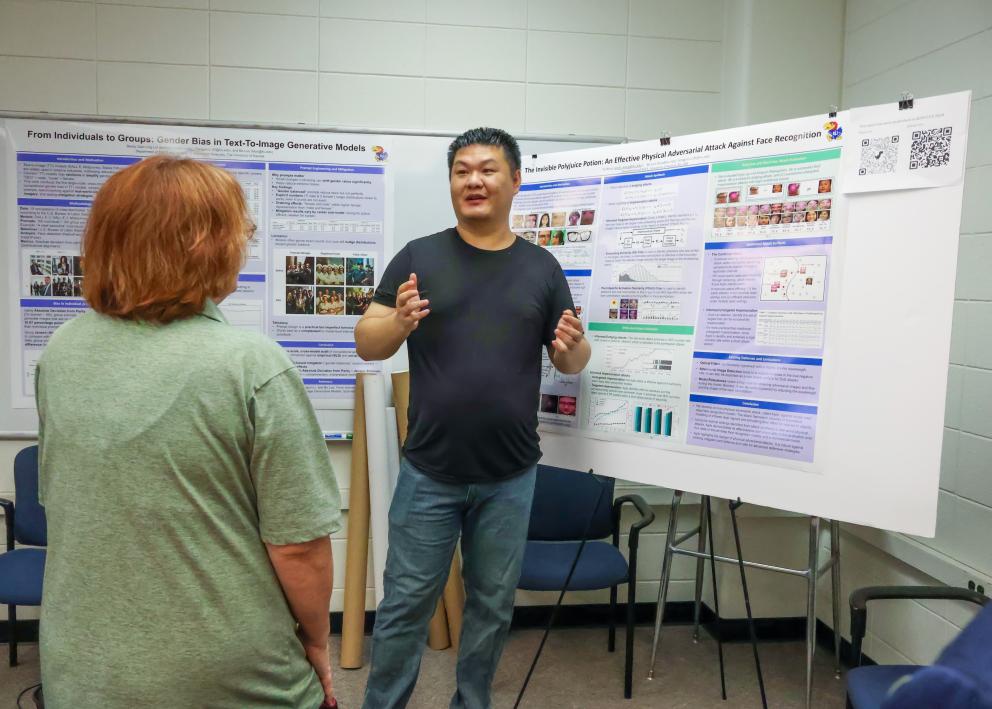
On Oct. 1, 2025, I2S hosted a showcase of research by students and faculty advisers involving advancements in AI and machine learning, part of a weeklong series “Falling into AI.”
David Tamez with CCSD and KU honors students visited the Lawrence retirement community Pioneer Ridge to talk with residents about AI, online safety, and how scammers are adapting to new tech.
Read more: https://t.co/Cy5Momz5X6
#KUHonors#CyberSafety#CommonCause#DigitalLiteracy
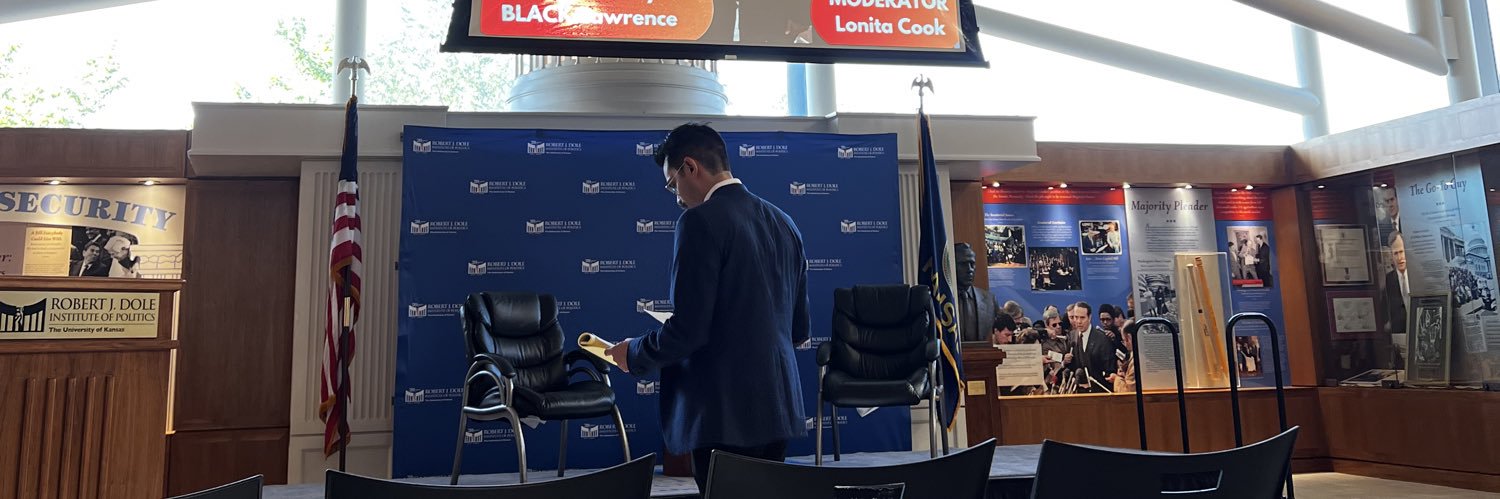
This Thursday: Join us in fostering dialogue between researchers, practitioners, and policymakers as we explore fairness in ML from technical, legal, and philosophical perspectives! click the “I’m Interested” button on the event page: https://t.co/fTacQvGp0W
An incredibly thought -provoking colloquium lecture by my friend @johnfsymons. Inverting Latour’s adage that technology is society made durable, John suggests it is societal norms that make technology robust. W/o proper social imaginaries/norms, tech’s solutions fall apart.
Join us for the online book launch of The Cambridge Handbook of the Law, Ethics and Policy of #AI on 11 March! We'll have a lively dialogue with several contributors & discussants.
Info & registration: https://t.co/fuQ5W4V8hR
Free access to the book: https://t.co/P0jSgiBsue
Congratulations to Oluwaseun Damilola Sanwoolu, David Tamez, and the rest of the team for securing two cool new research awards for our Center. You can read about the projects here : https://t.co/AxdDBzgWDo
Register now for the Hot Topics in the Science of Security symposium (HOTSOS)!
This year saw 47 submissions, and will see 6 WIPs, 8 already-published papers, and 12 posters presented at this year's HOTSOS on April 1-3, 2025.
Agenda coming soon!
https://t.co/TGChreZrOj
2024-2025 Beck Lecture

Dr. John Symons Thursday, February 20, 2025 | 5 p.m. | Richardson Performing Arts Center
“Reading, Writing, & Thinking in the Age of Large Language Models”
https://t.co/AulodUIboV
Calling all who are interested in the science of security!
Registration for the Hot Topics in the Science of Security (HOTSOS) is open! This symposium takes place virtually April 1-3.
Register here: https://t.co/TGChreZrOj
It's out! You can now access The Cambridge Handbook of the Law, Ethics and Policy of #AI: https://t.co/P0jSgiBsue
20 #openaccess chapters covering topics on AI, ethics, philosophy, legal domains & sectoral applications.
Huge thanks to all the authors who made this possible!
Hear from scholars James Yékú, Zack Zhang, Rebecca Johnston, and Korede Ajibona on the global impact of technological trends on our climate, education, labor, and society.
https://t.co/AcmFHhGFIg
#globaltechnology#digitalethics
Interesting new study. Finding: main "predictor of moral responsibility attributions was participants’ retributive desires. Those with stronger desires to punish wrongdoers were significantly more likely to attribute free will & moral responsibility." https://t.co/heY98KPmiz
The Center for Cyber-Social Dynamics invites YOU to submit your research to the Workshop on Advancing Fairness in Machine Learning!
For more details on the abstract and submission: https://t.co/O7JzSge8uu
Science and Engineering Ethics has a new special focus area on the Ethics of AI. I'm the area editor. We have been publishing ethics of AI articles before, of course, but are now making this into an even more focused area: https://t.co/YQ4p9BsYhE https://t.co/UkfBOu0Klp #aiethics