All TastyCo updates in one place.
Here’s what’s happening across our community, platform, and partnerships:
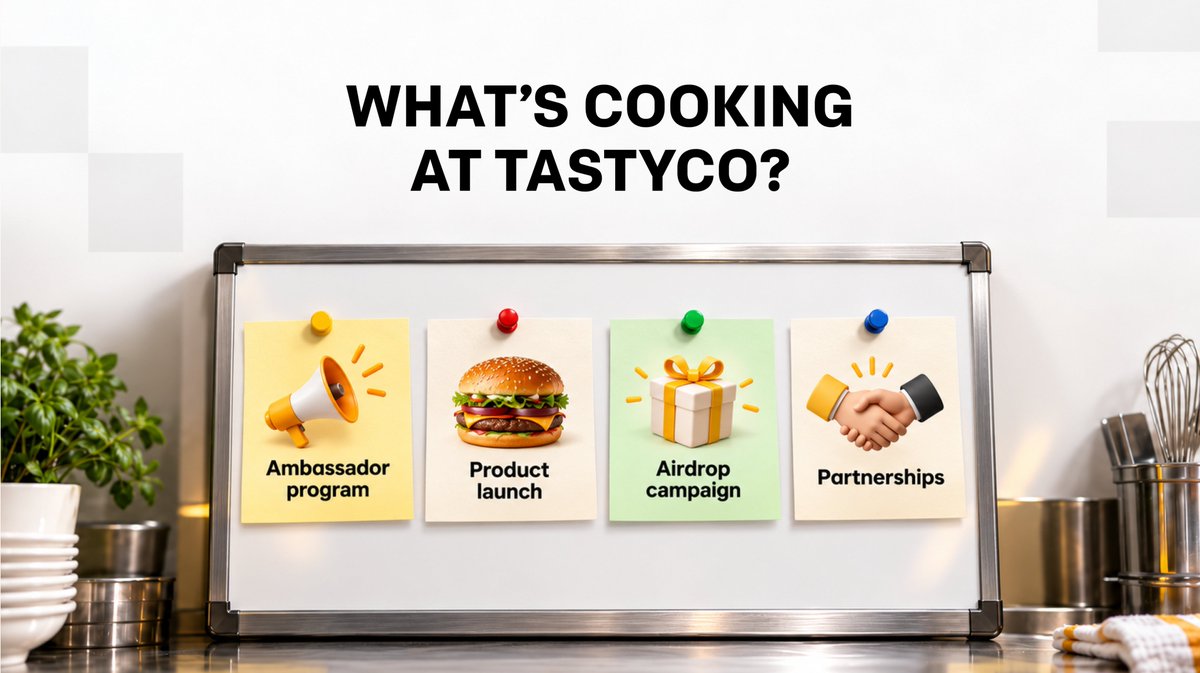
• Ambassador Program
The program is up and running, with members helping grow the TastyCo community. Next week, we’ll review Inner Circle activity and remove inactive members so rewards go to those who actively contribute.
• Platform Beta
The beta is ready to go live. We’re waiting for the right moment to launch, with some internal changes happening behind the scenes. We’ll share more once everything is in place.
• Strategic Partnerships
We’re working on a major Web3 partnership with a leading tokenization infrastructure project. We’re also preparing deals with Web2 operational partners to support the real-world side of TastyCo.
• Airdrop Campaign
The campaign keeps running until TGE, with more ways to participate and earn airdrop rewards coming soon.
Thanks to everyone who’s supported us along the way. FoodFi era is getting really close!
Restaurant giants are quietly rewriting the rules of convenience, speed, and customer ownership.
Three power moves reshaping the restaurant playbook this week:
1. Drive-thru speed is the new battleground
Chick-fil-A expanded its elevated drive-thru concept, featuring four lanes and kitchen-to-car conveyor belts that cut wait times by up to 50% during peak hours.
2. Coffee loyalty programs are turning into financial engines
Starbucks reported that rewards members now drive over 57% of its US company-operated sales, proving that direct customer ownership beats third-party discounts every time.
3. Fast-casual chains are winning on digital orders
Sweetgreen confirmed that digital channels now account for nearly 60% of total revenue, with average digital order values running 15% higher than in-store walk-ins.
Major food brands spend millions building proprietary tech and loyalty loops so they can own their customer flow.
TastyCo gives emerging food concepts that exact same infrastructure on-chain, letting communities back brands directly and earn real-time royalties from every order.
Which of these shifts do you think matters most for the future of restaurants?
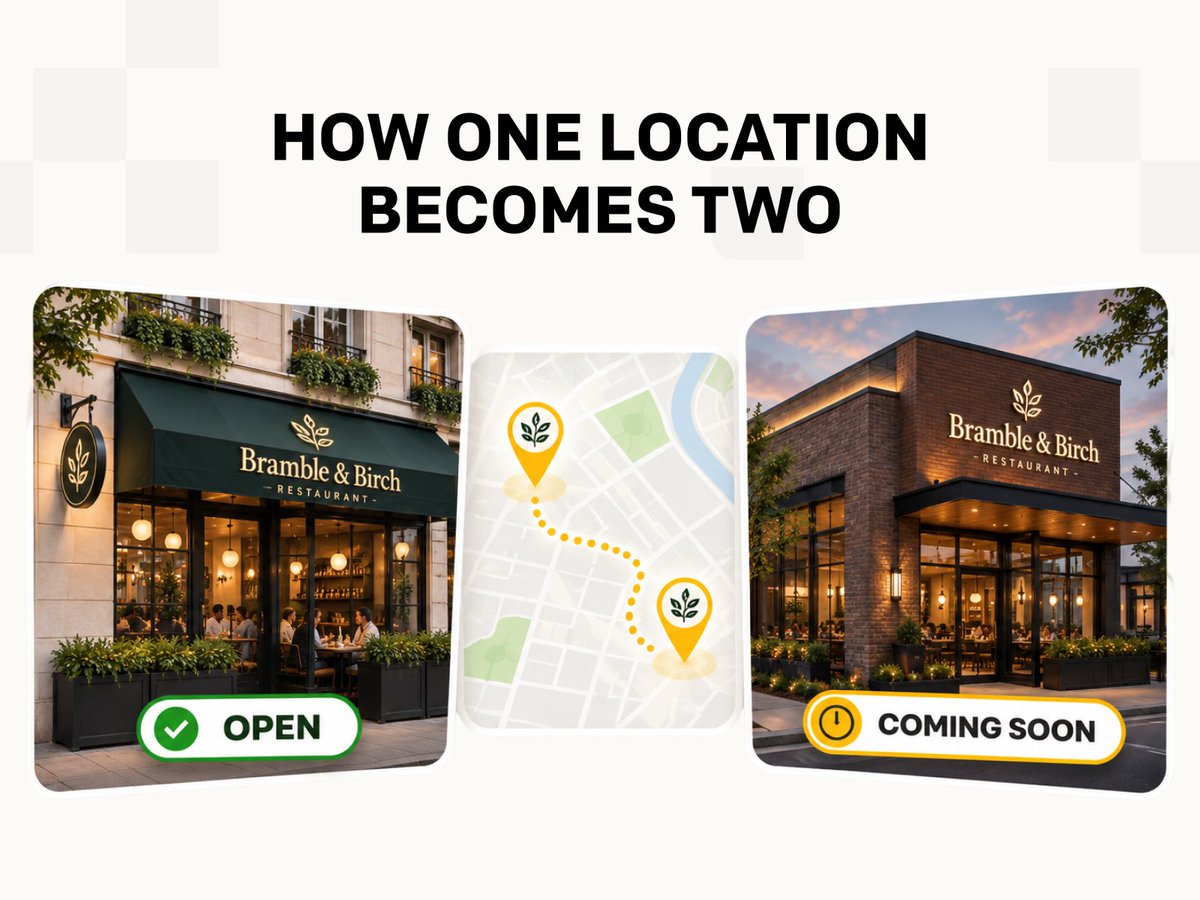
Opening a single kitchen isn't acually easy. Opening location B is where over 90% of independent restaurants stall because traditional expansion funding takes 7 to 12 years.
Expanding from one spot to two requires solving four core pieces:
• Location choice: Finding a neighborhood matching your delivery density, where delivery-native brands capture 25%+ EBITDA margins, without cannibalizing sales from unit A.
• Supply chain consistency: Ensuring recipes, sauces, and quality taste identical across every shift.
• Operational DNA: Hiring and training a crew that delivers the exact experience customers expect.
• The capex wall: Funding leases and equipment before the second unit generates revenue.
TastyCo helps food brands bypass that barrier by connecting them to liquidity and an operator network, backed by 1,000+ partner kitchens and $80M+ in revenue, to scale globally without traditional debt.
From kitchen A to location Z, scaling should be seamless.
Big chains are fighting value wars while agile fast-casual wins the week
Here is what went down:
1. Papa Johns is picking a fight over quality 🍕
After North American sales dropped 8.3% this quarter, the pizza chain launched its "Unbox Better" plan, putting fresh marketing and franchisee support behind quality to reverse a 10.5% revenue dip.
2. The world's best restaurants crowned in Spain 🏆
The prestigious World's 50 Best Restaurants list dropped, with Basque country legend Asador Etxebarri taking the No. 1 spot for its flame-grilled cooking.
3. CAVA keeps proving fast-casual is winning 🥗
While classic QSR struggles, Mediterranean leader CAVA posted a 22.1% revenue surge to $353.7M this quarter, hitting 500 total locations with 20%+ annual growth.
Big chains fight to fix margins while fast-casual concepts scale. That's the ecosystem we're building to open up.
Which of these updates caught your eye?
A community can do more than follow a brand
TikTok says 27 million Americans visited an independent restaurant for the first time after finding it on the app, spending an estimated $4.7 billion there.
Nobody paid those people. They filmed their food, answered "where is this?" in the comments, and told their friends where to go next.
Fans do more than bring new customers. They notice when a recipe changes, post the new menu item before the brand does, and show up when a new location opens.
Yet for all of that, a fan's relationship with a brand still ends at the follow button.
If you help a brand grow, shouldn't you get to be part of it?
That's the question TastyCo is built around.
The second order matters more than the first
A launch can fill a room once. A grand opening, a viral video, a line around the block. Six months later, none of that counts.
What counts is the day a barista looks up and asks, «Your usual?»
Toast’s restaurant data suggests that up to 50% of orders can come from just 7% of guests. The regulars. And almost half of diners say being remembered is what makes them feel most valued, which is a lot of weight for one small question at the counter.
Why do they come back? Because the tenth coffee tastes like the first. That consistency is what turns a launch into a business.
Web3 knows the other side of this story well, because plenty of launches live on day-one hype and quietly fade once the attention moves somewhere else. We want to bring food brands into Web3 that already have what hype can’t buy: customers who keep coming back.
The top 5 countries by food market cap are the US, China, Japan, Switzerland and India. The US leads with $1.93T from just 160 public food companies, while Japan has the most companies of all, 299, worth $498B together.
Bet you wouldn't have guessed that list. And you probably missed a few of these stories too:
1. Halloween candy got scary expensive 🎃
Candy prices are up more than 15% this year, four times faster than overall inflation. 35% of shoppers plan to skip candy completely.
2. TikTok now tells you where to eat 📱
Its new Must Eat guide is built from more than 40 million posts and reviews, and restaurants can't pay to be featured. It starts in New York, LA and the Bay Area.
3. Wendy's could leave the stock market 🍔
Activist investors led by Nelson Peltz's Trian offered about $1.4 billion to buy the chain and take it private, after more than a year of falling sales.
Deals like this still happen between a few big players, while the fans who make brands popular watch from the side. That's what we're working to change.
Which spot would you back, if you could?
What happens after you buy a brand token?
Say you buy the token of a burger brand on TastyCo. Here's how it's designed to work from there.
Someone orders a burger through a delivery app. The brand earns real revenue, and a share of that order goes to the token contract as a royalty. The contract uses it to buy back the brand's tokens and burn them.
That happens with every order. The more people order, the more tokens leave circulation, and every token you hold becomes a bigger share of what's left.
So the real driver behind a brand token sits in the kitchen. Before you buy, look past the chart: is the product something people crave, do they keep ordering, and can the brand serve them well in every location?
Real orders, connected to your token.
Every city has a food spot people would cross town for. Most of them never leave that town
The food is rarely the problem. There's a line out the door, regulars order every week, and people keep asking when it's coming to their side of the city. The trouble starts when the owner tries to say yes.
Opening a second location takes money first: industry surveys put it at around $375,000 per restaurant. Then a kitchen team, equipment, and partners in a new city who rarely work with a brand they've never heard of.
So the brand stays where it is, loved by the people who already know it.
We're building TastyCo to close that gap, connecting promising food brands with a global community of backers and the partners they need to open their next locations.
Local taste can have global potential. It just needs the right people behind it.
Fast food had a busy week, on the menu and on the market 🍔
$4.0B worth of McDonald's stock changed hands in the last 24 hours. That's more than the next four most-traded food stocks combined, and the top five together moved about $6.4B.
Here's what the burger and pizza world was up to:
1. Wendy's is going back to basics 🍟
After six straight quarters of falling sales and 245 closed locations this year, Wendy's is bringing back its old yellow packaging and a $7.99 Dave's Single combo. Its CEO said it plainly: "Our value proposition has weakened."
2. Domino's is giving away Minecraft 🎮
Starting Oct. 26, Domino's will give away 2,000 Minecraft Dungeons II game tokens a day across 19 markets. When McDonald's ran Minecraft meals last year, it got "a double-digit traffic lift."
3. Five Guys turned its kitchen race into a TV show 📺
The chain's yearly World Burger Games, where staff compete in kitchen races, is now a five-episode series on Prime Video. This year's winner took home $100,000.
Fast food is trying everything to win back attention, and the brands that grow fastest are usually the ones whose fans would show up anyway.
Which of these would actually get you to order?
Investing in food brands is about to change
You've probably ordered from the same coffee place hundreds of times. Yet there has never been a way to own any part of the brand you keep in business.
Until now, the early stage of a food brand belonged to VCs and big checks. Tokenization opens it up. A coffee brand in Riyadh could be backed by its fans in London, Mumbai, and São Paulo on the same day.
That's what we're building at TastyCo: one global, on-chain market that connects food brands with their fans anywhere in the world.
Soon, the people who love a brand first will be able to be part of it from the start.
TastyCo is joining @Vanarchain Foundry campaign as an ecosystem launch partner, bringing our community special access to AI-powered Organizations.
Turn your ideas into action:
• Create your own AI organization
• Put AI workers to work
• Explore what you can build
🎁 Get 7,000 free credits with code "TASTYCO"
Campaign link in the comments 👇
The latest food industry ranking shows that the biggest money sits in the things we grab between meals. The three most valuable categories right now: beer, wine & spirits ($911B), candy & snacks ($829B) and soft drinks ($819B).
Now the news:
1. Starbucks says it's not buying Chipotle ☕️
The Financial Times reported a possible deal for Chipotle, worth about $41 billion, which would have been the biggest restaurant deal in history. Starbucks shut it down and said it's "laser-focused" on its own turnaround.
2. Four chains hit big milestones in one season 🎉
Cava opened its 500th restaurant. Dave's Hot Chicken passed 500, up from just two locations in 2020. Freddy's hit 600, and Chipotle opened its 1,500th drive-thru lane.
3. Friendly service makes or breaks the drive-thru 😊
Mystery shoppers made 2,145 visits to 13 chains. When the staff was friendly, 99% of customers were satisfied. When they weren't, only about 27% were.
4. Restaurants are learning AI the hard way 🤖
A Wendy's AI drive-thru put up a sign asking customers to avoid saying "um" and "uh" because the AI "will interrupt." Starbucks dropped its AI inventory system after nine months. Still, about 80% of restaurant executives plan to spend more on AI.
5. Menu prices are rising faster than paychecks 💸
Restaurant prices are up 3.5% in a year, while wages are up just 3%. Fast food traffic fell 2.6% last quarter.
Even in this economy, newer chains keep opening new locations. Just imagine: Dave's Hot Chicken had only two locations in 2020.
Which local brand near you has only two locations today?
Delicious ≠ successful. Great food is only half the recipe
Some of the best food in your city comes from restaurants that are struggling to stay open.
The burger is great, the reviews are great, and the business still runs out of money. Taste gets people to order once. Whether the brand survives depends on what happens behind the counter.
It starts with margin. Ingredients, packaging, staff and rent all come out of every order before the brand earns anything, and delivery apps can take up to 30% on top. A dish people love can still lose money if it costs too much to make.
Then come repeat orders. A great first bite brings people in, but the business lives on the same customers ordering again next week and the week after.
And all of it depends on consistency. The burger has to taste the same on a busy Friday night as on a slow Tuesday, in every kitchen that makes it. A customer who gets a bad order often doesn't come back.
TastyCo records each brand's orders and royalties straight from the delivery apps, so backers can judge a brand by how much people actually order.
Find a brand people love to eat and a business that can keep serving it.
Your weekly food catch-up is here!
Coca-Cola is still the most valuable food brand on the market at $378B, ahead of Nestlé and PepsiCo.
Now the news:
1. McDonald's says it doesn't use AI to set your burger price 🍔
Reuters reported that McDonald's was using AI to estimate how much customers are willing to pay, based on millions of daily orders across 14,000 locations. McDonald's denied it: no dynamic pricing, and franchisees set their own prices.
2. Fuel prices are squeezing restaurants ⛽️
Diesel is now $6.38 a gallon, up $2.63 from a year ago. One expert's simple fix: cut a restaurant's supply deliveries from five a week to four, and the fuel savings start right there.
3. Burger King had the best quarter in fast food 👑
Its same-store sales grew 8.5% last quarter, the best result among major fast food chains, helped by a Whopper with new ingredients. Wendy's went the other way, down 7%.
Prices and costs are under pressure everywhere, and customers notice how brands handle it. At the same time, on TastyCo, every order and every royalty is on-chain, so anyone can see where the money goes.
Enjoy the weekend, and see you next Friday.