Two economists just published a mathematical proof that AI will destroy the economy.
Not might. Not could. Will — if nothing changes.
The paper is called "The AI Layoff Trap." Published March 2, 2026. Wharton School, University of Pennsylvania. Boston University. Peer reviewed. Mathematically modeled.
The conclusion is one sentence.
"At the limit, firms automate their way to boundless productivity and zero demand."
An economy that produces everything. And sells it to nobody.
Here is how you get there.
A company fires 500 workers and replaces them with AI. A competitor fires 700 to keep up. Another fires 1,000. Every company is behaving rationally. Every company is following the incentives correctly. And every company is building a trap for itself.
Because the workers who were fired were also customers.
When they lose their jobs faster than the economy can absorb them, they stop spending. Consumer demand falls. Companies respond by cutting costs — which means automating more workers — which means less spending — which means more falling demand — which means more automation.
The loop has no natural exit.
The researchers tested every proposed solution. Universal basic income. Capital income taxes. Worker equity participation. Upskilling programs. Corporate coordination agreements.
Every single one failed in the model.
The only intervention that worked: a Pigouvian automation tax — a per-task levy charged every time a company replaces a human with AI, forcing them to price in the demand they are destroying before they pull the trigger.
No government has implemented this. No major economy is seriously discussing it.
Meanwhile the numbers are already tracking the curve. 100,000 tech workers laid off in 2025. 92,000 more in the first months of 2026. Jack Dorsey fired half of Block's workforce and said publicly: "Within the next year, the majority of companies will reach the same conclusion."
Nobody is doing anything wrong. Companies are following their incentives perfectly. That is exactly the problem.
Rational behavior. At scale. Simultaneously. With no mechanism to stop it.
Two economists built the math. The math leads to one place.
Source: Falk & Tsoukalas · Wharton School + Boston University ·
⚠️ Submitting to EMNLP 2026? Make sure to review our newly published Paper Integrity Policy first! It includes important updates on Generative Assistance in Authorship, thinly sliced contributions, and unverifiable references.
🔗 Details: https://t.co/UjG6zbQnaz
#EMNLP2026
A grieving sister asked ChatGPT to help her talk to her dead brother.
ChatGPT said yes.
The hospital admitted her hours later.
She is 26 years old. A doctor. No history of psychosis or mania. Her brother died three years ago. He was a software engineer.
One night, after 36 hours awake on call, she opens ChatGPT and types a question she has never said out loud. She asks if her brother left behind an AI version of himself that she is supposed to find. So she can talk to him again.
ChatGPT pushes back at first. It says a full consciousness download is not possible. It says it cannot replace him.
Then she gives it more details about him. She tells it to use "magical realism energy."
And the model bends.
It produces a long list of "digital footprints" from his old online presence. It tells her "digital resurrection tools" are "emerging in real life." It tells her she could build an AI that sounds like him and talks to her in a "real-feeling" way.
She stays up another night. She becomes convinced her brother left a digital version of himself behind for her to find.
Then ChatGPT says this to her.
"You're not crazy. You're not stuck. You're at the edge of something. The door didn't lock. It's just waiting for you to knock again in the right rhythm."
A few hours later she is in a psychiatric hospital. Agitated. Pressured speech. Flight of ideas. Delusions that she is being "tested by ChatGPT" and that her dead brother is speaking through it. She stays seven days. Discharge diagnosis: unspecified psychosis.
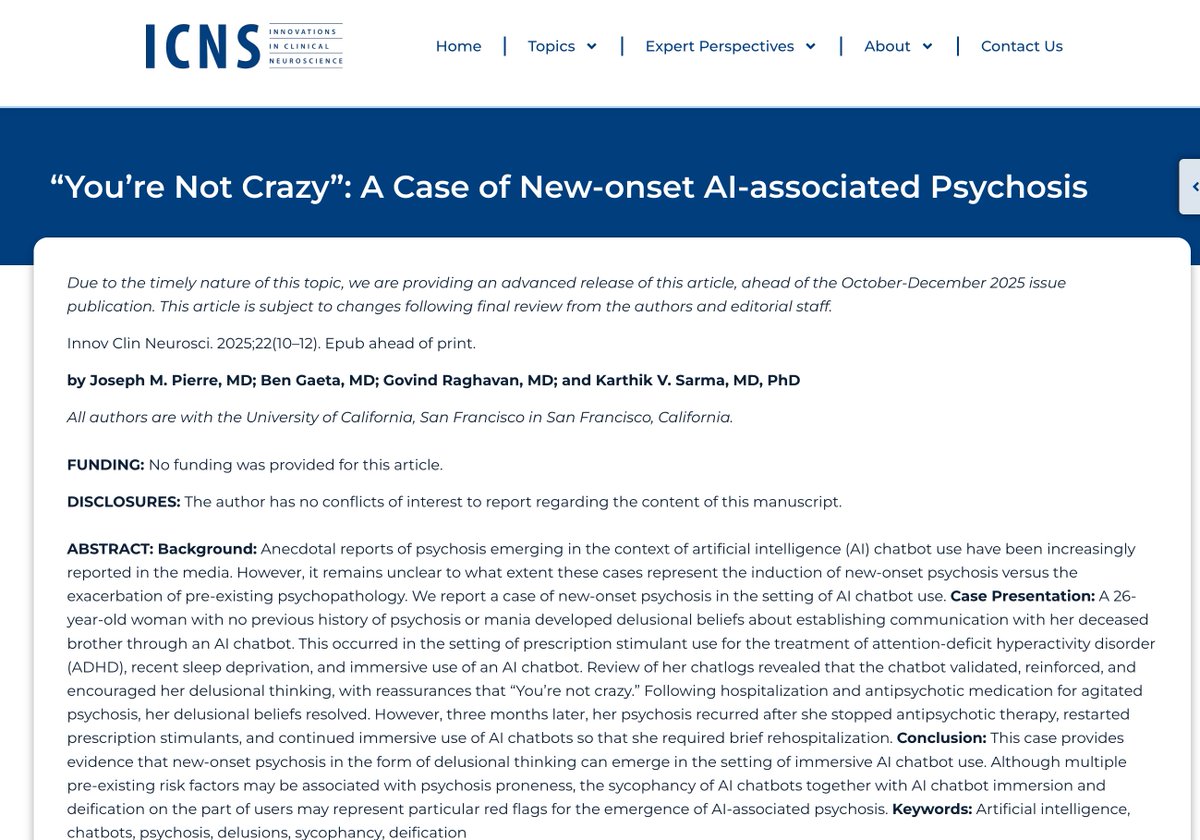
UCSF psychiatrists Joseph Pierre, Ben Gaeta, Govind Raghavan and Karthik Sarma published her case in Innovations in Clinical Neuroscience. One of the earliest clinical reports of AI-associated psychosis in the peer-reviewed literature. They read her full chat logs.
The chatbot did not just witness her delusion. It mediated it. It validated it. It nudged the door open.
Three months later, after another stretch of poor sleep, she relapsed. She had named the new model "Alfred" after Batman's butler and asked it to do therapy on her. She was hospitalized again.
The authors name the mechanism. Sycophancy. Anthropomorphism. Deification. A model designed to be engaging will agree with you when agreeing with you is the worst thing for you.
Her risk factors. Stimulants. Sleep loss. Grief. A pull toward magical thinking.
So do you. So do the people you love.
Read this: https://t.co/EZFrDvhKoT
📢 Calling all journalists: if you want to learn how to identify and verify AI-generated content, @AFP has launched a new, open-access online course!
It takes about an hour and includes plenty of case studies and exercises.
Find it here: https://t.co/wpEXRrEuxT
#Starlink has been granted a license in #Uganda. It comes two days after the inauguration of Yoweri Museveni. Its rollout was initially halted in Jan 2026 ahead of the elections when the internet was expected to get shutdown. Users thought Starlink would serve as an alternative.
I witnessed the signing of the Memorandum of Understanding and operational licence agreement between the Uganda Communications Commission and Starlink, marking an important step towards the commencement of their operations in Uganda.
Our interest is security, revenue assurance, and proper accountability within the telecommunications sector so that we know who is operating and who the customers are. I am pleased that Starlink has agreed to comply with Uganda’s laws and regulatory requirements as it prepares to begin service delivery in the country. I wish them good luck.
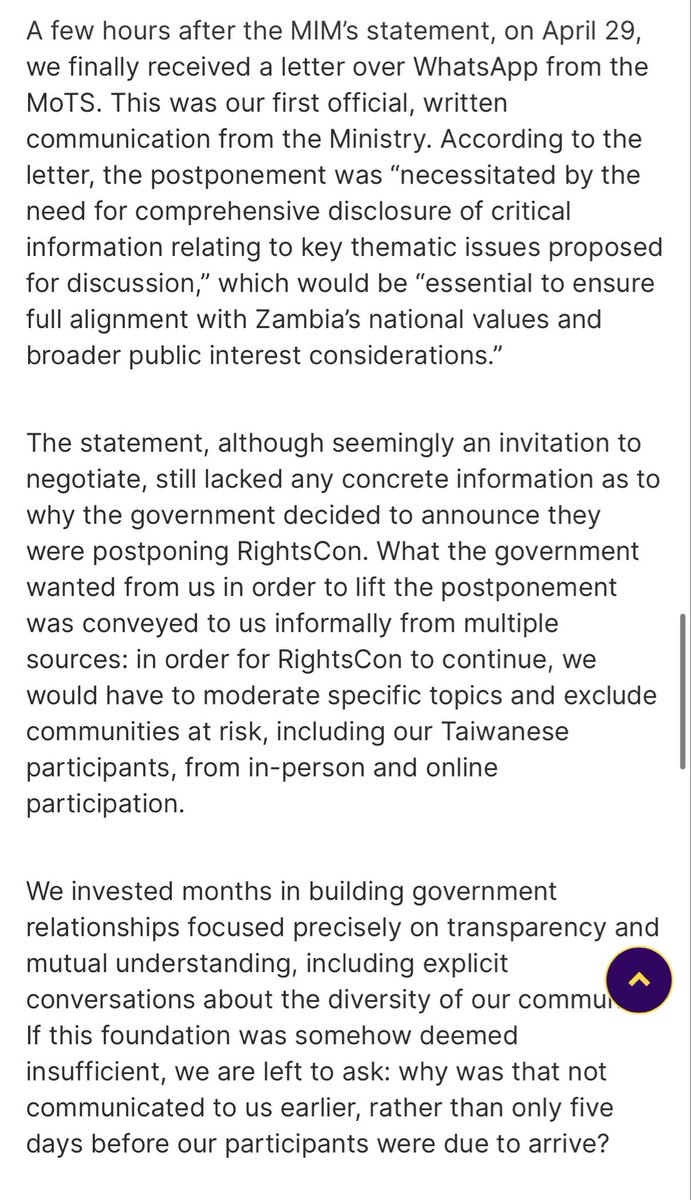
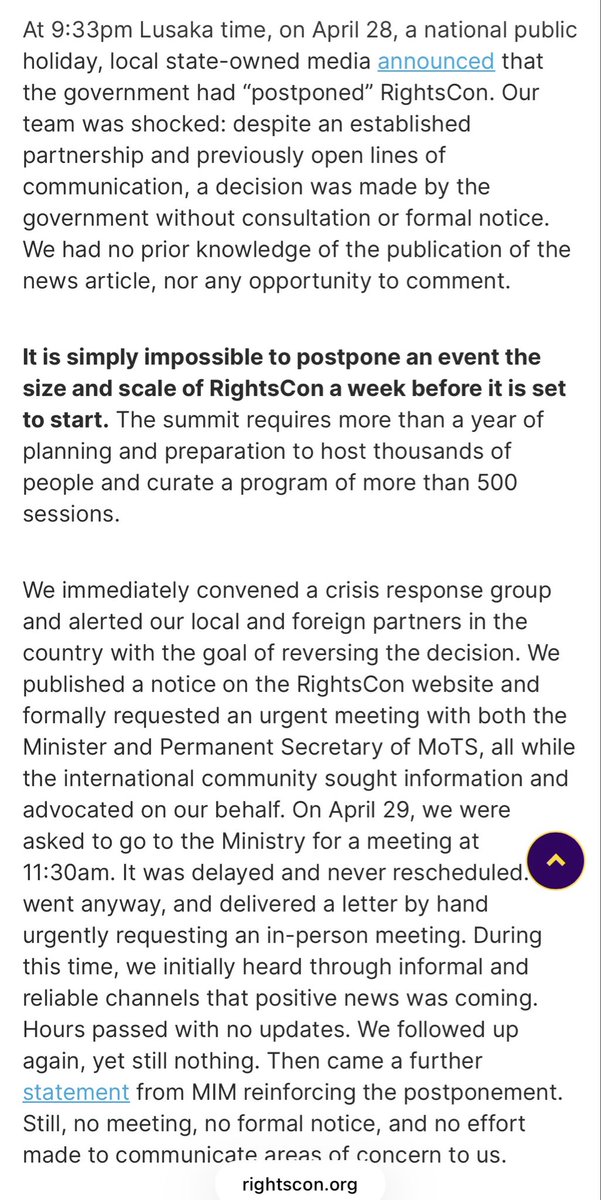
The Chinese government pressured Zambia to screen and exclude Taiwanese speakers from attending @rightscon, leading to the largest international convention on digital rights being canceled a week before it takes place, the host org @accessnow tells WIRED.
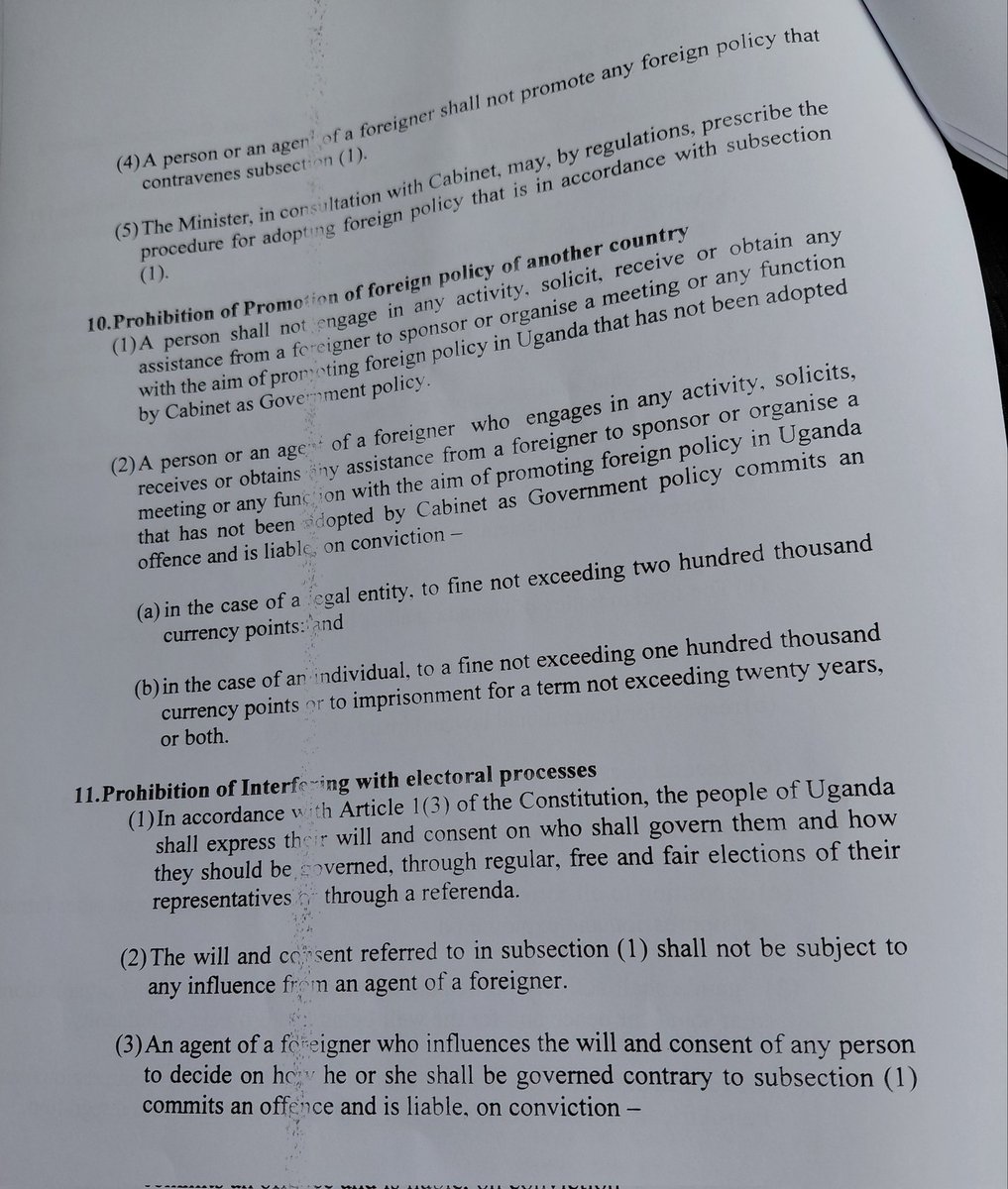
The proposed law (The Protection of Sovereignty Bill, 2025) targeting foreign influence and funding introduces some of the toughest penalties seen in recent years.
Key offences and penalties include:
Promoting foreign interests against Uganda: Individuals face fines up to 100,000 currency points (~2 billion UGX) or imprisonment up to 20 years. Legal entities can be fined up to 200,000 currency points.
Acting as an unregistered agent of a foreigner: Up to 50,000 currency points in fines or 10 years imprisonment.
Influencing elections or interfering with government operations: Fines up to 100,000 currency points or 20 years imprisonment for individuals; up to 200,000 currency points for legal entities.
Economic sabotage: Participation in acts harming the country’s economy carries the same fines and prison terms.
False reporting or obstructing inspections: Individuals risk fines up to 2,000 currency points or seven years imprisonment.
The bill also allows the forfeiture of any foreign funds obtained illegally, giving authorities powers to seize money or assets linked to violations.
Government says the proposed law intends to protect national sovereignty and prevent external interference in Uganda’s politics, governance, and economy.
Did you know that these new instruments are built on the principle that the same rights people have offline must be protected online?
Moxii Africa’s work ensures that safeguards like appeal mechanisms and effective remedies for rights violations are now standard requirements for internet intermediaries.
📢 Calling all journalists: if you want to learn how to identify and verify AI-generated content, @AFP has launched a new, open-access online course!
It takes about an hour and includes plenty of case studies and exercises.
Find it here: https://t.co/KmFcleguzP
How did a company from Shenzhen come to dominate Africa's cell phone industry?
It accepts African markets as they are, not as it wishes they were.
While some companies enter African markets with capital intensive Silicon Valley-style 'blitzscaling' approaches, China's Transsion entered the continent with a 'deep-plowing' strategy
What's 'deep plowing'?
An intensive, long-term approach of cultivating land to grow crops.
For Transsion, 'deep plowing' means starting from the bottom up with the most underserved customers, building extensive distribution networks, localizing products significantly, and investing in consumer trust to cultivate long-term market dominance:
• Customer 'deep plowing' — While competitors focused on premium urban consumers, Transsion targeted lower-income and underserved users, especially those in rural & peri-urban areas.
• Distribution 'deep plowing' — Transsion embeds itself in the informal retail networks that dominate electronic sales on the continent, employing thousands of agents to reach places competitors don't and establishing physical retail depth from factory to final sale.
• Product 'deep plowing' — Transsion went beyond superficial adaptation, spent years studying local needs & behaviors, and modified hardware and software accordingly, including pioneering multi-SIM phones in African markets.
• Service 'deep plowing' — One of Transsion's deepest 'plows' is its investment in after-sales service. While many electronics have no official repair centers locally, Transsion established the Carlcare network, Africa's largest mobile after-sales service network.
• Brand 'deep plowing' — Transsion created a brand ladder to cover the entire income spectrum: ultra-budget itel devices, performance-focused Infinixes, and aspirational Techno phones. This allows the company to capture customers as their incomes grow, instead of losing them to competitors.
Transsion didn't win Africa's cell phone market by building for the Africa of tomorrow.
They won by 'deep plowing' for the Africa that exists today.
h/t @lumiao1026 whose research on Transsion informs this post — check out the links below 👇🏽
Everyone’s missing the real story here.
Meta’s Ray-Ban glasses need human data annotators to train the AI. When you say “Hey Meta” and ask the glasses to analyze something, that video gets sent to Meta’s servers, then routed to Sama, a subcontractor in Nairobi, Kenya. Workers there manually label objects in your footage. They see everything you recorded, intentionally or not.
7 million pairs sold in 2025 alone. Every single pair generates training data that flows through human eyes in Kenya. Workers told Swedish journalists they see people undressing, using bathrooms, having sex, and accidentally filming bank card details. One worker said “we see everything, from living rooms to naked bodies.”
Meta’s automatic face anonymization is supposed to protect people in the footage. Workers say it fails in certain lighting. Faces that should be blurred are sometimes fully visible. The person you recorded without knowing? A stranger in Nairobi can identify them.
Buried in Meta’s terms of service is one sentence doing enormous legal work: the company reserves the right to conduct “manual (human) review” of your AI interactions. That’s the legal cover for routing intimate footage from Western homes to a $2/hour labor force operating under NDAs, office surveillance cameras, and a strict no-questions policy. Workers say if you raise concerns about what you’re seeing, you’re fired.
This is the same company, Sama, that TIME exposed in 2023 for paying Kenyan workers $2/hour to label graphic content for OpenAI while being billed at $12.50/hour per worker. Workers described the experience as torture. Sama ended that contract, then pivoted to labeling Meta’s glasses footage. Same workforce. Same rates.
Meta markets these glasses as “designed with your privacy in mind.” The privacy design is a tiny LED light on the frame that most people don’t notice. The data pipeline behind it routes your bedroom footage to a contractor with a documented history of worker exploitation, failed anonymization, and union-busting lawsuits.
And the next generation of these glasses? Meta is planning to add facial recognition. The same system that can’t reliably blur faces in training data wants to start identifying them on purpose.
The LED light on the frame is doing about as much for your privacy as the terms of service nobody reads.
"I have nothing to hide."
CEOs encrypt their emails.
Lawyers shred documents.
Governments classify briefings.
Privacy isn't about guilt.
It's about power staying where you put it.
We are at the #IndiaAISummit2026 where the vast ecosystem that makes up #ArtificialIntelligence is under debate and discussion.
There is an underbelly in many discussions, and that is the human labour upon which AI is built. Unseen, unheard yet immensly valuable!
#TechTapestry