Dr. Terry Wahls, author of The Wahls Protocol, used functional medicine and Paleo principles to overcome her MS and now teaches others how to use food to heal.
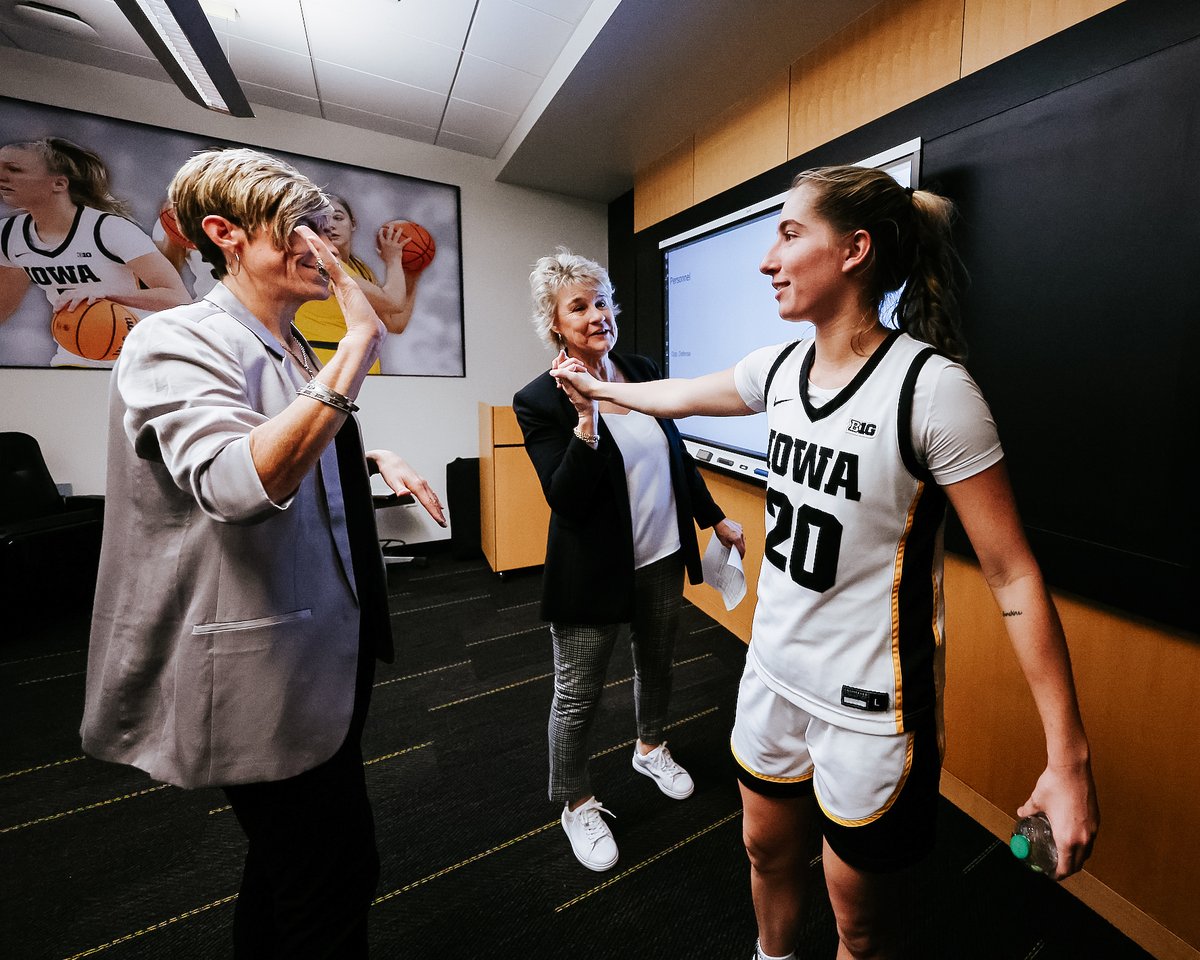
Caitlin Clark's new Capital One commercial with Samuel L. Jackson and Magic Johnson has already surpassed 15 million views across social media.
This includes fan-shared videos.
🚨Our Landmark Sport Nutrition Analysis in Endocrine Reviews — spanning 100+ years & ~600 studies🔬— challenges the foundations of the sports nutrition industry & guidelines, exposing potential harm to athletes' health.
This is the most comprehensive pub on nutrition's impact on performance (5+ years in the making). What we found is critical to athletes, coaches, dieticians, and the scientists who write guidelines with FREE study link below:
1) 🍞"Carb-loading" is misguided?
Current sport nutrition guidelines (i.e., @ACSMNews, @IntSocietySN, @Gatorade Sport Science Institute) recommend 5–12 g/kg CHO/day and 60–90 g CHO/hour. What does that mean?
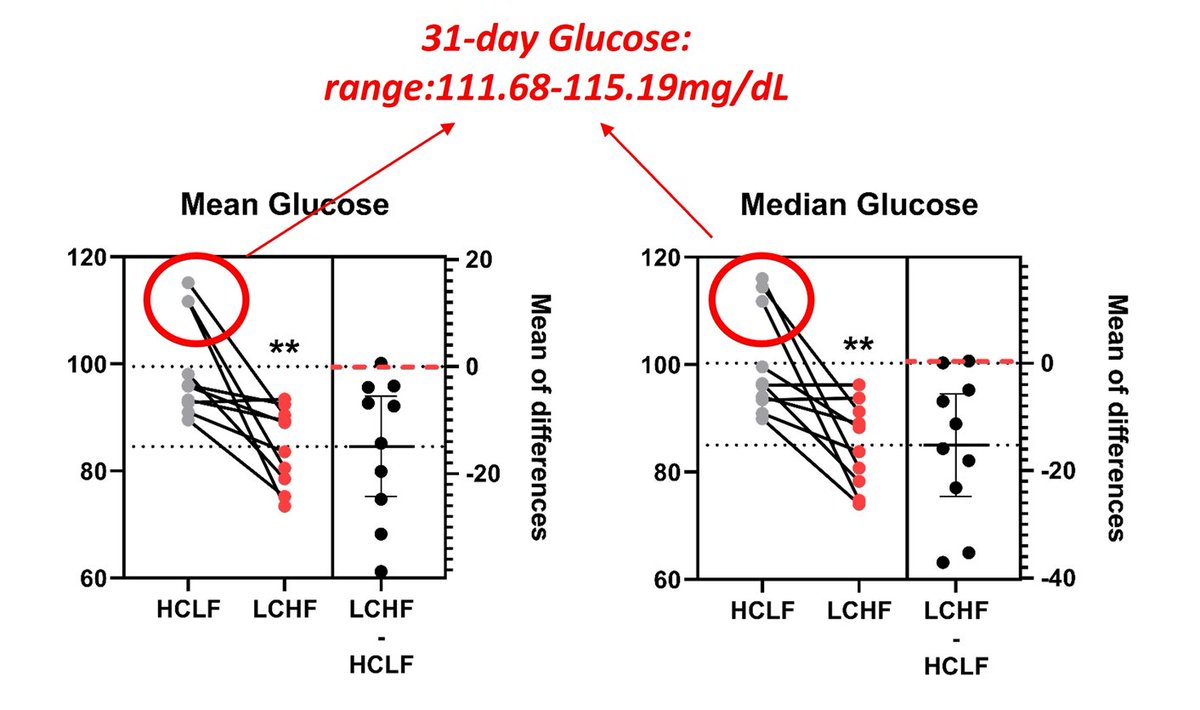
📈This can push some athletes to over 1000 carbohydrates/day. Multiple meta-analyses in the report revealed that sport nutrition guidelines have over-emphasized muscle glycogen and carbohydrate oxidation levels...yet these metrics didn't consistently align with performance... so what metric predicts performance?
See #2. 👇
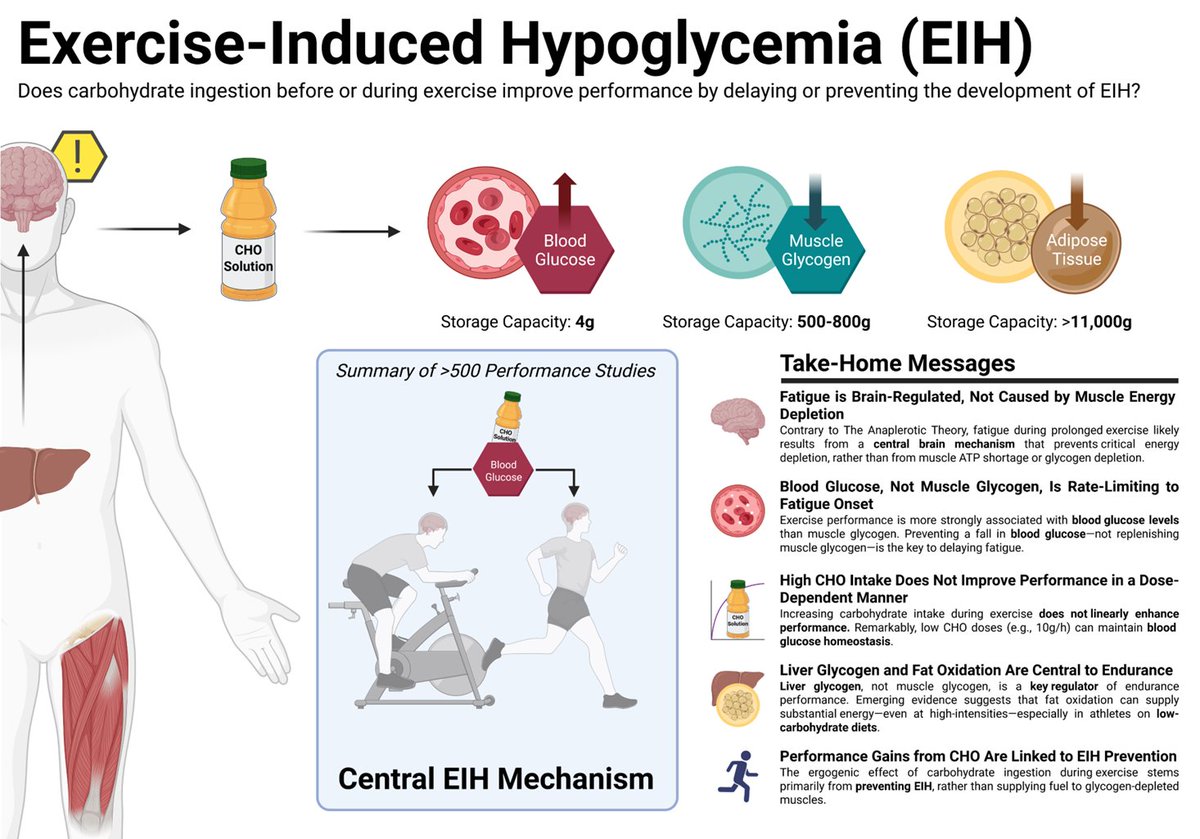
2)🧠Primary performance driver? Sustaining total brain energy (glucose + ketones + lactate)—not muscle glycogen or carb oxidation.
In >160 sports performance studies, 88% showed that carb intake only benefits performance when blood glucose plummeted in the placebo group, triggering early fatigue in non-carb athletes due to brain energy deficit. Carbs maintained blood glucose and brain energy, and this out-predicted every other metric. Yet, the brain's role has been sidelined in sports nutrition, ignoring evidence since the 1920s of its pivotal impact on performance.
3)🔥High carbohydrate intake paradoxically accelerates glycogen breakdown and suppresses fat oxidation during exercise.
This contradicts many of the sports nutrition marketing claims promoting high levels of carbohydrate supplementation (60-120g/hour) to "spare" muscle glycogen AND evidence showing that higher fat oxidation correlates with better performance.
4)🫀Health risks of sports nutrition guidelines? Emergent evidence has demonstrated that high-carbohydrate intake can lead to prediabetes in a percentage of athletes. This analysis also reveals that current sport nutrition guidelines' carbohydrate intake levels create a metabolic environment during exercise analogous to diabetes:
-⬆️circulating insulin
-⬇️fat oxidation
-⬆️glycogen breakdown
-🔒forced reliance on glucose as fuel
This is critical. We show that athletes ARE NOT immune to the metabolic problems driven by the food environment.
5)🥵Ketogenic athletes CAN "bonk" too...but not if they fuel correctly.
Contrary to claims, athletes on ketogenic diets can and do bonk—like on high-carb diets—due to dropping blood glucose. The lack of strategic carbohydrate placement was a mistake many keto-athletes made when trying to reach their peak performance. Small targeted brain-fuel supplements (10g/hour) during exercise boost peak performance without high-carb loads.
After 4-week adaptation, ketogenic performance equals high-carb performance...but BOTH high and low-carb athletes benefit from ~10g/hour carbs to maintain glucose/brain energy for exercise >60 minutes in duration, improving performance 22%. It will be interesting to see how other brain fuels can also assist (ketones and lactate).
🔗FREE Study Link: https://t.co/6GZjOnNmK8
📣CONCLUSIONS: This landmark analysis challenges over half a century of scientific assumptions in sports nutrition—and explains how they became embedded in official guidelines—with implications reaching beyond elite athletes to public health and chronic disease prevention.
Please share this widely with athletes, coaches, dietitians, and scientists to help optimize not just peak performance, but lifelong health. 🤝
Encouraging to see the 2025-2030 Dietary Guidelines for Americans move toward a whole foods framework and acknowledge diverse dietary needs with a low-carb option. Read more: https://t.co/u01U31b4CQ
We are recruiting for a clinical trial
Comparing ketogenic and paleo diets to usual diet in MS. Scan the QRS code to complete survey to see if you are eligible to be in study.
We are recruiting for a clinical trial
Comparing ketogenic and paleo diets to usual diet in MS. Scan the QRS code to complete survey to see if you are eligible to be in study.
Swank and Wahls diets seen to improve RRMS hand, arm dexterity - https://t.co/jaQ0Skvgl8 This is why we do research. Help change the standard of care for RRMS. Participate in research at https://t.co/EFEOu33xyt.
Swank and Wahls diets seen to improve RRMS hand, arm dexterity - https://t.co/fszvcYVB5f #GoogleAlerts Foood really matters!
We are recruiting for additional studies.
details at https://t.co/EFEOu33xyt
We are recruiting patients for a new research study: Efficacy of Diet on Quality of Life in Multiple Sclerosis. Complete this survey to see if you are eligible. https://t.co/ZeQkVeVUSI
More info at https://t.co/EFEOu33xyt
Iowa will attempt to set the all-time women's basketball attendance record when it hosts DePaul in an outdoor exhibition at 69,000-seat Kinnick Stadium on Oct. 15, the school announced Thursday. https://t.co/exLsFwAJoo
A web-based wellness intervention significantly improved fatigue in people with multiple sclerosis (MS), according to a new study. https://t.co/QUSxG4T70t