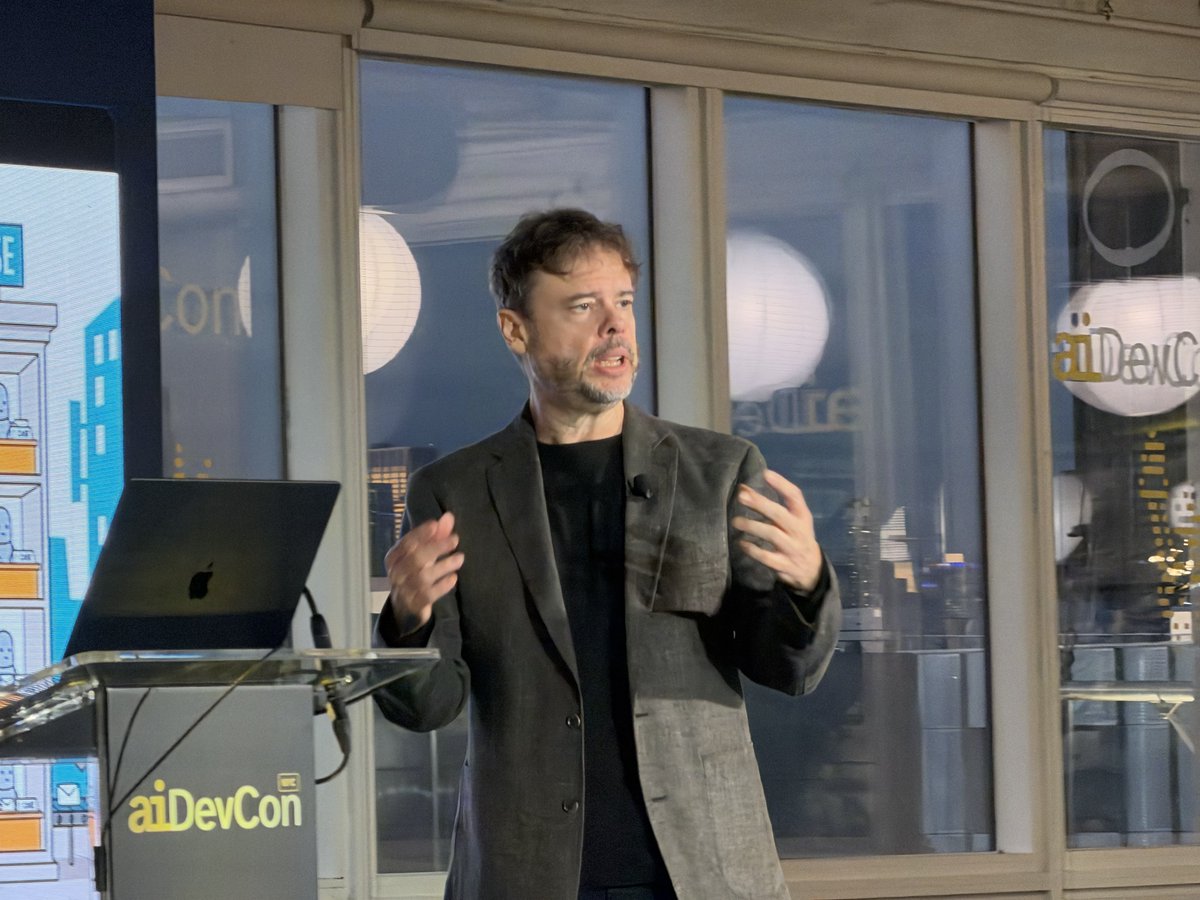
Not every app needs a global database. For software built around one person, JavaScript and SQLite go surprisingly far.
Matthias Lübken on personal apps: https://t.co/wVQaDNBv3G
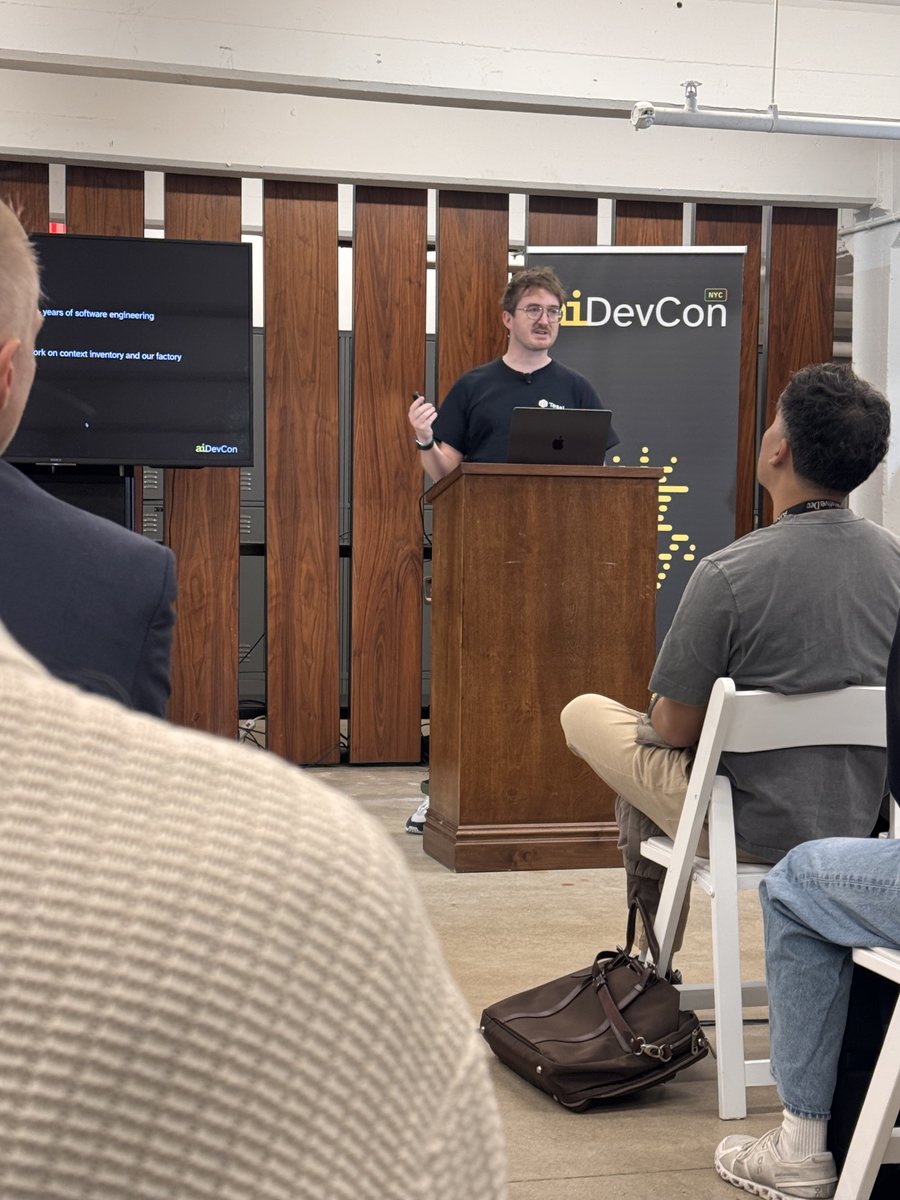
We've had general purpose agentic development machines for 50 years. We called them software engineers.
Nobody expected one to build a whole system from a single Slack message. @drufball on why agents still need a technical steward: https://t.co/ndOopjSoDB
Review isn't the bottleneck. Risk is.
A one-line auth change can be riskier than a big refactor of an internal tool. @patrickdebois on how agents earn the authority to act: https://t.co/ldl6DI9Gnn
In November everyone at Tessl started using coding agents. By February, every process built for slow software was breaking.
How we built Kikimora: https://t.co/OoB3Cpb6Kv
Most teams adopting agents are scaling prompts. Very few are scaling a process.
Four practices that turn agents into a context-driven software factory:
1. Version your skills like code
2. Set authority through tool permissions
3. Turn every failure into an eval
4. Version each run so you can see what changed
None of it needs a big bang rollout. You build the factory one practice at a time.
Read the full blog from Patrick Debois, who coined DevOps: https://t.co/RuUERZd3KW
The model isn’t the bottleneck anymore. Context is.
At AI DevCon London, we heard the same idea from very different perspectives.
Lamis Mukta (@lamismukta) from @AnthropicAI
explained why context engineering can multiply model intelligence.
Ryan Lopopolo (@_lopopolo) from @OpenAI looked at the limits that remain: human time, attention, and the context window.
Birgitta Böckeler from @thoughtworks explored how guides and sensors make coding agent harnesses more effective, while Guy Podjarny (@guypod) showed how this all fits into a new context development lifecycle.
The takeaway is simple: getting better results from coding agents isn’t just about choosing a smarter model. It’s about building the right system around it.
We brought the key ideas together in one video. AI DevCon is coming back to London on 7-8 June.
Watch it here: https://t.co/g24eGYMlfE
30th aug was my last day @tessl_io
glad I've been asked by one of the devrel to join their team. I maintained the @ainativedev (extinct, part of tessl) and contributed to marketing ops at tessl.
thanks to the team for teaching me so many things.
excited to see what comes next.
@Steve_Yegge's game had a 100-year bug backlog, so he gave up on it. With agents, he has "ambition to spare."
"Don't think about it that way. Think Death Star."
https://t.co/xQp1xHqO6y
Running 10 agents at once isn't a coding skill. It's knowing where a human still signs off.
@aroussi on coding agent reliability: https://t.co/xHCxmcS58G
Agentic code review that reads the whole PR, not just the diff, checks it against your standards, and leaves one review with severities.
Set it up in 5 minutes: https://t.co/of0x3sARNF
Day 3 of AI DevCon NYC and the great guests keep coming.
@jaydestro from Microsoft on why you shouldn’t trust an agent without real context. Test what it writes, then improve what it works from, from docs to MCP servers.
@Steve_Yegge closed AI DevCon with this: once agents run agents, you have a factory. The mechanical layer (CI, execution, deploys) is turning into a commodity. The layer above it, where your taste and judgment live, can’t be copied from anyone else.
The handoff that carries the evidence, every time. “Relaying, not reviewing” is a sharp way to put it.
One detail from James’s talk: those 11 rounds came from turning on four review bots on the same PR at once. Each finding was valid on its own. Nobody was asking whether the PR was getting closer to mergeable. That’s why he argued for a convergence check and a stop condition, not just better reviewers.
One small ticket. 11 rounds of agent review. 23 hours. Still “changes requested.”
At AI DevCon NYC, our very own James Moss showed what breaks when you go from 1 coding agent to 10, and how we built trust in our factory one step at a time.
Another PR ran for 6 days, got 83 updates and cost $794 in tokens. It never merged.
James’s fix: give the system a budget and a stop condition. If no one’s in the loop, something has to be able to say “enough.”
@JamesWard@guypod Love hearing that. When different teams land on the same patterns on their own, that’s a good sign the patterns are real. Which of the five hit you first?
Day 2 of AI DevCon NYC has started, with a full day of talks ahead. @guypod opened it with the welcome keynote.
His case: teams used to build the car. Now they build the factory. Skills define the work and what good looks like. Loops run them with triggers and boundaries, then learn from what happened. Factories combine them into a system you can inspect, constrain and trust.
The difference is in the checks. Agents fixed vulnerabilities correctly only 26% of the time without guidance. With verify and review steps built into the skill, Tessl’s testing got above 95%.
At DevCon? Get $500 in credits at the expo hall. Online? Get $200: https://t.co/JD3QJ3P704
Fair point, and the history backs you up. The first factories were mostly artisans under one roof, and that’s close to where agentic coding is today. The PR in James’s talk that went through 11 review rounds is what artisan methods look like at machine speed.
We agree that the real work is moving skill into tooling. That means writing the specs, context, checks and constraints before an agent runs, so the result doesn’t depend on luck. That’s what James meant by shifting left.
Where we see it differently is the end state. We’re not aiming for a line that unskilled operators can run. We want engineers to put their skill into designing the system and making the calls that need judgment, while the repeatable work runs on what they built.
So yes: having a factory isn’t the same as industrializing. Closing that gap is what we’re working on.
Building your own software factory with context, live at AI DevCon NYC with Joe Holdcroft, Hamza Oza and James Moss.
A full room setting up automated code review, security checks, reusable skills and token budgets.
Talks start tomorrow, 9am ET: https://t.co/stcQVDcIGp