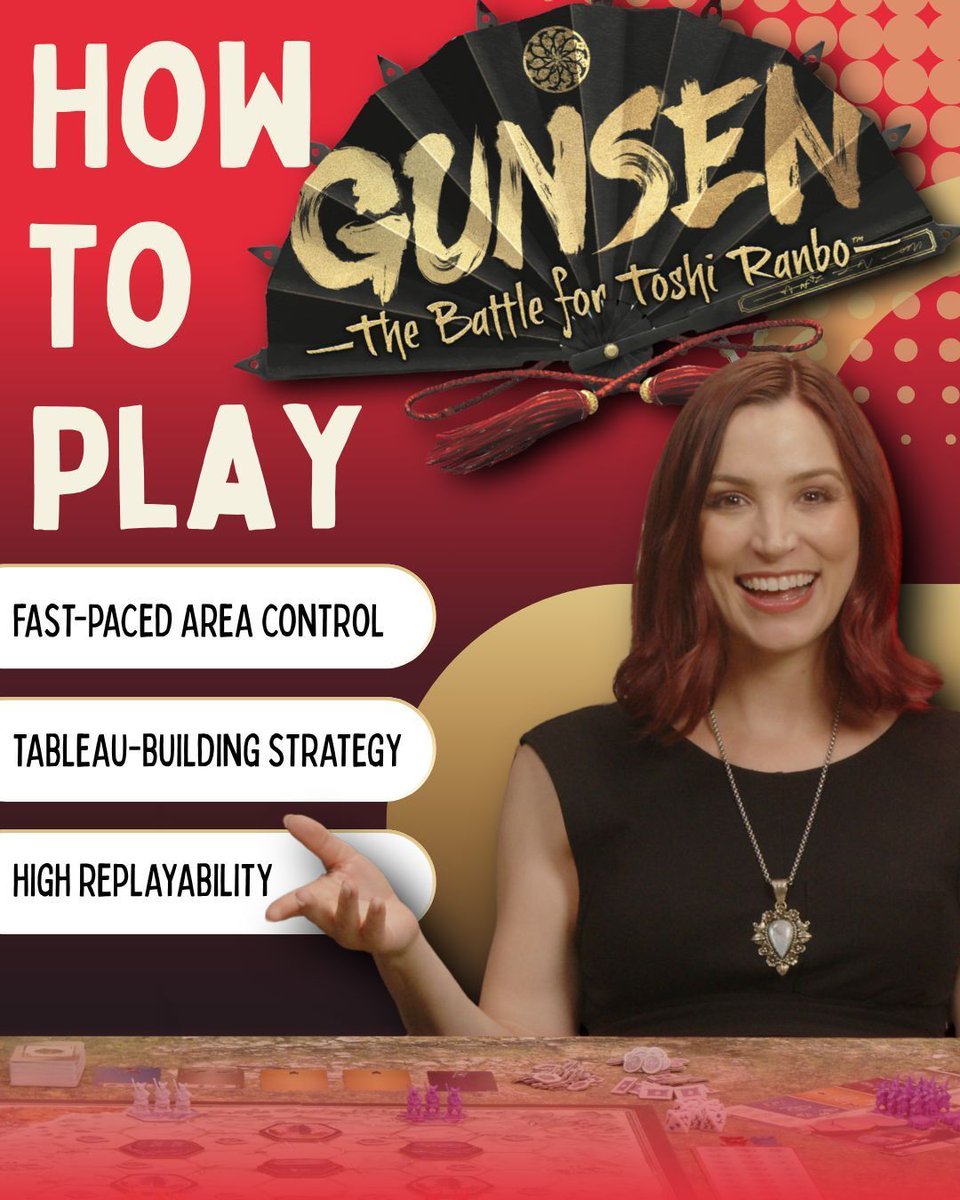
Take a seat, in the Captain's Chair with @thebeccascott and @wizkidsgames! In the spaciously strategic Trek-Builder players take the role of Sharship Captains, each with their own goals, crew, ships, and tactics.
New newsletter: HOW THE 2020s BROKE OUR BRAINS
It's the Tragic Twenties, and Americans can't stop feeling like hot garbage.
- The UMich consumer sentiment survey is now at its lowest rate on record
- The Fed's job satisfaction survey is at its lowest rate on record
- Both the General Social Survey and the World Happiness Survey have found that happiness in the US plunged in 2020 and has since been mired at levels significantly below previous decades
You shouldn't assume that your favorite pet issue is the main culprit here. Conservatives might point to cultural changes, like the decline of marriage and religiosity, but those have been going on for decades. The left might reach for wage inequality, but that has actually narrowed in the last six years. This can't even primarily be about phones, since what's most clear in the data set is something that changed this decade, not last decade.
I spent a long time reading, talking to people, and doing my own research, and I think the most parsimonious explanation I can provide is this:
The Pandemic Never Ended.
This thesis has three parts.
TPNE 1: The biological antagonist of COVID gave way to the economic antagonist of inflation, and after decades of coming to rely on lowflation and meager wage growth for low-income workers, price levels have increased 3x faster this decade than in the previous 40 years, and economists simply have to accept that inflation makes people angrier than it used to. This isn't even a strictly American phenomenon. Around the world, incumbents have lost power faster than any post-WWII period, as affordability concerns bludgeon their electorate. The few countries where happiness levels have increased in the western world in the last 6 years have had some of the lowest levels of inflation.
TPNE 2: Institutions down, individualism up: The 2020s have seen trust plummet for practically every institution, along with growing distrust in strangers, and rising alone time and at-home time. At best, community offers a buffer in times of crisis. But today, the absence of community—and the triumph of a tech-enabled, hyper-introverted atomism—makes every crisis feel more existential and unsolvable. And that's a problem bc...
TPNE 3: The 2020s have been the permacrisis crisis decade. It's really been one fucking thing after another, hasn't it? Pandemic, inflation, interest rates, Ukraine, Gaza, Iran, AI. Meanwhile, phones give us constant contact with both the scary news cycle and the panic-inducing fears and anxieties of the commentariat.
Inflation makes today's life feel harder to live. The news cycle makes tomorrow's world scarier to live through. And the post-pandemic decline of institutions and acceleration of toxic individualism weakens our socio-emotional immune system to deal with all of it.
TLDR: The pandemic never ended, and it's left us with the Tragic Twenties.
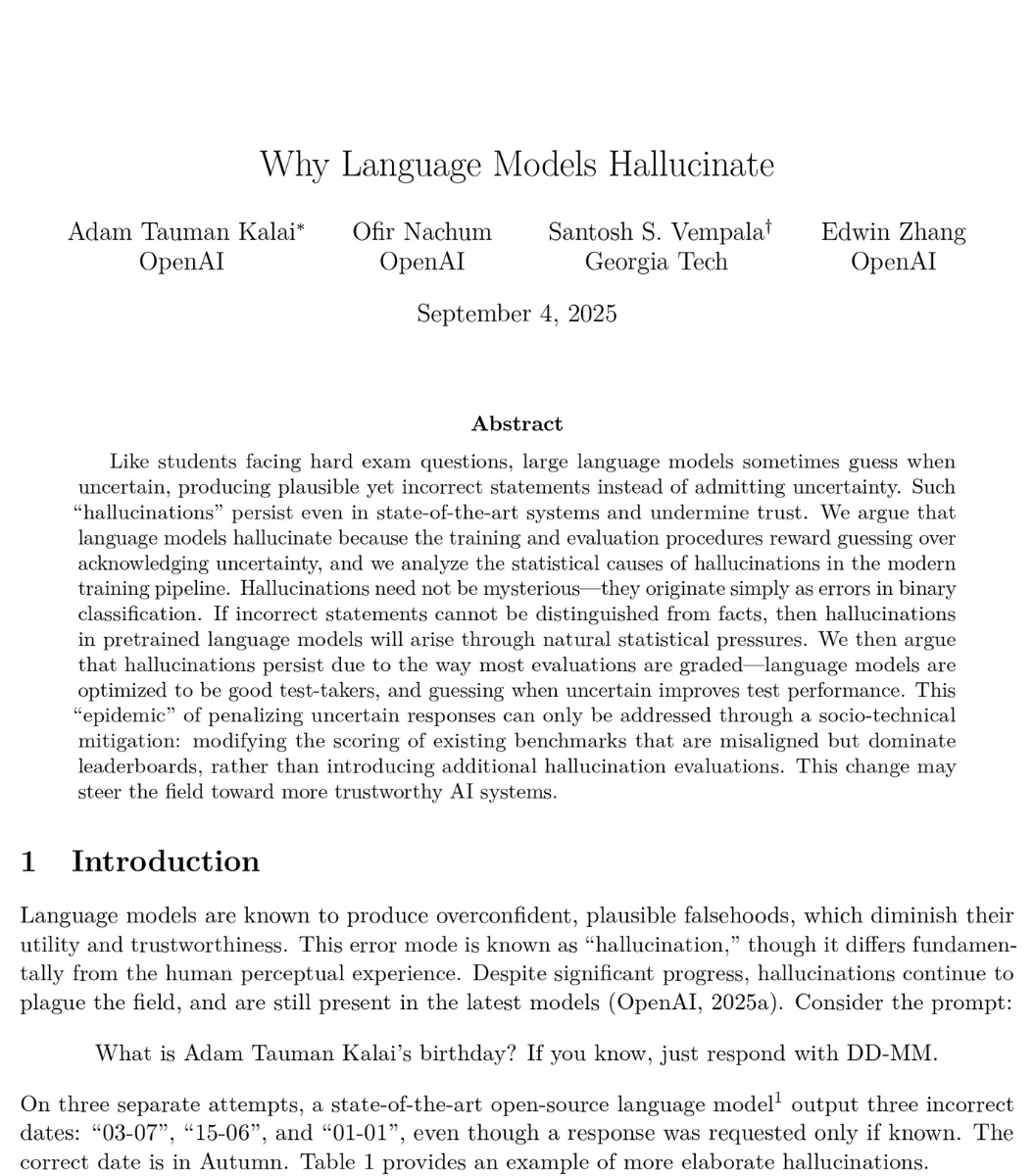
🚨BREAKING: OpenAI published a paper proving that ChatGPT will always make things up.
Not sometimes. Not until the next update. Always. They proved it with math.
Even with perfect training data and unlimited computing power, AI models will still confidently tell you things that are completely false. This isn't a bug they're working on. It's baked into how these systems work at a fundamental level.
And their own numbers are brutal. OpenAI's o1 reasoning model hallucinates 16% of the time. Their newer o3 model? 33%. Their newest o4-mini? 48%. Nearly half of what their most recent model tells you could be fabricated. The "smarter" models are actually getting worse at telling the truth.
Here's why it can't be fixed. Language models work by predicting the next word based on probability. When they hit something uncertain, they don't pause. They don't flag it. They guess. And they guess with complete confidence, because that's exactly what they were trained to do.
The researchers looked at the 10 biggest AI benchmarks used to measure how good these models are. 9 out of 10 give the same score for saying "I don't know" as for giving a completely wrong answer: zero points. The entire testing system literally punishes honesty and rewards guessing.
So the AI learned the optimal strategy: always guess. Never admit uncertainty. Sound confident even when you're making it up.
OpenAI's proposed fix? Have ChatGPT say "I don't know" when it's unsure. Their own math shows this would mean roughly 30% of your questions get no answer. Imagine asking ChatGPT something three times out of ten and getting "I'm not confident enough to respond." Users would leave overnight. So the fix exists, but it would kill the product.
This isn't just OpenAI's problem. DeepMind and Tsinghua University independently reached the same conclusion. Three of the world's top AI labs, working separately, all agree: this is permanent.
Every time ChatGPT gives you an answer, ask yourself: is this real, or is it just a confident guess?
Every single word of this fantastic column by @Peggynoonannyc
‘I fear sometimes that few people really care about journalism, but we are dead without it. Someday something bad will happen, something terrible on a national scale, and the thing we’ll need most, literally to survive, is information. Reliable information—a way to get it, and then to get it to the public. That is what journalism is, getting the information. ‘
https://t.co/gHH5IGBcEo
TALES OF DREAD IS LIVE!
This unique and innovative horror actual play uses a DREAD TOWER instead of dice as well as includes some reality show style challenges that will make this a truly immersive experience.
If you were a fan of Sagas of Sundry, you're going to love this.
My students kept using AI. I couldn’t make them stop.
It’s terrible for learning. Students engage with the content less, and the end result is that the purpose of education is circumvented. Expertise is never built.
I wrote about it for @TheArgumentMag.
https://t.co/inDLnSECIp
Another nail in the astrology coffin:
152 astrologers did no better than random chance at guessing people’s charts from detailed info about them. Astrologers helped design the test, and "experts" failed at the same rate as novices.
Horoscopes may be fun, but they ain't real.
TikTok science can leave you overconfident in your knowledge.
Evidence: Simplifying complex ideas makes them more compelling, but also fosters an illusion of deep understanding.
Beware of mistaking familiarity for fluency. Soundbites aren't substitutes for systematic study.
AI video is almost there: can’t tell fake from real.
Losing our last method of post-hoc verification is no joke.
When technology makes something easy, it can also knock down load-bearing obstacles where the difficulty was a safeguard. That’s what causes the transition chaos.🧵
This is how the greats have done it forever.
@DKThomp describes best:
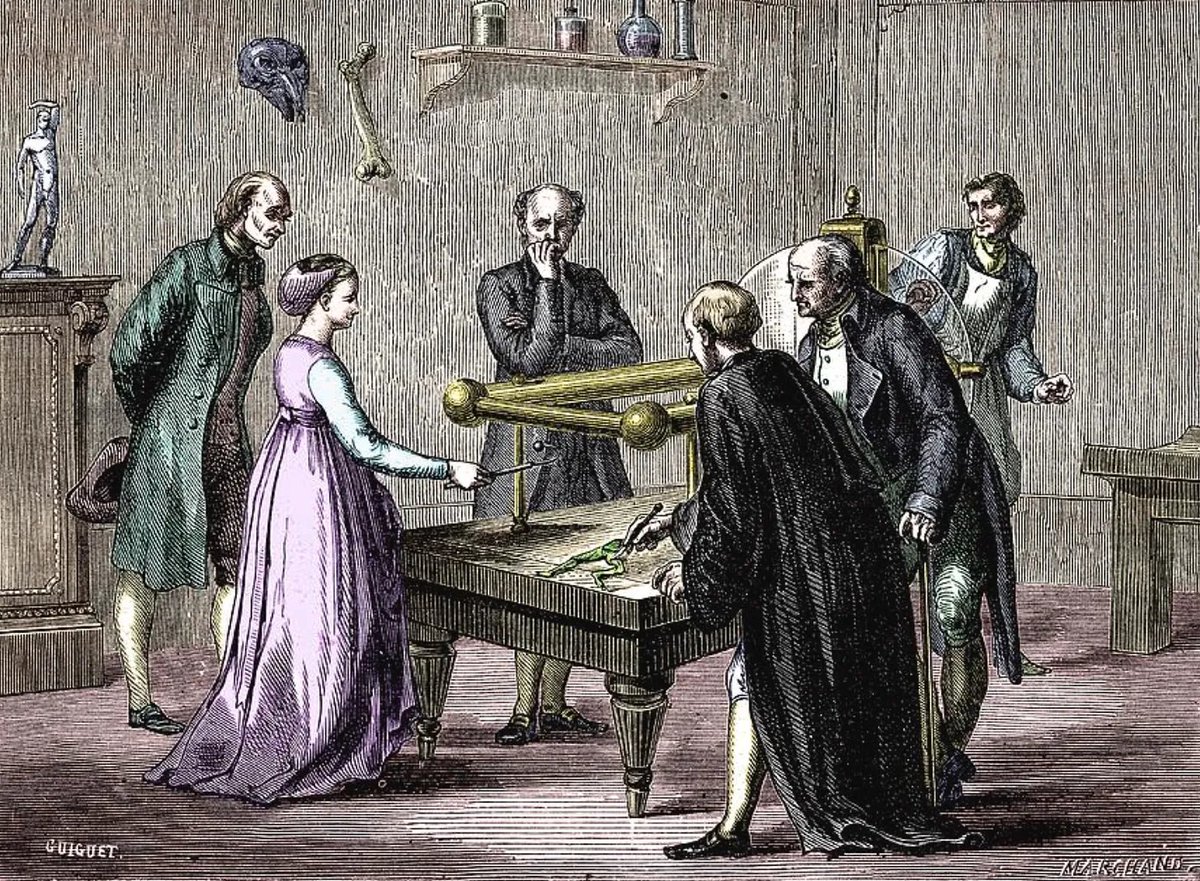
“This is how electricity was born. Alessandro Volta built the first electric battery by acting on the conviction that Luigi Galvani was wrong. Three decades later, Michael Faraday discovered the principles that power the modern economy by proving that Volta was wrong. A century after that, scientists built defibrillators and electric brain implants by proving that, well, you know all those people who said Galvani was wrong? Actually, they were wrong, too. Science is not about getting things right. It’s about getting things wrong, and wrong, and wrong again, and from this cavalcade of wrongnesses overturned, a useful thing sometimes emerges.”
Breakthroughs are built on the corpses of other people’s ideas.
What all of these interviewers fail to realize is that the most popular influencer-interviewer, Sean Evans from Hot Ones, is consistently respected because he actually asks engaging questions and doesn’t do whatever this is