Spreading truth about vaccines since 2015. SCREAM & Horror Movie fan. Space Host. “Debate bro.” Anti-Semite Slayer. Listen to past spaces under HIGHLIGHTS 👇
No. Delta was first detected in India in October 2020, months before vaccines rolled out there (Jan 2021).
Alpha, Beta, Gamma also emerged pre-vaccination.
Vaccines don’t “cause” variants.
They reduced infections which gave fewer chances for the virus to mutate and spread.
High transmission in unvaccinated populations did that.
The quote you posted is about incomplete control allowing continued evolution.
It is not proof that vaccines created any variant.
That link confirms the vaccines are effective!
@nj4rfk@unjected Show me a single citation that Delta or any other variant was caused by a vaccine.
Not a theory or belief. Not feelings.
Only proven facts.
If not it’s going to be rejected with prejudice.
So you sent me a study that showed vaccines DON'T cause autism then a "commentary" about a vaccine ingredient removed 25 years ago and your response is I'm in a "paid activist network" and some "mutton crew?"
Let me suggest taking some basic debate classes. This is not the way.
P.S. I lose money standing up for truth.
@JohnFerreraPhD I stated facts about the manufactured “autism epidemic” sold by grifters & frauds exploiting families w/ autistic children for profit, fame & their god complex. You ignored them or handwaved them away. That hurts families.
I’m science based. This is from my documentary on RFK.
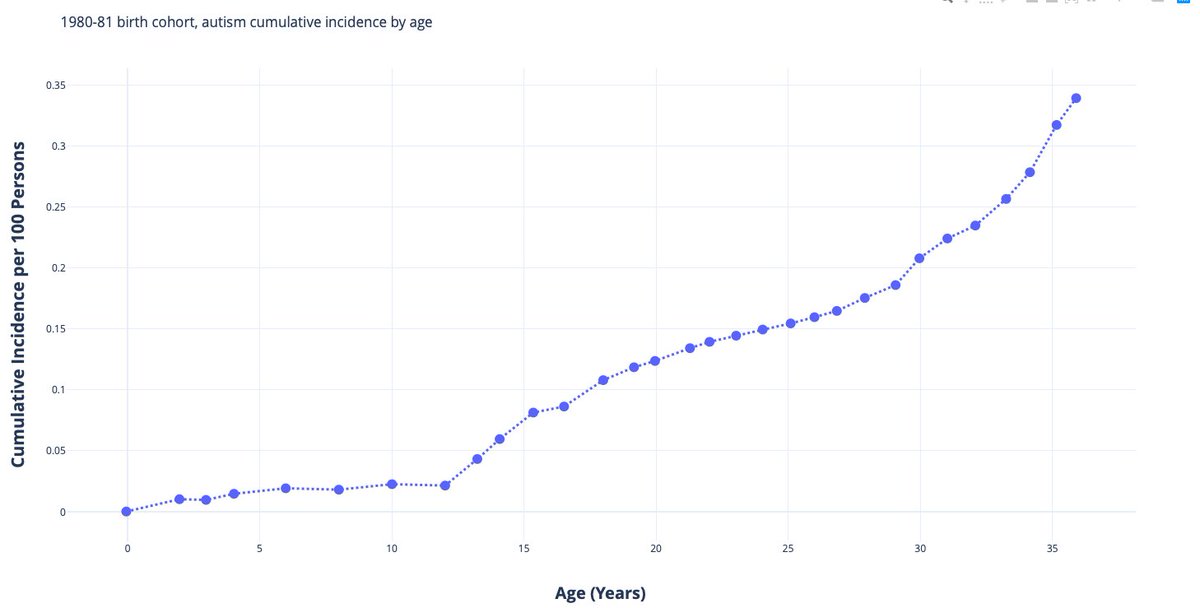
A 2018 Denmark study tracked autism from 1980-2012.
Autism prevalence for those born in 1980 was significantly higher when they factored in those diagnosed into adulthood.
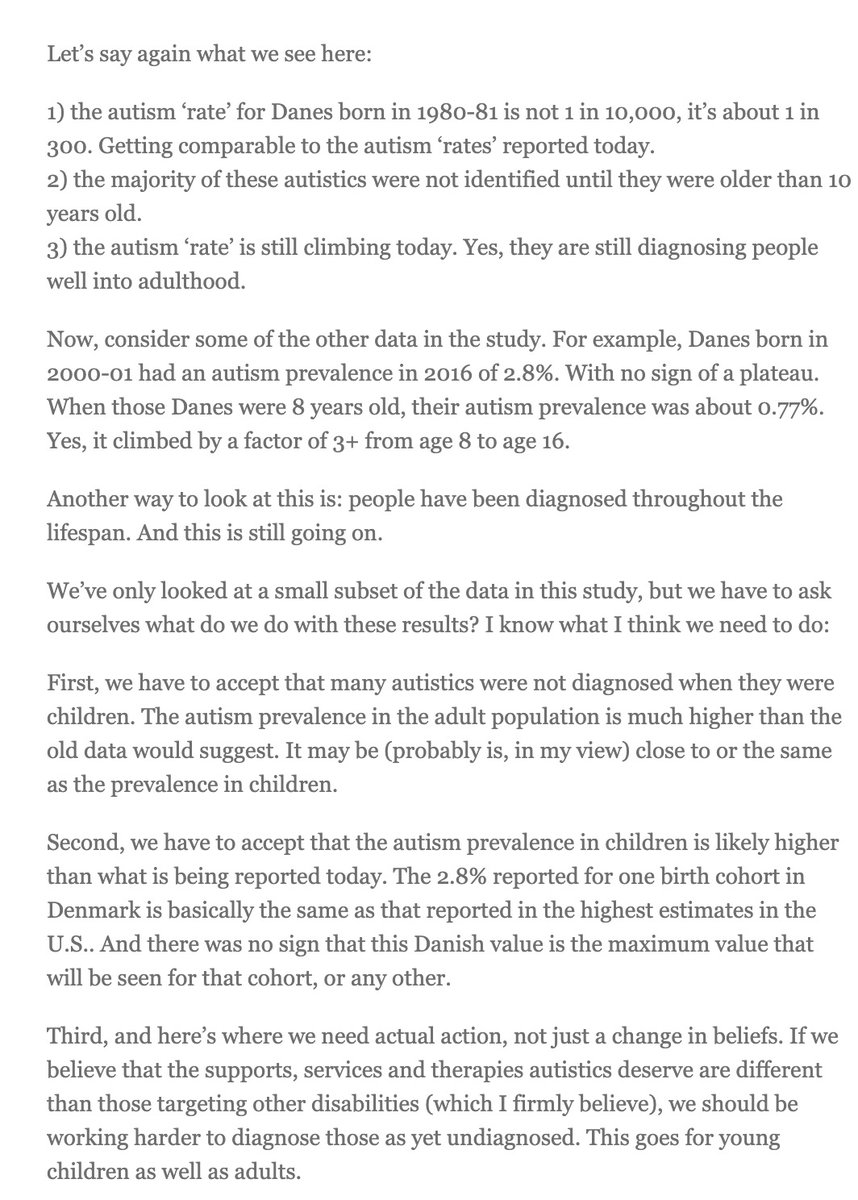
The majority of autistics born in 1980 were not identified until they were over 10 years old.
This means there are a LOT more adult autistics than commonly thought.
And the claim that autism was "1 in 10,000" in 1980 is objectively false.
@JohnFerreraPhD Where did I say autism was a hoax? I’ve spent over a decade standing up for the autism community against dehumanizing attacks by the anti-vax movement.
Data from the CDC shows that the rise in autism between 2000 and 2016 was two things:
- A decline in rates of debilitating autism
- A rise in non-debilitating autism
Diagnostic drift explains essentially all of the increase in diagnoses. If anything, kids got better!
In 2011 researchers In England compared rates of autism in children to adults & concluded the rates were similar.
In 2014 researchers published a paper that studied the epidemiology and global burden of autism. After accounting for methodological variations, there was no clear evidence of a change in prevalence for autistic disorder or other ASDs between 1990 and 2010.
In 2015 researchers published a study that looked at over one million children born in Sweden from 1993 to 2002. The number of children diagnosed with autism increased significantly but the number of children who actually displayed symptoms remained stable.
In 2015 scientists at Penn State University published a paper that analyzed 11 years of special-education data (an average of 6.2 million people per year.) The researchers found no overall increase in the number of students enrolled in special education from 2000 through 2010. They also discovered the increase in students diagnosed with autism was offset by a nearly equal decrease in students diagnosed with other intellectual disabilities that often co-occur with autism.
In 2016 researchers studied the effects of ASD insurance mandates on the treated prevalence of ASD. They concluded that implementing state ASD insurance mandates resulted in increases in the number of children diagnosed with ASD & these numbers increased each year after implementation.
In 2017 researchers published a paper that estimated
5,437,988 (2.21%) of adults over 18 in the United States have ASD which was consistent with estimates of ASD in US school-aged children.
A 2018 study from Denmark showed that rates of autism in 1980 were similar to today when you account for those diagnosed after the age of 10 into adulthood.
In conclusion, you're damn right we are much better at diagnosing it!
The line you keep quoting, no plateau, could exceed 2.8%, is about the 2000-01 birth cohort not having stabilized yet. It tells you diagnosis is still happening as people age. It says nothing about why. It can't, it's a cumulative-incidence curve, not a decomposition of cause.
The paper that actually answers why is Hansen, Schendel, Parner, JAMA Pediatrics 2015, same senior author as the 2018 paper, same national registry, birth cohorts 1980 through 1991.
Result? 33% of the increase in reported ASD prevalence from the 1994 diagnostic-criteria change alone, 42% from adding outpatient contacts alone, 60% from both together.
https://t.co/b3un0EuTDR
That is a direct causal breakdown of prevalence growth in the exact cohort range we're arguing about, by the same author. You also haven't addressed the timing. Look at the chart.
The curve for the 1980-81 cohort roughly quadruples between ages 12 and 15, which is calendar 1992 to 1996. Denmark changed its diagnostic criteria in 1994 and started counting outpatient contacts in 1995.
I'm not asserting a coincidence, that's the exact mechanism Hansen 2015 measured and quantified.
If you read my link which evaluated the study you'll see the 3 conclusions below:
https://t.co/584H1nc5Ve