I firmly believe this is the legacy that Serenity is going to leave behind
It’s not the fact that he called $AXTI and it went up 6,000%
Or that $SIVE went from 3 SEK to 110 SEK
Instead, it’s that he teaches you how to anticipate the market and, above all, the institutions
As a retail investor, this has happened very few times in history
That is where the crazy returns show up
I agree that with larger capital, the risk to take is lower and investing in mainstream stocks is great
The likes of $GOOGL $NVO $AAPL $LLY
More safety, but with upside potential
But historically, many of these people haven't had portfolios large enough to take those precautions
The reality is that they simply weren't able to see beyond
They were blinded and only saw the doors that institutions opened
Once they had already positioned themselves and eaten the biggest piece of the pie
These returns might seem crazy, but you have to understand that a 10% return today is not the same as it was in 2006, for example
Companies have stronger fundamentals
The world is becoming wealthier, and investors are increasingly knowledgeable
And the most important part
Social media is an infinite investment book
Profiles like Serenity's or mine serve as a key to the investment world
Both generalized and specific, in this case: AI, photonics, memory etc
That being said, Serenity has been so widely recognized and praised precisely for this
He/She is, IMO, the first relevant figure in the history of the internet
Who has provided retail investors with information or deductions that are well ahead of any type of institution
Thank you for everything, Serenity
You will be studied in finance history books
The street has been buying calls all last week and this week. They are likely going to send it up on the bears here at this 20 DMA cloud in the coming weeks ahead.
Whoever is holding puts into the weekend? Be careful.
Here is the volume to open interest on every unusual whale buying the calls:
OI vs Volume Read. Where the Whales Stand on the positions that they have been buying.
Simple way to read this. Open Interest is how big the position still is. Volume is how much traded today. When the volume number is small next to the open interest number, nobody's leaving. The whales are sitting tight. If volume ever jumps up close to the OI, that's the tell they're moving (taking profit, cutting, or doubling down).
Right now volume is quiet across almost the whole board. Our whales are still in.
Ticker Volume Open Interest
$NU 13C (8/21) 3,676 158,256
$POET 40C (12/15) 312 30,006
$FIVN 22.5C (10/16) 1,112 22,012
$AMZN 300C (7/17) 3,317 50,582
$NVDA 230C (6/26) 9,392 43,477
$ARRY 9C (8/21) 14,575 33,931
$MSFT 480C (7/02) 3,063 13,363
$INTC 150C (8/21) 1,719 12,803
$ORCL 220C (7/17) 460 12,565
$MSFT 455C (6/26) 535 12,406
$IREN 70C (8/21) 858 11,857
$INFQ 22.5C (7/17) 1,286 11,887
$CRWV 120C (9/18) 335 8,630
$LUNR 40C (7/17) 360 8,615
$ORCL 200C (7/17) 134 7,130
$NVDA 215C (7/02) 1,676 6,036
$SATS 135C (6/18) 547 6,200
$FCX 59C (6/18) 8 5,615
$MRVL 290C (9/18) 162 5,610
$GOOG 360C (7/17) 92 5,122
$TTWO 230C (7/17) 52 3,951
$LYV 185C (1/15) 2 3,095
$ASTS 110C (9/18) 107 2,818
$ENPH 90C (9/18) 93 2,585
$DDOG 300C (8/21) 131 2,178
$NOW 155C (1/15) 137 2,142
$FSLR 420C (6/17) 25 1,472
$DOCN 180C (8/21) 69 1,351
$GOOGL 535C (12/15) 4 767
$AVGO 402.5C (6/10) 165 787
$DELL 500C (1/15) 1 619
$AVGO 700C (6/17) 76 520
$FSLR 450C (1/21) 1 444
Across every name above, volume is tiny next to open interest. Nobody's selling. The size is parked.
Watch $NBIS.
This is the one in question. The near term strikes have volume running almost even with open interest:
Ticker Volume Open Interest
$NBIS 250C (6/18) 1,735 2,033
$NBIS 300C (7/17) 3,500 4,501
$NBIS 320C (7/17) 2,660 4,248
$NBIS 350C (9/18) 278 1,150
$NBIS 400C (1/15) 68 595
When volume gets this close to the open interest, the position is moving. Somebody's either rolling out or doubling down. We don't know which yet. We'll know which way NBIS breaks come Monday.
Bottom line? Quiet tape equals conviction. Loud tape says a decision is being made. The whole board is sitting tight except $NBIS. Eyes on NBIS into Monday.
OPENING RANGE BREAK (ORB) 101⚡️⚡️
This thread will teach you how to use the hottest day trading strategy of 2026. You can use this to trade commons, futures, and/or options
🧵👇
If you made it all the way to the end of this thread...... YOU'RE THE REAL MVP
Keep learning the ropes & grinding. My DMs are always open if you need any extra help. Much love
97% probability $SPY crashes at least 10% after June 15.
There's 4 massive reasons $SPY can't avoid it:
1. Large IPOs like $SPCX will trigger sell off.
Major IPOs drain liquidity. The 1999–2000 dot-com IPO wave pulled $100B+ from markets before $SPY crashed 78%.
2. Kevin Warsh hawkish FOMC on June 17
Hawkish Fed surprises trigger immediate selloffs. In June 2022, a surprise 75bps hike sent SPY down 8.4% in 5 days.
3. $MU $ORCL earnings is the peak of market
Semis and enterprise software peak earnings historically signal cycle tops. $MU peaked in June 2018 $SPY followed with a 20% correction by December.
4. Midterm elections for Trump is this year
Midterm years average a 17% $SPY drawdown before Q4 recovery. 2022 saw $SPY drop 25% into October before reversing Trump's 2026 midterms follow the same cycle.
♻️ RESHARE this post and write 1 comment, I'll share with you my $SPY target for the crash.
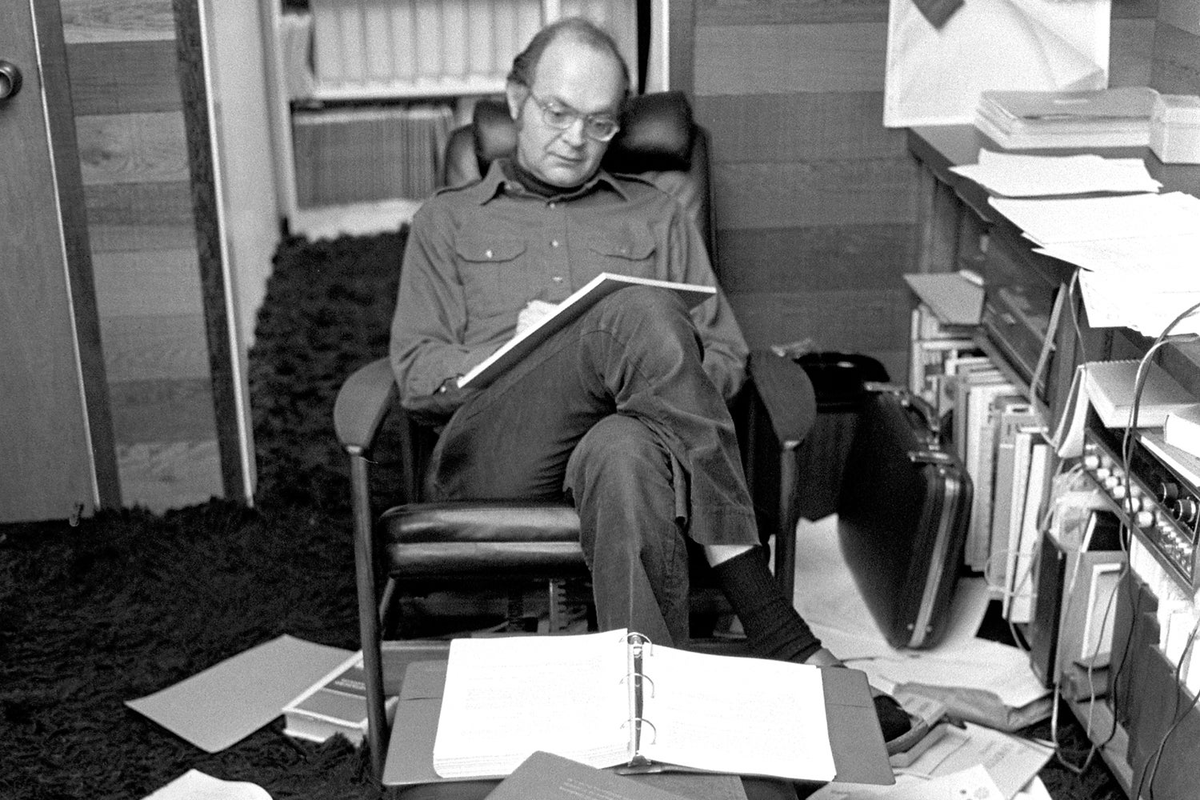
A computer scientist won the Turing Award at 36 and then walked away from almost every other project for the next 50 years to write one book that he has still not finished at age 88, and it may be the most important book in his field.
His name is Donald Knuth. He won the Turing Award in 1974, which is the closest thing computer science has to a Nobel Prize.
He was 36 years old. He had already written volumes one, two, and three of a book series called The Art of Computer Programming. He was the youngest person ever to receive the award at that point in its history.
Almost anyone else would have ridden that moment for the rest of their career. Founded a company. Sat on boards. Gone on speaking tours. Knuth did the opposite. He went back to his desk and kept writing.
He started the book in 1962. He was 24 years old. His publisher had asked him to write a short paperback on compilers. He sat down to outline it and discovered that to explain compilers properly he would have to explain the deeper algorithms underneath them first.
The short paperback became a draft outline of 12 chapters. The 12 chapters became a planned 7-volume series. The 7-volume series became the project he is still working on 63 years later.
Volume 1 came out in 1968. Volume 2 in 1969. Volume 3 in 1973. He was producing books faster than most academics produce papers. Then everything stopped.
In 1977 he received the printed proofs of the second edition of Volume 2. He looked at the pages and was so disgusted by how the publisher had typeset his mathematical notation that he could not bring himself to release the book.
The equations looked ugly. The fonts looked wrong. The spacing was off. He decided he could not in good conscience publish another volume of TAOCP until the typesetting problem was solved.
So he paused the book.
He stopped writing TAOCP and spent the next 8 years inventing TeX from scratch.
TeX is the typesetting system that every academic paper, every math textbook, every physics journal on earth now uses. Every PhD thesis in the sciences is set in TeX. Every paper on arxiv. Every equation in every paper Anthropic, OpenAI, and DeepMind have ever published. The system that the entire scientific publishing world runs on exists because one man refused to compromise on how the second edition of Volume 2 looked.
He gave the entire TeX system away for free. He never tried to commercialize it. He went back to writing TAOCP.
In 1992 he retired from Stanford at the age of 54. Most professors retire to slow down. Knuth retired to speed up. He explicitly said he was leaving teaching because he needed every remaining hour of his life to keep writing the book. He stopped using email on January 1, 1990.
He answers no calls. He takes paper mail only. He is on a personal mission to finish a multi-volume series that nobody is forcing him to write, on a deadline that only exists in his own head.
Volume 4A came out in 2011. Volume 4B in 2022. He is currently working on Volume 4C. Volumes 4D, 4E, 4F, 5, 6, and 7 are still ahead of him. He is 88 years old. He will almost certainly die before he finishes.
The thing that should haunt anyone reading this is the math of his choice.
Every modern incentive structure tells you to optimize for speed. Ship the imperfect version. Get it out the door. Iterate later. Move on to the next thing.
Knuth has spent 63 years doing the exact opposite. He pays a $2.56 reward in hexadecimal dollars to anyone who finds an error in his published books. Real checks, until check fraud made him switch to certificates of deposit. He treats every single error in every single volume as a personal failure. He revises. He rewrites. He goes back to fix issues that nobody else could have spotted.
He could have written 30 books in 63 years. He chose to write one.
The reason is the one almost nobody understands the first time they hear it. There is a category of work that loses all its value when it is done quickly.
A reference book that engineers will rely on for the next 200 years is not the same kind of object as a blog post that has to ship today. The slow project and the fast project look like the same activity from the outside. They are completely different games.
Bill Gates once said in an interview that if you can read the whole of TAOCP, you should send him your resume. He meant it. He was not joking. The man who founded Microsoft was telling the world that the rarest skill on earth is being able to finish a book that one man has spent his entire adult life writing for an audience that mostly does not have the patience to read it.
The book may never be finished.
The man writing it knows this and keeps writing anyway.
The work outlives the worker. That is the entire point.
This 1-hour Stanford lecture on "Sports Betting Math" - by the founder of a $160M sports platform - exposes the exact math books use to print millions off sports.
Bookmark it. Give it 1 hour today, no matter what. Most productive way to start your week.
Then read article below
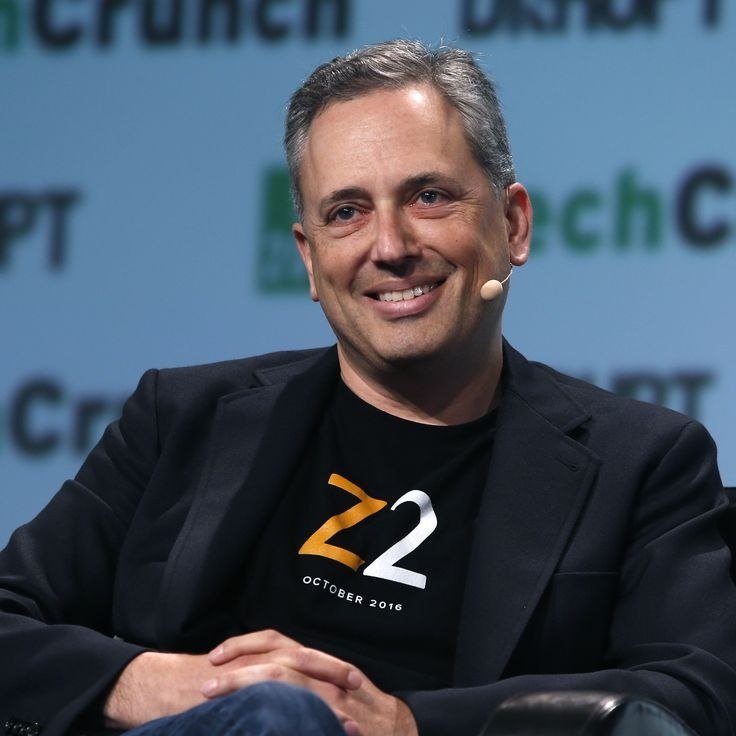
David Sacks invested in SpaceX at a $27 million valuation back in 2002.
Even a small $50,000 angel check from that time would be worth roughly $3.14 billion today.
2 years ago, I called out $ASTS at $2. Its up 6500% so far at $130.
My target at least $200+ when $SPCX IPOs.
Right now, $ORCL is the most obvious play. Its earnings is on June 10 then $MU on June 24.
This year, I explained these would 10x-20x:
$INTC — $AAPL chip deal + foundry turnaround tripled the stock in months (Trump)
$DELL — Pentagon contract + AI server orders created a multi-catalyst monster (Trump)
$MU — HBM memory sold out through 2026, AI supercycle just getting started (Trump)
$NOW — Enterprise AI agents replacing entire IT workflows, 22% revenue growth accelerating (Trump)
$PLTR — Government + commercial AI contracts exploding, revenue up 56% in 2025 (Trump call)
$TE — nuclear power is the only answer to AI's insatiable electricity demand (Leopold call)
♻️ RESHARE this post and write 1 comment, I'll DM you my exact 1000% play for $ORCL
Ordinary people will be millionaires in 2030 by doing nothing.
Trump is telling everyone what to buy:
$INTC at $20 → $140 then $300
$DELL at $200 → $300 then $500
$NOW at $80 → $120 then $200
Here, he is saying to buy $MU or $DRAM
SWING TRADING BANGER ALERT🚨
This strategy is built for the daily & weekly timeframes. It combines long term momentum indicators with short term momentum indicators
Find 2 minutes to watch the video👇