Diagnosed with ADHD as an adult.
Relief, because finally there's an explanation.
Anger at every report card that said try harder.
Grief for the kid who believed it.
Sometimes all three in the same hour.
https://t.co/rxderHkFt1
The teacher saw the finished homework.
Nobody saw the three hours of staring at it first.
Were you an easy child, or just easy to overlook?
https://t.co/GvojxnLUeQ
You can come home from work completely exhausted and still find silence unbearable.
Especially after eight hours of forcing your attention onto things that barely held it.
Sometimes you need music, movement, or something interesting before you can settle.
After 8 years working with adults with ADHD, I kept seeing the same pattern:
They function well at work, then have almost nothing left for home.
So I wrote a book about that gap.
It’s finished. I’m looking for a few women with ADHD to read it before release.
DM me for a copy.
After 8 years working with adults with ADHD, I kept seeing the same pattern:
They function well at work, then have almost nothing left for home.
So I wrote a book about that gap.
It’s finished. I’m looking for a few women with ADHD to read it before release.
DM me for a copy.
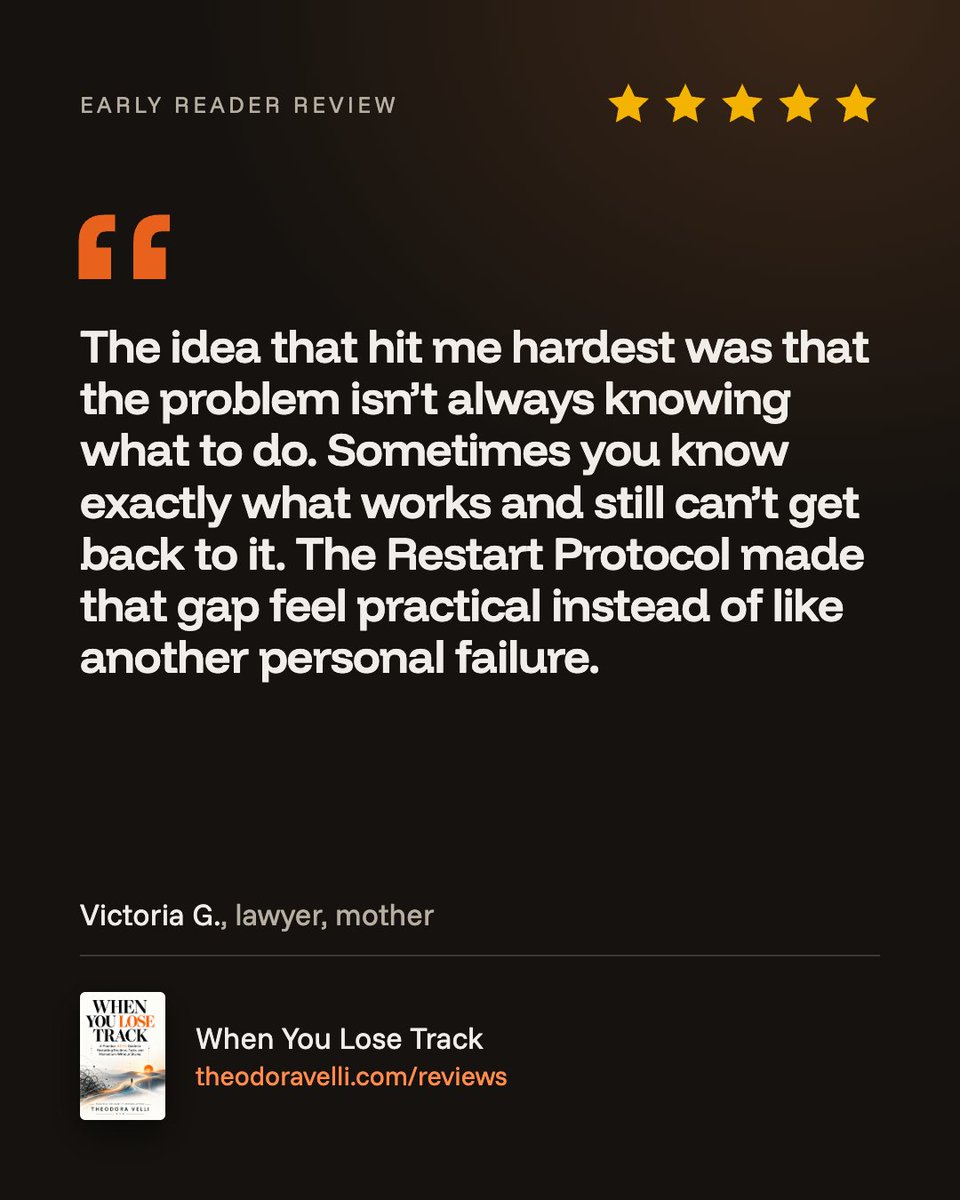
Sometimes you know exactly what works and still can't get back to it.
That gap is not a personal failure. It's a design problem.
https://t.co/Pqrd5utic2
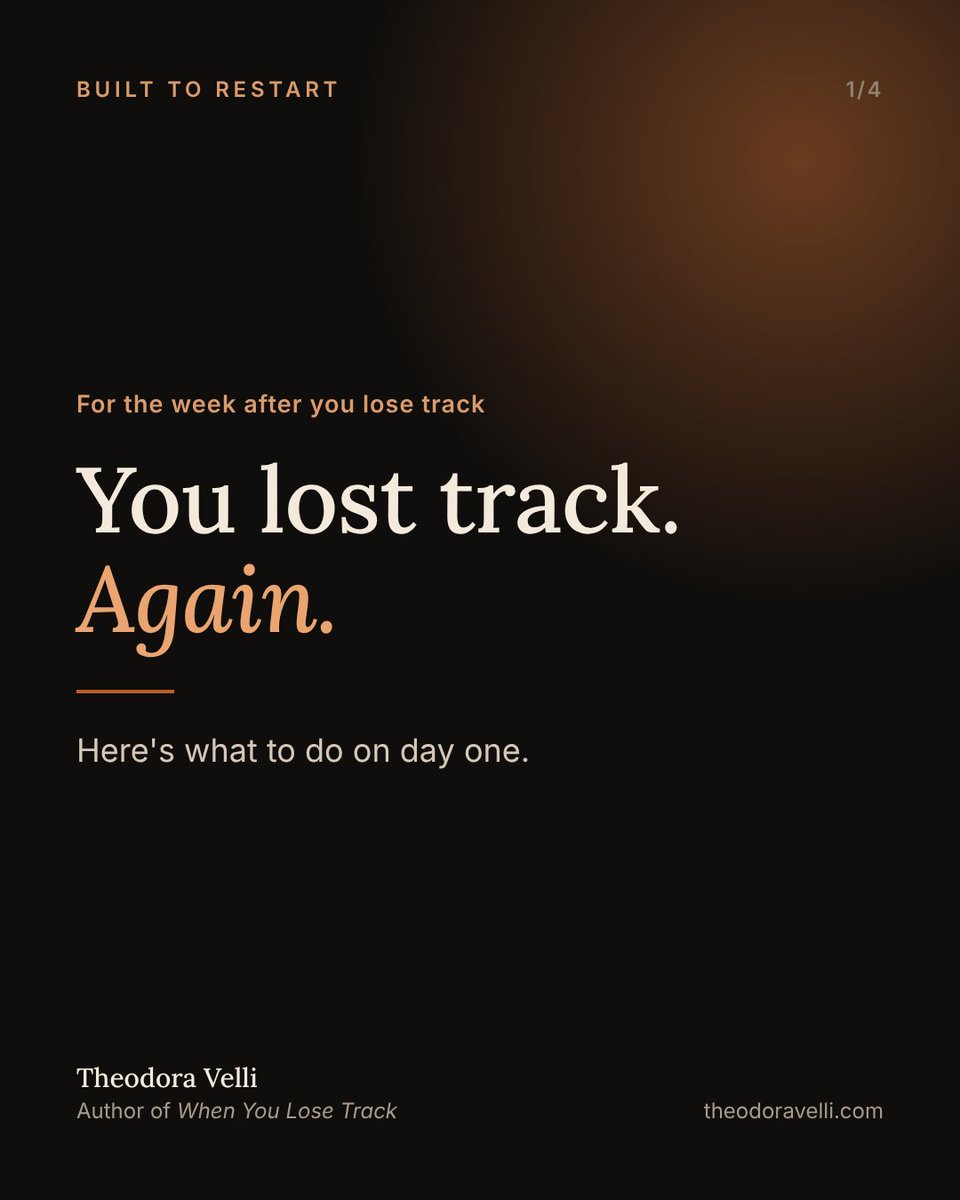
You lost track. Again.
Day one, in 4 steps:
1. Don't rebuild your system tonight
2. Ask what gets more expensive in 24h
3. Message who's waiting, with a new date
4. Set a stop time, then stop
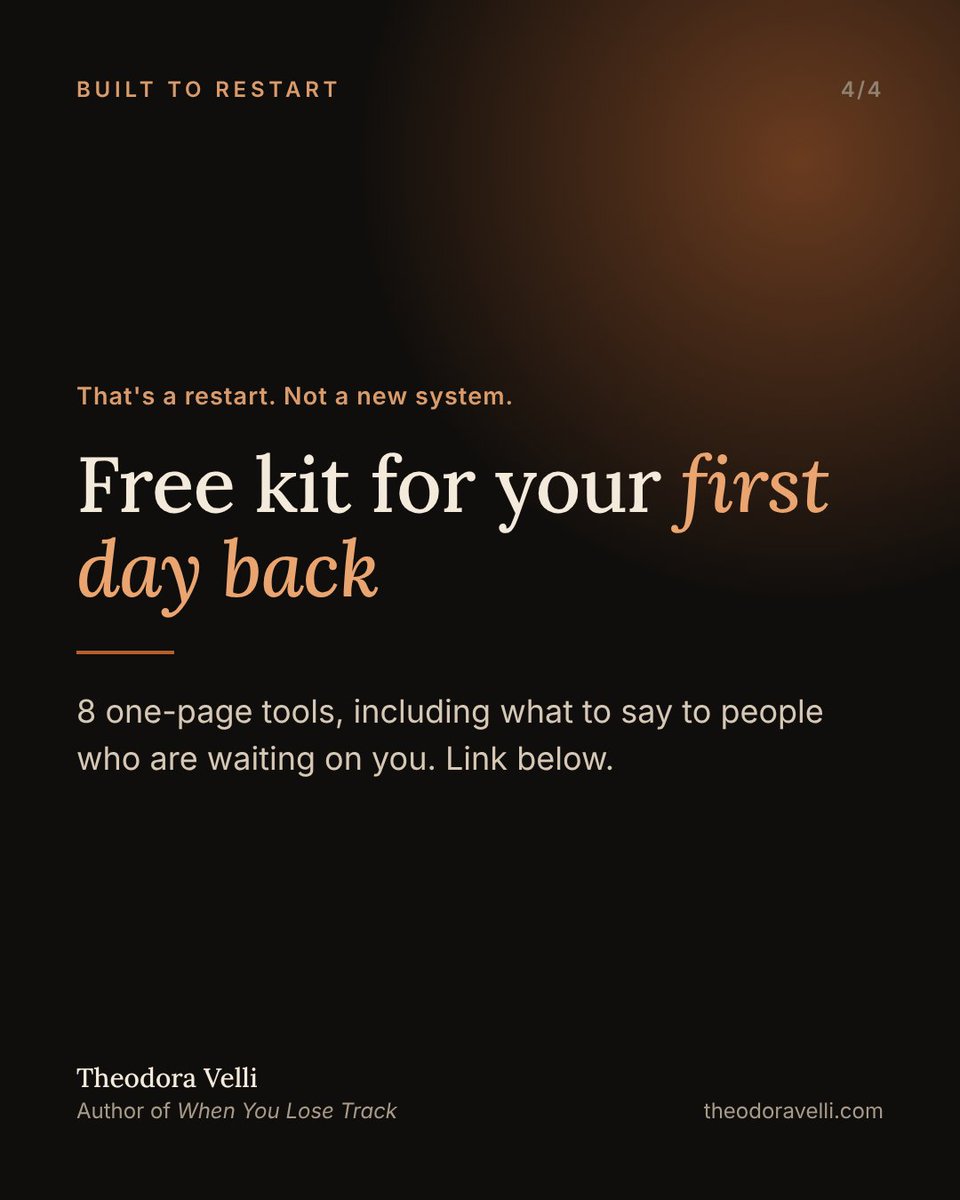
Free kit for your first day back: https://t.co/ub1JEJqnFP
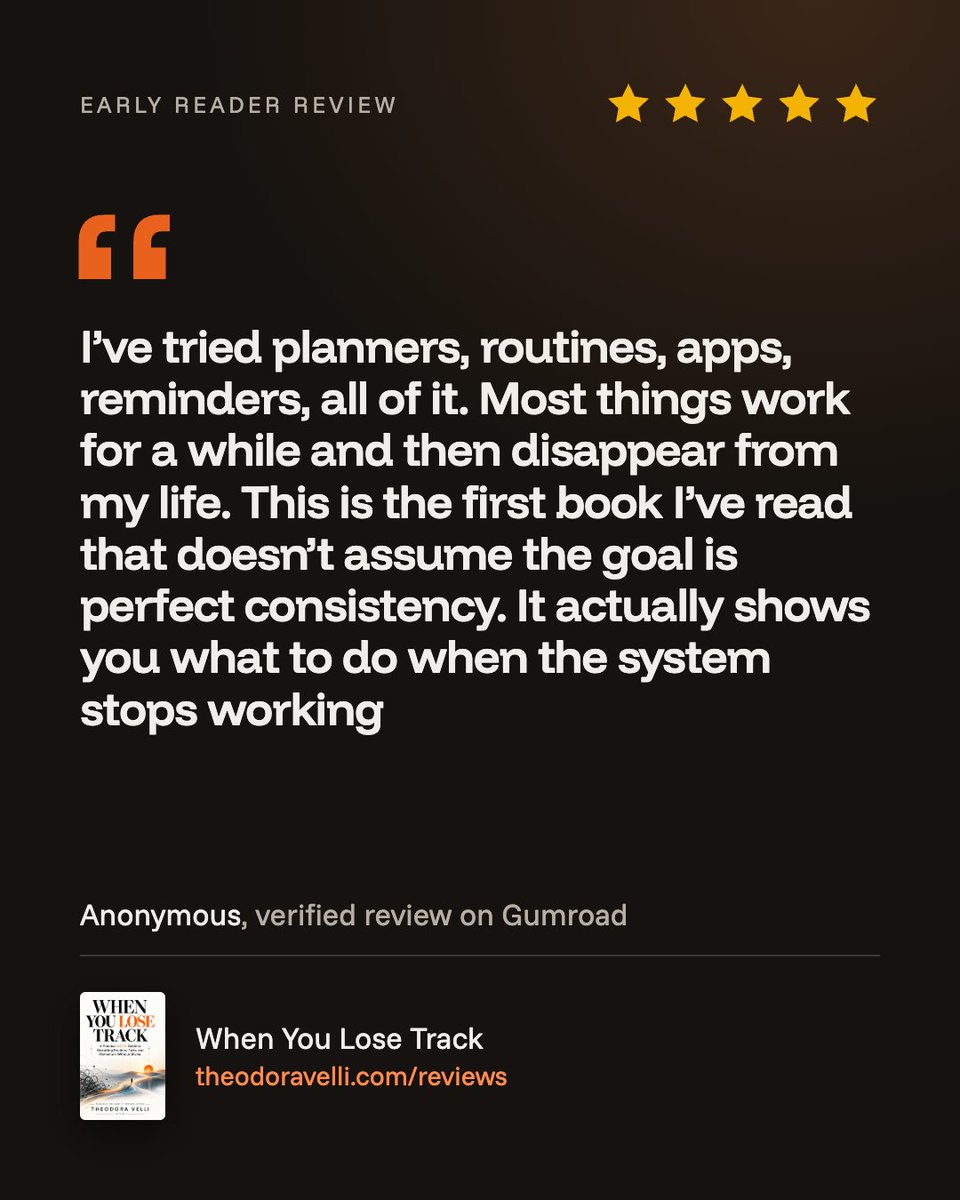
Most ADHD systems work for a while, then disappear.
An early reader on When You Lose Track: "It actually shows you what to do when the system stops working."
https://t.co/Pqrd5utQ1A
The ADHD problem nobody warns you about:
The routine worked.
Then you missed 3 days.
Now reopening it feels harder than building a new one.
The problem isn’t always starting.
Sometimes it’s returning.
Most ADHD advice is built around one goal: stay consistent.
I think that’s the wrong target.
A good system isn’t one you never leave.
It’s one you can return to.
That’s the idea behind everything I’m building around When You Lose Track.
A system with only a full version has one gear.
That works until you don’t have a full-version day.
Low Power is not cheating.
It is the smallest version that protects what matters while capacity is low.
ADHD advice is obsessed with consistency.
I think that’s the wrong metric.
The real test of a system is not how long you can keep it going.
It’s how easily you can return after you lose it.
Stop measuring streaks.
Measure restart latency.
@tootsietoes22@tootsietoes22, don’t study longer. Make the return easier. Try 20–25 min, close the notes, write what you remember from memory, then check the gaps. Repeat later instead of rereading everything.