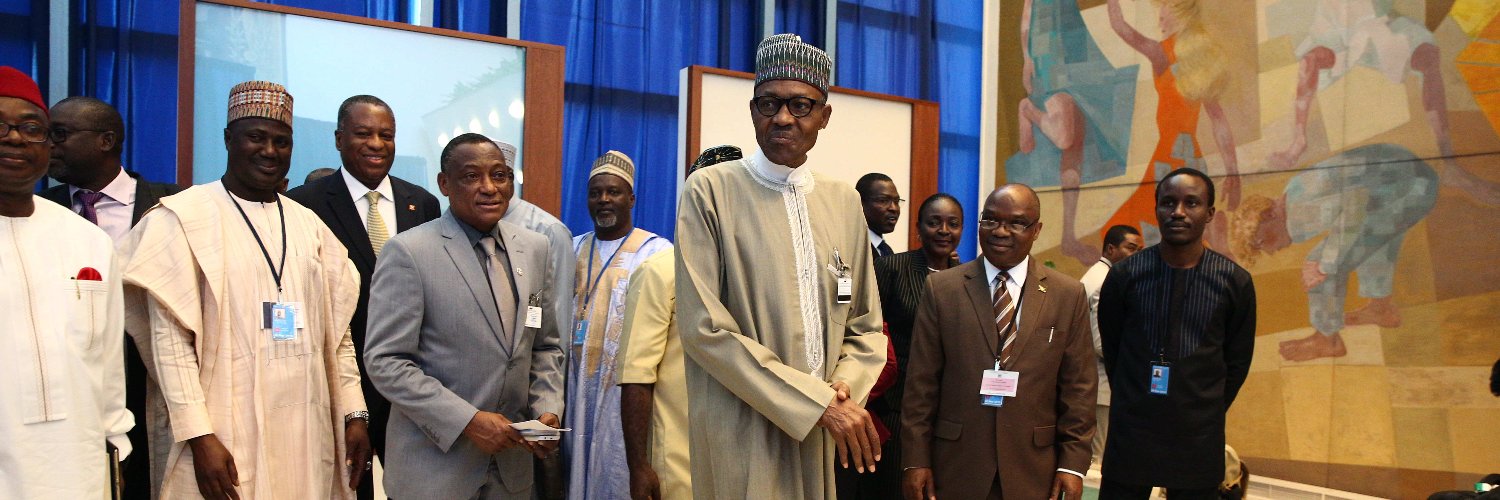
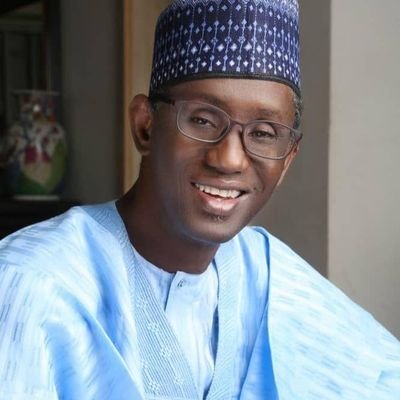
This is from May 2014, when I travelled to Scotland as part of the Commonwealth Poets United (CPU) project, an international exchange between six Scottish poets and six Commonwealth poets (Canada, India, Jamaica, New Zealand, Nigeria and South Africa).
The Chibok abduction was barely two months old at this point—and international attention was rapidly intensifying.
Below's the first of the blogs I contributed from my CPU exchange trip. My mind has today gone back to the 'map of loss'—all those small and unknown places around the world thrust into the limelight by tragedy—because of Ahoro-Esinele, in Oyo State.
This time two months ago, it was a completely unknown rural community, doing its thing as quietly as possible.
Until Ansaru bandits struck, leaving death and trauma in their wake. Adding Ahoro-Esinele to a long list that includes Chibok, Buni Yadi, Lockerbie, Dunblane, and many others...
*
'The map of loss, widening...'
May 2014.
I’m no stranger to Scotland, but the Commonwealth Poets United project provided a new and different perspective. It was a two-week visit into which was packed quite a lot—readings in Aberdeen, Dumfries, Glasgow and Edinburgh, visits to schools in Gatehouse and Borgue (towns so small I imagine you could cram the entire population into a ‘face-me-I-face-you’ apartment block in Lagos), radio interviews, and a visit to the charming offices of the Scottish Poetry Library.
I stayed most of my two weeks in Glasgow, a house guest of the poet, journalist and teacher Donny O’Rourke, a warm and fatherly man who ensured there was a breakfast table laid out for me every morning, constantly fretted over my dubious eating habits, and tried his best to encourage me to see the city.
In his house I had a living room to myself, from where I often wrote at a desk by a giant window which seemed to endlessly offer enticing prospects of sun and fun from the city beyond.
As I’ve since come to expect on my travels, Nigeria travelled with me every inch of the way. I met someone who introduced me to a Nigerian man whose parents moved to Glasgow in the late 1960s, and who took me to meet an interesting group of African immigrants working to expand the space for African culture in Scotland.
I met a Nigerian man who moved to Scotland a few years ago, and has now just launched a website that streams movies in Yoruba (my Nigerian language). I also met up with my friend A, playwright and performer, whom I first met in Lagos in 2013. She took me to see a lunchtime play at Oran Mor’s ‘A Play, A Pie and A Pint’, one of the highlights of my Glasgow stay.
‘A map of loss’
Dumfries is a small town of about 40,000 people, where Scotland’s best-known poet Robert Burns spent his final years and died, in 1796, aged 37. (Poet Tom Pow, my host in Dumfries, has written about my pilgrimage to Burns’ favourite pub).
Shortly before my arrival someone in the town had organised an event for the more than 200 Nigerian girls kidnapped by terrorist group Boko Haram on April 14.
Residents of Dumfries gathered one Saturday to put out shoes for the girls—the idea was to have each missing girl represented by a shoe—resulting in a hauntingly apt snapshot of the horrific fate that had befallen the girls.
On my way out of Dumfries Tom graciously offered to drive me through Lockerbie, where, on December 21, 1988, a Pan Am airplane—blown up in the air by a terrorist attack—fell, killing all 259 persons on board and 11 on the ground.
As we drove through the town I kept remembering that days earlier the train from Aberdeen to Glasgow had rolled past Dunblane, another witness to tragedy (there, on March 13, 1996, a school shooting took place that killed seventeen people).
In my mind Lockerbie joined up with Dunblane and suggested the idea of 'a map of loss'—bringing together every town and city that has witnessed tragedy on an unimaginable scale.
As the taxi driver drove me to the train station on my last morning in Glasgow, we came upon the burning sight of the Glasgow School of Art. I recalled that late the night before, A’s boyfriend, who teaches at the School, had tried to point out the building to me from where we sat at a nearby pub, guzzling beer (cider for me!).
Now it was up in flames. Later I would learn that the building, designed by early 20th century Scottish architect Charles Rennie Mackintosh, is one of Glasgow’s iconic, and most treasured.
The map of loss, widening.
Alhaji Abubakar Alhaji (aka Triple A), Sardauna of Sokoto, former federal Permanent Secretary, former Nigerian Minister of Finance, and former Nigerian High Commissioner to the United Kingdom, died today. He was 87.
New stash.
Meanwhile, let me put this out here again. I’m looking for a couple of books:
1. Building Lagos by ʼKunle Akinsemoyin & Alan Vaughan-Richards,
2. Prince Tajudeen Olusi ("Do not be a low mean man: The Story of a Prince of Peace")
3: Alhaji Lateef Femi Okunnu ("In the Service of the Nation").
c1957/58, something happened in a village, Anohia, in Afikpo in what‘s today Ebonyi State. A large portion of the population converted to Islam. They were converted by a native, Okpani Egwani, who‘d traveled to Senegal, found Islam, & changed his name to Alhaji Ibrahim
#thread
FULL SPEECH: "Power Force is not really about smart meters. Smart meters are simply the tool. People are the mission."
Read the full address by PMI Executive Secretary Olu Arowolo Verheijen @OluVerheijen the launch of the Presidential Metering Initiative @PMISGDL (PMI) Power Force programme in Abuja.
https://t.co/lllmqw2GPz
"Proximity is not a sentiment. It is a production input," writes Kemi Adeosun @HMKemiAdeosun in her latest piece.
She profiles Yemisi Iranloye, who moved her cassava factory into a farming village and changed 35,000 lives, and Lagos Island's "King of Small Chops," who built thousands of jobs no federal database ever captured.
Her argument: development keeps failing because Abuja designs nationally for problems that live locally.
Read "Development Has an Address" on The Daily Circular:
https://t.co/mnYf6qZNZV
Many people think iDICE @iDICE_Nigeria is just a training programme, a funding initiative or a policy project. It is all three, working together.
In this piece, Ife Adebayo @ifeadebayo, National Coordinator of the iDICE Programme breaks down how the Programme combines skills development, blended finance and policy reform to help young Nigerians build businesses, create jobs and strengthen the country's digital and creative economy through one connected system.
Read More:
https://t.co/PNWYMBWWKH…
Here are some of the songs I've been listening to this summer. It starts with a song Michelle and I love by Glen Hansard, a great musician who passed tragically this week. Our hearts go out to his family.
Throwback:
Similar thing, from 2019. A presidential panel set up to solve a problem, that ends up becoming part of the problem, and has to be forcefully wound down.
STATE HOUSE PRESS RELEASE
PRESIDENT BUHARI DISSOLVES SPECIAL PRESIDENTIAL INVESTIGATION PANEL FOR RECOVERY OF PUBLIC PROPERTY
President Muhammadu Buhari has dissolved the Special Presidential Investigation Panel for the Recovery of Public Property (SPIP) as currently constituted with Mr. Okoi Obono-Obla as Chairman.
The Attorney-General of the Federation and Minister of Justice has been directed to immediately take over all outstanding investigations and other activities of the SPIP.
The panel was established in August 2017 by the then Acting President, Prof. Yemi Osinbajo, SAN to investigate specifically mandated cases of corruption, abuse of office and similar offences by public officers.
President Buhari thanks all members of the dissolved panel for their services.
The President looks forward to receiving the final Independent Corrupt Practices and other related offences Commission (ICPC) report on the ongoing investigations of the dissolved panel’s Chairman.
Femi Adesina
Special Adviser to the President
(Media & Publicity)
September 17, 2019
Just in from @NGRPresident:
"President Bola Ahmed Tinubu has approved the immediate dissolution of the Presidential Implementation Committee (PIC) on the Alienation of Federal Government Properties.
It's a 2000 Presidential Committee - est by President OBJ - that has somehow managed to survive till date. 26 years ago. Was set up to implement FG's monetisation policy of that period.
Statement by @aonanuga1956 says: "After careful consideration, the Government has noted that the activities of the PIC had extended beyond its original mandate, resulting in multiple litigations across the country, and the continued existence of the Committee is no longer justified."
This is one clear upside from the PFIPC brouhaha. More light being shed across the bureaucracy.
There will be others like it out there, still flexing long after they should've wound up. They must all be fished out and rested.
@Temitope_AA@NGRPresident Establishing is clearly the easy part, and winding down now becomes the problem. Not very hard to keep rolling over from admin to admin, if you're determined.
The Federal Government of Nigeria @NigeriaGov has launched Power Force to train 5,000 youths, accelerate the rollout of more than seven million smart meters and build a skilled technical workforce for Nigeria’s electricity sector.
https://t.co/vxXsZjO0ri
via @DailyCircularNg
Starting very soon, I want to organise a series of X Spaces focusing on subnational analyses of ‘2027’.
Goal is simple: highlight and analyse political landscape and context in each State: interplay of voting trends / patterns, zoning, history, geography and demography.
If you’re interested in providing context and insight about your State, drop a comment below - indicating the State.
Partisan and non-partisan perspectives welcome. As long as they’re knowledgeable and insightful.
Introducing The 1966 Archive:
I've spent a lot of the last couple of months thinking about the year 1966, and what it means for #Nigeria. A symbolic year in a number of ways:
1. The year our first democratic experiment as a nation ended (the First Republic), succeeded immediately by the first of several military regimes.
2. The Nigerian civil war didn't officially start until 1967, but looking back, 1966 was arguably when the descent began. Had 1966 turned out differently, a Nigeria may have emerged that never saw a civil war.
3. A youth angle: The year that gave us the youngest leaders ever to lead Nigeria. Probably the year in which Nigeria's modern history was most influenced by young people. We even got a Head of State so young he was unmarried and child-free.
4. The year Dodan Barracks became Nigeria's seat of power. It would remain so for the next quarter of a century, making it Nigeria's second-longest-serving presidential residence, after Aso Rock. I have a personal fascination with Dodan Barracks, which has intensified since I saw it up close in January 2023: https://t.co/rNGDLpgpBy
6. A year of military decrees, and extensive bans (on political, tribal and cultural organisations), and intense debate about what kind of governance structure the country should adopt—the year of the first Constitutional Conference since Independence. A year of massive changes of political and governmental titles and nomenclature.
7. It was also a year of much high-level bloodshed -- two Heads of State assassinated in the same year, alongside several politicians and military officers. Not like Nigeria had not seen political violence and turmoil—1964 was a pretty turbulent year, marked by electoral violence—but the violence of 1966 was unprecedented. Of course it would then go on to be ecplised by the violence of the following three years. But no one knew this in 1966.
8. Interestingly, on the economic front, as democracy was vanishing, the macro-economy seemed to be picking up. Q1 1966 was an outlier Q1 for external trade since Independence in 1960, delivering a record trade surplus. In fact, the preceding two Q1s, 1965 and 1964, delivered trade deficits.
9. One of the major reasons for this surplus was that Nigeria's first oil refinery, in Port Harcourt (wholly private at the time, owned and run by a Shell-BP consortium), had opened at the end of 1965, and so Q1 1966 saw a 75% decline in the import of petroleum products.
10. It was also a peak year for Nigerian oil production (soared above 500,000 barrels per day), before the war sent output tumbling. In 1966, the number of companies that had made commercial discoveries of oil in Nigeria jumped from 2 to 7. That's how big a deal the year was, for oil. You can indeed say 1966 was the year Nigeria's 'oil-rich' status truly began.
Why all the story? I find 1966 fascinating enough to focus on as a history project, as we mark its 60th anniversary this year, 2026. So many threads, so many questions, so many lessons.
What should you expect? Stories, dates, interviews, a podcast, videos, essays, in-person events, maybe even a pop-up museum, and a commemorative book. Plenty ideas (because ideas are cheap), let's see which ones come to fruition.
It will go live at: https://t.co/7B9u0g25au (link not active yet, but watch this space).
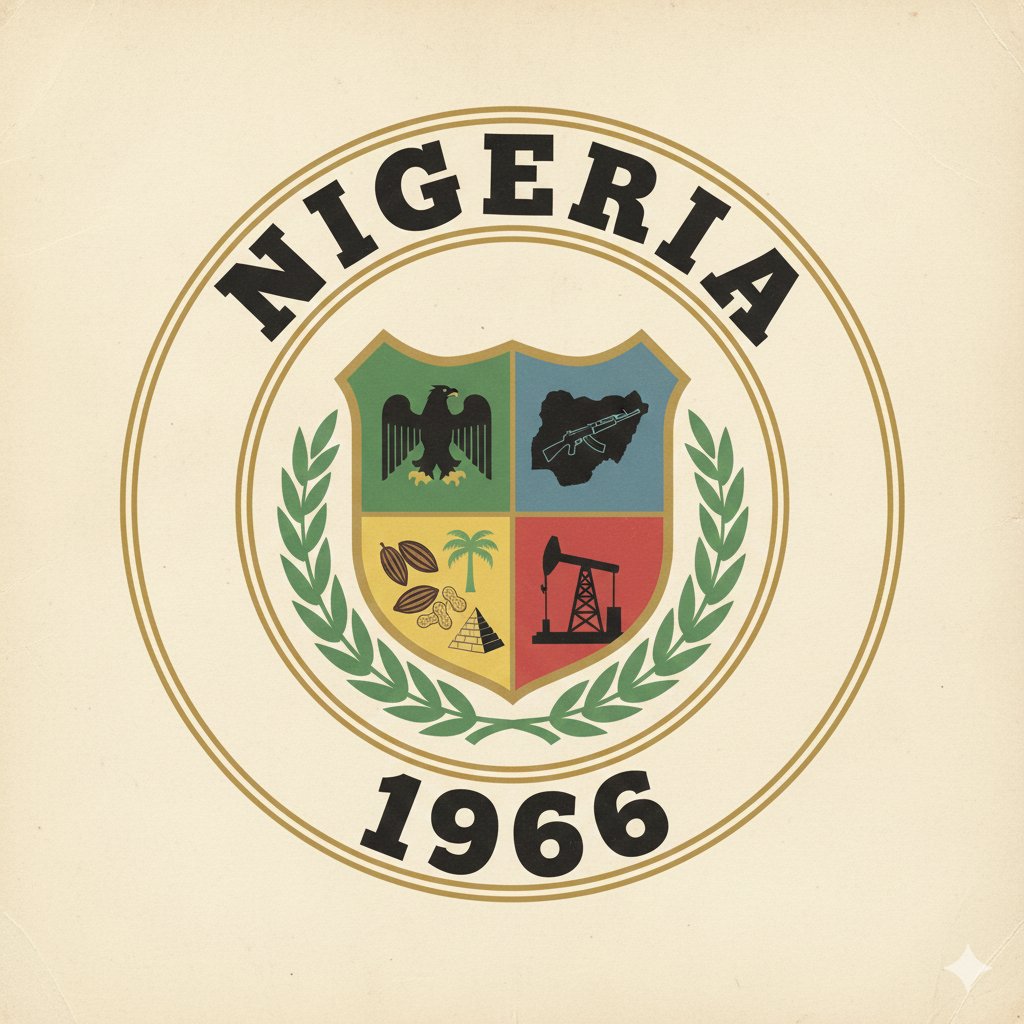
Logo below done with the help of Gemini. What does it symbolise for you?
Did you know that on this day, July 30, in 1966—exactly 60 years ago—Nigeria did not have a Head of State or Government?
A coup the previous day had resulted in the assassination of the Head of State General Aguiyi Ironsi, in Ibadan, and it would not be until August 1 that Yakubu Gowon would succeed him.
So on July 30 and 31, 1966 - Nigeria was without a leader. Two days packed full of tension and intrigue. The most senior military officer, to whom power should have naturally flowed, did not have widespread support.
Introducing The 1966 Archive:
I've spent a lot of the last couple of months thinking about the year 1966, and what it means for #Nigeria. A symbolic year in a number of ways:
1. The year our first democratic experiment as a nation ended (the First Republic), succeeded immediately by the first of several military regimes.
2. The Nigerian civil war didn't officially start until 1967, but looking back, 1966 was arguably when the descent began. Had 1966 turned out differently, a Nigeria may have emerged that never saw a civil war.
3. A youth angle: The year that gave us the youngest leaders ever to lead Nigeria. Probably the year in which Nigeria's modern history was most influenced by young people. We even got a Head of State so young he was unmarried and child-free.
4. The year Dodan Barracks became Nigeria's seat of power. It would remain so for the next quarter of a century, making it Nigeria's second-longest-serving presidential residence, after Aso Rock. I have a personal fascination with Dodan Barracks, which has intensified since I saw it up close in January 2023: https://t.co/rNGDLpgpBy
6. A year of military decrees, and extensive bans (on political, tribal and cultural organisations), and intense debate about what kind of governance structure the country should adopt—the year of the first Constitutional Conference since Independence. A year of massive changes of political and governmental titles and nomenclature.
7. It was also a year of much high-level bloodshed -- two Heads of State assassinated in the same year, alongside several politicians and military officers. Not like Nigeria had not seen political violence and turmoil—1964 was a pretty turbulent year, marked by electoral violence—but the violence of 1966 was unprecedented. Of course it would then go on to be ecplised by the violence of the following three years. But no one knew this in 1966.
8. Interestingly, on the economic front, as democracy was vanishing, the macro-economy seemed to be picking up. Q1 1966 was an outlier Q1 for external trade since Independence in 1960, delivering a record trade surplus. In fact, the preceding two Q1s, 1965 and 1964, delivered trade deficits.
9. One of the major reasons for this surplus was that Nigeria's first oil refinery, in Port Harcourt (wholly private at the time, owned and run by a Shell-BP consortium), had opened at the end of 1965, and so Q1 1966 saw a 75% decline in the import of petroleum products.
10. It was also a peak year for Nigerian oil production (soared above 500,000 barrels per day), before the war sent output tumbling. In 1966, the number of companies that had made commercial discoveries of oil in Nigeria jumped from 2 to 7. That's how big a deal the year was, for oil. You can indeed say 1966 was the year Nigeria's 'oil-rich' status truly began.
Why all the story? I find 1966 fascinating enough to focus on as a history project, as we mark its 60th anniversary this year, 2026. So many threads, so many questions, so many lessons.
What should you expect? Stories, dates, interviews, a podcast, videos, essays, in-person events, maybe even a pop-up museum, and a commemorative book. Plenty ideas (because ideas are cheap), let's see which ones come to fruition.
It will go live at: https://t.co/7B9u0g25au (link not active yet, but watch this space).
Logo below done with the help of Gemini. What does it symbolise for you?
Recently stumbled on a cache of archived @NigeriaGov documents, from the 60s/70s. Utterly fascinating. There’s a long letter, dated April 27, 1966, that Zik wrote to Head of State Gen. Ironsi, bitterly lamenting harassment at the hands of Ojukwu, Military Governor, Eastern Region
The Federal Government of Nigeria is providing grants to support early-stage mining exploration and research, through @SMDFemerge.
Applications open August 3, 2026
Early-stage exploration companies and companies targeting critical minerals can receive up to 70% of eligible costs, while researchers and research institutions can get up to 100% of eligible costs.