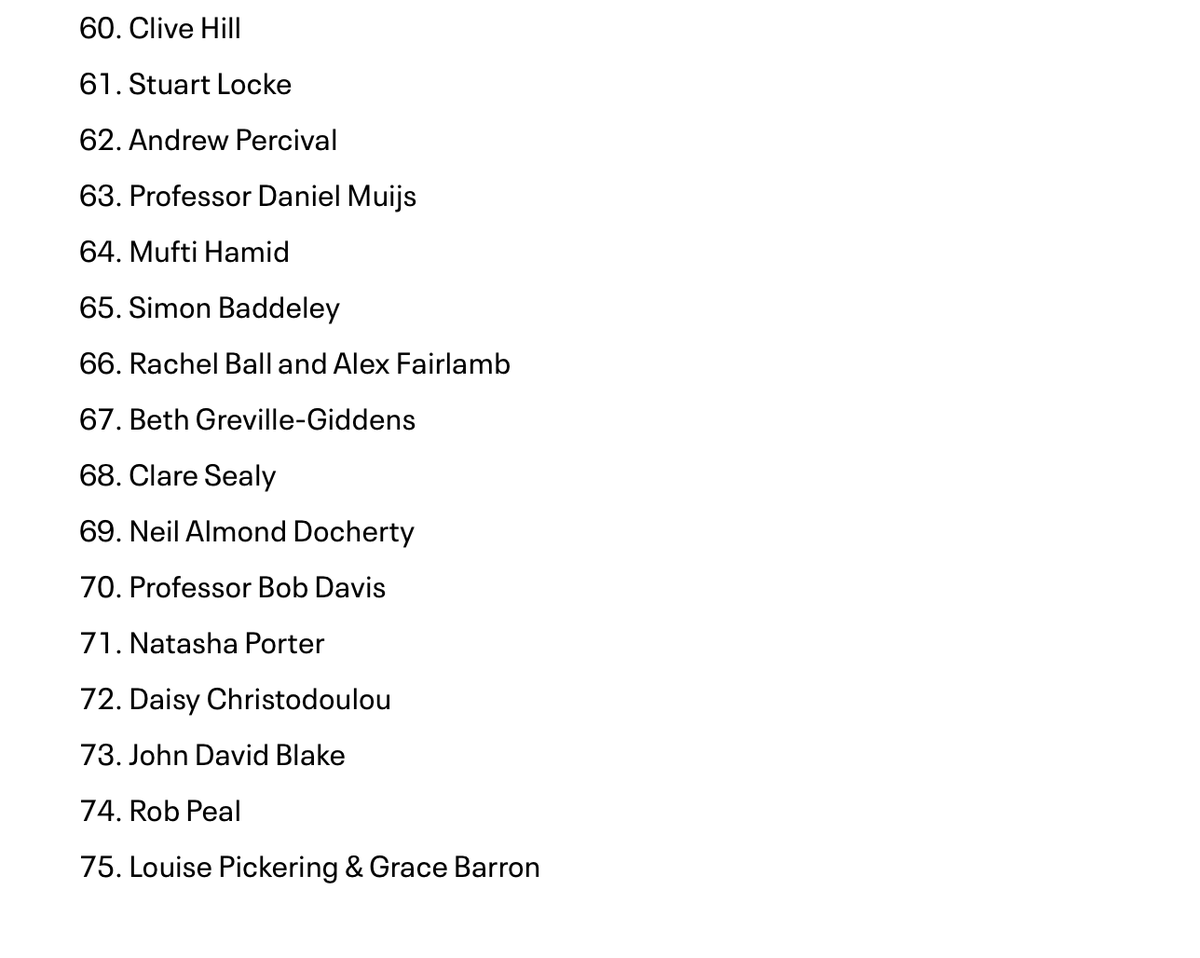
Some AMAZING names already signed up to speak at 🔬researchED National Conference 2026, Sept 5th, Parliament Hill, London. An Olympic pantheon of reason, practice, and evidence. More to come! Ticket link below ⬇️
Booked my kids onto Go Ape! high-wire treetop escapades in Peebles, Scotland. Imagined they were going round with a guide or something. Turns out you have to go with them. Next:
Fantastic post from @bennewmark about an area that needs to be addressed urgently- the need for SEND adjustments and accommodations to be as evidence informed as possible. Wishing they work isn't enough, when resources are finite. And even if they weren't, doing the wrong thing with good intentions is as bad as doing it for the wrong reasons. Maybe worse, because it tempts us to fall into rightthink bias.
This is a conversation we need to be having more and more, and *especially* now that SEND provision is such a big part of the discourse around education, behaviour, and standards.
Fantastic post from @bennewmark about an area that needs to be addressed urgently- the need for SEND adjustments and accommodations to be as evidence informed as possible. Wishing they work isn't enough, when resources are finite. And even if they weren't, doing the wrong thing with good intentions is as bad as doing it for the wrong reasons. Maybe worse, because it tempts us to fall into rightthink bias.
This is a conversation we need to be having more and more, and *especially* now that SEND provision is such a big part of the discourse around education, behaviour, and standards.
Highly effective adaptation is where it is applied to such a degree, it is *almost* invisible.
What becomes more visible in fact, is that students not only achieve academically, but also experience success as part of their lived experience.
Excellent work from @EducEndowFoundn
The number of parent appeals to the SEND tribunal is six times higher than it was in 2016-17, according to an @TheIFS report warning about increasing pressure on the tribunal system
https://t.co/p01Pb7lv1U
The new Education Endowment Foundation 'Guide to Inclusive Teaching' goes live today. It explores universal teaching alongside adaptations and additional support.
Explore the guide, the evidence base, and the additional CPD resources here:
https://t.co/1phNJvOr9y
The new EEF Guide to Inclusive Teaching is published today.
It's worth checking out. It contains guidance, summaries, myth busting & scenario based training plus more.
https://t.co/ugPZKi5NMN
For the love of God can people stop using AI to write Tweets/X-posts. The listing. The pause. The trite, smooth conclusion in one sentence. The metronomic argument. It’s the reading version of biting into a pizza only to discover it’s a piece of paper with the words ‘a delicious pizza’ on it.
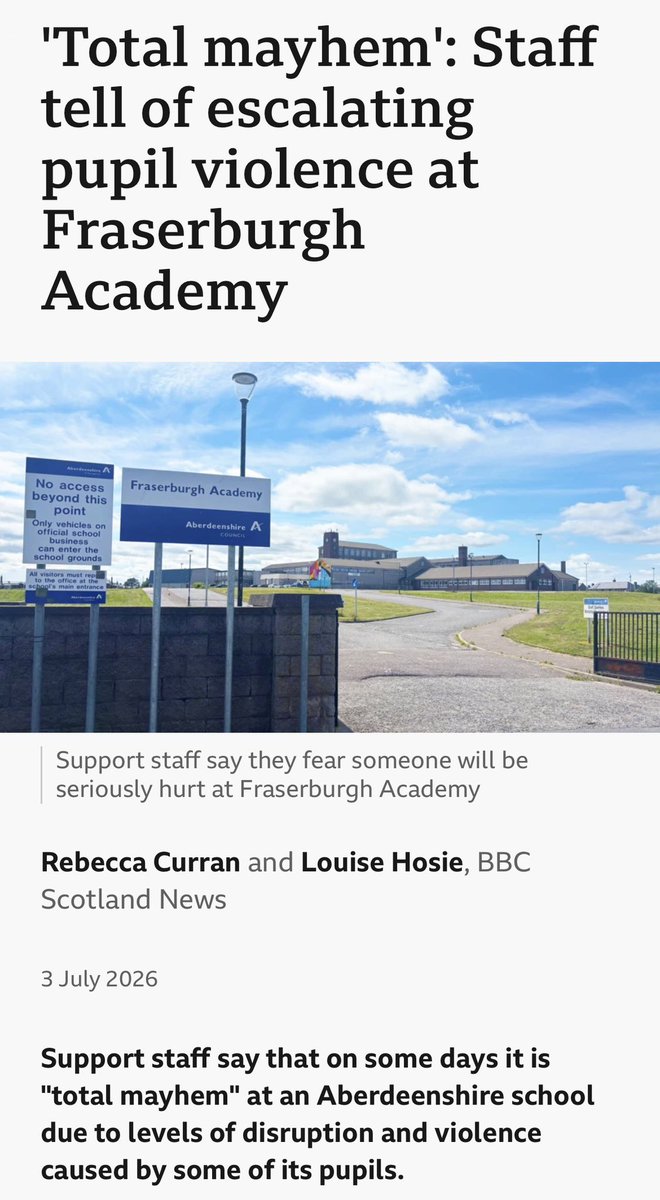
Another workplace where people can’t work, another school where learning can’t happen, because of rampant defiance, abuse and violence. Heartbreaking to read, and almost impossible to endure. My sympathies with the staff and students who have to cope.
Unless we get serious about responding to these levels of disruption- including sanctions, suspensions and exclusions, then no amount of ‘positive behaviour training’ will be enough. The Scottish government has to wake up to the behaviour crisis that is harrowing the opportunities of generations of children. Until it is acknowledged, and the current behaviour model for schools is rebuilt, nothing will change.
Completely agree with Adam here. The EEF guidance on inclusive environments makes it clear that calm, safe schools *are* one of the main ways we create a culture of inclusivity. Students with SEN, for example, are disproportionately supported by this approach, and *then* targeted exemptions and accommodations. But the whole system rests on the fact that it *is* a system, founded on routines and consistent expectations.
The EEF's new guidance on inclusive teaching is a very interesting piece of work. There is much to like, some bits to criticise, and one absolutely HUGE statement that should be getting a lot of attention.
Here are my thoughts:
- There is a lot there. Most won't read it.
- There is a heavy emphasis on explicit instruction, and the creation of simple routines and "calm classroom environments." This is what "trad" teachers have been banging on about for years, so is most welcome.
- There is very little that I can see about specific conditions/neurodevelopmental issues. If you want to know about how to support specific needs, the information isn't directly in this guide.
- This makes sense, because "While targeted interventions can help, they are most effective when they supplement – rather than replace – effective everyday teaching."
- This line is buried in one of the "myths" but is absolutely MEGA: "Strong universal provision reduces the number of pupils who require additional support..." I mean, let that sink in. I've said stuff like this before and been pilloried for it. It's a huge claim, and from what I've seen actually the most significant thing in the whole report.
- This is an important line: "Teachers should not be making assumptions about pupils’ learning rates based on their socio-economic background or SEND status." I have this conversation with people quite a lot. They say things to me like "how do your students with SEND respond to Name at End questioning?" or "how do your pupil premium students respond to your expectation that every student answers a question every lesson?" I always say the same thing, which is that the label tells me nothing, and that we need to reframe the relationship between label and issue. There is nothing causative there, it is all correlational.
- There aren't many concrete examples of good "inclusive practice" in the report itself. There is a link to other supporting resources, but you need a login for that. You can only log in with a school email account (odd choice for a research organisation), but I couldn't get it to work so 🤷
- Without concrete examples, it is almost guaranteed that people will do weird things, and cite the EEF in support.
https://t.co/jQCybyaVS5