Finding Truth. Creating impact.
Explore. Find. Document. Impact.
Real People. Real places. Real stories.
TRACE goes where the story is. We explore remote places, find what's been overlooked, document it honestly, and turn it into impact.
Follow for more.
18 parks down, 46 to go in the National Park Series.
Taking a few days to build a home for the series, one place where every article and detailed information will live for those wanting even more information.
Back soon with #19. Thank you for following along!
@julieta_pedrosa The beech forest at Sasso Fratino, inside the park, was protected as Italy's first integral nature reserve, where almost no one is allowed in. It's now part of the UNESCO World Heritage site for the ancient and primeval beech forests of Europe.
The thinning is only half the job. The cut brush usually gets piled and left to cure, then burned once there's snow or wet ground, like the pile burns starting this month in Grand Teton. Many areas then need low-intensity prescribed fire every few years to keep the brush from growing back.
@JoeVeyera Rainier is worth the drive even this late. Paradise is one of the snowiest places on Earth where snowfall is measured regularly, averaging more than 50 feet a year, and it once had more than 1,100 inches in a single winter.
@ed_lamon The only fourteener in the park, at 14,259 feet. Even the Keyhole Route, the standard way up, is about 15 miles round trip with roughly 5,000 feet of gain, and most people start well before dawn to be off the summit before the afternoon storms.
@AustraliaZoo And unlike a cow's or an antelope's horn, there's no bone inside. It's keratin all the way through, with calcium and melanin packed into the core to harden it. If a rhino breaks its horn, it grows back.
@Complex Yosemite has another full moon trick. In spring, when snowmelt has the falls running high, moonlight makes a faint rainbow in the spray at Yosemite Falls. People call it a moonbow, and it only shows up for a few nights around each full moon.
@outsidemagazine That's Mooney Falls, about 200 feet tall. The way down runs through short rock tunnels and then chains and handholds cut into the travertine, and the mist keeps it slick. It's on the Havasupai Reservation, so the permits come from the tribe, not the Park Service.
@AnimalPlanet Calves are born weighing around 200 to 250 pounds and are usually on their feet within an hour or so. The trunk takes much longer. It can take them months to learn to control it, which is why young calves often just let it flop around.
Today's Park News: Today it costs nothing to walk into a national park.
It's Veterans Day. For U.S. citizens and residents, entrance is free at every national park that charges a fee, and at national monuments and other Park Service sites too. Many national forests, wildlife refuges, BLM lands and Army Corps lakes are also free.
The NPS waiver covers all Park Service sites that charge an entrance fee, not just the national parks. That includes national monuments, historical parks, seashores and other NPS sites.
Also free today:
• Entrance at national wildlife refuges and other Fish and Wildlife Service lands that charge a fee
• Recreation fees at most Forest Service day use sites (concession sites may still charge)
• Standard amenity and day use fees on many BLM lands, including National Conservation Lands
• Day use fees at more than 2,850 Army Corps of Engineers recreation areas (boat ramps and swim beaches)
Get out there, enjoy the parks, and take a moment for the people who served.
#NationalParks #VeteransDay2026
Sunrise on one of the historic barns of Mormon Row, with the Teton Range behind it. Homesteaders built them in the valley of Jackson Hole, and the Moulton barns here are among the most photographed barns in America. Photo: DASH713
Read my article on the history of Grand Teton National Park. Full story: #18 of 64, Grand Teton 👉 https://t.co/cguSVEa4Jn
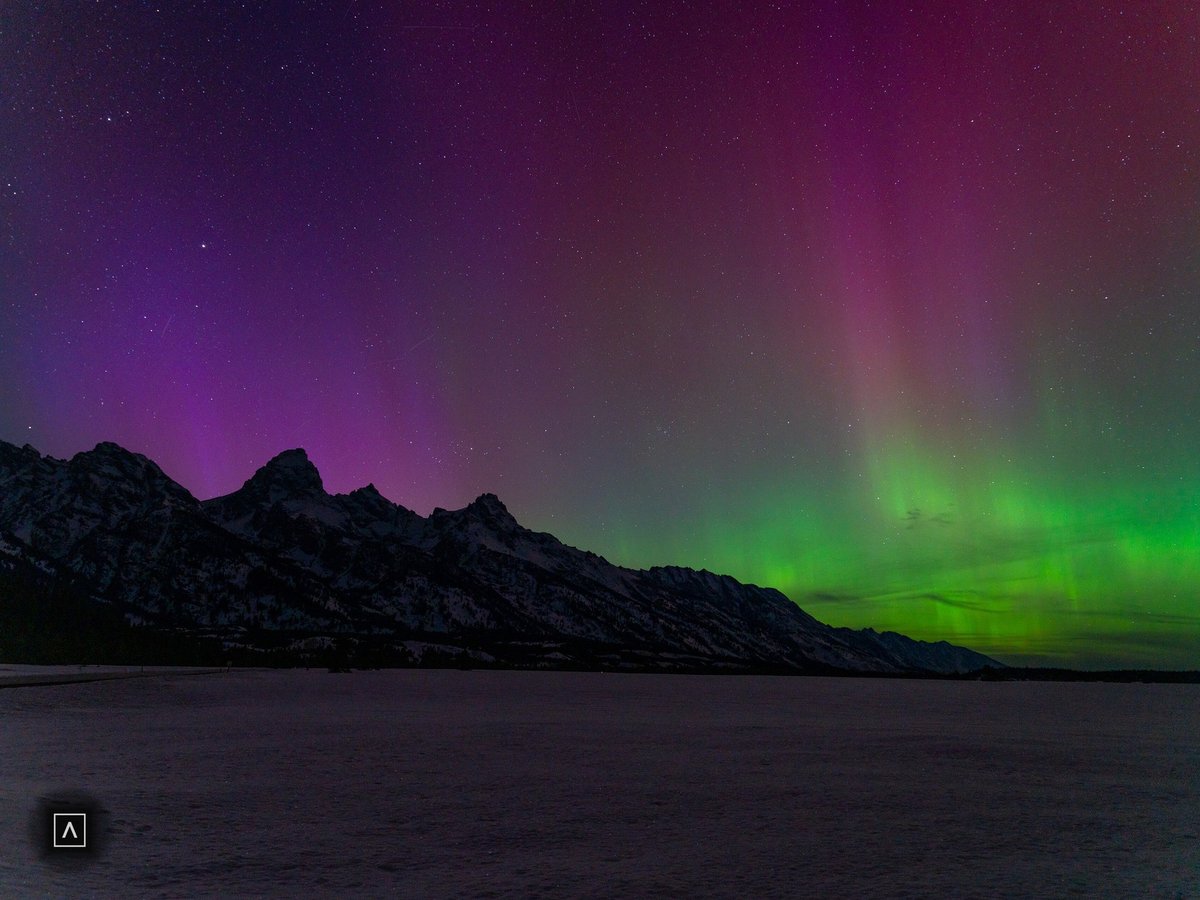
Grand Teton National Park, Wyoming. The northern lights over the Teton Range, photographed by a park photographer. Half the park is after dark: with little light pollution in the valley, the night sky here can be as good as the mountains. Photo: NPS/C. Adams
Read my article on the history of Grand Teton National Park. Full story: #18 of 64, Grand Teton 👉 https://t.co/cguSVEa4Jn
1. The Tetons reflected in String Lake at first light. Photo: NPS/Adams
2. Mount Moran above the Snake River at Oxbow Bend, one of the best wildlife-watching spots in the park, with moose, river otters, bald eagles and coyotes. Photo: Watts
3. Jenny Lake and the mouth of Cascade Canyon, carved by glaciers between the park's highest peaks. Photo: Acroterion
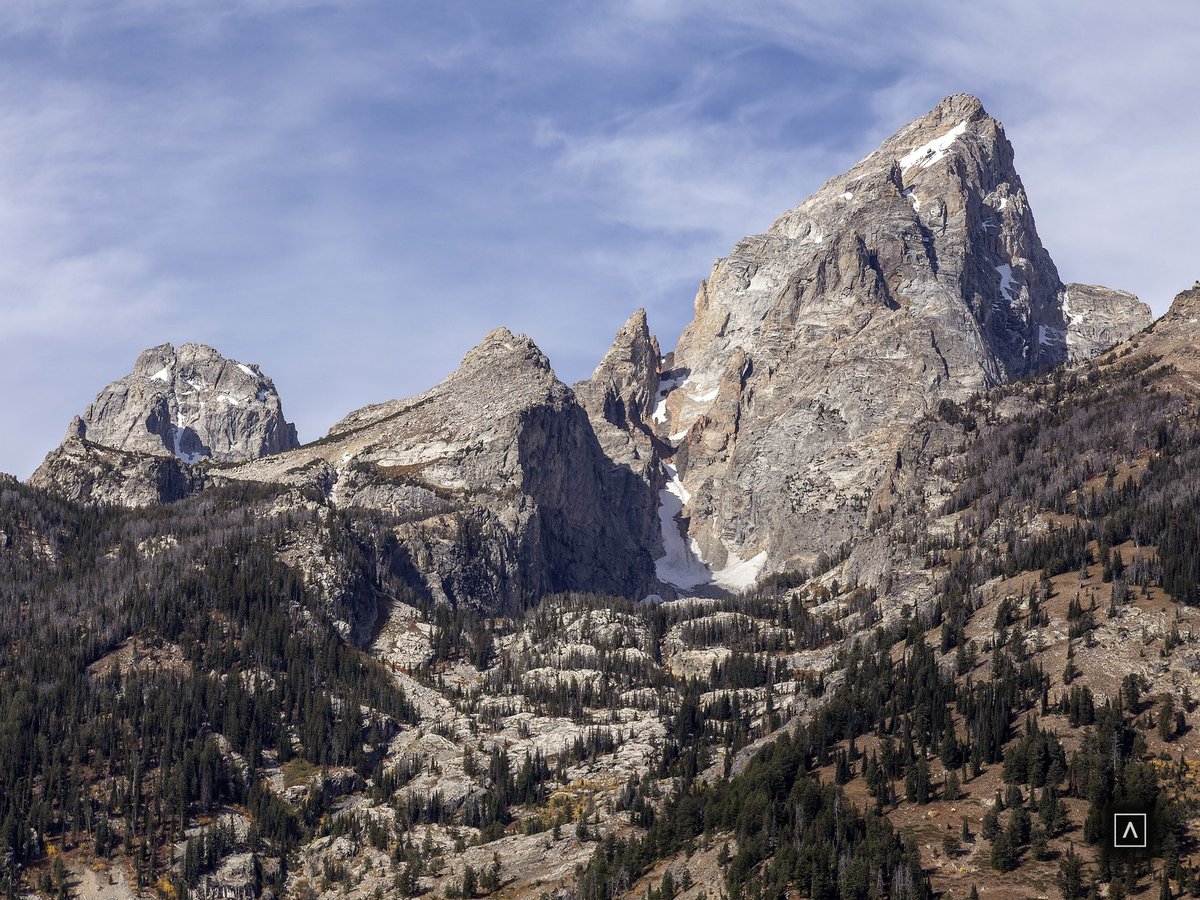
4. The heart of the range: Middle Teton, Disappointment Peak, Teepe Pillar and the Grand Teton, which tops out at 13,775 feet. Photo: Acroterion
Read my article on the history of Grand Teton National Park. Full story: #18 of 64, Grand Teton 👉 https://t.co/cguSVEa4Jn
1. Sunset color over the Teton Range and Jackson Lake. Photo: NPS/Adams
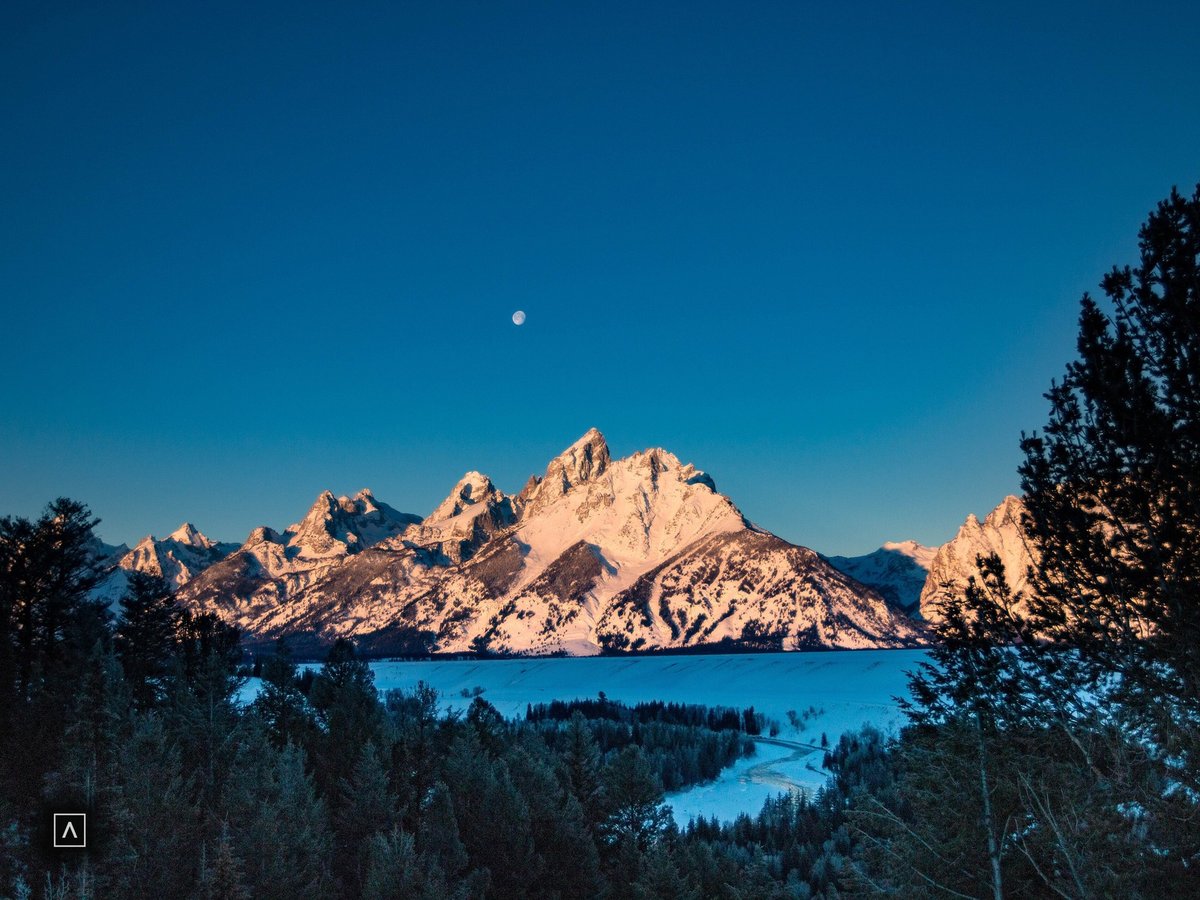
2. Morning light on the Tetons on a winter day, seen from the Snake River Overlook. Photo: NPS/Tobiason
3. A dusting of spring snow on the range. Snow and frost are possible here in any month. Photo: NPS/A. Fallouts
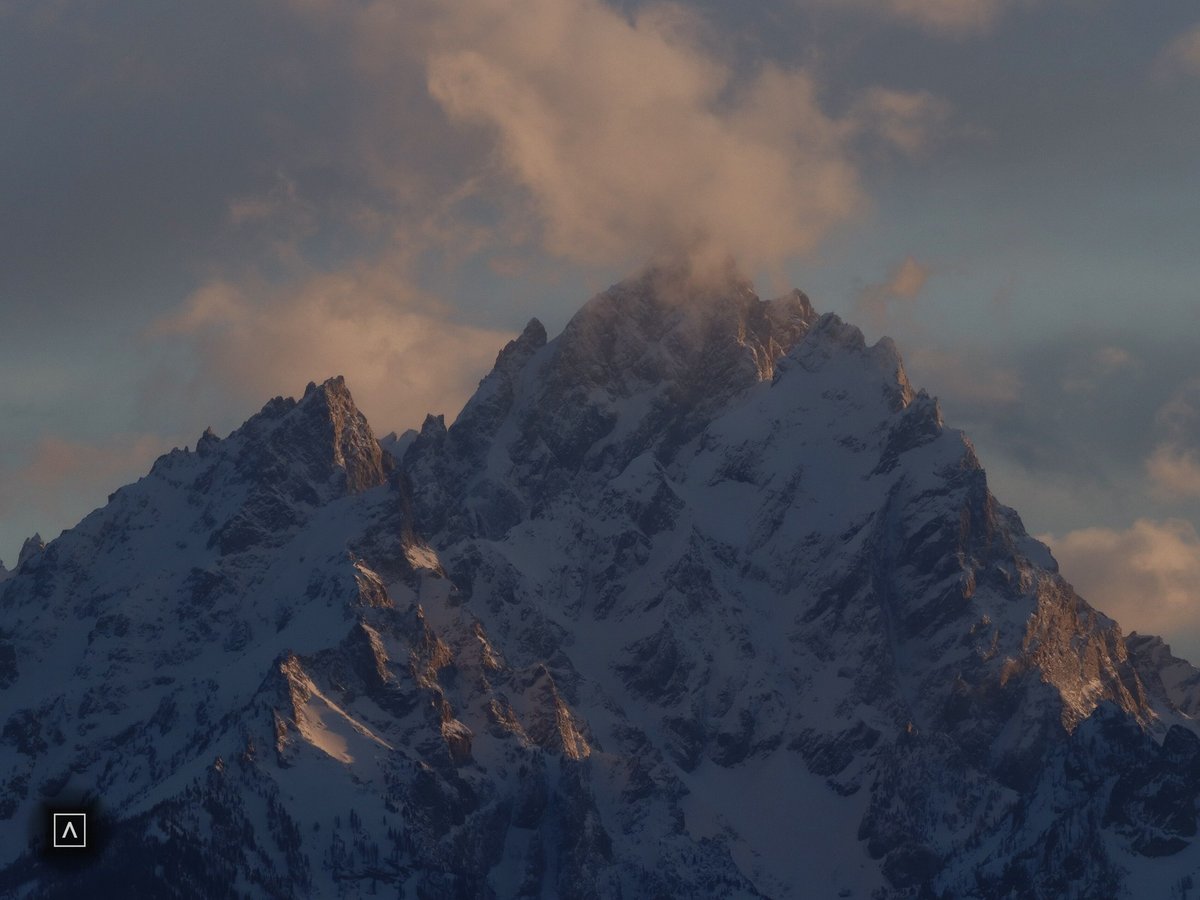
4. Evening clouds over the Teton Range, seen from Jackson Lake Dam. Photo: NPS/A. Falgoust
Grand Teton National Park
(Today's Park Report & News)
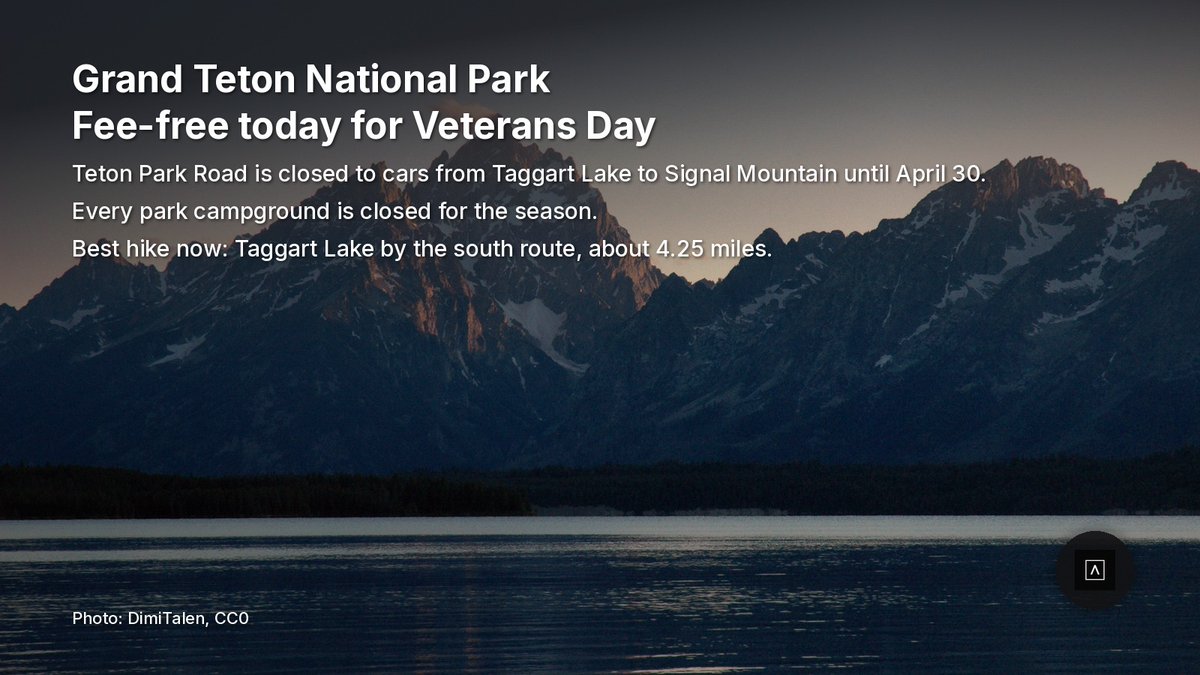
Today, Veterans Day, entrance is free for U.S. citizens and residents at every national park that charges a fee, including Grand Teton. The park is open 24 hours a day, all year, but it's in its quiet season now. Since Nov. 1, the Teton Park Road has been closed to cars from the Taggart Lake Trailhead to Signal Mountain Lodge. Until snow covers it, you can walk, run or bike the closed road, and leashed pets are allowed on it. The park's elk reduction program, run with Wyoming Game and Fish, starts Nov. 14 and runs through Dec. 6 in Hunt Area 75. Those areas stay open to visitors, and the park asks you to wear bright colors. Fire crews may also be burning brush piles near Colter Bay, Beaver Creek, Elk Ranch and Kelly Pit, so you may see smoke.
Roads: The park's main highways are plowed and open all winter from Jackson to Flagg Ranch. Expect 20-minute delays south of Moran Junction for riverbank repair work. The Moose-Wilson Road is closed between the Laurance S. Rockefeller Preserve and Moose, and Death Canyon Road and Trailhead are closed to all use for construction. Secondary roads such as Antelope Flats and Schwabacher close as the weather turns. Construction pauses for the winter on Nov. 15.
Trails: The north segment of the Taggart Lake Trail is closed for reconstruction, but Taggart and Bradley lakes are still reachable by the southern route. Mormon Row is open, though some buildings are closed for construction. Black and grizzly bears are still active, even this late in the year, so hike in groups of three or more, make noise and carry bear spray.
Camping and fees: A private vehicle pass is $35, a motorcycle $30 and a walk-in or bicycle $20 per person, all good for 7 days. The park doesn't take cash. Non-U.S. residents 16 and older pay an extra $100 unless they hold an annual pass. All park campgrounds are closed for the season, as are the visitor centers, lodges and marinas. On Jackson Lake, the water is low and Signal Mountain is the only boat ramp open. NPS recommends hand launching there, at your own risk. The park keeps most of its entrance fees and spends about $9 million a year on roads, trails, pathways and habitat.
Best hike: Taggart Lake. NPS lists it at 3 miles round trip with 360 feet of gain, rated easy, about 1 to 2 hours. With the north segment closed for construction, plan on the southern route, about 4.25 miles round trip (Grand Teton National Park Foundation). AllTrails lists the Taggart Lake Loop at 3.8 miles and 426 feet of gain, with 4.8 stars from about 12,500 reviews. It's known for some of the best close-up views of the Teton Range: you climb an aspen-covered glacial moraine to a lake at the mouth of Avalanche Canyon. Tip: The trailhead sits just south of the road closure, so you can still drive to it. Once snow falls, bring snowshoes or skis.
Grand Teton quick facts:
-Became a national park: 1929.
-Known for: The Teton Range, which rises about 7,000 feet straight out of the valley of Jackson Hole with no foothills, topped by the 13,775-foot Grand Teton. The park also protects the Snake River, Jackson Lake and elk, bison, moose and pronghorn.
Seasonal closures: The Teton Park Road is closed to cars from Nov. 1 to April 30, and it's groomed for skiing and snowshoeing from mid-December to mid-March. The Moose-Wilson Road is closed from Nov. 1 until mid-May. The Deadmans Bar and Pacific Creek river launches close for winter wildlife on Dec. 15.
Best time to visit: May through September is the busy season, when the roads and facilities are open. Fall brings golden aspens and bugling elk. Winter is quiet, with sunny days between storms, frigid nights and snow over the valley.
Tip: Get to Mormon Row or the Snake River Overlook before sunrise. The range faces east, so first light turns the peaks pink and gold. Carry winter gear in the car, because snow can come in any month.
TRACE take: Grand Teton in November is the park with the crowds gone and the elk moving down from the high country. Go today while it's free, walk the empty Teton Park Road, and watch the light hit the range.