At the inaugural lecture of the Africa Center at @StellenboschUni, @Winnie_Byanyima reflected on how the AIDS movement showed that science alone does not defeat pandemics. Political courage, community leadership and human rights are equally essential.
She recalled how people living with HIV, activists, scientists and health workers organised to challenge pharmaceutical monopolies, demand affordable medicines and hold governments accountable, saving millions of lives.
"Africa must not simply prepare to survive the next pandemic. It must help build a world in which pandemics no longer become catastrophes of inequality."
Read her full lecture: https://t.co/dZLAsuhv9G
Happening today! @Winnie_Byanyima will deliver the inaugural public lecture on “Fighting on the frontlines and shaping the future: African leadership in pandemic preparedness and response” at the Africa Centre for Inclusive Health Management at @StellenboschUni
Watch the livestream: https://t.co/p9q5aCHUQi
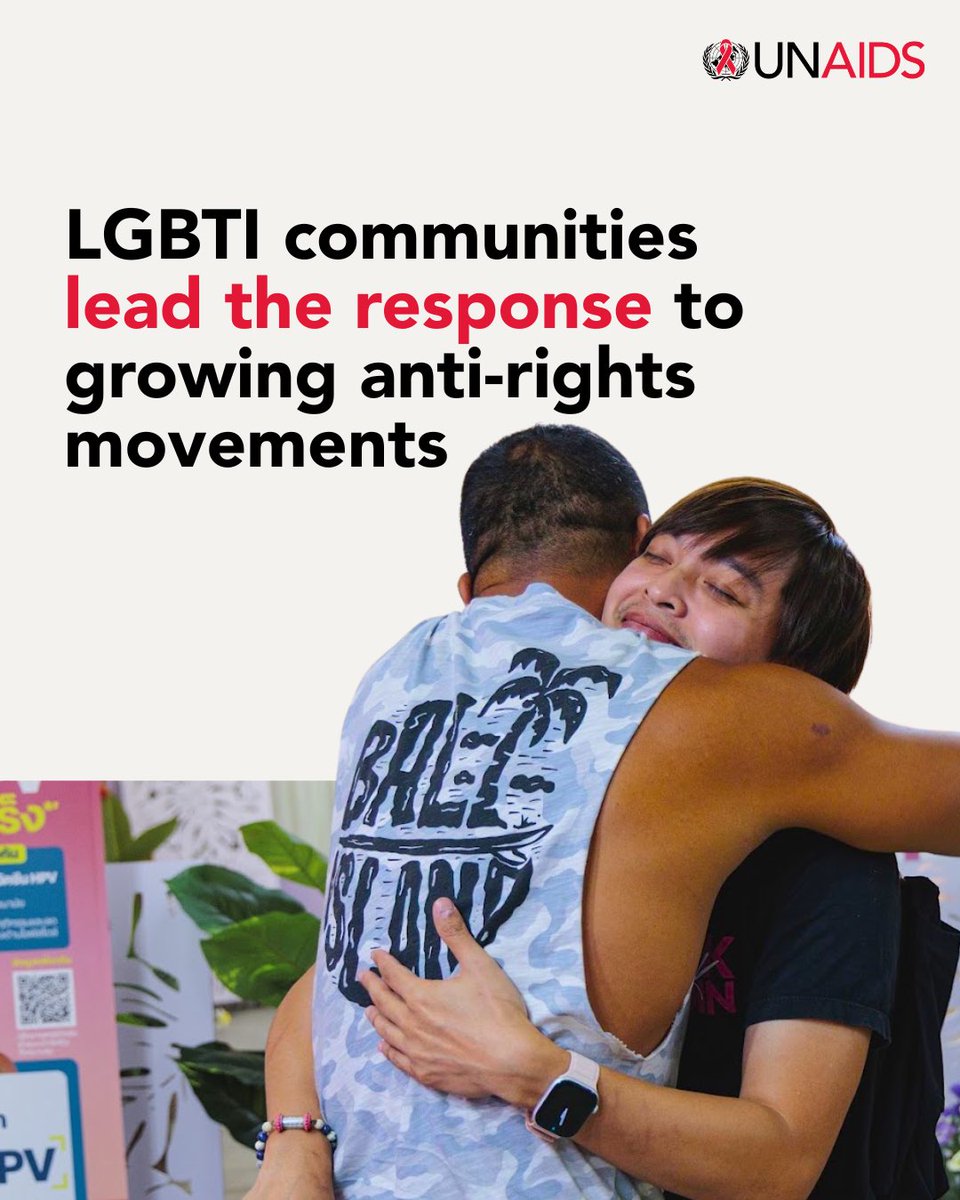
For LGBTI communities, human rights violations are a daily reality. When rights are under attack, access to HIV prevention and treatment suffers for people who are already marginalized.
Read how UNAIDS is working to support LGBTI communities in leading the response to growing anti-rights movements: https://t.co/PMi30KVd24
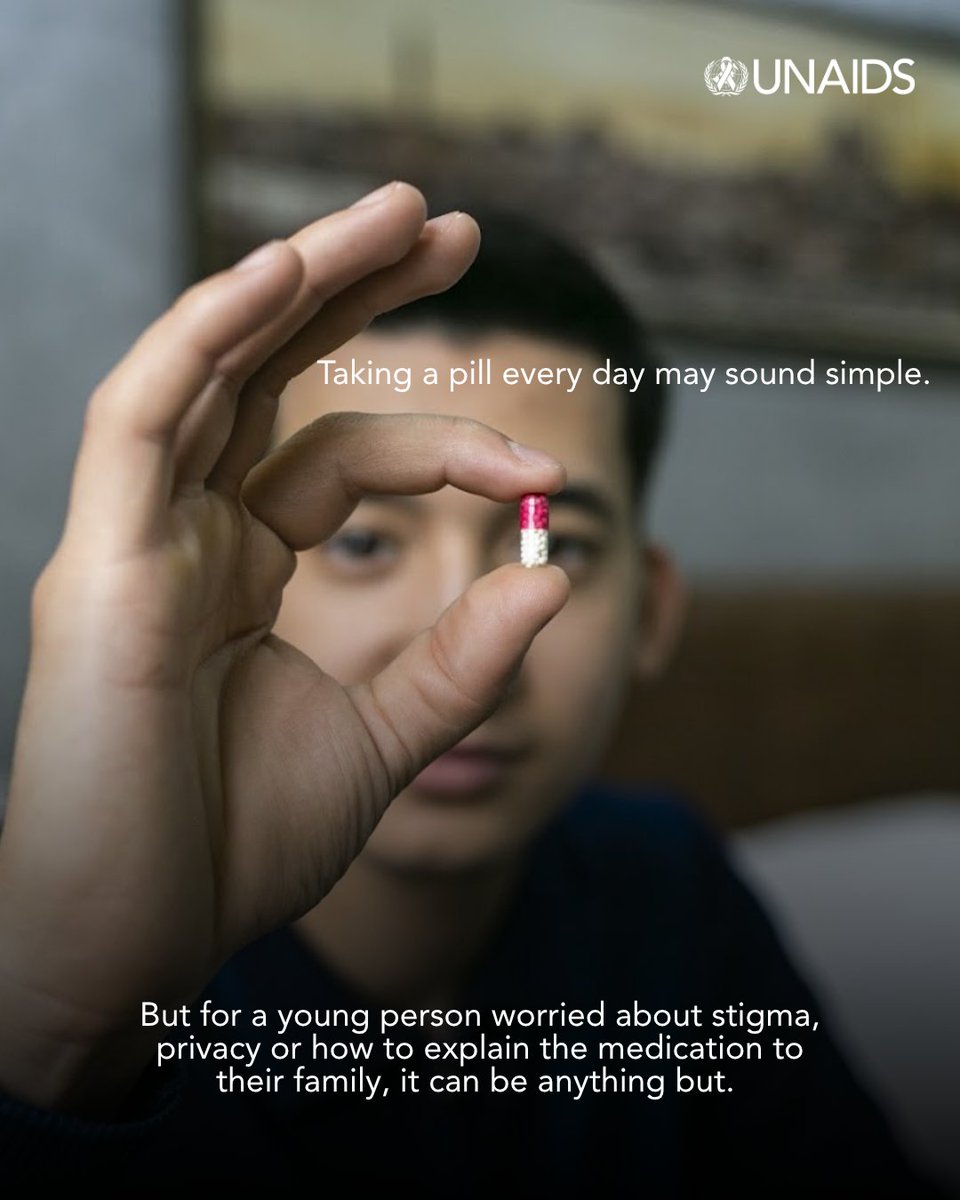
In Asia Pacific, too many young people from key populations still struggle to access HIV prevention services.
Youth-led organizations, like @YouthLEADAP_, are working to help design services and shape decisions that will enable young people to access care.
Read story: https://t.co/GuatHVEKDc @UNAIDS_AP
What can the AIDS movement teach us about ending inequality in global health?
On 9 November, UNAIDS Executive Director @Winnie_Byanyima will deliver the inaugural public lecture of the Africa Centre for Inclusive Health Management at @StellenboschUni
In her lecture, Ms Byanyima will draw on lessons from the global AIDS response to explore how human rights, gender equality, community leadership and equitable financing can help build stronger, more inclusive health systems.
📅 9 November 2026 | 09:30–12:45 (SAST)
Watch the livestream: https://t.co/IBS66ATT7L
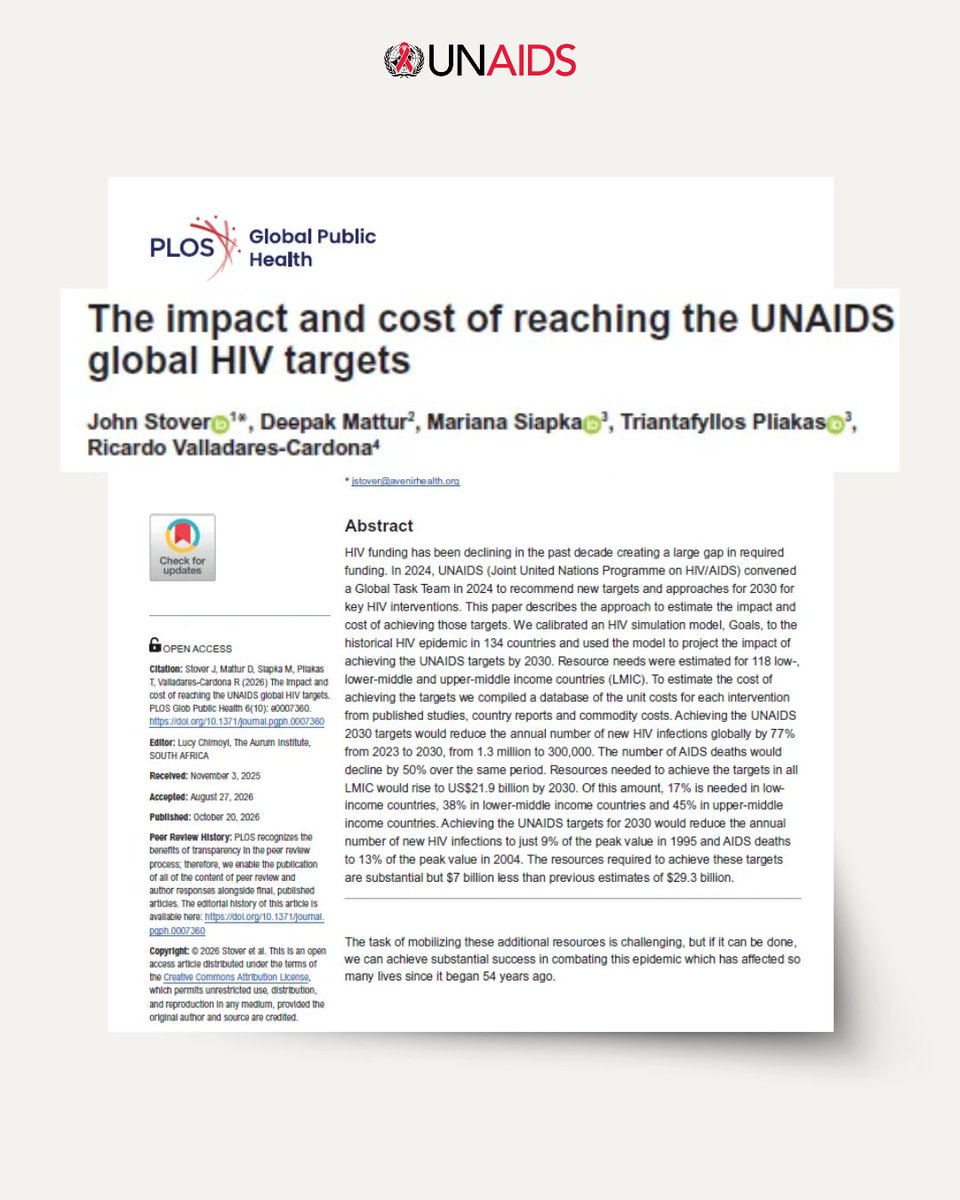
New study! Answering the questions: What would it actually cost to achieve the 2030 HIV targets, and what impact would it have?
Read more about this study, drawing on resource needs estimation and epidemiological modelling across more than 118 countries: https://t.co/Sg0UpZHVwd
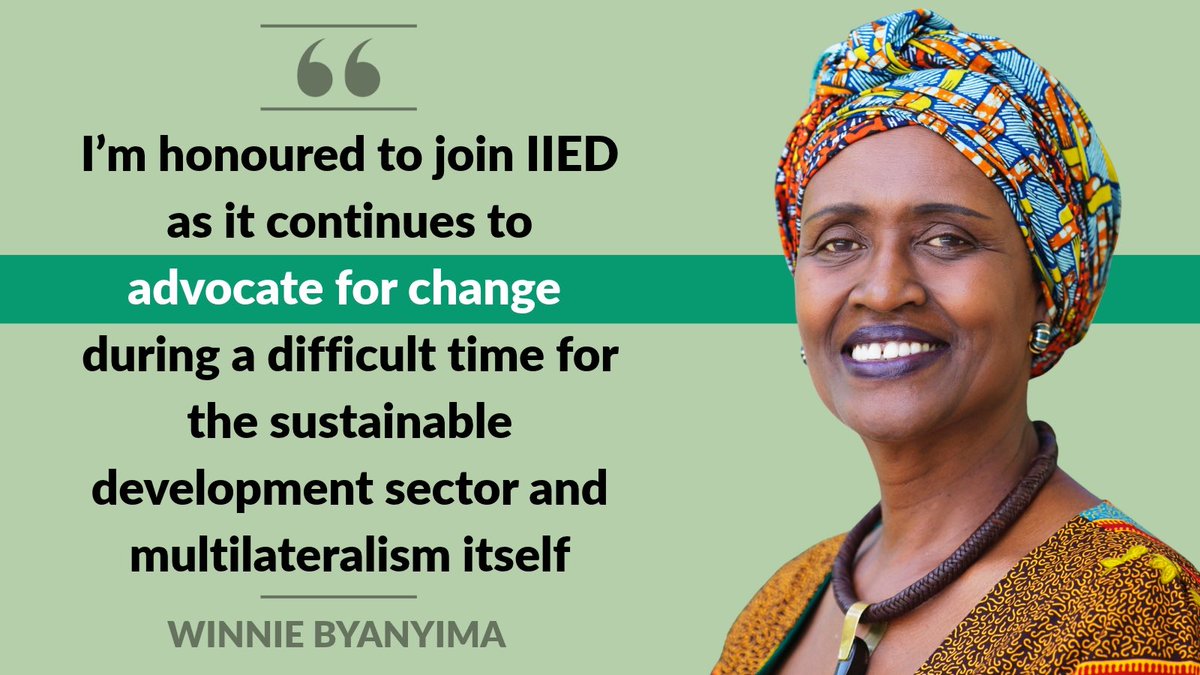
UNAIDS congratulates @Winnie_Byanyima on her appointment as chair of the board of the International Institute for Environment and Development (@IIED).
Ms Byanyima will take up her new position with IIED in January 2027.
Press release: https://t.co/4FHnmOz4Tn
Congratulations Barbados 🇧🇧 for obtaining the @pahowho certification of the elimination of vertical transmission of HIV! This achievement reflects political commitment, technical and community leadership, as well as investment in integrated health services grounded in human rights and gender equality.
Watch @UnaidsLac Director @LuisaCabal_’s message below 👇🏼
Press statement: https://t.co/FrYqk764ih
UNAIDS congratulates Mark Dybul as the new Executive Director of the @GlobalFund and also warmly welcomes the new Board Chair and Vice-Chair, Erna Solberg and Javier Hourcade Bellocq.
We also thank Peter Sands, and Chair and Vice Chair Lady Roslyn Morauta and Bience Gawanas, for their excellent leadership of the Global Fund over these years.
UNAIDS and the Global Fund have worked hand in hand to advance the global HIV response, expand access to life-saving treatment and prevention, and support countries and communities.
We look forward to working in partnership and solidarity to build on this longstanding partnership and accelerate progress towards ending AIDS by 2030.
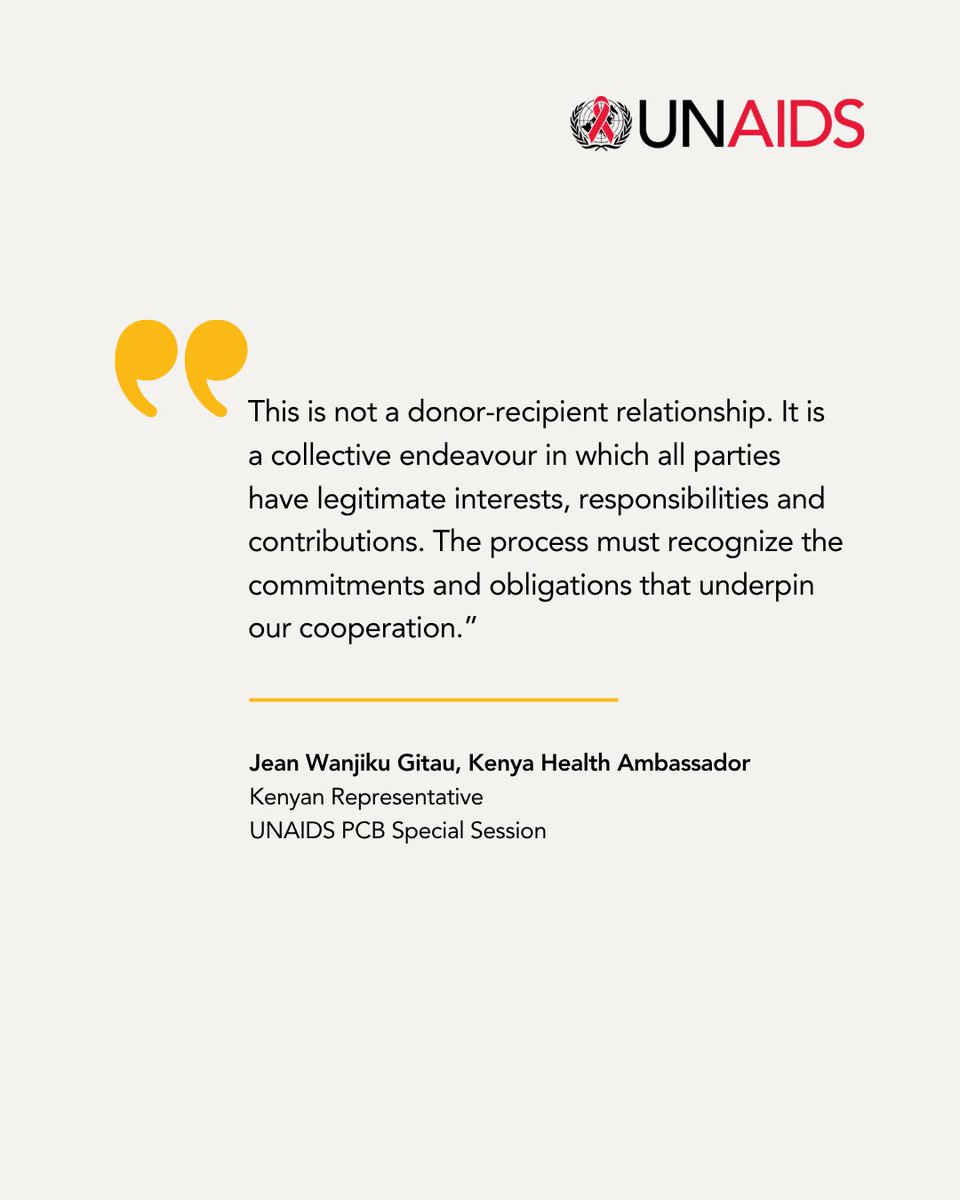
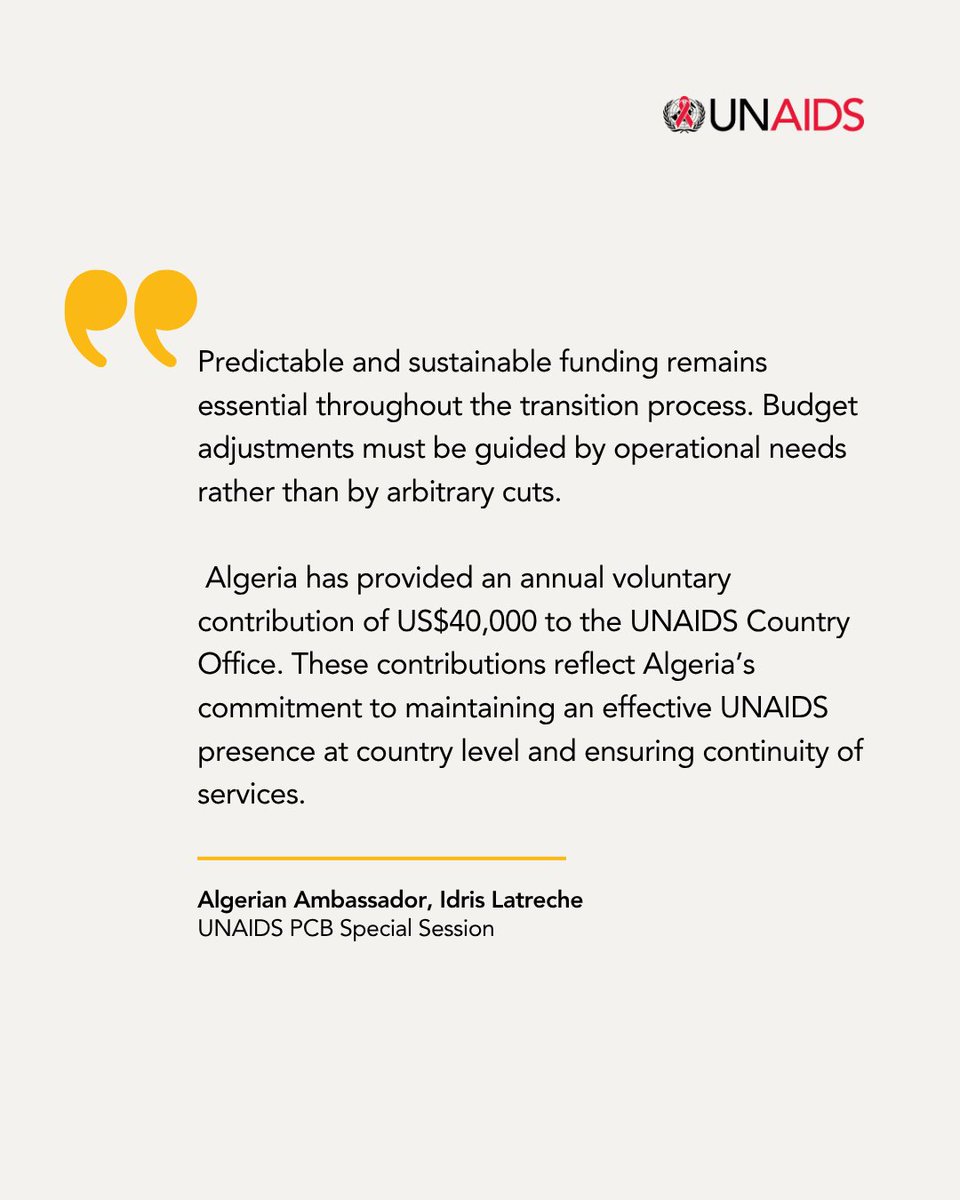
#ICYMI UNAIDS Programme Coordinating Board has rejected the sunsetting of UNAIDS.
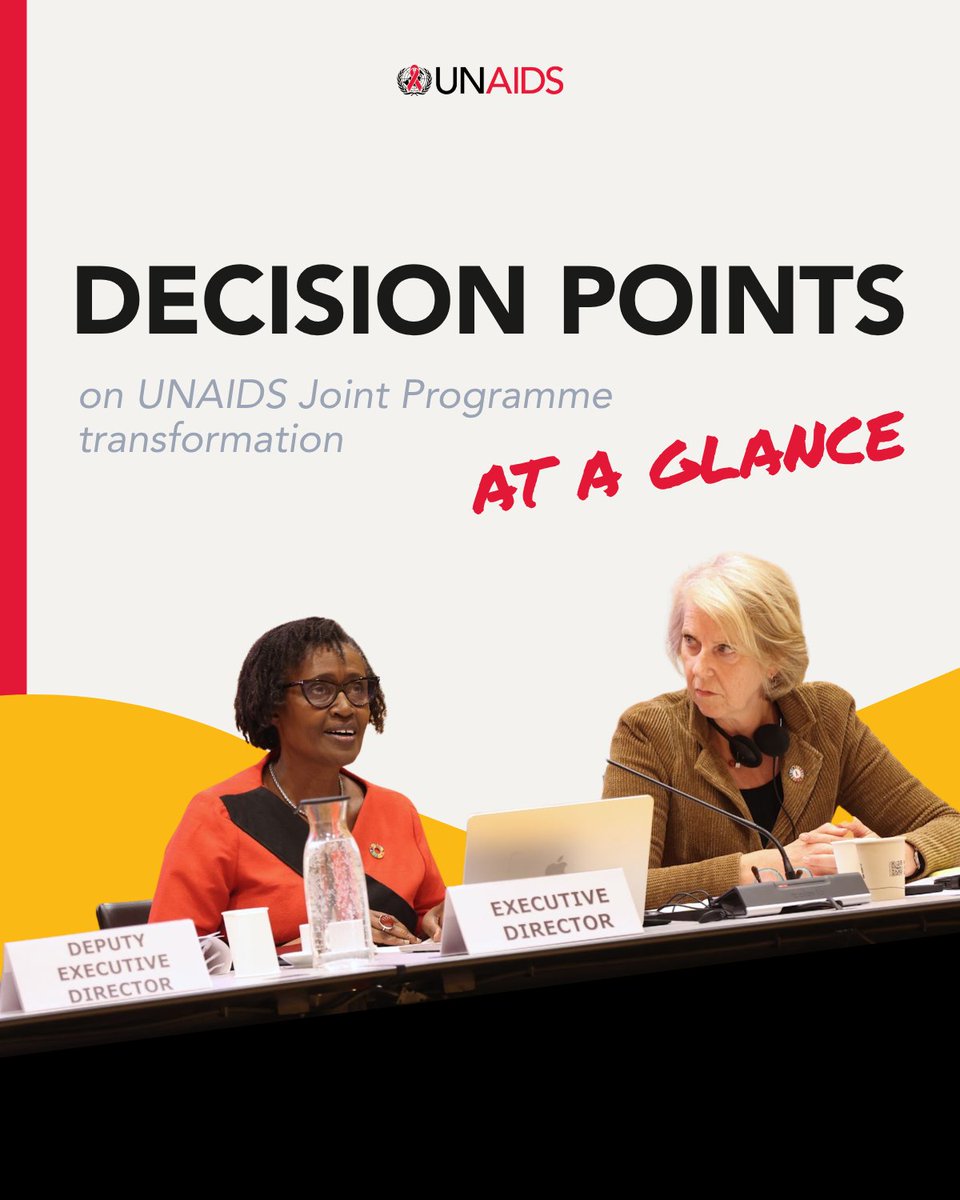
Here’s what you need to know about the key decisions.
Read more: https://t.co/Rrj1wWFbNj
The UNAIDS Programme Coordinating Board has rejected the sunsetting of UNAIDS, reaffirming its support for a continued, streamlined and efficient Joint Programme.
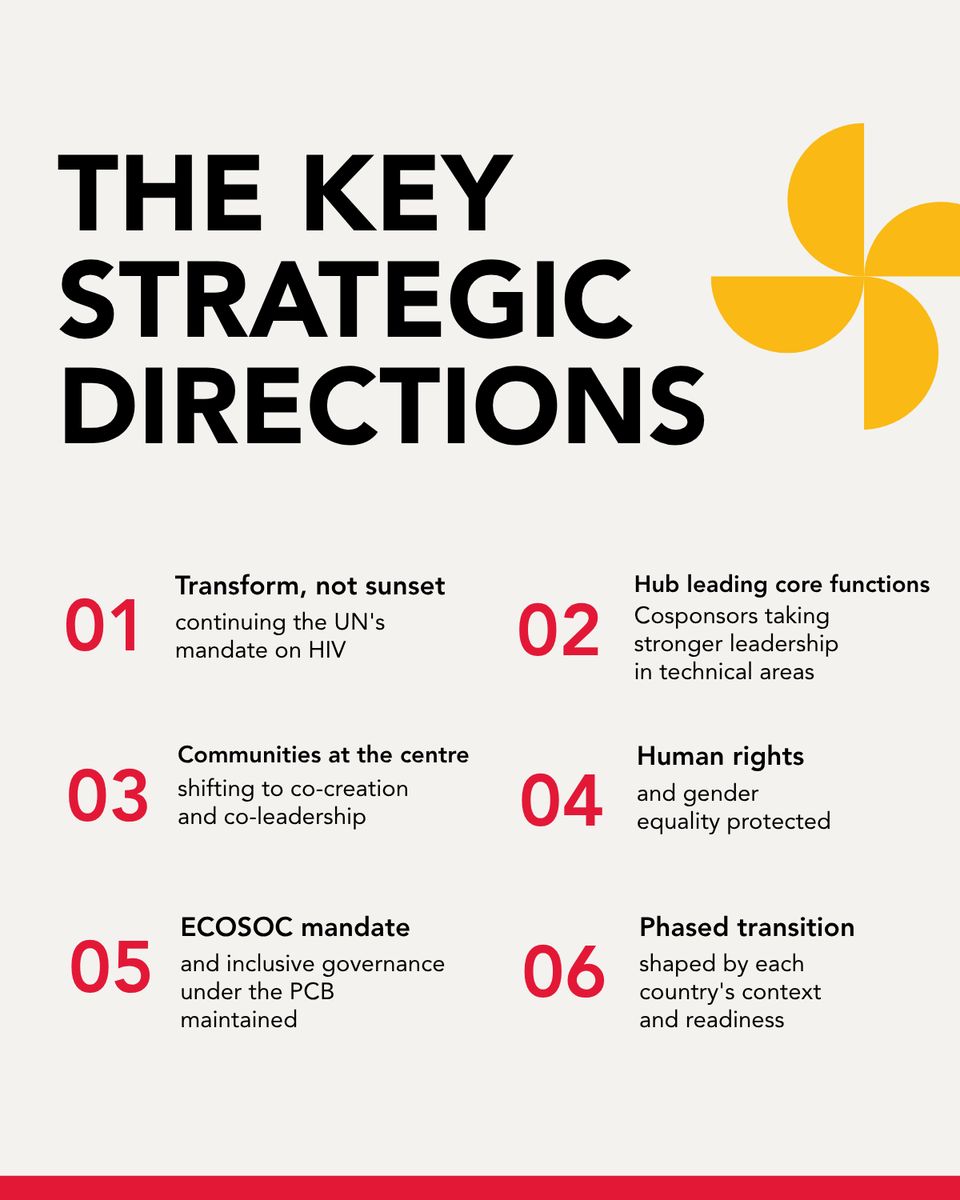
At its special session, the Board approved the strategic direction for the transition, emphasizing that it must:
✅ Keep communities at the centre
✅ Protect human rights and gender equality
✅ Maintain inclusive governance under the PCB
✅ Ensure a phased transition shaped by country contexts and readiness
The Board also called for stronger country-level leadership and community co-creation and co-leadership, while protecting the gains of the HIV response.
See what programme countries and civil society representatives had to say about the future of UNAIDS and the HIV response.
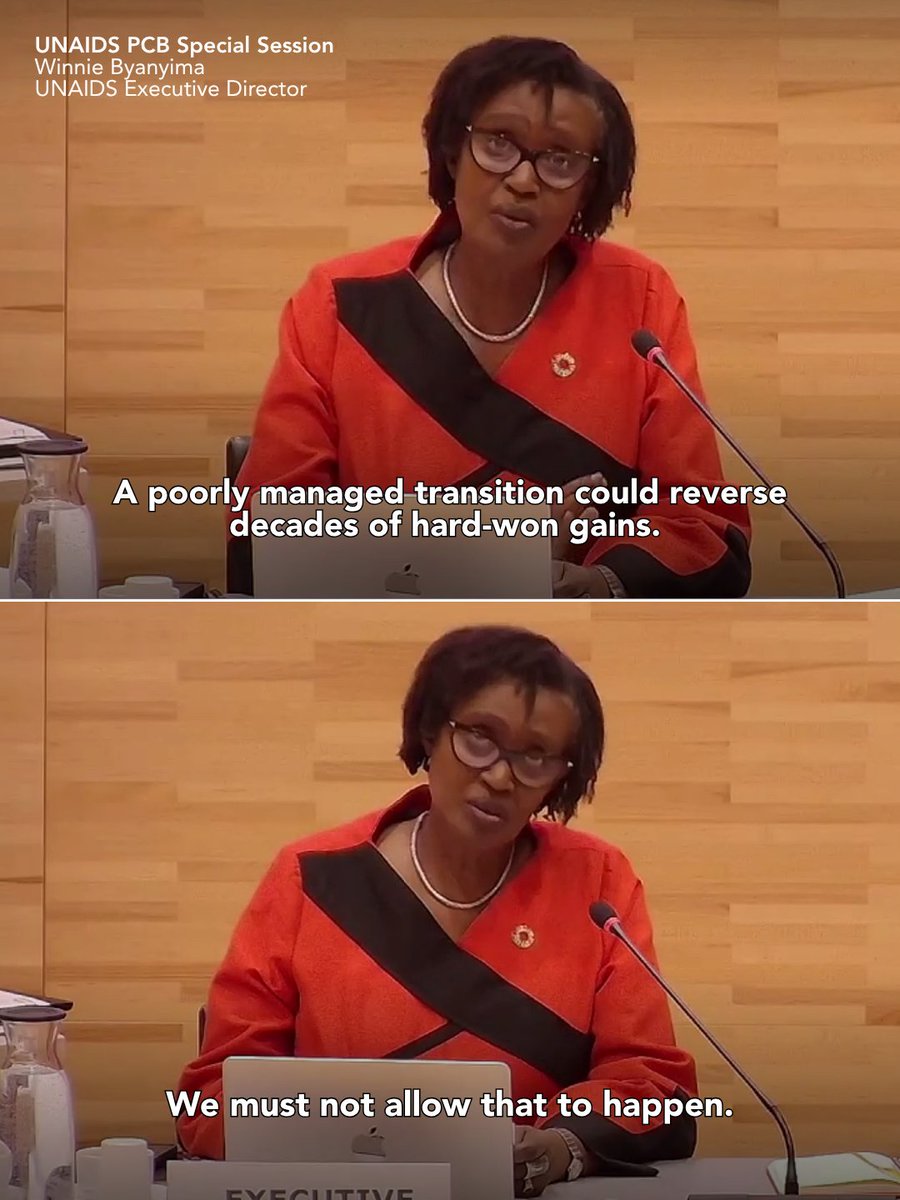
Closing her remarks at today’s UNAIDS PCB Special Session, Executive Director @Winnie_Byanyima underscored the stakes of the Joint Programme’s transformation.
UNAIDS is not closing. Its mission continues.
The road ahead demands a responsible transition that builds on past achievements, strengthens country ownership and protects the people we serve.
At the UNAIDS PCB Special Session, Executive Director @Winnie_Byanyima reminded the Board that the UNAIDS Joint Programme’s transformation must deliver for people: ensuring access to HIV treatment and prevention, empowering community-led organizations, and building sustainable national responses.
“The Joint Programme’s transformation must serve that larger transformation, not the other way around.”
The UNAIDS Joint Programme brings together the Secretariat and its UN Cosponsors to support governments, share resources and work with communities to deliver HIV programmes.
Speaking at today’s UNAIDS PCB Special Session, Executive Director @Winnie_Byanyima highlighted examples of this collaboration, from regional efforts in the Pacific and Latin America to HIV prevention programmes in South Africa and Uganda.
“Moving faster is not necessarily moving forward.”
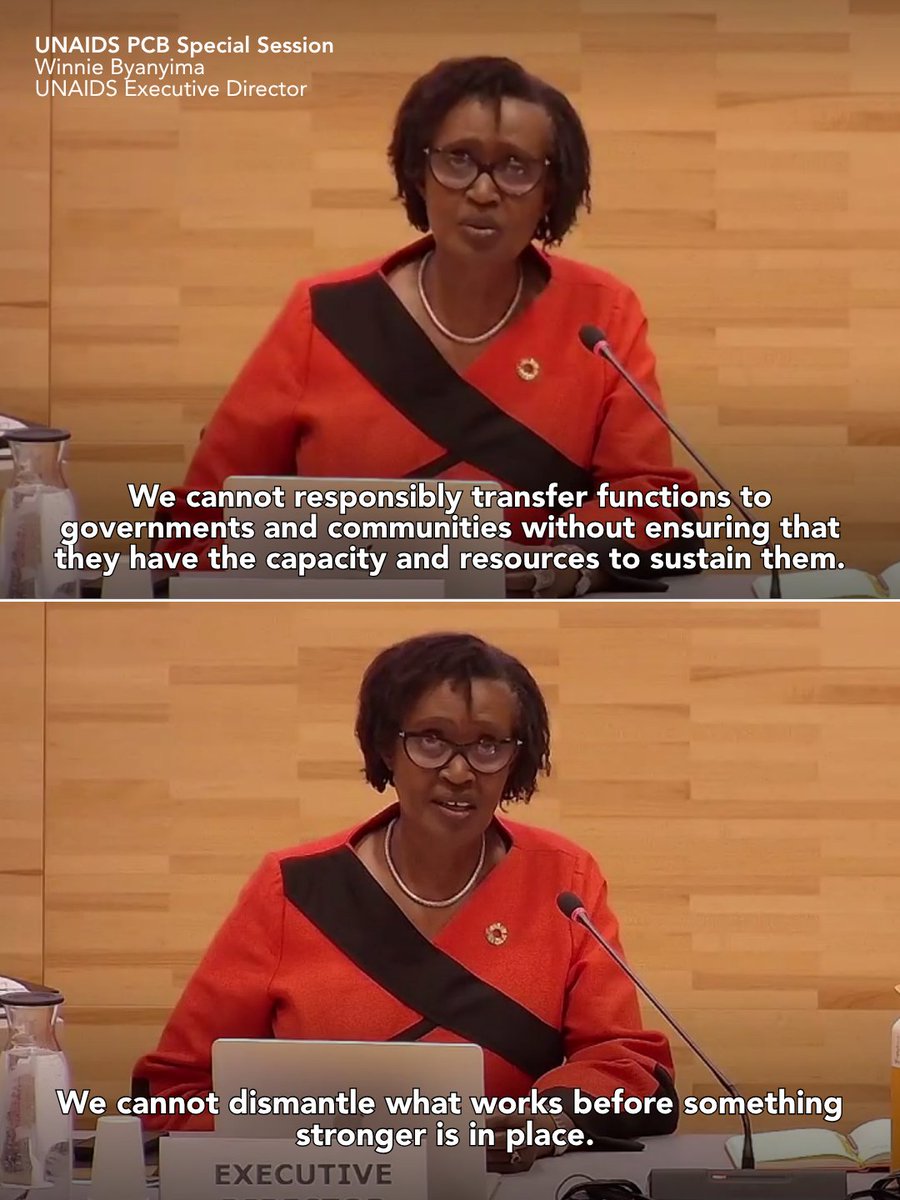
Speaking at today’s UNAIDS PCB Special Session, Executive Director @Winnie_Byanyima stressed that the UNAIDS Joint Programme’s transformation must be responsible and do no harm. Functions cannot be transferred to governments and communities without the capacity and resources to sustain them. Decades of progress in the HIV response must be protected.
"All the world wants to do is to forget that AIDS ever existed. We should not give this up without a fight."
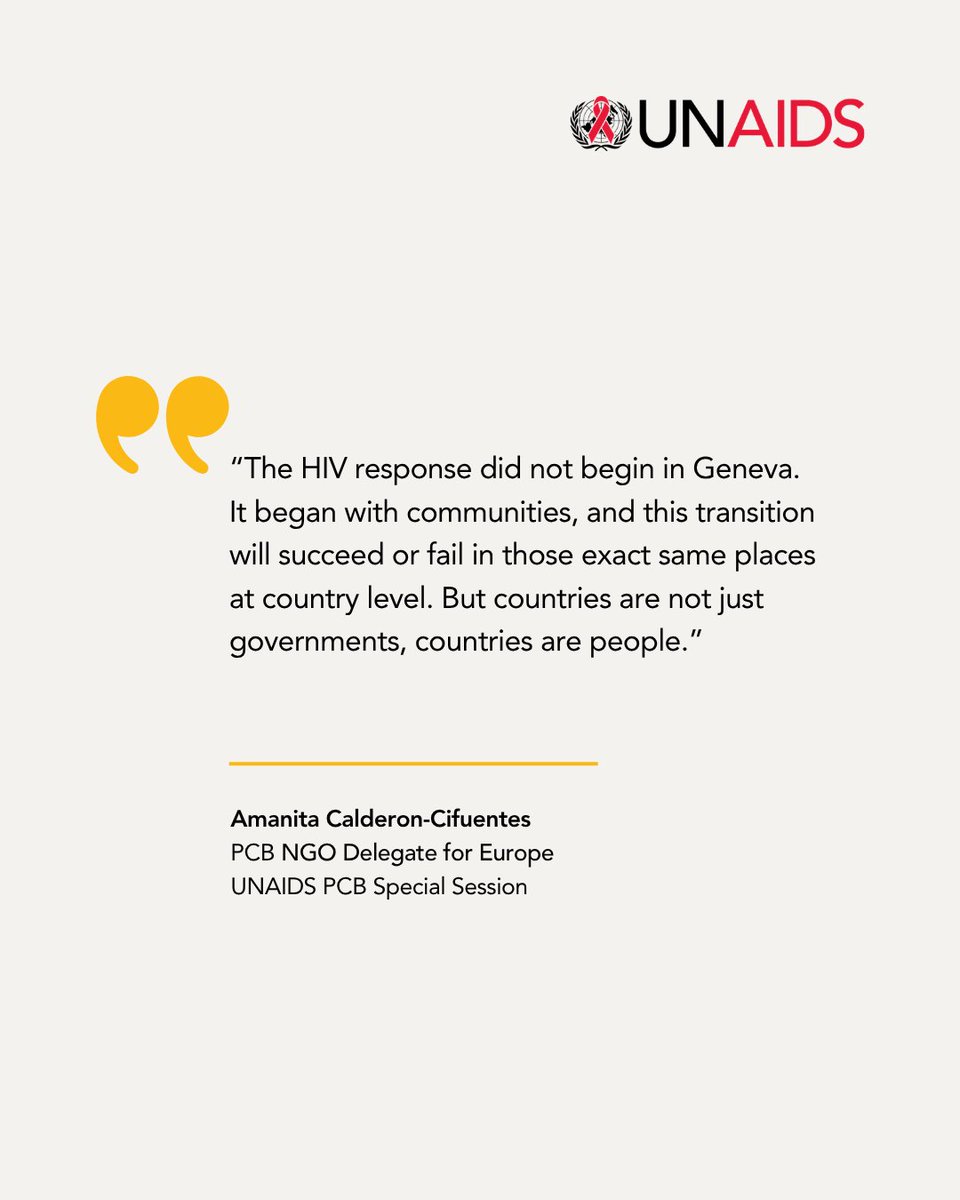
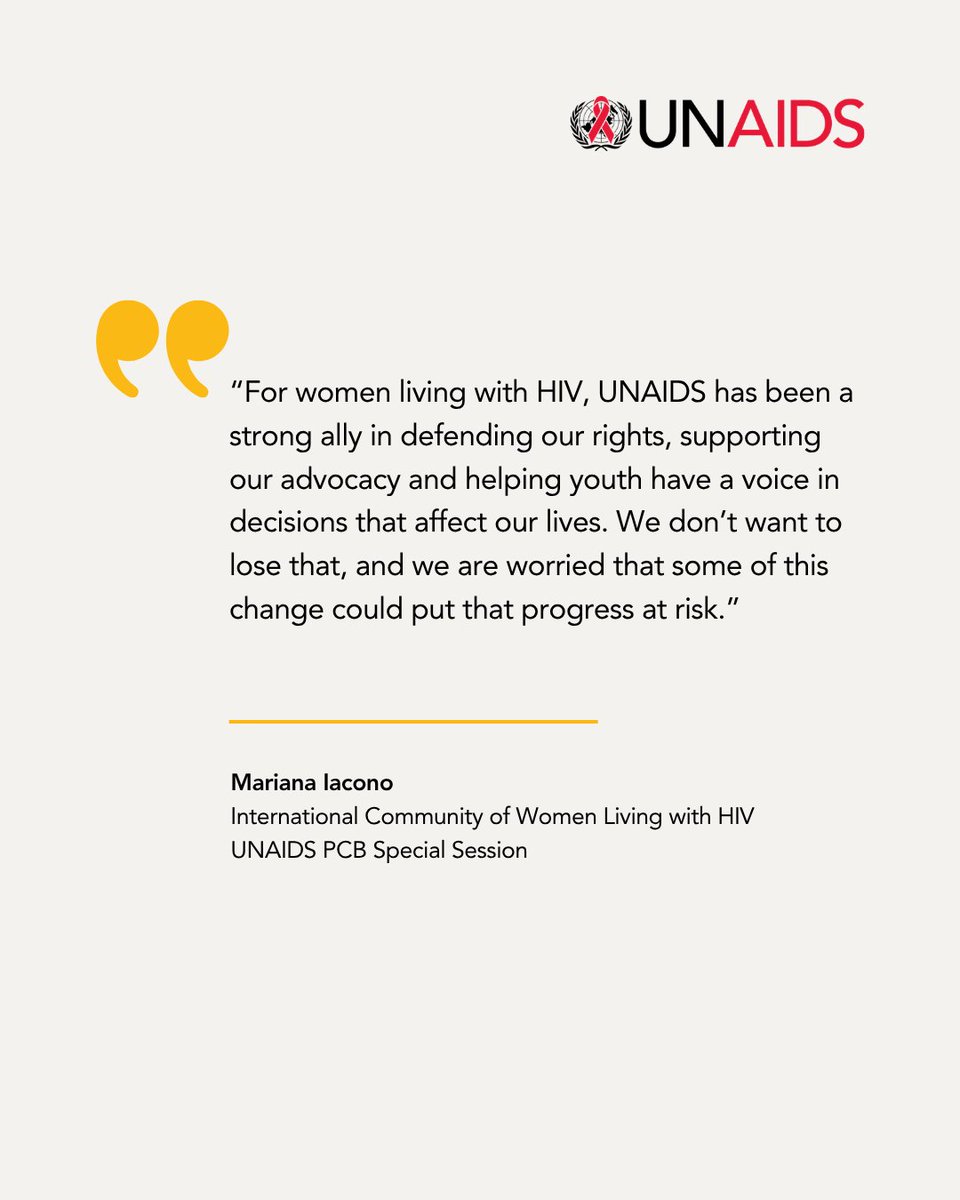
As the UNAIDS Programme Coordinating Board holds its special session today to discuss the future of the UNAIDS Joint Programme, communities reflected on the need for the transformation to safeguard the rights, health and services of communities most affected by HIV, ensuring no one is left behind. #PCBSpecial
Today, the UNAIDS Programme Coordinating Board (PCB) holds a special session to consider the future of the UNAIDS Joint Programme, including a roadmap for its further transition and integration into the UN system and beyond.
As the Joint Programme evolves, its role in coordinating the HIV response, providing technical expertise, ensuring accountability and amplifying community leadership remains vital to ending AIDS.
As UNAIDS prepares for the upcoming Special Session of the Programme Coordinating Board (PCB), the question is not simply how to make the Joint Programme more efficient, but how to ensure that its transformation strengthens the global HIV response.
At #WHS2026, Christine Stegling, Director of Management and Partnerships at UNAIDS, highlighted that UNAIDS accounts for just 0.5% of global HIV resources in low- and middle-income countries. Discussions about efficiencies and savings must be considered in this wider context.
Reform must address duplication while preserving the essential functions that UNAIDS provides: coordination, accountability and political advocacy for people living with HIV and those most at risk.
As PCB members consider the way forward, we must be clear about what needs to be protected, who will be responsible for delivering it, and how we will ensure that the transition strengthens support for countries and communities.
The measure of success must be a stronger, more accountable global HIV response — one that keeps us on track to end AIDS as a public health threat.
#PCBSpecial