Exhibition Antarctica - 5,200 metre dive https://t.co/om3IKaL88i via @YouTube
Diving deep in @InkfishExplore submersible Bakunawa exploring the habitats and local biodiversity.
'It was like something out of a kids' book' - @Hadalbloke@uwaoceans@uwanews@KelpieGeo
70% of Nature readers who responded to an online poll are using the social-media platform Bluesky.
Us too! @uwaoceans.bsky.social
https://t.co/PQzADYnrCA
Happy to share that I contributed to a new paper on how we can preserve bio-logging data to help address conservation issues. Many thanks to @movebankteam for their hard work! @EcoEvo_ANU@uwaoceans
https://t.co/i5XJu69Vok
Productive start to 2025. Another exciting collaborative paper looking at the influence of natural and artificial features on the movement and connectivity of whale sharks - led by @BenDantonio@aims_gov_au@uwaoceans@ECOCEANInc https://t.co/aaVii0TkqR
“I think the world was ready for a bit of seaweed love. Just as corals unite the features of the Great Barrier Reef, seaweed connects the Great Southern Reef” says OI member Prof Thomas Wernberg @twernberg
https://t.co/xHtSNvgAvu
Wishing everyone a happy and safe festive holiday with family and friends!
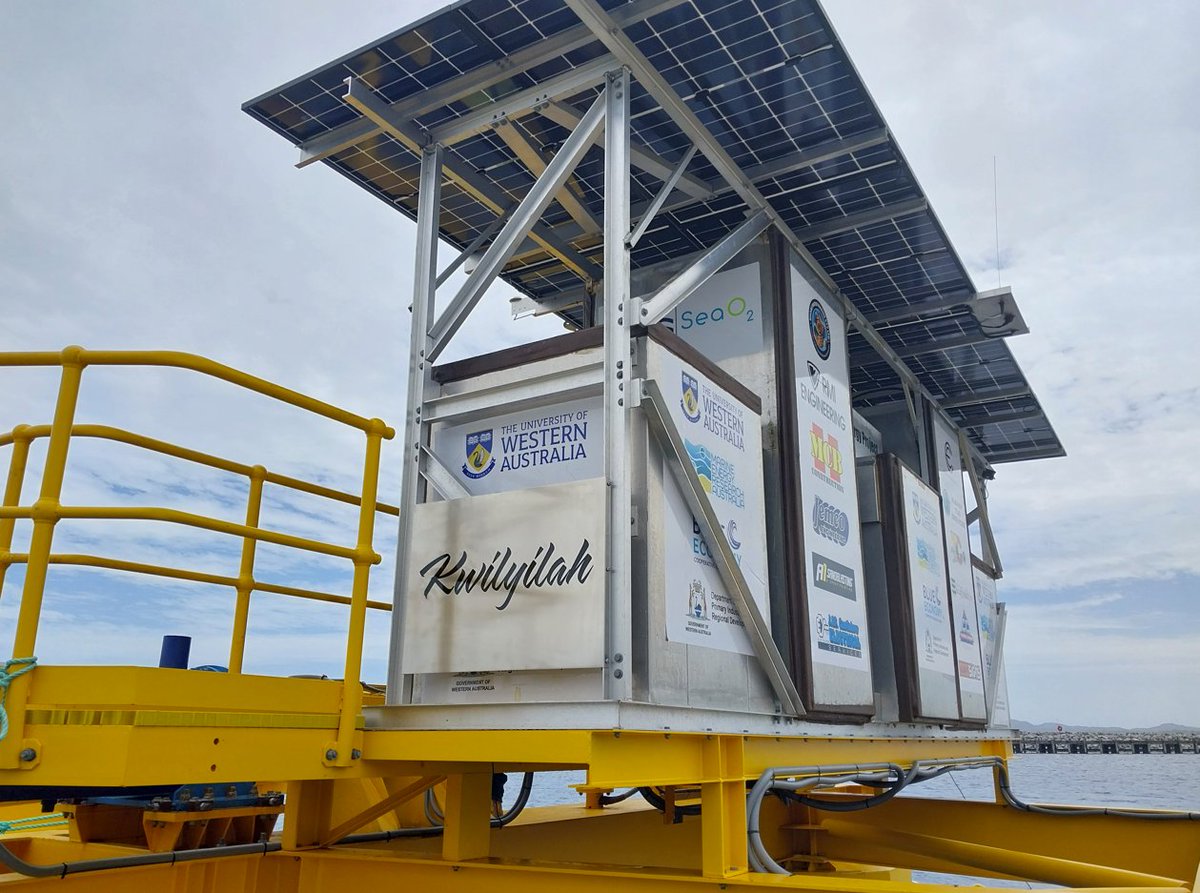
The M4 (𝘒𝘸𝘪𝘭𝘺𝘪𝘭𝘢𝘩) wont be taking any time off over the break, it’ll be working hard collecting data!
Working with the Albany Heritage Reference Group, participating Elders chose the Noongar name ‘𝗞𝘄𝗶𝗹𝘆𝗶𝗹𝗮𝗵’ – dolphin for M4, describing the leaping/hinging motion above water and the strong connection and knowledge shared between dolphins and coastal communities.
We developed a ‘donor registry’ of pre-adapted #Posidonia genotypes by mapping the distribution of alleles to visualise allelic composition, a first step to select source material for future-proofing restoration: https://t.co/NoReinurKM
#seagrassrestoration#GenotypebyEnvironment