Every four minutes, a child is killed by violence. At home, two in three children worldwide regularly experience violent punishment.
But violence against children is not inevitable. We know what works. Now we need the political leadership, funding and action to make a difference in every child’s life.
Learn more: https://t.co/6cB70BAWNR
At least 64 children have been killed and 64 injured in Yemen since hostilities escalated on 3 September. The number of casualties is likely to increase as renewed fighting continues around densely populated areas.
Basic services and infrastructure children depend on are also being directly impacted and displacement is accelerating. More than 330,000 people, including an estimated 174,000 children, have been displaced since the beginning of the renewed military escalations. Many displaced families are sheltering in unfinished or damaged buildings and struggling to access food, safe water, and health care.
UNICEF is expanding its emergency response to reach up to 350,000 people in the following ways:
- redeploying health and nutrition mobile teams to displacement sites and affected communities
- scaling up emergency water and sanitation support, and
- providing psychosocial care and case management for children, including those who are unaccompanied or separated from their families.
Learn more: https://t.co/zMY7SoiaL3
Every year since 2015, individually, has been the warmest year on record.
Several climate hazards have increased in frequency and intensity, and often overlap - and children are disproportionately affected by the consequences.
Long droughts create food insecurity. Dry vegetation and heatwaves can spark wildfires. Storms and floods cause landslides, destroying schools and homes. These effects can become a vicious cycle.
Children’s futures can’t wait. At #COP31, Governments and businesses must commit to:
✔️ Reduce emissions
🏫 Protect children and the services they rely on
🗣️ Empower children and young people to be at the heart of climate decision-making
Learn more: https://t.co/bABwMqkmGI
When a child experiences violence, what happens next matters.
A safe place to turn to. Someone who listens and believes them. The right care and support to recover.
In 2025, UNICEF supported around 4.5 million children affected by violence to access essential services across 112 countries.
No child should have to face violence alone.
#EndViolenceAgainstChildren
“As soon as I wake up, I think about water,” says Aya, 11.
For children in Gaza like Aya, Aisha and Yaza, water isn’t something easily accessible from a tap at home.
Almost half of all attacks that damaged or destroyed water systems globally between 2021 and 2025 were documented in the State of Palestine.
Water is every child’s right and must be protected at all times, even in conflict.
#WaterUnderFire
Lost loved ones. Missed school. Cut off from healthcare.
6 months into the Ebola outbreak in DR Congo, children are among the most impacted.
UNICEF and partners are putting children at the heart of the response, but the needs are enormous.
Share this video to spread the word.
If you could keep, change or delete ONE thing about AI, what would it be?
Yolanda from Zambia, Richard from Belize and Swarnima from Nepal are sharing their takes. Now it’s your turn!
Make your voice count in the Children’s Manifesto on Artificial Intelligence and Child Rights: https://t.co/1wceTgooVi
The United Nations Convention on the Rights of the Child has helped transform children's lives around the world.
Yet millions are still being left behind.
This #WorldChildrensDay, we're calling on leaders to protect the rights of every child. https://t.co/mGnKke2Iu7
Rising child poverty, conflicts, climate shocks, and drastic funding cuts for life-saving services and supplies are robbing children of their futures.
We say: enough.
Children’s rights must be upheld every day, though actions and investment.
#WorldChildrensDay
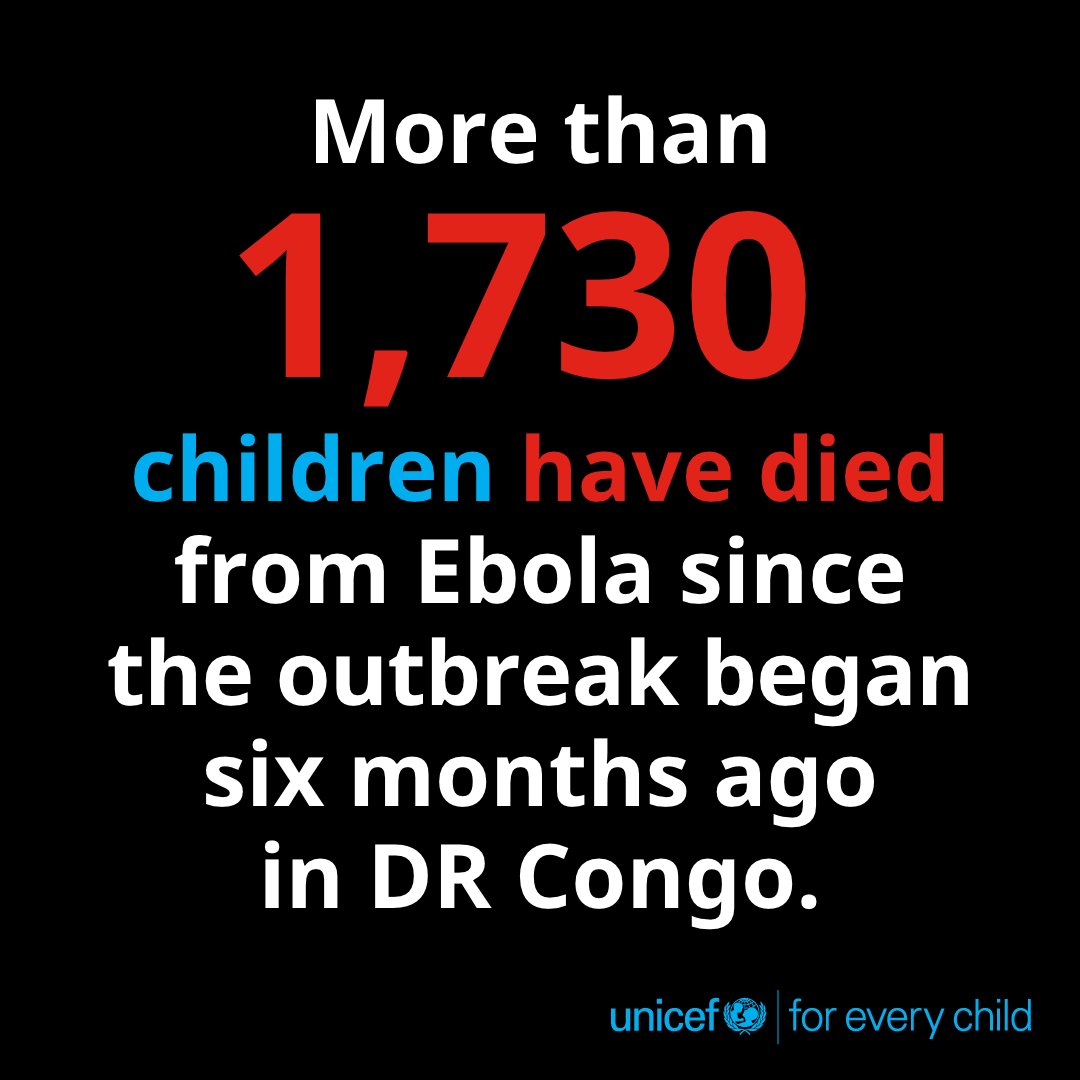
More than 1,730 children have died from Ebola over the past six months, amid DR Congo’s largest and deadliest outbreak to date.
UNICEF and partners are urgently expanding our response in the most vulnerable areas, while ensuring children and communities can access essential services.
But the needs are immense and as Ebola spreads to new areas, children continue to bear a heavy and growing toll.
Learn more: https://t.co/m7ahWEZOLb
Investing in children means investing in our shared future.
This #WorldChildrensDay, and every day, choose a better future for children and uphold their rights. https://t.co/DTzsriGm0L
3.7 million.
That’s the staggering number of children in Afghanistan suffering from acute malnutrition. Another 1.65 million remain in critical condition.
UNICEF’s Daniel Timme shares how climate change is driving food insecurity in the country. Afghanistan is one of the lowest contributors to global emissions, but people are being disproportionately impacted. Drought is causing water sources to dry up and orchards to wither, threatening the well-being of children and families.
UNICEF and partners are working to reach affected children to ensure they receive the care and treatments they need.
But without urgent and sustained funding, acute malnutrition will likely worsen further. UNICEF is calling for funds to maintain life-saving therapeutic food, nutrition and health services, alongside safe water, sanitation and livelihood support.
As leaders gather at #COP31, they need to make decisions and investments to protect vulnerable communities from the impacts of climate change.
Learn more: https://t.co/ChgMmfvXVp
An attack on water is an attack on children.
We reject this new normal.
Join us in calling for the protection of water and children. #WaterUnderFire
Learn more: https://t.co/esXUzQT13A
Drone attacks. Drought. Severe malnutrition.
Children in Sudan are facing multiple threats to their lives and well-being.
Watch as UNICEF’s @1james_elder explains the critical situation following his visit to the country.
Read more: https://t.co/OF90giiIe7
Recent heavy rains in Gaza directly affected more than 106,000 people, damaging or destroying shelters, latrines, and belongings.
Three children aged four, five and eight were killed along with their mother over the weekend when a sand dune collapsed onto their tent in Deir al-Balah, central Gaza, after heavy rainfall.
The deaths happened as families, exhausted by war and the protracted crisis, prepare to face a fourth winter under very dire conditions. Some 1.7 million displaced people are still living in tents, makeshift shelters, or damaged buildings exposed to flooding, cold and collapse.
The flooding caused by the heavy rains is compounding a sanitation crisis created by the war. No wastewater treatment plant in Gaza is currently operational.
UNICEF and partners are distributing tarpaulins, winter clothing, blankets, and hygiene supplies, clearing blocked sewers and stormwater basins, and installing sandbags at sites to mitigate the impact of flooding. In the past week alone, we reached at least 10,000 children with winter clothing and thermal blankets, distributed tarpaulins to families whose tents have flooded, and cleared sewage and stormwater at more than 50 locations.
The emergency response is vital but is not a long-term solution. Tents and tarpaulins offer little protection against severe storms, and damaged water and sanitation systems continue to put children’s health and lives at risk.
UNICEF urgently calls on the Israeli authorities to allow the immediate entry of pumps, generators, spare parts and other materials needed to repair water and sanitation infrastructure, including the Sheikh Radwan stormwater basin and the Sheikh Ejleen Wastewater Treatment Plant.
We urge the international community to join the call for the entry of all life-saving humanitarian supplies and equipment, and to provide urgent funding for UNICEF's winter response in Gaza.
Learn more: https://t.co/hsSq0AbkDU
This year in Sudan, armed drones have caused two out of three child casualties.
After more than three years of conflict, even the most ordinary parts of daily life have become increasingly dangerous.
Watch to see the maddening devastation with UNICEF Spokesperson @1james_elder
The killing and injuring of children must end.
“We got flooded, and our tent collapsed.” Bilal, 13.
Rain & cold temperatures in #Gaza are making living conditions even worse for children & families
While @UNICEF is distributing emergency winter supplies, access for all aid to enable recovery work & more funding is vital.
Have you ever wondered what El Niño is?
What does it have to do with climate change?
And how will it impact children around the world?
To clear things up, UNICEF Goodwill Ambassador and climate activist Vanessa Nakate is here to explain it.
#COP31