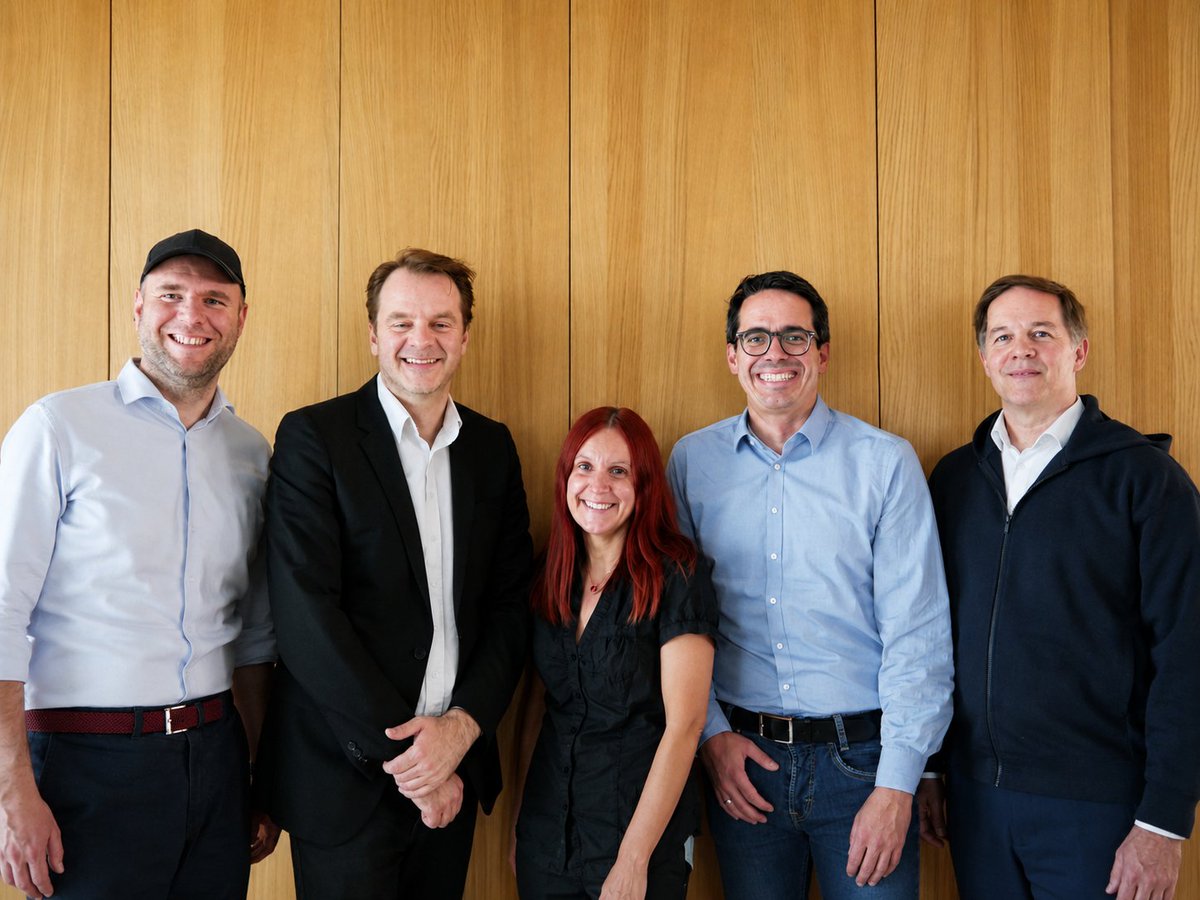
We just got the MiCAR CASP license 🇪🇺
Europe’s first independent Crypto Asset Advisory firm, not a platform. Self-hosted investing. No intermediaries. The future is decentralized.🚀
We’re joining r/FinanzenAT tomorrow for an AMA on crypto taxes in Austria together with @blockpit_io 🇦🇹
📅 May 27 | 18:00–19:00
We’ll discuss:
• Tax return 2025
• DAC8 reporting
• Crypto documentation
• DeFi & staking
• Austria’s growing role as a European crypto hub
Tomorrow you won't pay 10,000 BTC for a pizza. Tomorrow the pizza is on us 😎
Global Bitcoin Pizza Party at MAK Säulenhalle.
Starting at 16:00
Free Pizza and free Drinks. See you there. 🤝
MAK Wien x Validvent x @Pizza_DAO x @CryptoWiener_
The longer I work in this industry the more I believe the next phase of Bitcoin & Crypto will be built less on hype - and much more on trust, infrastructure and - yes - "clarity" 😇
We’ve had our CASP license for just one month - and already five crypto companies have approached us asking whether we would acquire their stack through an asset or share deal because they will not be MiCA compliant by July 1 and are now looking for some form of exit.
Some developments don’t really come as a surprise. This one didn’t.
MiCA did not “kill” the European crypto industry. What it did was force the market to distinguish between narrative, real technology and sustainable financial infrastructure.
Web3 used to work almost like a utility. You picked a provider, plugged into an API and moved on. It did not really matter where the company was based. Now it does.
Regulation has become local. Supervision is continuous. And the integrations that actually matter with banks, payment providers and merchants go far beyond a simple API connection.
What changed with MiCA is what the market now requires.
Today, local presence matters in a way it never did before. From the few crypto companies left in Europe, even fewer are able to support the full lifecycle properly: euros into crypto, execution, custody, compliance, reporting, governance, payments infrastructure and integrations that actually hold up under scrutiny.
The uncomfortable reality is that the barrier to remain in this industry is becoming extremely high.
Compliance, licensing, governance, cybersecurity, reporting and operational oversight now require enormous amounts of capital and resources. This increasingly means that only heavily capitalized players can survive long enough to scale.
And yet the industry still avoids confronting the core issue: if there is no market, there is no industry.
Tokenization alone does not create value. Without liquidity, interoperability, distribution, market structure and real secondary market access, many tokenized assets are still just more expensive databases wrapped in blockchain infrastructure.
The technology already exists. That is no longer the problem.
MiCA’s original goal was a very good one: protecting customers from rug pulls and insolvent platforms. Investor protection is necessary. Regulatory maturity is necessary.
But does protecting customers really require shutting down hundreds of European crypto companies? Does banning USDT really serve the interests of users?
In my humble opinion, the current implementation of MiCA does not sufficiently serve the needs of European customers, founders or innovation.
Europe is entering a new phase: fewer players, but more specialized, supervised and integrated into the traditional financial system.
That shift was probably inevitable.
The real question is whether Europe will still leave enough room for innovation once the dust settles.
One week till we celebrate the Global Bitcoin Pizza Party at MAK's Säulenhalle 😋
🕓 16:00 Doors open
🎨 16:00–18:00 Exhibition "Soft Image, Brittle Grounds" by Felix Lenz 🚶
📺 Livestreams from 400+ cities worldwide
🍕 Free Pizza & free Drinks 🥤
See you at MAK!
Bitcoin Pizza Day is coming 🤘
Join the biggest global Bitcoin Pizza Party with us
📅 Friday, May 22nd, from 16:00
📍 Säulenhalle, MAK Vienna
Free Pizza 🍕, free Drinks🥤 and free entry if registred
One lesson from our CASP journey:
Don’t underestimate execution complexity and review process.
We handled most things in-house and underestimated the operational + regulatory workload.
Ended up taking 6 months longer than planned and got debanked along the way.
If you want to move fast under MiCA: build the right team before you start.
In the picture you see our Legal Team besides me and @cryptorobby_
Our timeline:
09/2024 Initial preparations began
01–04/2025 Application submitted
05–10/2025 Multiple review iterations with the FMA
11/2025 Fit & Proper test completed
12/2025 Additional equity requirements requested
03/2026 Confirmation of completeness received
04/2026 Notification granted - officially a CASP
There is a day that changed Bitcoin forever 👀 And we're about to celebrate it in a BIG way in Vienna.
📅 Friday, May 22nd, from 16:00
📍 Säulenhalle, MAK Vienna
Free Pizza 🍕 & free Drinks 🥤
RSVP now: https://t.co/FAkksgAJdG
Save the date for Vienna’s Official Global Bitcoin Pizza Party 🍕
📅 Friday, May 22nd 2026, from 16:00
📍 Säulenhalle, MAK Vienna
Hosted by @Pizza_DAO x MAK x Validvent x @CryptoWiener_
https://t.co/FAkksgAJdG
Building independent crypto advisory rooted in self-custody and long-term conviction means a lot to us and it means even more when it is seen and shared.
Thank you to @TrendingTopics for the thoughtful coverage of our MiCAR CASP license 🇪🇺
https://t.co/yafTcuRW3n