"Veda has carved out a spot currently as the top choice for wrapped L1 assets. 42% of WETH and 73% of WBTC sit in Veda vaults." -@JackMandin
The universal nature of veda vaults enable the ability to support any asset, chain, curator, market and more. The dominance is shown as the #2 stablecoin vault provider and #1 BTC + ETH vault provider.
"Should anyone be able to spin up a vault? I think the answer is it has to be yes, right? There's no way to really gate this."
"But I also don't think it matters because _______"
@sunandr_ at @proofoftalk
What caught my attention: @TuongvyLe12 asks who actually owns the real tokenized Apple stock once five companies claim to issue it. 🍎
New clip from @DEXintheCityPod.
Millions of @MetaMask users can now tap into spendable onchain yield with Money Account 👇
> powered by a @veda_labs vault on @monad
> strategy by @SteakhouseFi
> leveraging @Morpho's open credit network
> save, spend, or trade with your balance
The future of money 🔮
Finance should be flexible.
The current system doesn't offer that.
Vaults need to be able to adapt to changing markets but many don't, resulting in lower performance and posing unnecessary security risk.
Learn more about flexible finance on our blog: https://t.co/a0jbcjhI6q
Nothing like a Comm'r Peirce statement to get securities lawyers debating Reves and notes again! As @veda_labs has submitted to the SEC, decentralized on-chain lending protocols generally do not implicate Reves.
The discussion often begins with Reves’s family resemblance test. But that skips over the threshold question. Reves presupposes the existence of a note - an instrument evidencing a borrower’s obligation to repay a debt. Before asking whether an instrument bears a “family resemblance” to a security, we must first identify the note itself.
That was straightforward in a situation like BlockFi: customers transferred assets to BlockFi, making it the obligor, who deployed customer assets on its own balance sheet, rehypothecated them, and contractually promised repayment. Customers were ultimately relying on BlockFi’s creditworthiness. That is the paradigmatic debtor-creditor relationship to which Reves naturally applies.
Decentralized lending protocols such as @aave and @Morpho are fundamentally different. The protocol does not borrow customer assets, incur an independent repayment obligation, issue debt backed by its own credit, raise capital for its own business, or intermediate lending through its own balance sheet. Rather, it provides a non-custodial, rules-based mechanism through which users lend and borrow pursuant to predetermined smart contract logic.
That distinction is legally significant, not just a design difference. To be sure, protocols may make governance decisions regarding collateral eligibility, risk parameters, and other aspects of protocol design. But those decisions govern how the protocol operates; they do not transform the protocol into an intermediary borrower that incurs an independent obligation to repay suppliers.
Traditional notes evidence an extension of credit premised on the borrower’s promise to repay. Protocol lending instead relies on ex ante overcollateralization, algorithmic collateral management, and automatic liquidation. Repayment is designed to come from collateral, not from an intermediary's willingness or ability to satisfy its obligations. The lender’s principal risks are collateral risk, market risk, and smart contract risk, rather than the credit risk of a balance-sheet intermediary.
Ask: Who is the issuer? Whose motivations are relevant? Who is raising capital? Whose creditworthiness is the lender evaluating? Whose promise to repay is reflected in the alleged note?
In BlockFi, the answer to those questions was obvious. In decentralized lending protocols, it is not.
And that’s why decentralized lending protocols do not generally implicate Reves. The doctrine was developed to determine when an instrument evidencing an issuer's indebtedness should be treated as a security. Where there is no intermediary borrower, no balance-sheet financing, and no instrument embodying an independent promise to repay, the legal predicate for Reves is absent.
None of this is to suggest that every on-chain lending arrangement falls outside the securities laws. Protocol design matters, and different architectures may produce different analyses. But decentralized, non-custodial lending should not be analyzed simply by analogy to centralized lending businesses. They are fundamentally different models.
DeFi risk is moving from the smart contract layer to the operational layer.
"This is inevitable ... I actually think this transition is a good thing."
- @sunandr_ at @proofoftalk
"When you have financial technology that reaches a certain scale, it is inevitable that it will be regulated."
"It's too impactful, it's too important, it's too easy for people to lose money if they don't understand what's going on."
"Now whether vaults fit neatly into any of the existing regulation in any jurisdiction, I think the answer is no. This is fundamentally new technology."
@sunandr_ at @proofoftalk:
"Vaults are going to be really critical infrastructure for crypto to succeed."
Veda GC @TuongvyLe12 explains why she doesn't see institutions getting involved with vaults as a bad thing:
"To me that just means more everyday users are going to get to access this technology."
If your business strategy relies on the customer being stuck with a worse product, you need a new strategy.
The direction of travel with AI, crypto, etc. is that consumers will get the best product at the best price one way or another
Comm'r @HesterPeirce@SECGov just released a statement on vaults. The part that stood out to me:
"These new approaches to the deployment of assets hold great promise. Depending on their design, they can enable people to use the assets they own to generate income efficiently and cheaply. As securities move onchain, vaults and onchain lending strategies may become mainstream tools for managing investment portfolios."
Notice what's in that sentence. First, it presupposes that securities will move on-chain. Second, it suggests that when that happens, vaults won't just be a niche crypto product - they'll be core infrastructure for on-chain capital markets.
That is quite remarkable and we @veda_labs couldn't agree more. This is an exciting glimpse into the future of on-chain financial markets and exactly the conversation we should be having.
The answer: Flexibility.
As a category, neobanks have become a powerful alternative to traditional banking because they offer a wider global audience the ability to spend, send, and save money on their own terms.
This flexibility is what draws users to neobanks.
It only makes sense that their yield infrastructure is flexible too.
Read more about why flexibility matters for DeFi yield vaults on our blog: https://t.co/3qmJVKvwwt
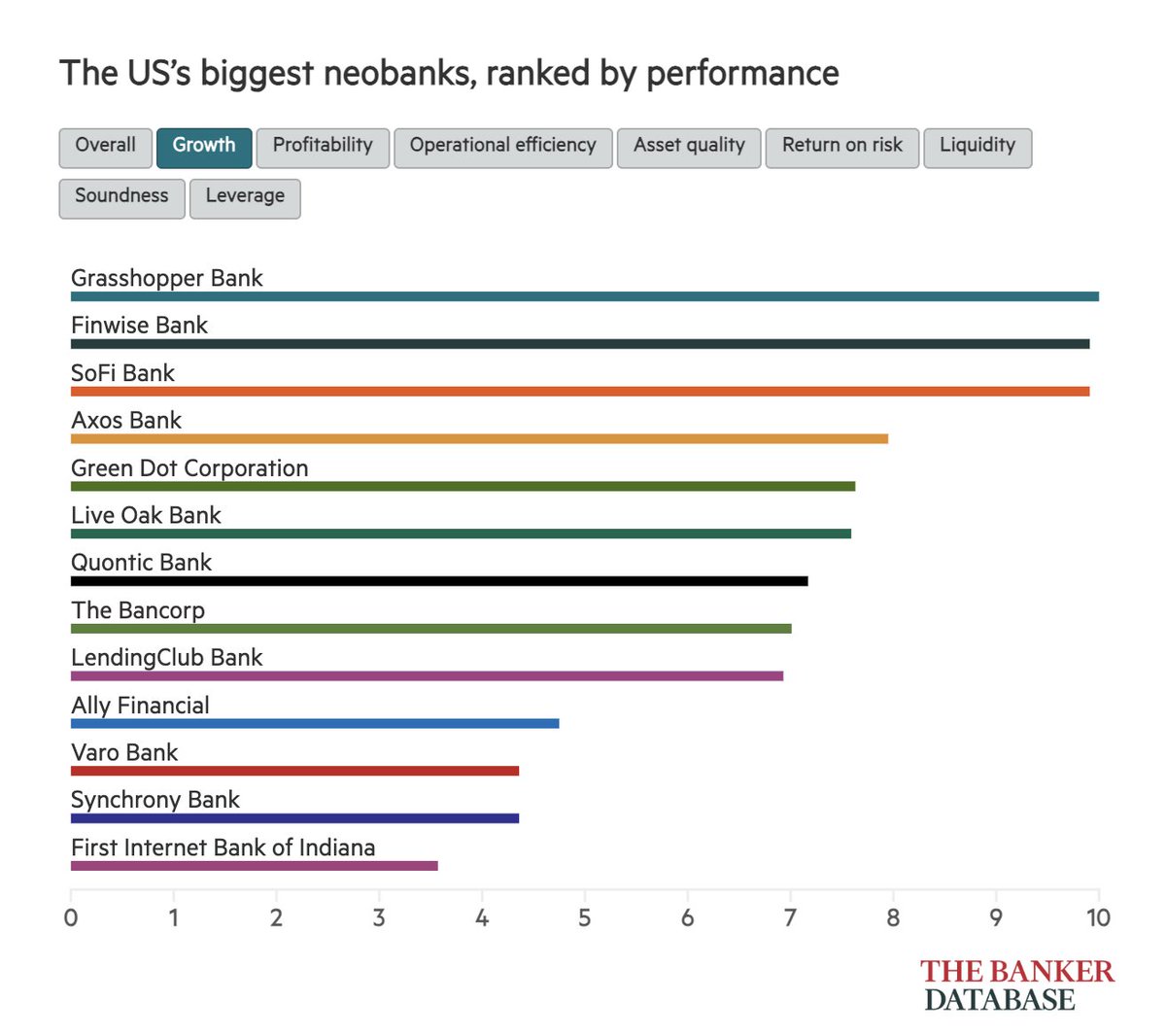
Neobanks make up 19% of bank accounts globally but only about 5% of retail banking revenues, according to a report from consulting firm Simon-Kucher.
Since 2024, neobank growth has become concentrated among a small group of leaders.
So how can new entrants stand out?
At @veda_labs we talk to institutions everyday and they see the power of Defi: open, permissionless, programmable, composable, interoperable, and non-custodial. The question is how DeFi can be offered to their users in a way that is usable and safe while preserving what makes DeFi special.