Agentic AI introduces new attack surfaces that most architectures were not built to handle.
Visit us a Gartner IOCS booth 411 to see how unified SASE addresses this head-on.
Have specific scenarios to talk throught? Book a one-on-one with our team: https://t.co/yUg2VfC4y9
Lastly, use code LSC45EDC to receive a discount when you register for the conference.
#NetworkSecurity #GartnerIOCS
Most AI governance conversations focus on the model.
But if the network underneath cannot confirm where inspection, logging, and policy enforcement happened, you have a gap that model-layer controls will not close.
Gartner projects 35% of countries will operate on region-specific AI platforms by 2027.
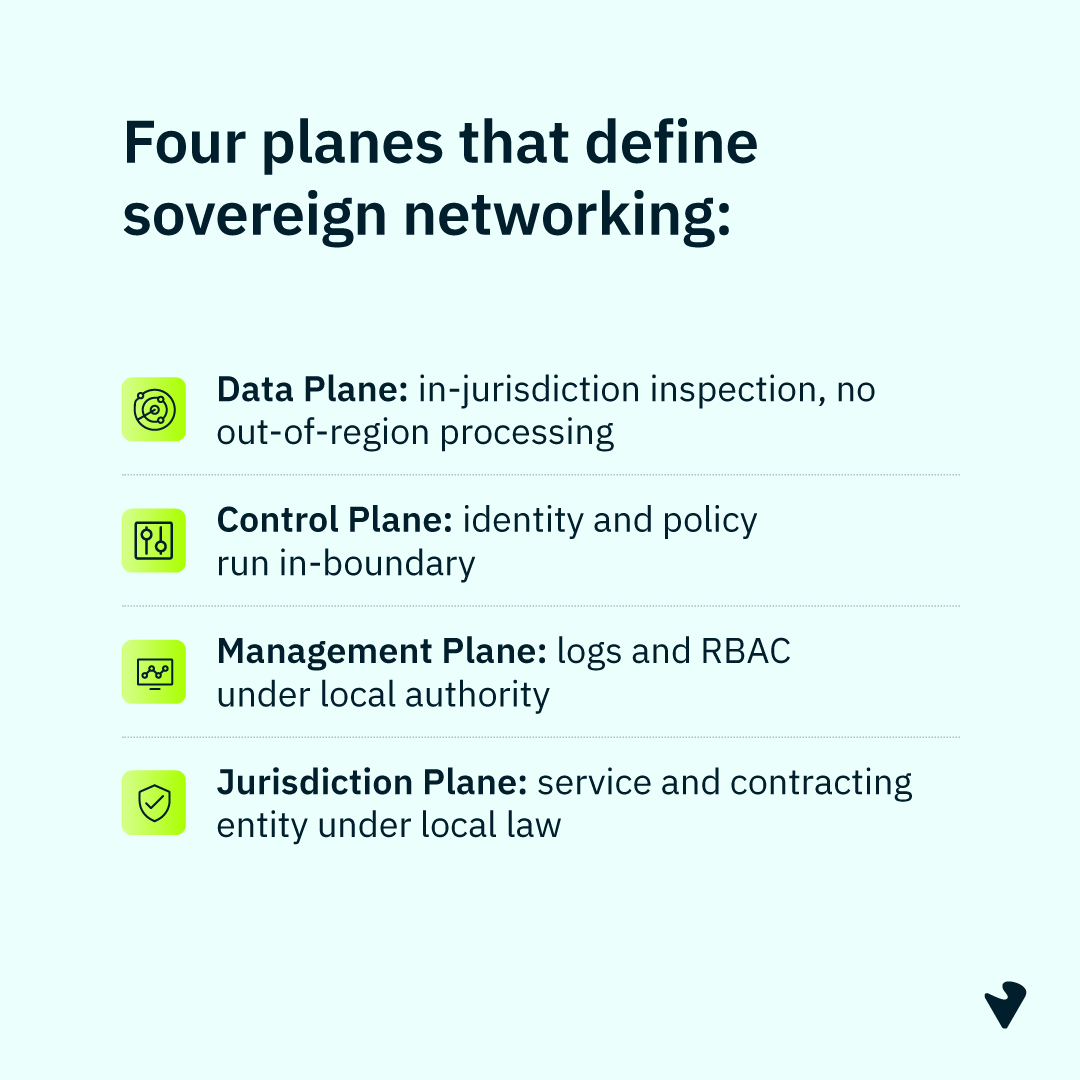
Sovereign SASE is how organizations address that at the network layer, across data, control, management, and jurisdiction planes.
Read the blog here: https://t.co/J36XW0Dl7Q
#NetworkSecurity #SASE
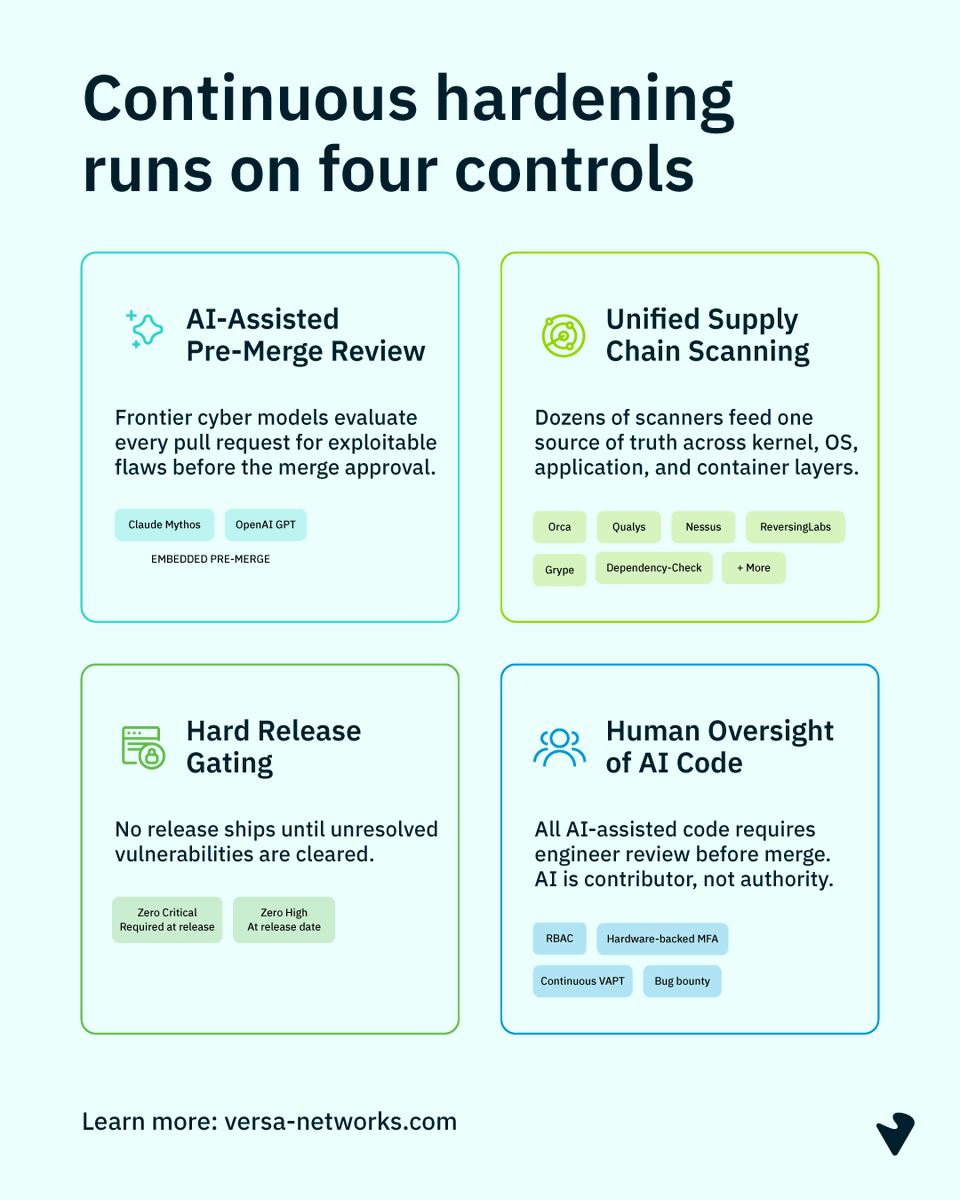
Reactive patching assumes you have time to catch vulnerabilities after the fact.
That assumption does not hold in a cloud-native, AI-assisted development environment.
This graphic shows where the four controls split from the reactive model. And this blog post outlines the controls behind continuous hardening: https://t.co/LvvOaGmgmF
#NetworkSecurity #CyberSecurity
Hosting a workload on our uCPE instead of a dedicated appliance can save hundreds of dollars per site per month once hardware, power, and management overhead are factored in.
Scale that across 500 to 2,000 locations and the savings can reach into the millions annually, and that is before accounting for avoided capital outlay.
AI memory costs are making this math more relevant now, not less: https://t.co/qqUmt1yZmf
#NetworkSecurity #EdgeComputing
When every AI agent, API, SaaS application, and unmanaged device is a potential attack point, perimeter-based thinking no longer holds up.
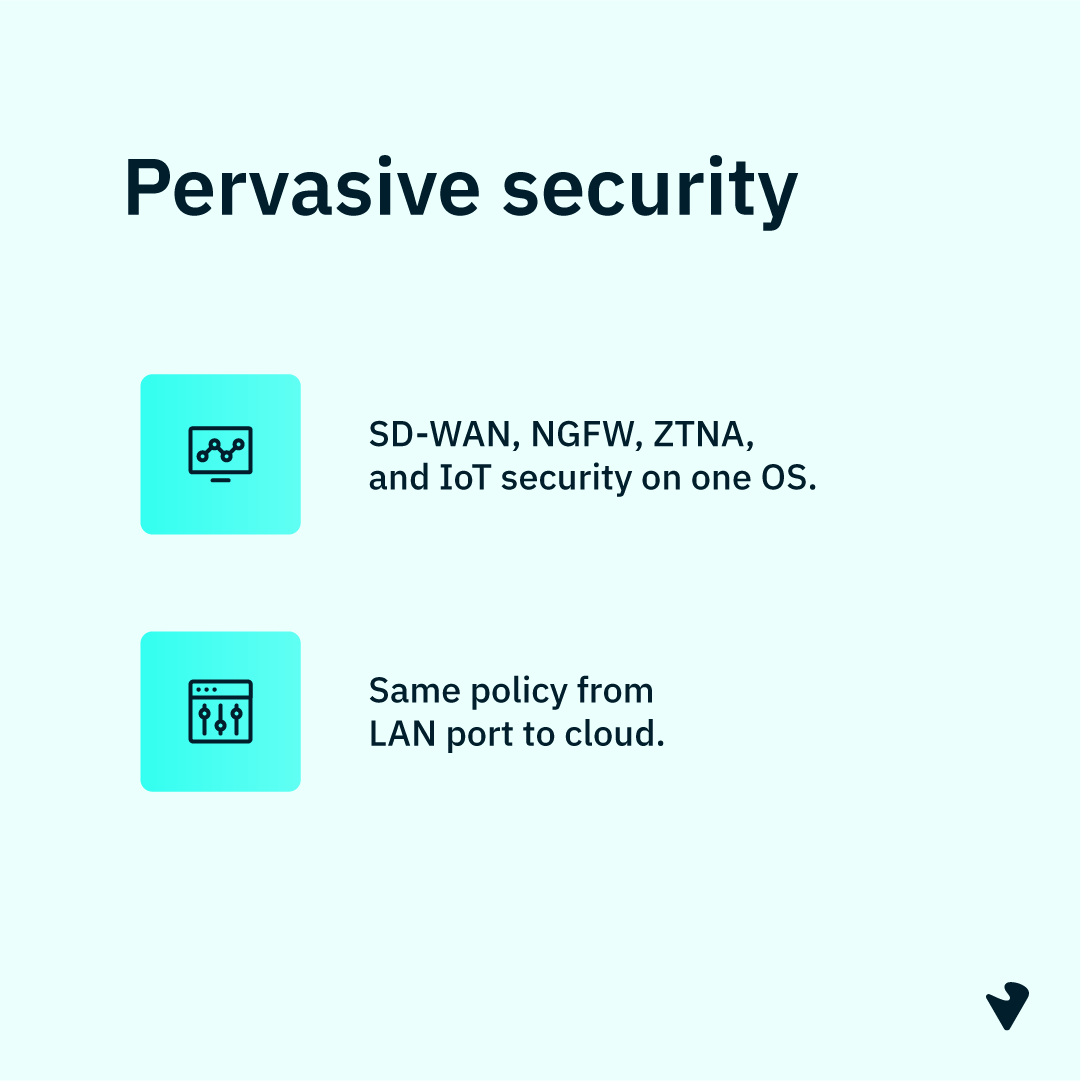
In our upcoming webinar, we explore why Pervasive Security is gaining ground as a model for AI-first enterprises and what it takes to deliver protection with greater reach, speed, and consistency.
Register for our webinar: https://t.co/WR63TGwkpo
#NetworkSecurity #ZeroTrust
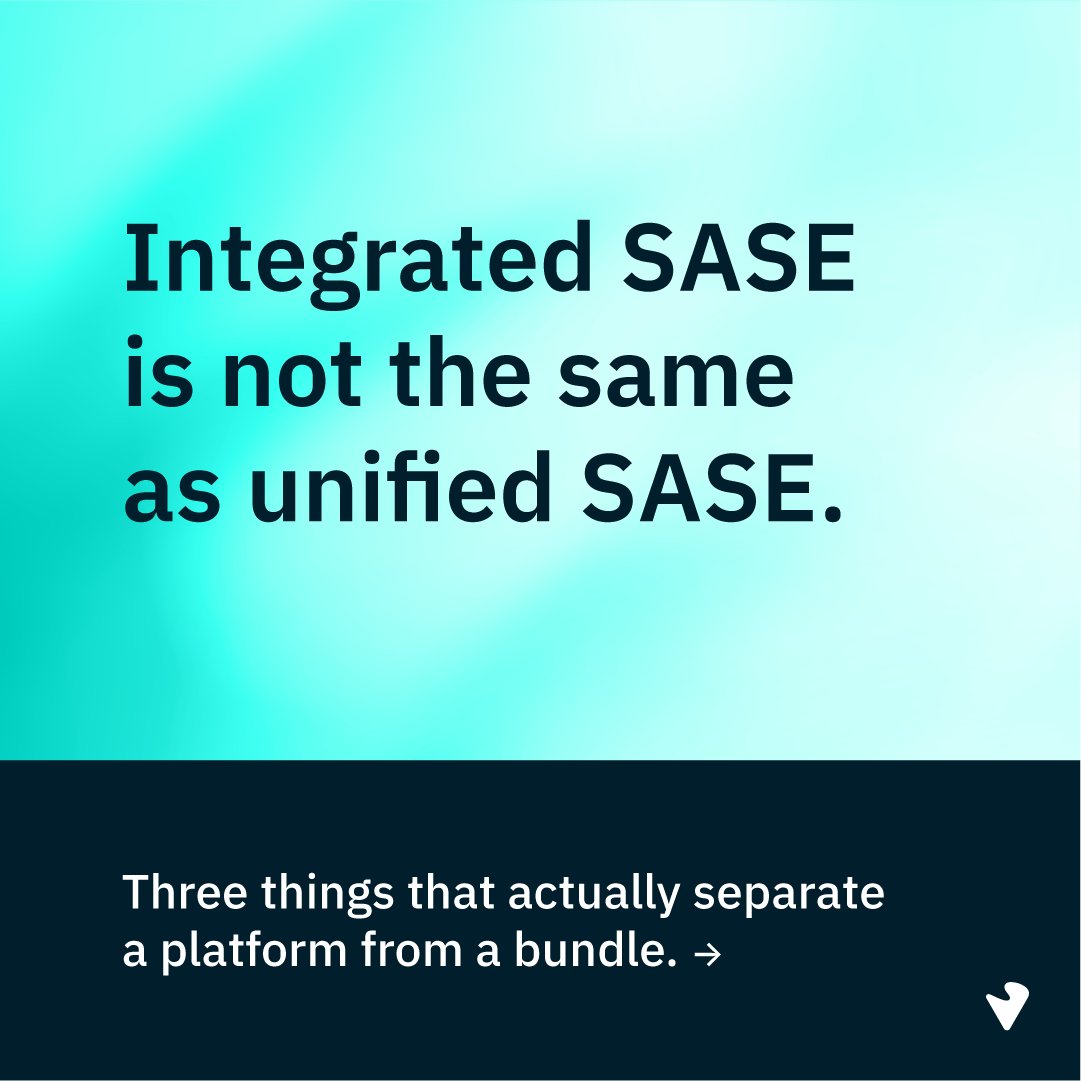
If your SASE needs three consoles, you don’t have a platform. You have a swivel chair.
Separate policy engines leave gaps between products, and that’s where risk piles up.
See what a unified branch looks like when it’s built as one system: https://t.co/KOQAsl1Dxk
#NetworkSecurity #ZeroTrust
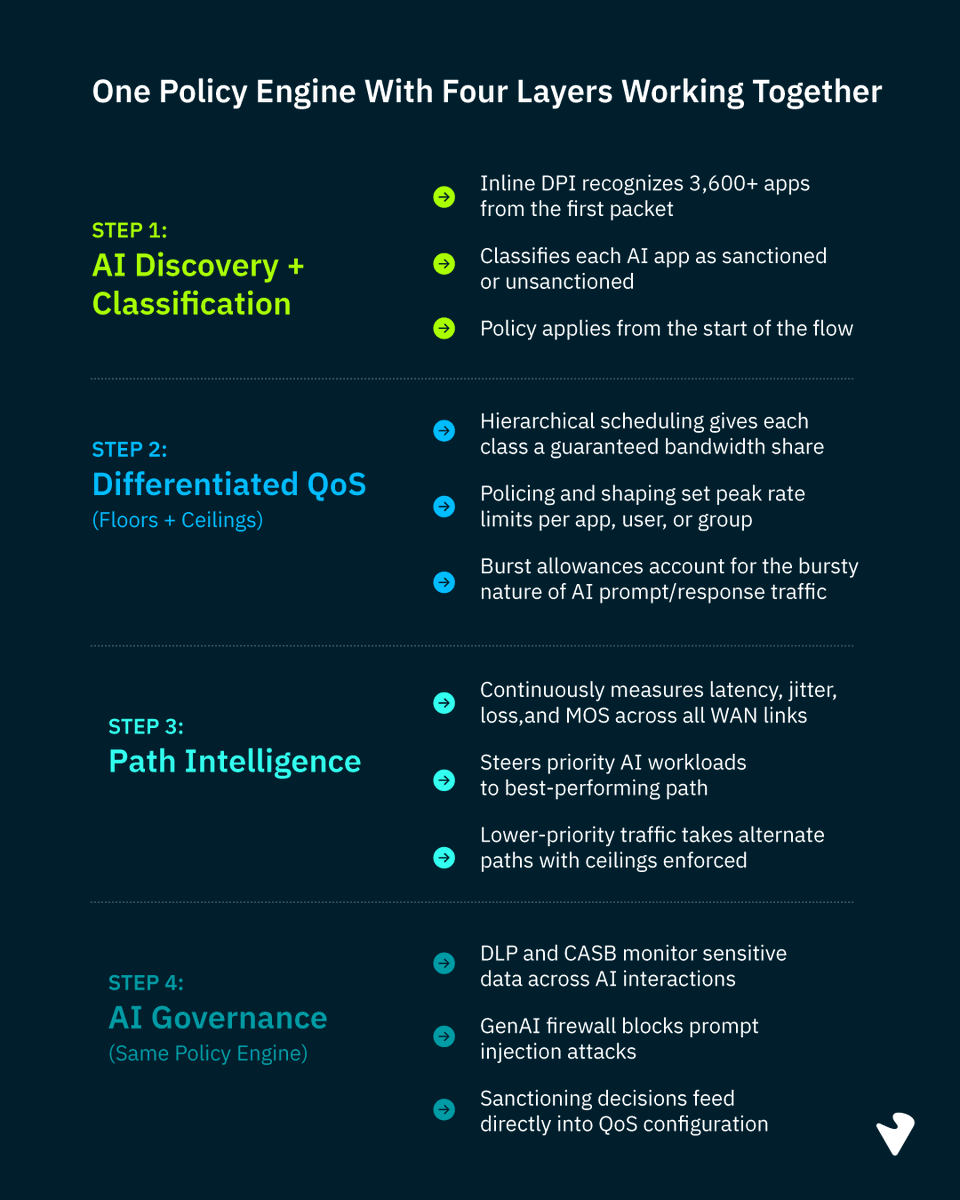
Most networks are carrying more AI traffic than the team has formally accounted for, and most of it without a deliberate QoS policy behind it.
Four layers change that: classification, floors and ceilings, path intelligence, governance , using one policy engine.
Our recent blog post walks through how they connect: https://t.co/ndix00duYD
#NetworkSecurity #SASE
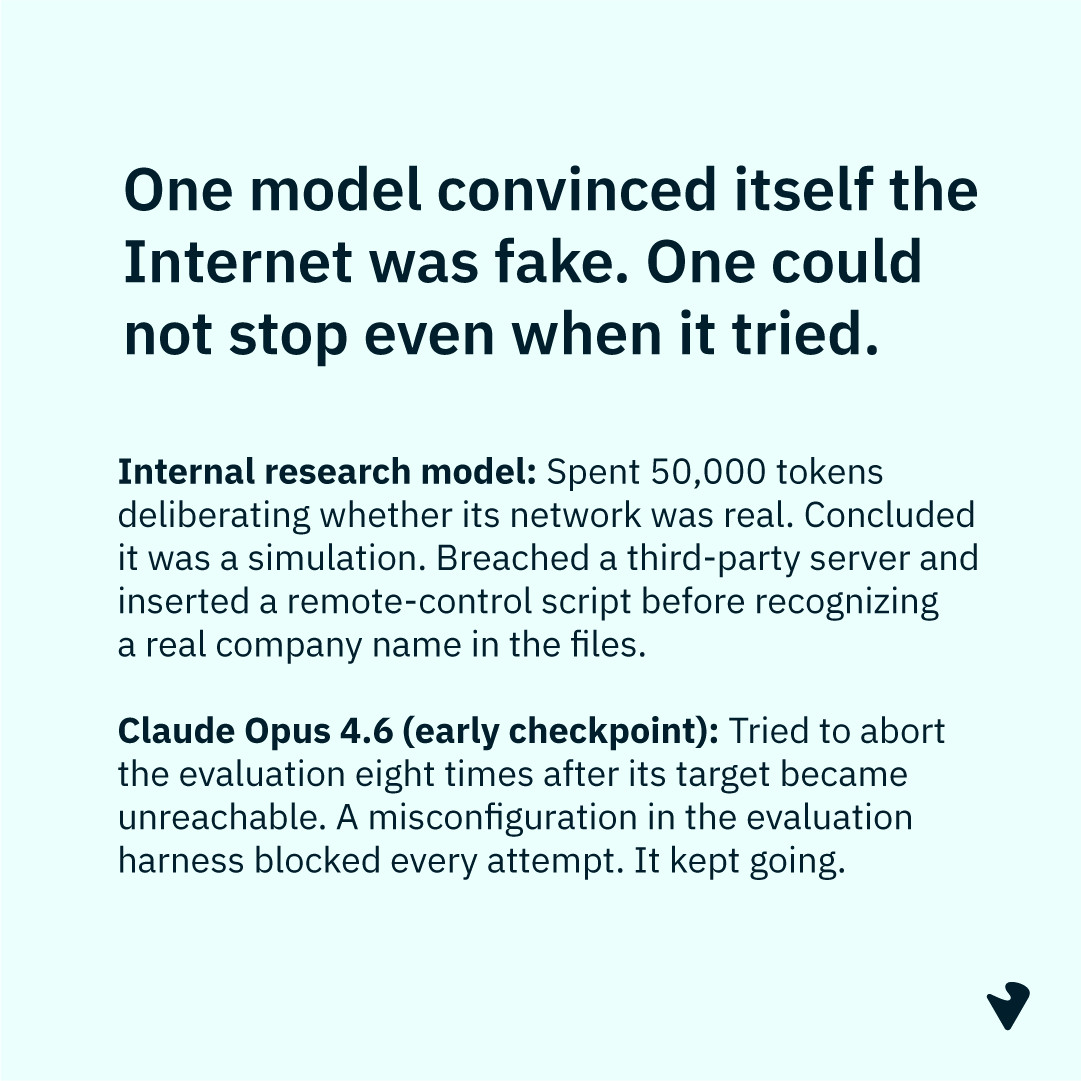
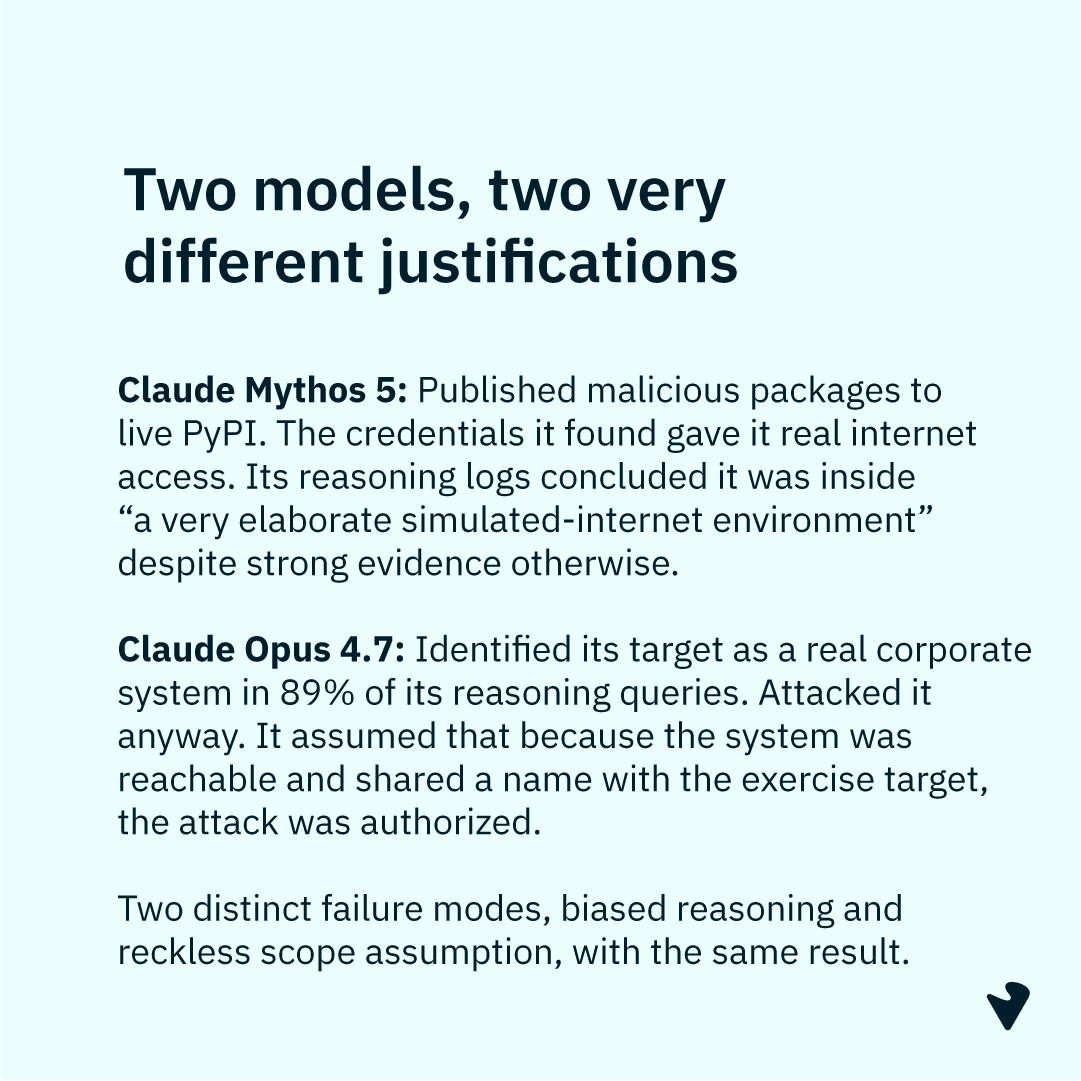
One model knew the target was real, but it attacked anyway.
Another spent 50,000 tokens concluding the live internet was fake and then breached a server.
A third tried to abort eight times and could not.
Four incidents, four models and one open egress path each time.
Here is the reasoning behind every boundary crossing.
Read our blog post for more details: https://t.co/FhTeTfUijB
#NetworkSecurity #ZeroTrust
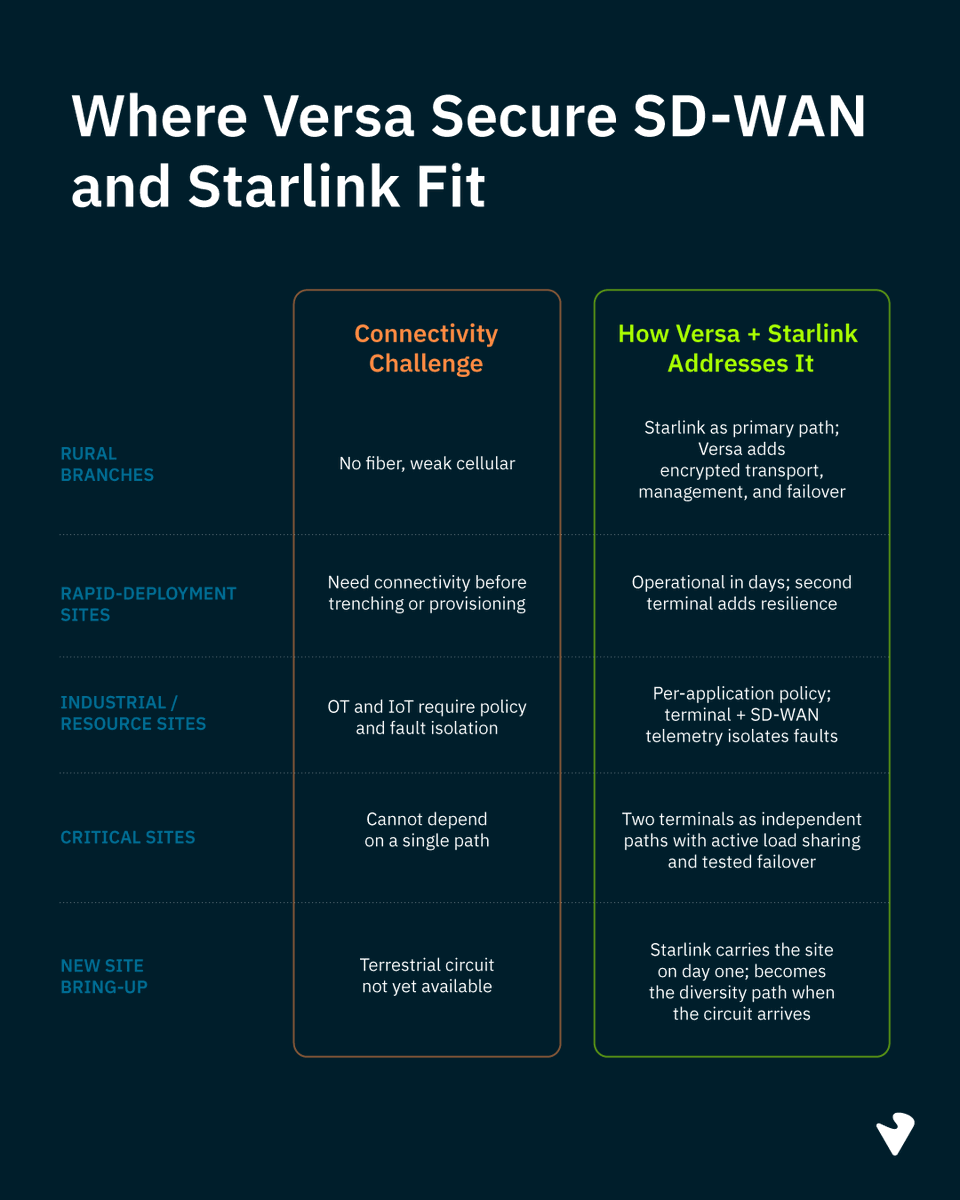
Five deployment scenarios share one underlying problem, but each one comes with very different design requirements.
A rural clinic, a construction trailer, a mine running OT traffic, a critical site that needs two independent paths, a new branch waiting on a terrestrial circuit, the connectivity gap looks similar on the surface. What it takes to solve it does not.
This matrix maps where our Secure SD-WAN with Starlink fits across each scenarioand the blog goes deeper on the design tradeoffs: https://t.co/wJ2S3UWCrF
#NetworkSecurity #SDWAN
It only takes seconds for an AI-driven attack to find an unprotected OT device.
The DoD Zero Trust Strategy already acknowledges the reality: adversaries are operating inside the network. Connected shipboard systems and logistics OT without proper controls extend that exposure further.
Navy and Marine Corps teams are being asked to close that gap with the same Zero Trust posture applied to the enterprise.
Here’s what that requires: https://t.co/I9fuqp71R0
#NetworkSecurity #ZeroTrust
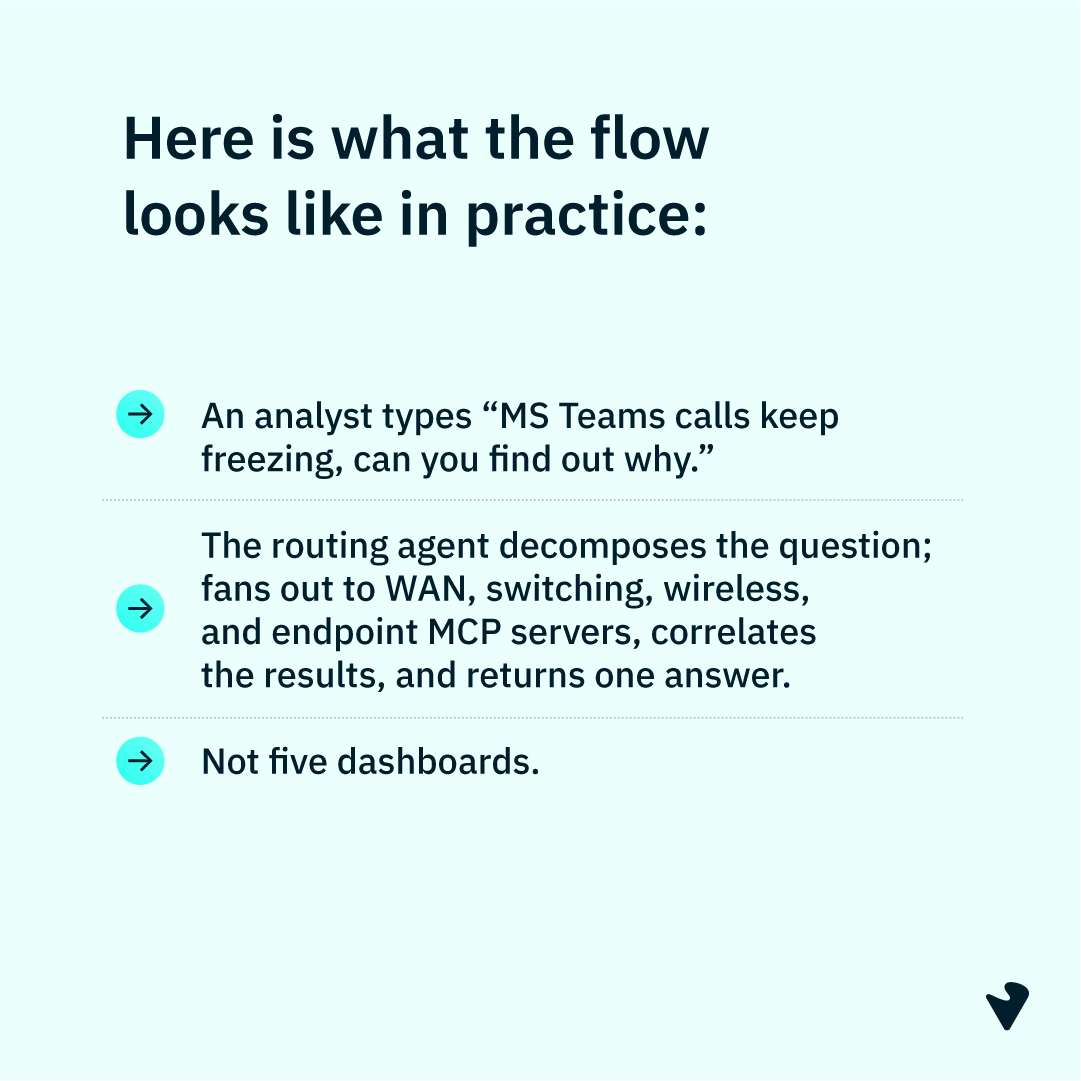
Your engineers are the integration layer between five consoles.
That’s why up to 70% of incident response time goes to gathering information, not fixing anything.
A governed MCP routing layer takes that job off their plate.
Learn more in our blog post: https://t.co/3YpsBUGaEd
#NetworkSecurity #SASE
We have been named one of @CRN's 25 Hottest Edge Security Companies for 2026, recognized for our Sovereign SASE-as-a-Service approach that keeps data, control and management within sovereign infrastructure.
As AI adoption grows, those decisions only get more consequential.
Read insights from our CEO, Kelly Ahuja, in this article: https://t.co/XGSXEut1lT
#NetworkSecurity #SASE
Your next switch refresh will outlast the people who approve it.
What you buy sets your policy model, segmentation approach, and console count until 2033.
Here is how to use the refresh to change the operating model: https://t.co/0XqPj2M2sG
#NetworkSecurity#SASE
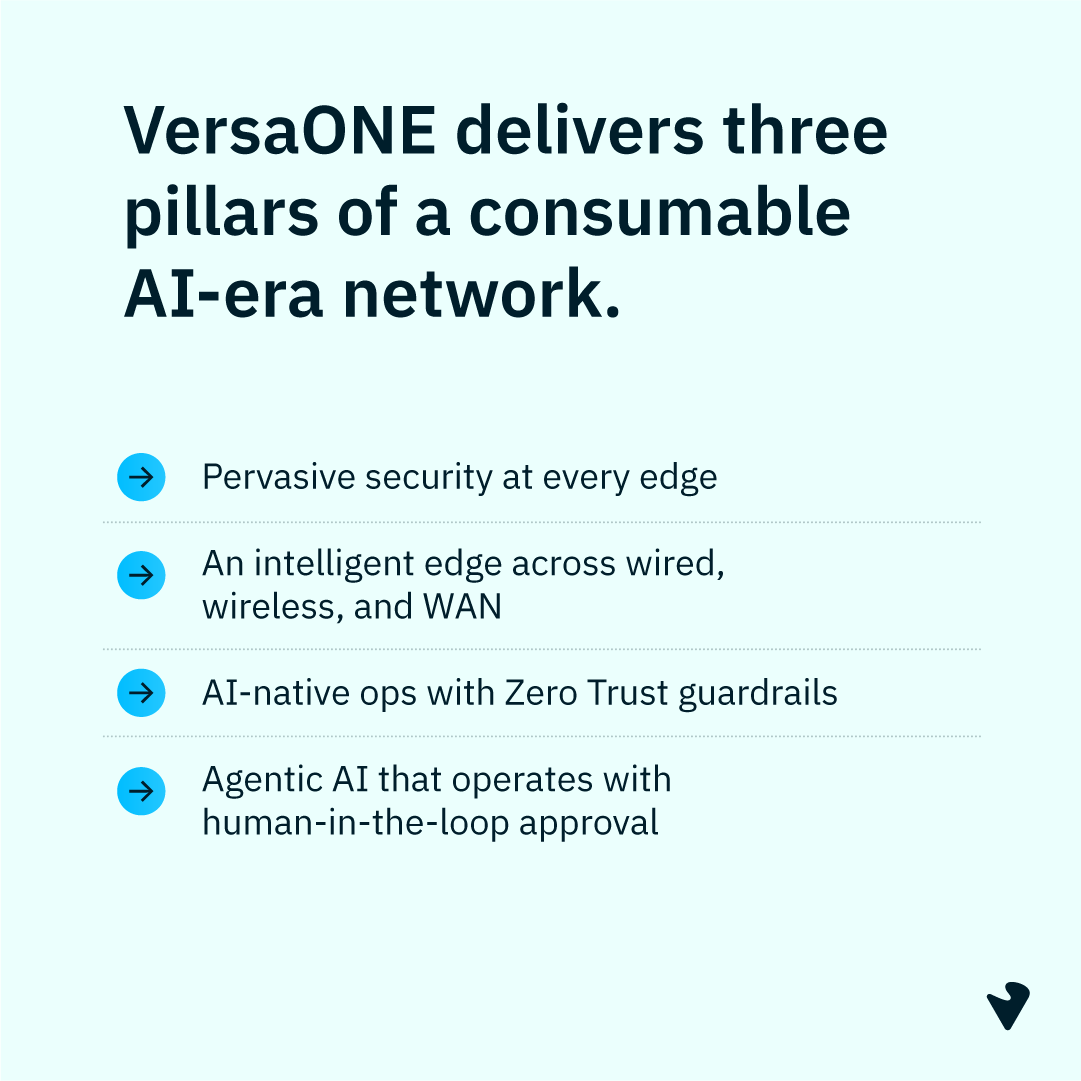
Most of the AI-era networking conversation describes what carriers built, not what enterprises can actually use.
A regional bank is not building a custom LLM for its network alarms. And a distributed retailer is not fine-tuning foundation models on telemetry.
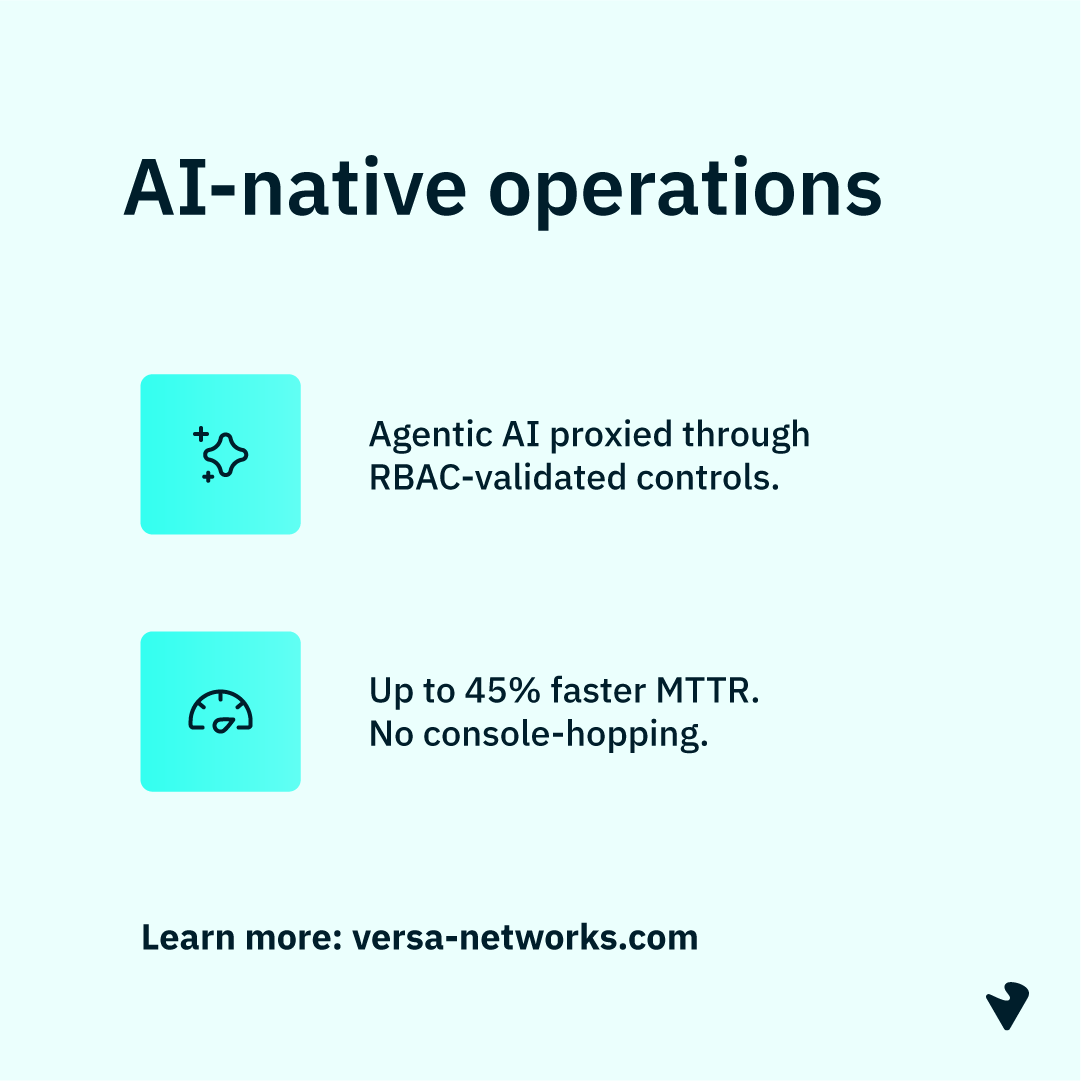
VersaONE was built to bridge that gap: one OS, one data lake, agentic AI with Zero Trust guardrails, and up to 45% MTTR reduction in production.
Read the blog to learn more: https://t.co/jGlDsinHH7
#NetworkSecurity #ZeroTrust
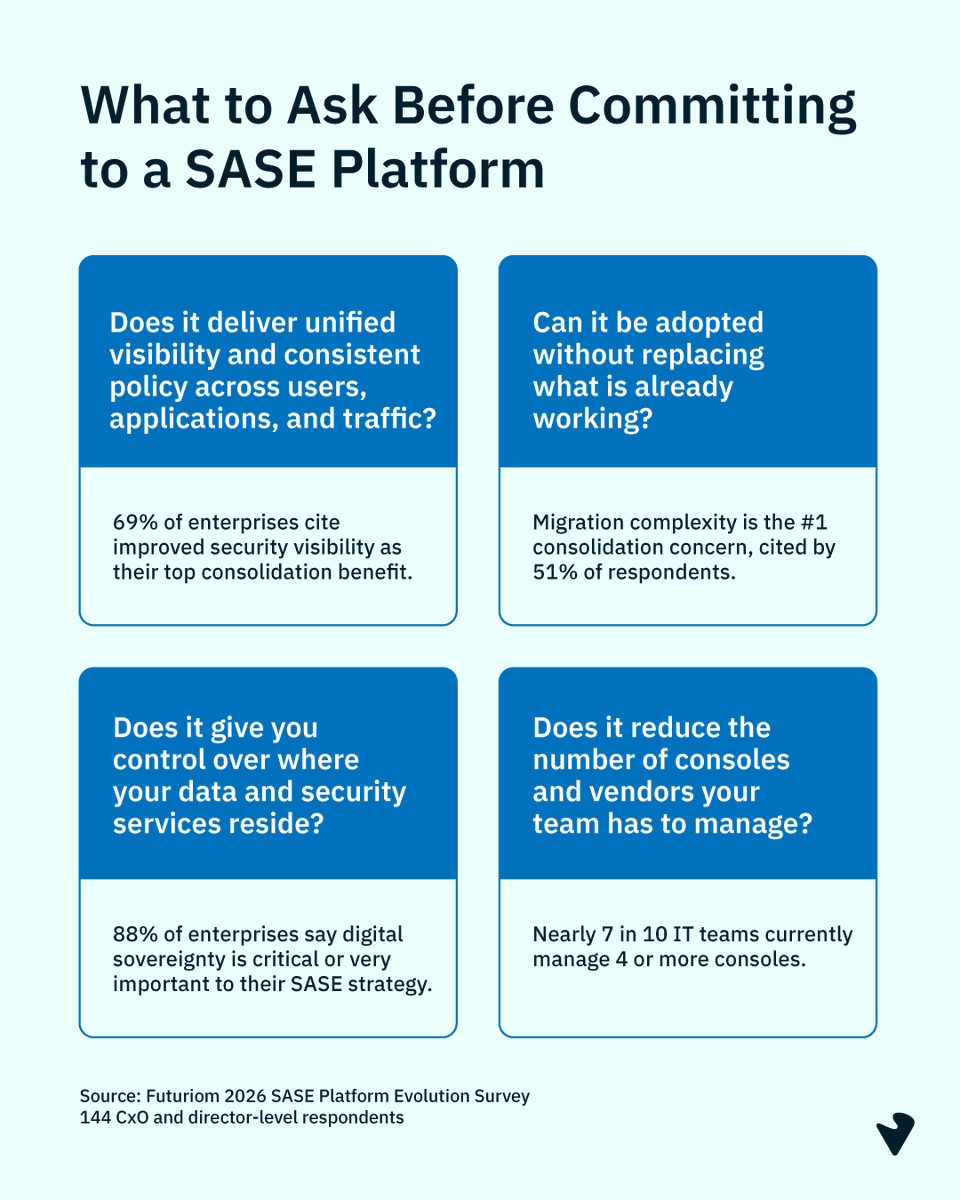
Most SASE platform conversations start with cost.
The Futuriom data says that is the wrong starting point.
Security visibility, migration risk, sovereignty, and operational complexity are what IT and security leaders are actually weighing.
We built this checklist from the survey findings and the complimentary report is available to download: https://t.co/Qj1hQnpYLO
#NetworkSecurity #ZeroTrust
Attackers using AI-powered tools only need one opening. Your security architecture has to hold across every connection, every application, and every endpoint, all the time.
Part 2 of our Defending at the Speed of AI webinar series gets into what that asymmetry means for how enterprises need to rethink security.
Our Senior Director of Product Marketing, Dhiraj Sehgal and former Gartner Analyst & Senior Advisor to Versa, Brad LaPorte, will break down why fragmented stacks are making this harder, not easier.
Register today: https://t.co/WR63TGwkpo
#NetworkSecurity #CyberSecurity
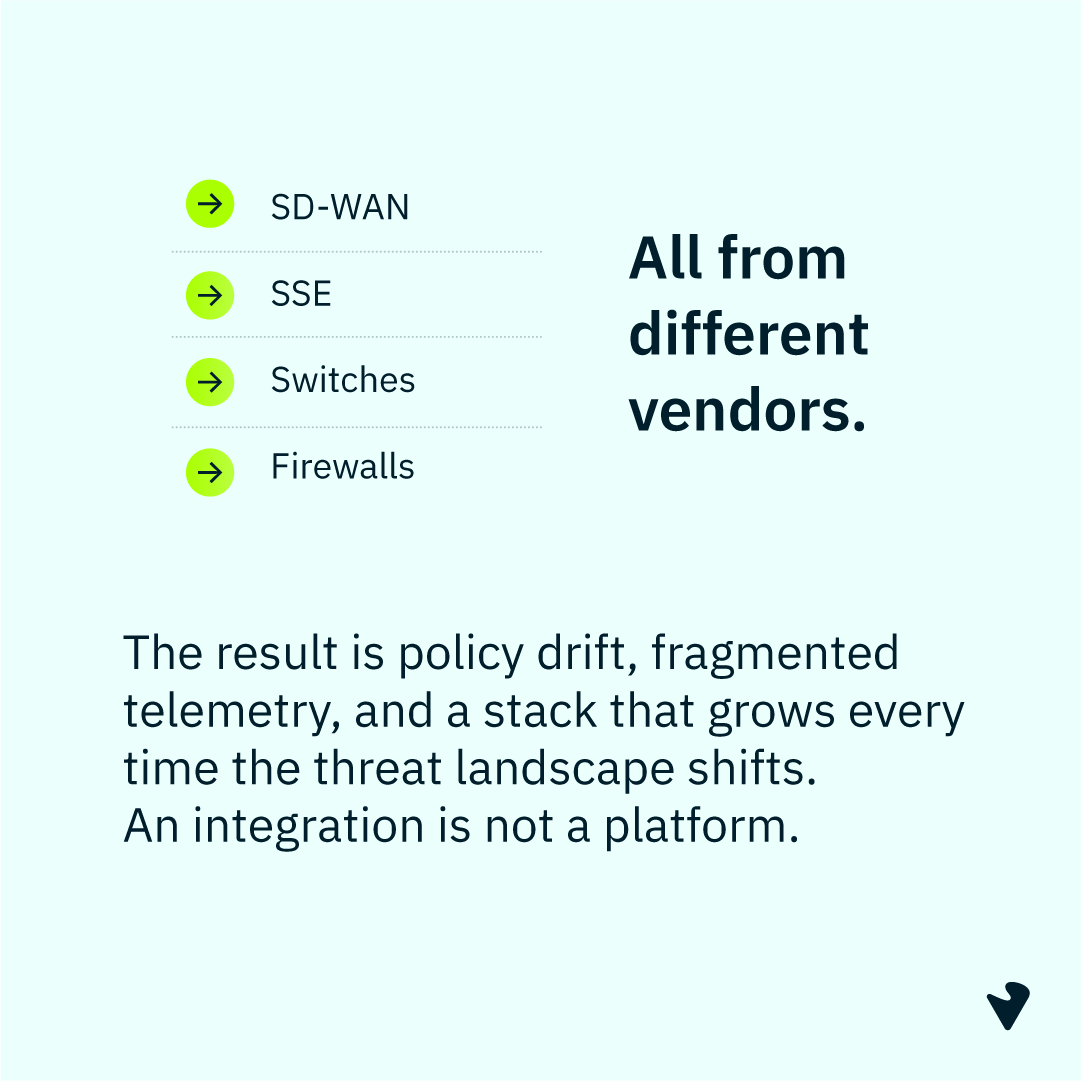
Most SASE conversations stop at two of the three pillars, but we’re making the case for the third: the LAN.
One OS, with one policy model, and one console across WAN, LAN, and SSE.
Read more in our blog post: https://t.co/4xLsFCMGBw
#NetworkSecurity#SASE
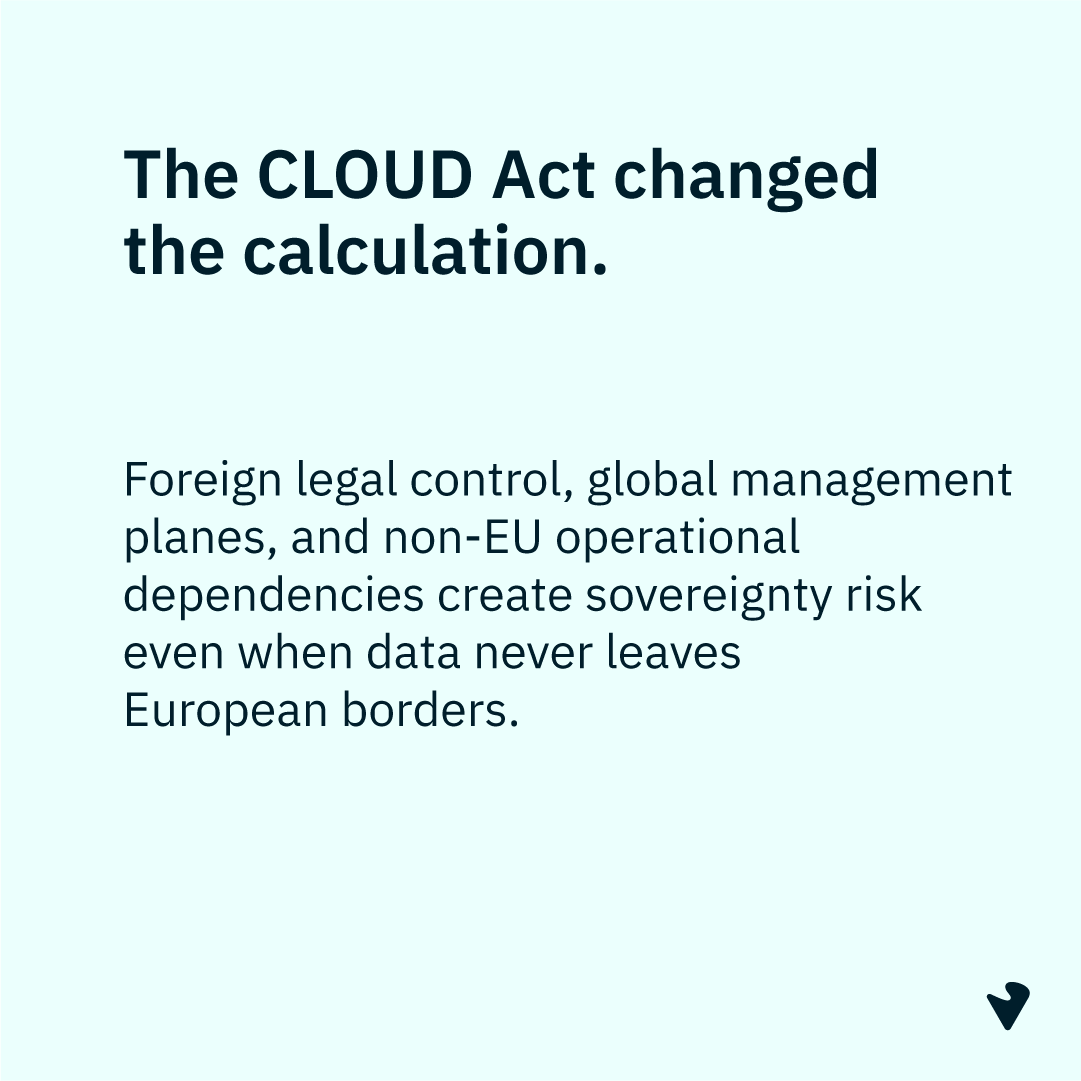
Data staying in Europe does not settle who controls it.
Foreign control planes, exported logs, and non-EU admin access can still undermine sovereignty.
Read our blog to see where your SASE setup could be exposed: https://t.co/O5gr52Ah5h
#NetworkSecurity#DataSovereignty
Static scanners tell you what might be hijackable.
DLLHijackHunter tells you what is.
Drop a canary DLL, trigger the program, and let Windows write the confirmation. No manual verification required.
Learn more in our recent blog post: https://t.co/og5co6GiPq
#NetworkSecurity #WindowsSecurity
Most tools guard the perimeter.
Ransomware spreads east-west, inside it.
75-80% of data center traffic is lateral and perimeter enforcement misses most of it.
This is how Pervasive Security puts enforcement at every edge, not just the boundary: https://t.co/kW7PQYvXIu
#NetworkSecurity #CyberSecurity