The ICT Authority Athletics Team delivered a dominant performance at the KECOSO 2026 Games in Machakos County.
In the Women's 200 m, Lilian Aoko and Susan Nyambura led the way with a Gold-medal performance for ICTA. At the same time, the team also excelled in the relay events,
Shem Abiri delivered an outstanding individual performance, scoring 24 points to earn the title of KECOSO MVP Chess Player.
Congratulations to the Chess Team for their remarkable performance and dedication.
A powerful reminder from Lake Bogoria: climate change is no longer a distant environmental conversation. It is reshaping communities, livelihoods, ecosystems and the future of places we hold dear.
Today, I had the honour of touring Lake Bogoria National Reserve alongside H.E. Kang Hyung-shik, Ambassador of the Republic of Korea to Kenya. 🇰🇪🤝🇰🇷
The visit brought into sharp focus the urgent realities facing the Rift Valley lakes.
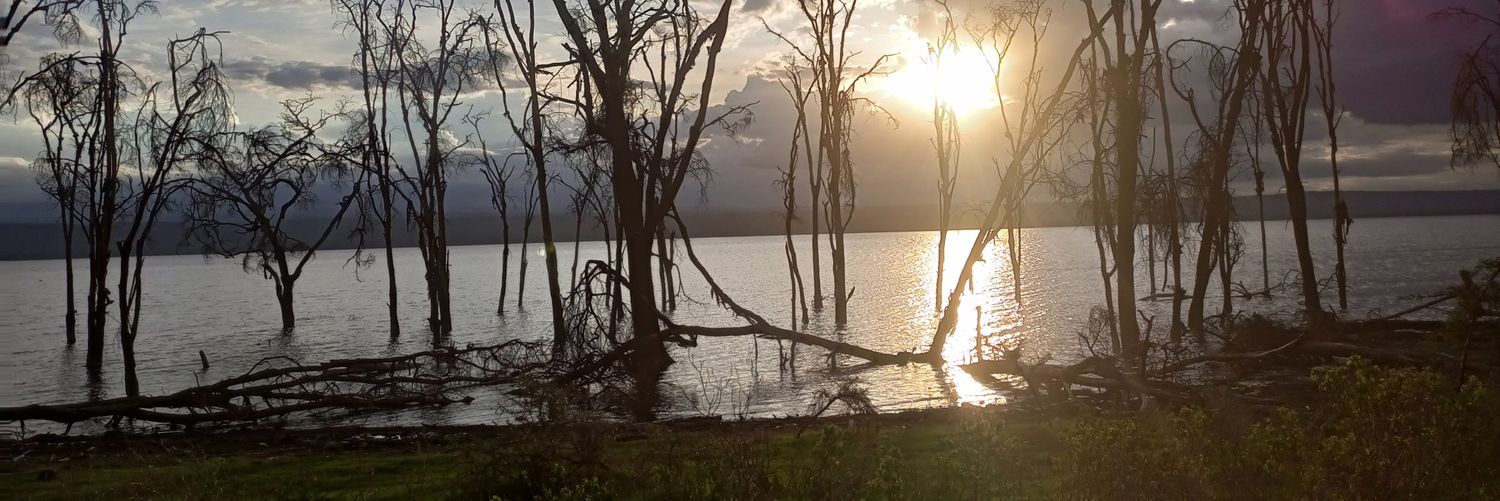
Historically, Lake Bogoria — a highly alkaline soda lake with a pH of about 9.5–10.5 — covered approximately 32–34 square kilometres. Today, intensified climate variability, extreme rainfall and heavy siltation have driven a dramatic rise in water levels, with the lake expanding to more than 40 square kilometres in some estimates.
The consequences are profound. Nearly 80 percent of the lake’s famous geysers and hot springs have been submerged, while homes, schools, health facilities, roads, grazing land and other public infrastructure have been affected. Even the Kenya Wildlife Service has had to relocate the reserve’s main gate as rising waters overwhelmed previous facilities.
But Lake Bogoria is not an isolated story.
Just to the north lies freshwater Lake Baringo. The rising waters of the two lakes have significantly narrowed the distance between them, raising concerns about the possibility of their eventual connection. Such an occurrence would have far-reaching ecological consequences, given the fundamental difference between Bogoria’s highly alkaline waters and Baringo’s freshwater ecosystem.
The ecological implications are equally serious.
Lake Bogoria is part of the Kenya Lake System in the Great Rift Valley, a UNESCO World Heritage Site, and is also a designated Ramsar wetland of international importance. It is globally renowned for its spectacular populations of lesser flamingos, which depend heavily on the lake’s unique alkaline ecosystem and the blue-green cyanobacteria that forms an important part of their food supply.
Changes in water chemistry caused by increased freshwater inflows can therefore disrupt an extraordinarily delicate ecological balance. The decline in flamingo numbers observed in recent years is a powerful reminder that climate impacts are not measured only in metres of rising water — they are also measured in the disruption of entire food chains and ecosystems.
The rising waters are also changing human-wildlife interactions, with crocodiles and hippopotamuses increasingly coming closer to areas where communities live and farm. For families whose livelihoods depend on agriculture, livestock, tourism and natural resources, this is not simply an environmental challenge. It is a question of livelihoods, safety, resilience and survival.
There is also a less visible dimension to the crisis: siltation. Heavy runoff from surrounding catchments carries enormous quantities of sediment into the Rift Valley lakes, altering their basins and reducing the ability of the ground to absorb and store water. This reinforces the need to look beyond the lake itself and invest in catchment restoration, watershed management and nature-based solutions.
Beyond the challenge lies an opportunity to demonstrate what meaningful international partnership can achieve.
Kenya’s partnership with the Republic of Korea offers an opportunity to bring together local knowledge, science, technology and global expertise in climate adaptation. Satellite monitoring, geospatial intelligence, hydrological and geological modelling, early-warning systems and resilient infrastructure planning can help us understand changes in real time, anticipate risks and make better decisions before climate impacts become disasters.
The lesson from Lake Bogoria is clear: climate resilience must be built where people live, where ecosystems are under pressure, and where the consequences of inaction are already being felt.
@KoreanEmbassyKE@KOREA@TheKoreaHerald , @MoICTKenya . @MyGovKe
The ICT Authority, in partnership with IBM, invites you to a free virtual training under the Training Million Citizens 2.0 programme.
📅 1st–3rd Sept. 2026
⏰ 6:00–8:00 PM
💻 Virtual
🔗 Register: https://t.co/UnWiEGwMOx
Empowering the next generation.
Today, we had a highly productive meeting at the Ministry of Information, Communications and the Digital Economy, hosting Ambassador Dr. Jendayi Frazer, the Peter J. and Frances Duignan Distinguished Visiting Fellow at the Hoover Institution, Stanford University, alongside her delegation.
Our discussions centered on exploring a strategic partnership focused on youth skilling, digital capacity building, and creating sustainable employment frameworks.
By aligning our digital economy master plan with world-class expertise, the Ministry is moving to expand tech opportunities and build a future-ready workforce for our youth.Together, we are shaping the future of work
Driving the future of tech, together. 🇰🇪🤝🇰🇷
Today, we had the distinct honor of hosting the Korean Ambassador to Kenya, H.E. Kang Hyung-shik, to explore strategic ways to deepen our bilateral collaboration, specifically focusing on the landmark development of Konza Digital Media City (DMC) and the Kenya Advanced Institute of Science and Technology (Kenya-AIST).
As Silicon Savannah evolves, this partnership with South Korea bridges world-class innovation with Kenya's vibrant tech ecosystem. From empowering creators through the Digital Media City to cultivating top-tier engineering talent at Kenya-AIST, we are setting a new global benchmark for digital transformation and academic excellence.
The future is digital, and the momentum is unstoppable!
After our Sunday Service at AIC Maralal Town, we joined young people participating in the NYOTA Programme, where we celebrated 450 youth beneficiaries who have completed a 21-day Socio-Emotional Skills Development programme part of over 1400 in Samburu county.
The training has equipped the young people with practical skills in financial literacy, entrepreneurship and business development, digital and e-commerce skills, communication, teamwork, problem-solving, decision-making, and work readiness—important foundations for employment, enterprise and sustainable livelihoods.
Small businesses have enormous potential to transform our communities and our country. Many of the world’s strongest economies are built on millions of small enterprises that create jobs, introduce new products and services, support local value chains and keep money circulating within communities.
For many young Kenyans, the difference between having a good business idea and building a successful enterprise can be basic business skills, mentorship, access to markets and affordable start-up capital.
When we combine training with access to financing and continued enterprise support, programmes such as NYOTA can become a game changer—helping young people move from seeking opportunities to creating opportunities and jobs for others.
We encouraged the beneficiaries to use the skills gained to identify opportunities around them—from livestock and agriculture value chains to tourism, trade, digital services and e-commerce—and to build businesses that can grow beyond Samburu into national and global markets.
We were joined by H.E. Governor Jonathan Lelelit, my colleague PS for Devolution Lenasalon, Hon. Naisula Lesuuda, area MP for Samburu West and DHA CEO Anthony Lenaiyara, among other leaders and stakeholders.
Congratulations to the young people taking this important step towards economic empowerment, entrepreneurship and self-reliance. Our task is to continue building an environment where their ideas can become enterprises, their enterprises can grow, and their growth can create jobs and prosperity for our communities.
Empowering youth. Building enterprises. Creating opportunities.