W150 on UniSwap:
https://t.co/K5t0NDpFoU
🪧 Important notice: Uniswap is a third-party, decentralized protocol. The issuer does not operate or control Uniswap or any trading venue. Any swapping availability, pricing, fees, and execution depend on third-party liquidity and may change or be unavailable at any time.
Water has never been this liquid. 🌊
A W150/USDT pool is live on the Uniswap Protocol (Ethereum Mainnet), and you may now be able to swap $W150 there.
⚠️ Beware of scams - only use the official token contract:
0x766ff859Ed590fF67CC5EE49E883F01f8C55D872
Link: check the pinned comment👇
Water is disappearing from our world!
Why ? Modern life isn’t powered by “water to drink.” It’s powered by water to operate.
Where water quietly holds up everyday systems:
➡️ Food: farming, livestock, processing, and sanitation
➡️ Clothing: cotton, dyeing, washing, and textile finishing
➡️ Cities: hygiene, sewage, construction, and firefighting
➡️ Health: hospitals, labs, and sterilization standards
That’s why water isn’t just a resource. It’s a reliability layer.
When reliability breaks, the impact isn’t abstract.
In modern life runs on water, what happens when water is disappearing?
🌐Water is part of the AI stack.
Here’s the quiet shift:
Compute scales in the physical world - and the physical world runs on water.
Where water shows up in the tech stack:
➡️ Data centers: cooling is a local constraint
➡️ Chips: fabs rely on ultra-clean water
➡️ Power: generation and cooling link water to electricity
➡️ Scaling: permits and restrictions decide where growth is possible
That’s why compute isn’t just an efficiency game anymore.
It’s a location + reliability game.
Water isn’t a talking point but infrastructure.
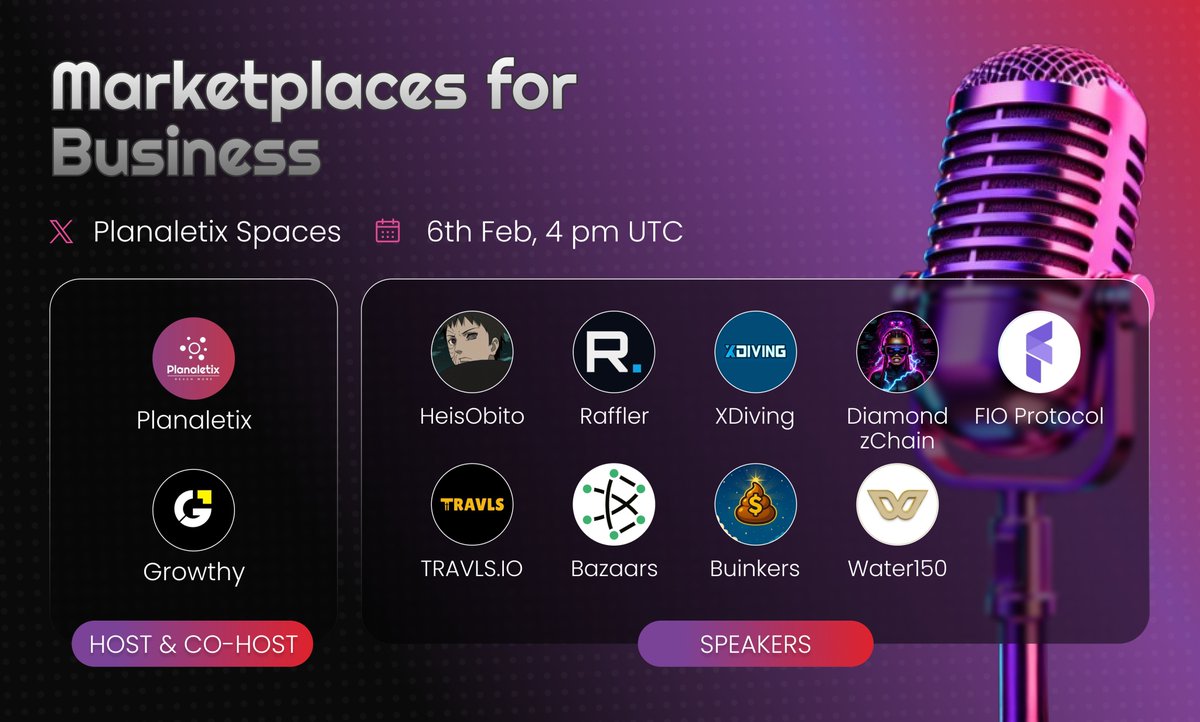
🚀 NEW SPACE: Marketplaces for Business
Founders are moving away from scattered tools toward marketplaces that bundle execution, talent, and AI support in one place!
We’re talking about the rise of 'business marketplaces' and how they’re changing the way we build companies.
Featuring: @XDIVING_Ocean @joinFIO@BazaarsBzr + 6 more!
🎙 Space Alert: The Credibility Gap
Some Web3 projects earn real partners, real users, and durable trust. Others burn bright, then disappear.
We’re breaking down the credibility signals that actually matter.
Turn on a reminder ⤵️
https://t.co/lGF5PVjs1K
MiCAR is raising the bar across RWAs.
Water150 is built with a compliance-first framework - because scale follows clarity.
Rules aren’t a constraint.
⚖️ They’re the foundation of trust.
Most RWA conversations are still stuck on real estate and treasuries.
Important, yes.
But incomplete.
Because the highest-conviction RWAs are the ones with:
➡️ unavoidable demand
➡️ tightening supply constraints
➡️ systemic importance
Water checks all three - and projections show a major supply-demand by 2030 under current trends.
Tokenization doesn’t make water “valuable.”
It makes ownership and verification more legible - which is what markets need before scale happens.
Today’s Space with @planaletix: Turning Information into Markets
Data is abundant. Credible data isn’t. We’ll cover verification rails, usability, and pricing signals for AI markets. Featuring: @WOWEARNENG@OpenverseGlobal@xPayLink + 6 more.
Set a reminder ⤵️
https://t.co/eb8gtLoEMe
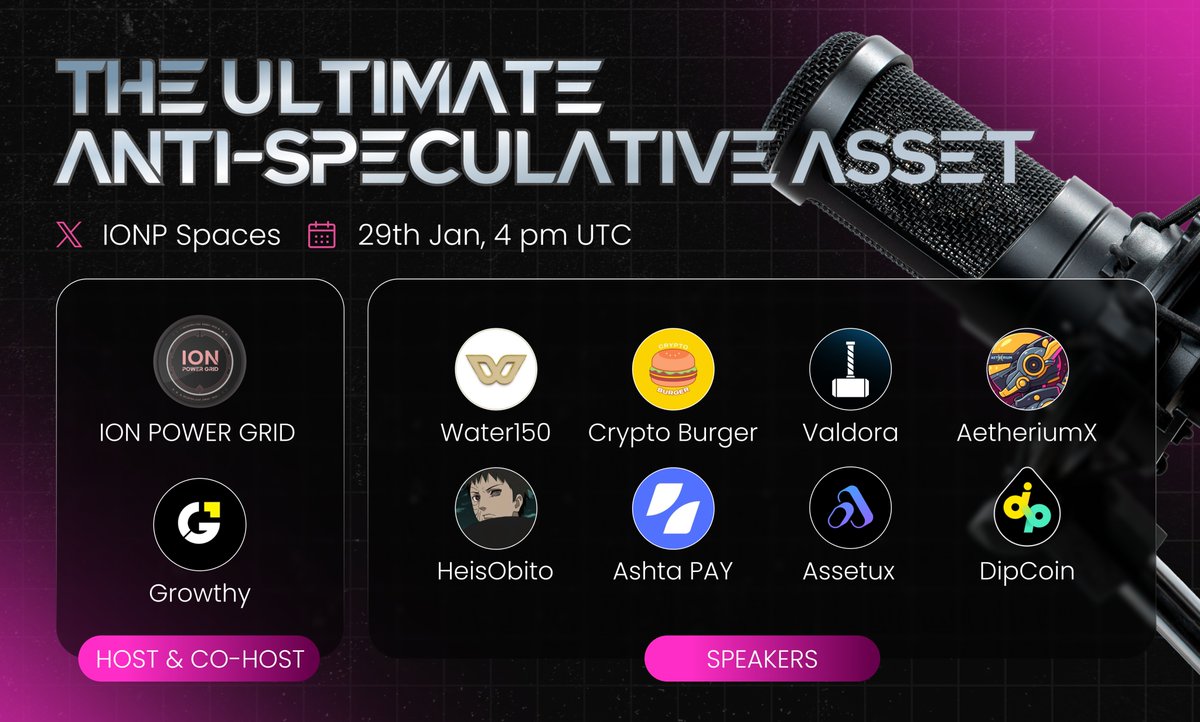
🎙️ NEW SPACE: The Ultimate Anti-Speculative Asset
What happens when value is tied to measurable output, real demand, and reliability, but not narratives?
We’re talking proof of output, accountable infrastructure, and why energy changes how markets behave.
Water150 doesn’t compete on noise.
We compete on clarity.
❌No speculation.
❌No unofficial confirmations.
✅Only updates that can be documented and checked.
That’s how real-world systems communicates.
🌐 Everyone debates AI in terms of chips and power.
But AI also has a water footprint - especially through data-center cooling. Reuters reporting highlights how rapid data-center growth is raising alarms about water consumption, particularly in water-stressed regions.
Here’s the quiet shift:
AI scales by building physical infrastructure. Physical infrastructure competes for physical resources.
So the next decade isn’t just a “tech cycle.”
It’s a resource allocation cycle.
Markets tend to misprice resource constraints early because constraints don’t trend on social feeds. They show up later as:
➡️ higher operating costs
➡️ regulatory limits
➡️ supply competition
➡️ geopolitical friction
Water sits at the center of that grid. Not as a narrative - as an input.
The future is built on real rails, real inputs, and real limits.
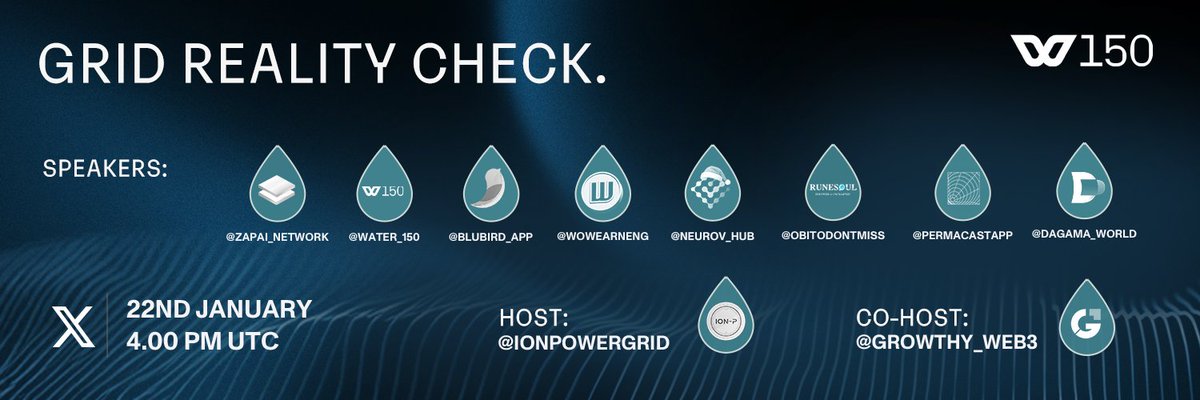
🎙 Space Alert: Grid Reality Check
Announcing is easy. Operating is hard-constraints, real time, reliability.
For builders, investors & operators who care about execution.
🗣 Join live-let’s get practical.
https://t.co/pbneC9cwso
🎙️ Grid Reality Check - live in 1 hour
Announcing is easy. Operating is hard: constraints, real-time, reliability.
For builders, operators & investors focused on execution.
Join us live.
https://t.co/pbneC9cwso
NEW SPACE: The Cost of Ignoring the Grid 🎙️
Energy isn’t just about generating more. It’s coordination, constraints, and real-time balance.
This Space is for builders, investors and operators who want energy innovation that survives reality.
When Water becomes a privilege.
Not everybody will be blessed by access to it. Water150 Secures this rights for you that future access today.
Choose wisely. Choose $W150.💧
What to Expect in 2026 | The Greenhouse 🌱
→ 99% of Web3 projects never reach sustained traction
→ Most “communities” lose 100% of activity days after launch
→ Billions in capital is still spent with nothing measurable to show for it
We’re breaking down what’s changing, what’s dying and what actually wins in 2026.