The Daugherty Water for Food Global Institute at the University of Nebraska works to ensure a water and food secure world via research, education and policy.
The GAP Report is out. Global agricultural TFP growth fell to 0.63% in 2015-2024, roughly 30% of the 2001-2010 peak.
Can regenerative agriculture restart it? The evidience, from @Ag_Productivity: https://t.co/wws6CsyAhW #GAPReport
When we talk about irrigation efficiency, we often focus on water. But what about the energy it takes to pump, move and apply that water?
Energy use can have significant implications for both farm profitability and long-term water management — particularly as groundwater levels decline and pumping demands increase.
A new DWFI article explores the often-overlooked connection between water and energy in irrigation, including where inefficiencies occur and how system performance, energy prices and weather can influence both costs and water use.
Read more: https://t.co/0eAvBTZQSy
💧 What will it take to scale small-scale irrigation?
Small-scale irrigation can help farmers increase productivity, strengthen resilience and improve food security—but expanding access requires more than technology. It requires innovative business models and financing mechanisms that work for farmers and service providers.
At #WorldWaterWeek2026, DWFI and the International Food Policy Research Institute (@IFPRI) will explore Innovative approaches and financing mechanisms for small-scale irrigation.
The session will highlight real-world approaches including irrigation-as-a-service, leasing, producer off-taker agreements, group-based agreements, subsidies and blended finance—and how these models can help catalyze long-term scaling.
📅 August 27 | 14:00–15:30 CEST | A2, Level 6
📍 Online (free) or in person at World Water Week in Stockholm
Join us to explore what it will take to make small-scale irrigation more accessible, scalable and sustainable.
More opportunities to engage » https://t.co/1YokZ62QJB
#WorldWaterWeek #SmallScaleIrrigation #Irrigation #WaterForFood #FoodSecurity #AgriculturalFinance
🌱 How do we turn drought policy into action that builds resilience for people and communities?
At World Water Week 2026, DWFI's Jesse Bell will be part of a conversation focused on bridging the gap between drought policy and implementation—and making resilience-building approaches more available and practical.
From policy to people: Advancing inclusive drought resilience
This interactive session will explore how capacity building, peer learning and communities of practice can accelerate the uptake of knowledge and strengthen drought resilience. It will highlight practical approaches spanning drought governance, resilience investment, nature-based solutions and integrated water-food-wellbeing innovations.
📅 August 27 | 9:00–10:30 CEST | Room 24/25, Level 2
📍 Online or in person at World Water Week in Stockholm
Join us to explore how we can move from drought policy to meaningful action for more resilient communities.
More opportunities to engage » https://t.co/EavYwhrKm0
#WorldWaterWeek #DroughtResilience #Drought #WaterResilience #WaterForFood #ClimateResilience
What does it take to understand what’s really in our water?
In the latest Water for Food Podcast, host Frances Hayes goes behind the scenes at the Water Sciences Laboratory with lab manager Jennah Duncan to explore the science behind water quality testing — from nitrate and PFAS to pesticides, isotopes and emerging contaminants.
Hear how the lab’s work supports researchers, communities and agricultural decision-making in Nebraska and around the world, and what new testing capabilities are on the horizon.
🎧 Listen to the full episode: https://t.co/3PllEVQBa2
@NebrWaterCenter
🌎 What can the history of global water cooperation teach us about the challenges ahead?
Tomorrow, at World Water Week 2026, DWFI’s emeritus executive director Roberto Lenton will draw on more than 40 years of international experience—and his new book on water in multilateralism—to explore how global water policy has evolved and where it needs to go next.
The evolution of water multilateralism: Tackling today’s challenges
Following the interview, DWFI's Rebecca Carrillo and IWMI's Darshini Ravindranath will consider what we can learn from the successes and failures of the past—and how those lessons can help shape the institutions and approaches needed for the future.
📅 August 24 | 15:00–15:20 CEST | Talkshow studio, Level 5
📍 Online or in person at World Water Week in Stockholm
Join the conversation as we look at the past, present and future of water multilateralism—and what comes next for global water cooperation.
Read more about DWFI's participation in World Water Week » https://t.co/HvW7Mexqks
#WorldWaterWeek #WaterMultilateralism #WaterPolicy #GlobalWater #WaterForFood #WaterCooperation
💧 What does responsible water stewardship look like in the irrigation industry?
During a World Water Week talk show tomorrow, DWFI's Nicole Lefore and Valley Irrigation's Darren Siekman will together explore what it means to be a responsible water steward—and how we might consider a “social license to irrigate.”
Join us in person or online at World Water Week tomorrow, August 23 from 11:00–11:20 CEST for:
Water, Food, People and Progress – Quo vadis, irrigation industry?
🌎 Learn more about this session and others in which we're participating: https://t.co/6aKr7JBI4h
#WorldWaterWeek #WaterForFood #WaterStewardship #Irrigation #Water #FoodSecurity
"You can't get that perspective by staying here. You have to go to other places and compare what you're doing to what everyone else is doing."
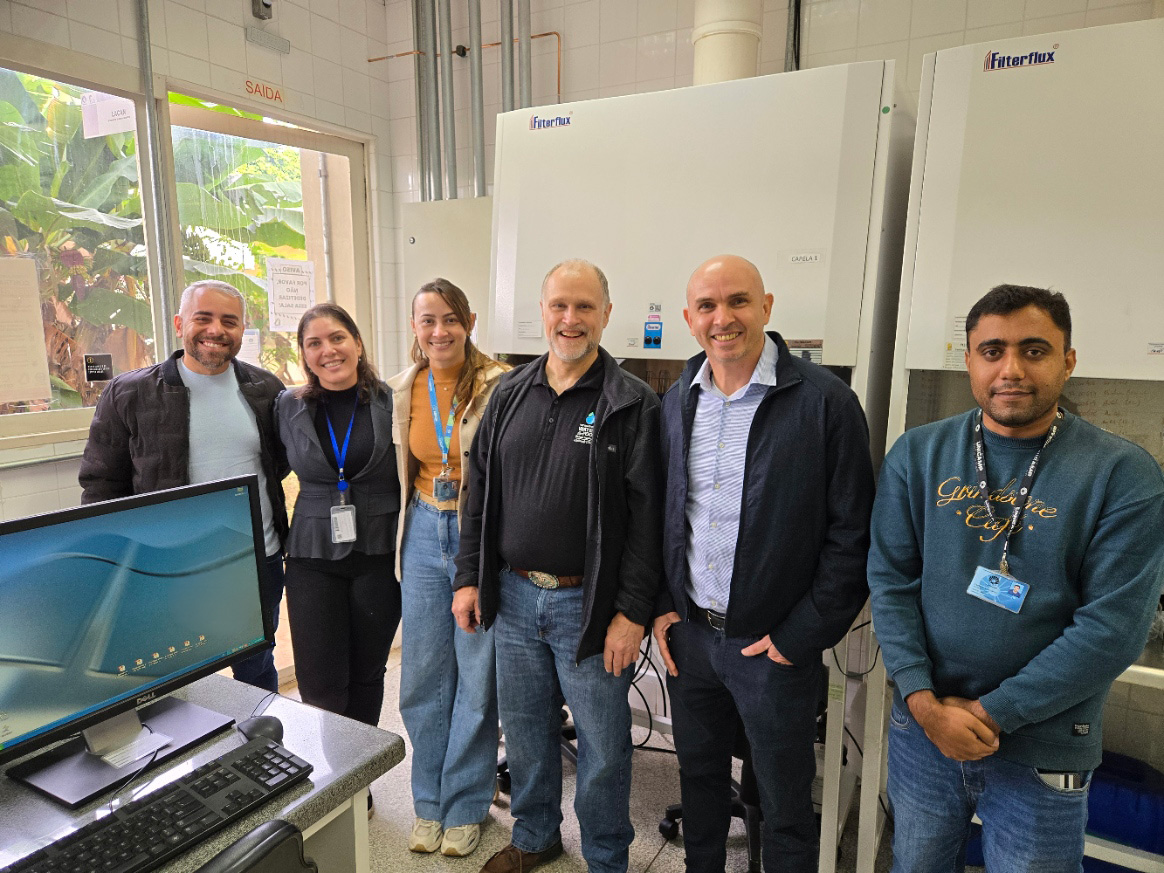
Water Sciences Laboratory Director Dan Snow recently returned from Brazil after serving as a Fulbright Specialist, where he shared Nebraska-developed environmental testing methods, collaborated with researchers at UNICAMP and explored new opportunities for scientific partnership.
His experience is a reminder that solving today's water challenges requires global collaboration. Read more: https://t.co/T1uNeCzoh4
Peter McCornick was DWFI's executive director when he was interviewed for this excellent Once Again podcast episode from Nebraska Public Media on the story of center pivot irrigation.
Listen for a comprehensive look at how the Nebraska invention transformed global food production while continuing to shape important conversations about water use, irrigation and the future of agriculture.
🎧 Listen here: https://t.co/GJGoo92Lww
What are carbon credits, and how can they create opportunities for producers?
In our newest episode, DWFI Director of Research Christopher Neale reflects on a five-year, $3 million project funded by the U.S. Department of Energy to scientifically validate carbon sequestration in Midwest corn and soybean production.
He discusses:
🌱 What carbon credits are
📊 Why rigorous, field-level data matters
🤝 How science can strengthen confidence in carbon markets
🌽 What this work could mean for producers and future policy
Tune in to learn how research at the intersection of agriculture, energy and policy is helping build more credible carbon credit markets. https://t.co/z7uEj6CCjN
Who manages groundwater in your state? How do water rights differ across the U.S.? And what can those differences tell us about the future of water and agriculture?
DWFI intern Christian Curtis spent the spring semester building an interactive map that brings state water policy and irrigation data together in one accessible tool.
Read about the project, what he learned and why understanding water policy matters for water and food security: https://t.co/gsP2zUuUuM
💧 More than 85% of Nebraskans rely on groundwater for drinking water, making it one of our state's most valuable resources. Protecting groundwater starts with understanding it.
Through the Nebraska Water Center's Know Your Well program, students, educators and well owners are learning more about the water beneath their feet through water quality testing, hands-on education and community partnerships.
Learn how this program is helping build awareness, encourage well testing and inspire the next generation of Nebraska water stewards: https://t.co/RgjL3odOQq
🆕 #Blog: Are subsidies the solution for “costly” small-scale irrigation technologies?
🖋️ Claudia Ringler (IFPRI) & Nicole Lefore (@waterforfood)
🔗 Read more here: https://t.co/alcXKKPqHH
@CGIAR@u_nebraska
For decades, large-scale water projects have been seen as the path to growth and food security.
But what if they come at a cost?
In Niger, a billion-dollar dam project remains incomplete after years of investment—while smaller, more flexible solutions like small-scale irrigation could have delivered faster, broader benefits.
In the final installment of our series exploring the myths of smallholder irrigation, this blog by Dr. Douglas Merrey explores the tradeoffs of large projects and what they mean for development decisions: https://t.co/UHoiONL4ih
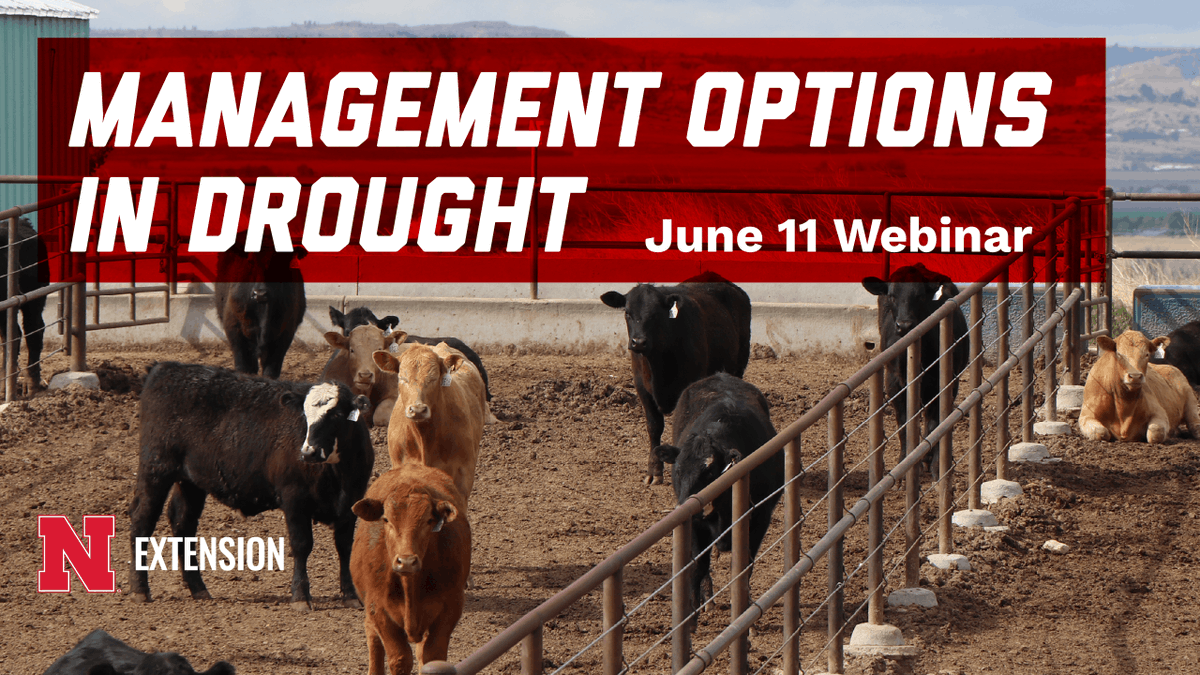
Nebraska Extension will host a free June 11 webinar, Management Options in Drought, to help producers navigate ongoing dry conditions and management decisions.
Register: https://t.co/4FRCRpx3yp
DWFI works to address today’s agricultural water management challenges while building the partnerships, knowledge and innovation needed for tomorrow. 💧
We are proud to be a part of the Institute of Agriculture and Natural Resources at the University of Nebraska–Lincoln and contribute to the university's land-grant mission by connecting research, teaching and extension with communities in Nebraska and around the world!
The land-grant university system helped shape America, and Nebraska is helping lead its future.
Since 1869, @UNLincoln has connected research, teaching and @UNLExtension to serve Nebraskans across all 93 counties.
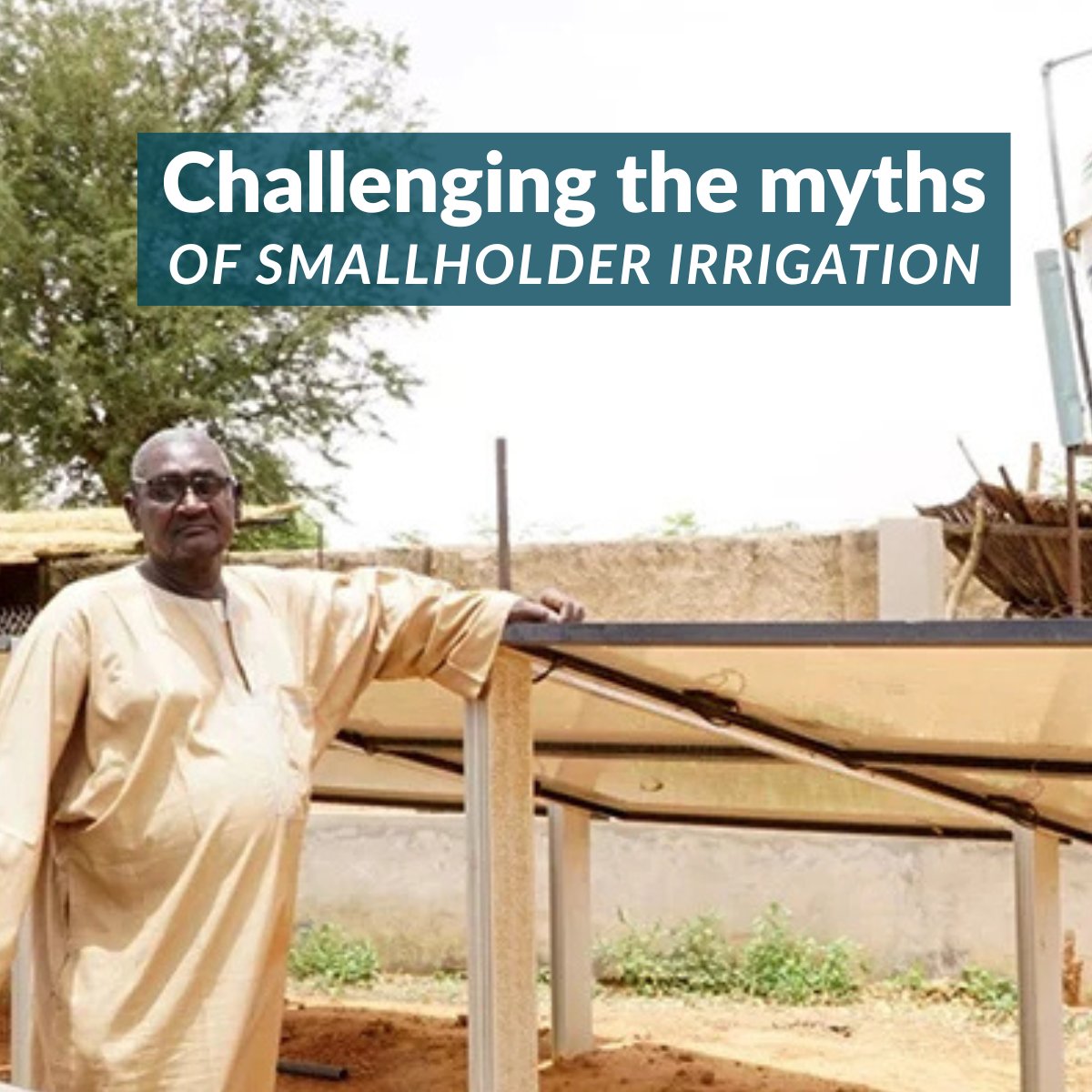
In many Sub-Saharan African countries, less than 5% of renewable groundwater is used. Yet, irrigation development is often approached with extreme caution due to concerns of water scarcity.
What if the bigger risk isn’t overuse—but underinvestment?
As part of our series exploring the myths of smallholder irrigation, this blog discusses the tradeoffs between water sustainability, food production and economic growth: https://t.co/hOwrGCGdEL
This is the last week to register for the 2026 Water and Natural Resources Tour! Don't miss your opportunity to learn about the Republican basin from local experts - register today at https://t.co/3U5KeV7lWO 💧
A brief published by researchers at DWFI and the @DroughtCenter highlights the complex intersection water law, resource management and agricultural development across Tribal lands in the United States. Read more: https://t.co/H2iryLWzn0
Global collaboration continues to be essential to advancing practical water and food solutions. Nebraska Water Center Director Chittaranjan Ray and Senior Program Manager Jude Cobbing were recently in India, presenting at an international symposium, strengthening research partnerships, delivering training courses and learning from agricultural innovations on small- and medium-sized commercial farms.