The Australian wool market extended its recovery in Week 21, recording a second consecutive weekly increase as stronger competition for Merino fleece supported prices.
The Eastern Market Indicator (EMI) gained 16 cents to close at 1,738 A¢/kg, rising eight cents on each selling day.
A total of 27,814 bales was offered nationally, 737 more than the previous week, with 24,687 bales sold, and the national pass-in rate increasing from 6.9% to 11.2%.
For the full market summary, head to 👉 https://t.co/H3Wd9vUxin
The Australian wool market rebounded this week, ending four consecutive weekly declines as stronger buyer competition and a lower Australian dollar provided renewed support.
The Eastern Market Indicator (EMI) gained 24 cents to close at 1,722 A¢/kg, although in US-dollar terms the EMI fell seven cents to 1,184 US¢/kg, indicating currency movements contributed to the recovery in local prices.
For the full market summary, head to 👉 https://t.co/AAyRdPIKT3
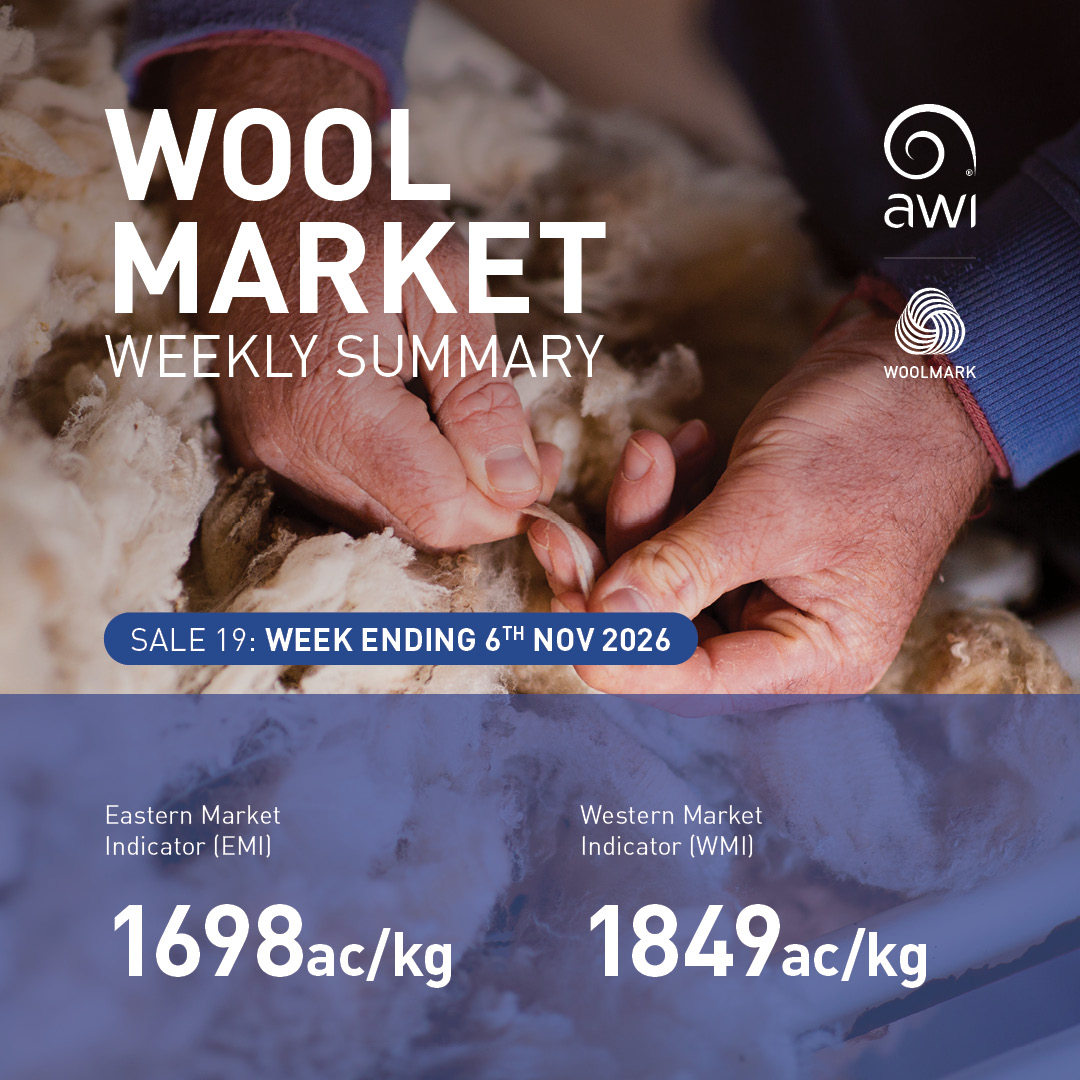
The Australian wool market eased for a fourth consecutive week, although the pace of decline moderated and improved clearance rates suggested buyers and sellers were moving closer to a workable price level.
The Eastern Market Indicator (EMI) fell 25 cents to 1,698 A¢/kg, while in US-dollar terms the EMI declined 21 cents to 1,191 US¢/kg.
A total of 25,022 bales was offered nationally, 2,912 fewer than the previous week, with 21,618 bales sold. Significantly, the pass-in rate halved from 27.0% to 13.6%, indicating greater seller willingness to meet prevailing market prices.
For the full summary, head to 👉 https://t.co/y5T5BiPwCS
This week the Australian wool market recorded its sharpest weekly adjustment of the season, as reduced buyer confidence met strong grower resistance to lower prices.
The Eastern Market Indicator (EMI) fell 62 cents, or 3.5%, to 1,723 A¢/kg, with the EMI declining 40 US cents to 1,212 US¢/kg.
A total of 27,934 bales was offered nationally, 2,042 more than the previous week, while the pass-in rate surged to 27.0%, the highest since May 2023. Despite the correction, the EMI remains 310 cents, or 21.9%, above the corresponding sale last year.
For the full summary head to 👉 https://t.co/bKP4rMIaJR
The Australian wool market continued to ease this week despite a substantially smaller national offering, suggesting global markets are still seeking a price level at which normal trade can resume. Buyer selectivity and increasing grower seller resistance were the key factors shaping the market.
For the full market summary, head to 👉 https://t.co/fYxj1EfD5l
The Australian wool market eased this week as the largest national offering in five weeks tested buyer appetite. A total of 33,265 bales was offered, 7,030 more than the previous series, with 30,137 bales sold and the pass-in rate rising to 9.4%.
The Eastern Market Indicator (EMI) fell 17 cents, to close at 1,803 A¢/kg, while the EMI declined seven cents in US-dollar terms to 1,262 US¢/kg.
For the full market summary, head to 👉 https://t.co/2Lml9fRtEJ
Australian wool markets found some stability this week, bringing an end to four consecutive weekly declines. The Eastern Market Indicator (EMI) edged 1ac/kg higher to 1,820ac/kg as reduced supply and improving competition encouraged some buyers who had been sitting on the sidelines to re-enter the market.
For the full market summary head to 👉 https://t.co/9iB8n79tAJ
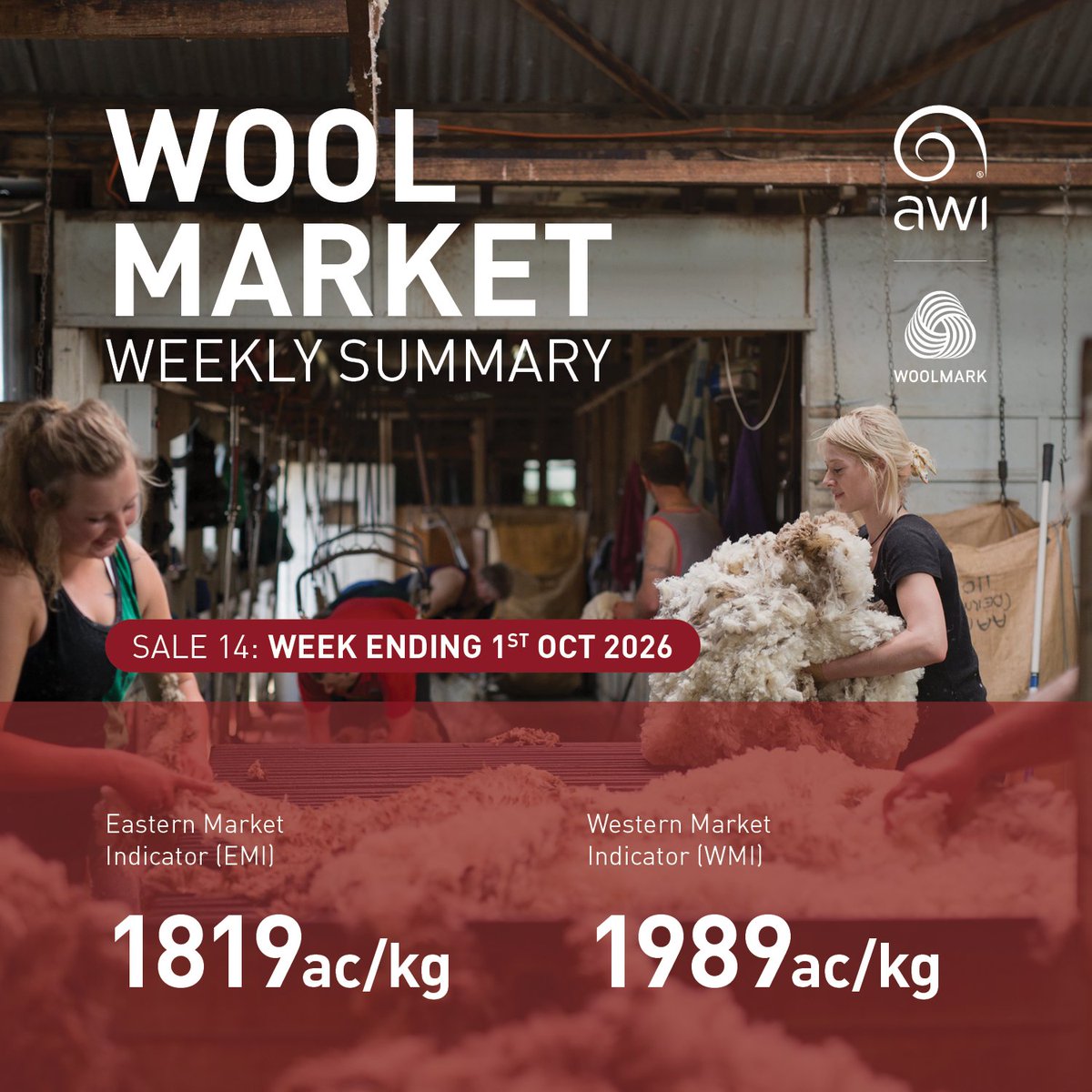
The Australian wool market continued to fall this week as buyers remained selective, and growers showed increasing resistance to lower prices. A total of 29,406 bales was offered nationally, up 1,739 bales on the previous week, with 25,647 bales sold.
The Eastern Market Indicator (EMI) fell 26 cents to close at 1,819 A¢/kg. Currency movements amplified the decline for overseas buyers, with the Australian dollar falling 1.25 US cents to 69.77 US cents and the EMI losing 41 US cents to 1,269 US¢/kg.
For the full market summary, head to 👉 https://t.co/Pj2zqhOeHg
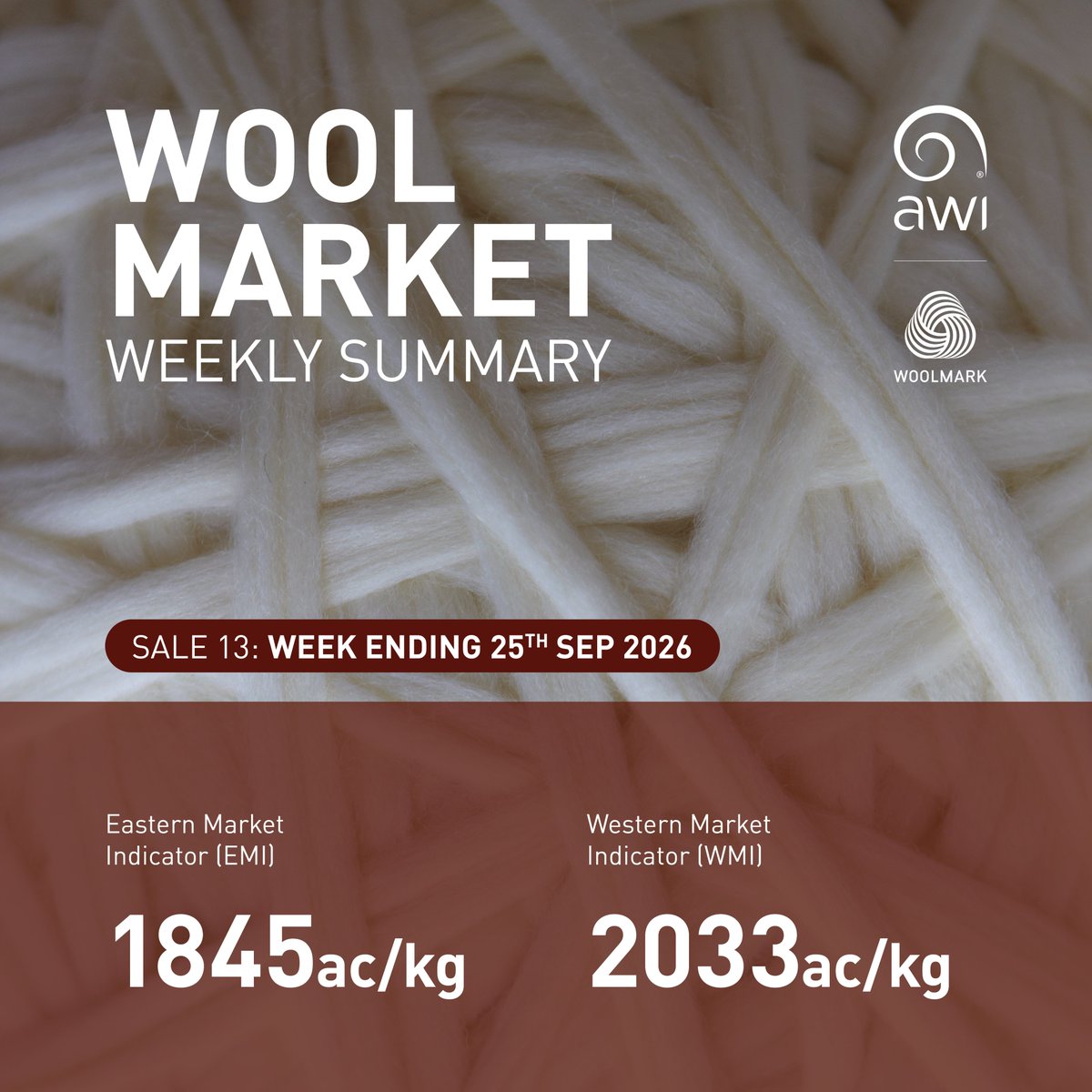
The Australian wool market recorded a modest decline this week, the first auction following the Nanjing Wool Market Conference.
A total of 27,667 bales was offered nationally, 725 fewer than the previous week, with 25,364 bales sold.
The Eastern Market Indicator (EMI) fell 12 cents to close at 1,845 A¢/kg. In US dollar terms the EMI declined 14 cents to 1,310 US¢/kg, with the AUD relatively steady at 71.02 US cents.
For the full market summary, head to 👉 https://t.co/QYkx46xIK5
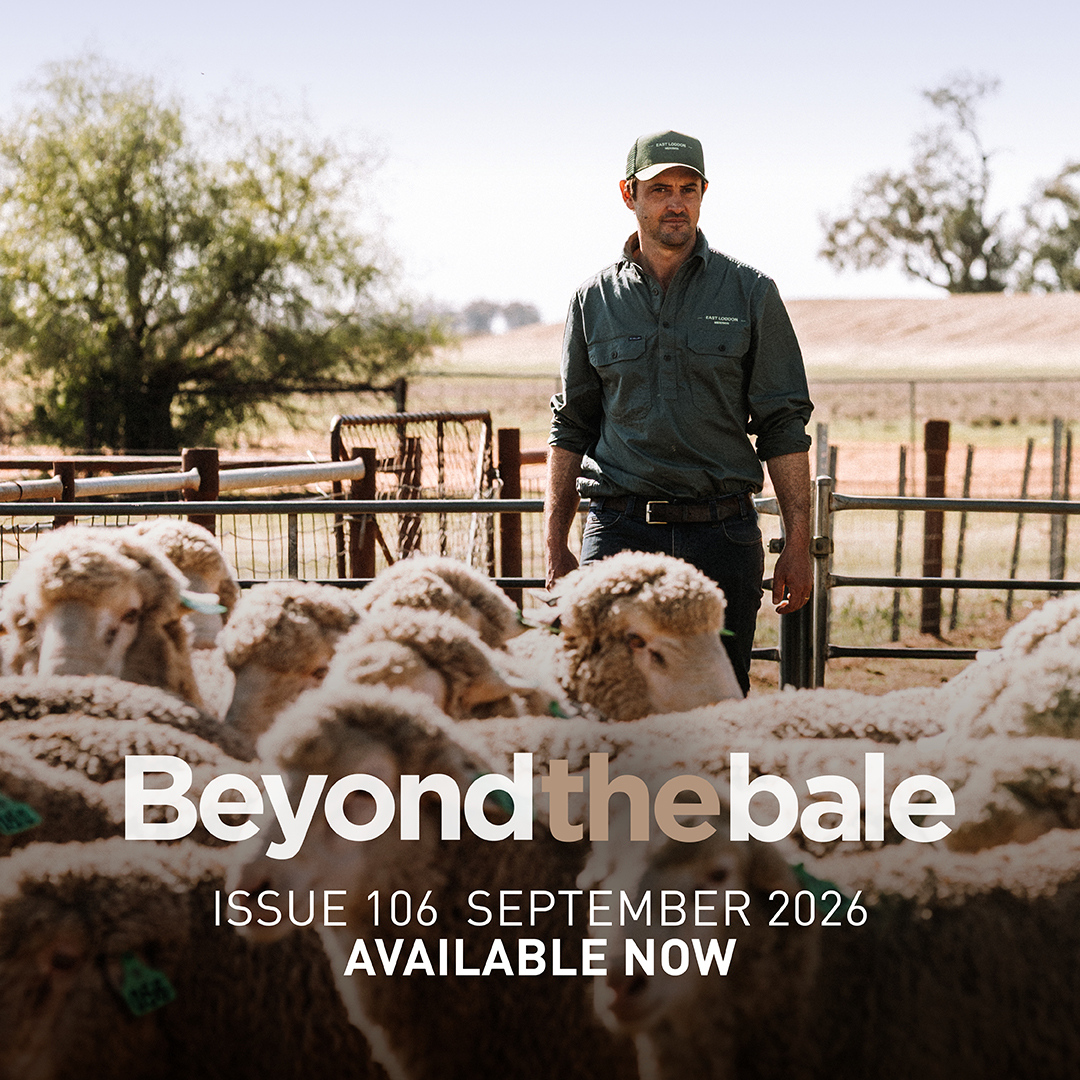
Introducing Beyond the Bale, edition 106.
In this Spring/Summer edition of Beyond the Bale we explore the people, ideas and innovation shaping Australian wool’s future.
Meet woolgrowers and industry leaders including Tom Hooke, Emily Stretch, Michael Wright and Jim Gall, and discover how knowledge gained through AWI Extension is driving practical improvements on-farm.
The edition shares key findings from the decade-long Merino Lifetime Productivity Project, examines wool’s carbon story and reports on progress towards a flystrike vaccine. Beyond the farm gate, it looks at opportunities emerging through Japan, crossbred wool, wool faux fur, natural fibre collaboration, and Homestead Road’s Australian wool activewear.
Plus, find the latest market intelligence, National Wool Declaration advice and practical woolgrower resources.
Explore the full edition here 👉 https://t.co/zcTTCfS5Ng
The Australian wool market experienced a more cautious tone this week, with the larger national offering meeting increasingly selective demand ahead of the Nanjing Wool Market Conference. A total of 28,392 bales was offered, with 25,009 bales sold and the pass-in rate rising to 11.9%.
For the full summary, head to 👉 https://t.co/kr1a1a7CJV
The Australian wool market experienced a more variable Week 11, with early gains giving way to broader losses on the second selling day. A total of 23,486 bales was offered nationally, 1,535 fewer than the previous week, with 21,147 bales sold and the pass-in rate rising to 10.0%.
For the full summary, head to https://t.co/DD0cQd7lBz
The Australian wool market extended its recovery this week, recording a second consecutive weekly rise as widespread buyer demand continued to meet relatively tight supply. A total of 25,021 bales was offered nationally, up 1,370 bales on Week 9, with 23,926 bales sold and 4.4% passed in.
The Eastern Market Indicator (EMI) gained 37 cents, or 2.0%, to close at 1,890 A¢/kg. In US dollar terms the EMI increased 25 cents to 1,350 US¢/kg.
For the full market summary, head to 📷 https://t.co/hAgaDKJtaH
The Australian wool market rebounded strongly this week, reversing much of the previous week’s decline as buyers competed for the smallest three-centre offering in almost six years. Just 23,651 bales were offered nationally, down more than 14,000 bales on the previous week, with 23,185 bales sold and only 2.0% passed in.
The Eastern Market Indicator (EMI) gained 41 cents, or 2.3%, to close at 1,853 A¢/kg, with the EMI higher in all major currencies. In US dollar terms the increase was 44 cents to 1,325 US¢/kg.
For the full market summary, head to https://t.co/xMXKAsHPhC
Australian wool auctions returned this week following the annual three-week recess, with the market opening sharply lower before stabilising to some degree on the second day.
A total of 37,702 bales were offered nationally, with 31,541 sold and 16.3% passed in.
The Eastern Market Indicator (EMI) fell 61 cents, or 3.3%, to close at 1,812 A¢/kg. In US dollar terms, the EMI lost 28 cents to 1,281US¢/kg, a fall of 2.3%.
For the full market summary, head to 👉 https://t.co/VvVktLIx97
The Australian wool market moved lower in the final selling week before the mid-year recess, with all three centres operating and the national offering rising by 10,521 bales to 31,751 bales.
The larger catalogue placed greater pressure on the market, with the EMI falling 28 cents to 1,873 A¢/kg. In US-dollar terms, the indicator eased by 18 cents to 1,311 US¢/kg, while the Australian dollar finished close to US70 cents. The clearance rate fell to 84.7%, showing stronger seller resistance as prices weakened.
For the full market summary, head to 👉 https://t.co/5Qfs1ZGJ9h
The Australian wool market edged lower in the third selling week of the 2026/27 season, with only Sydney and Melbourne operating and no sale held in Fremantle.
The national offering fell by 7,730 bales to 21,230 bales, helping limit the overall decline. The EMI closed 8 cents lower at 1,901 A¢/kg, while a firmer Australian dollar lifted the US-dollar indicator by 3 cents to 1,328 US¢/kg.
The passed-in rate rose to 8.5%, pointing to some seller resistance despite the relatively small movement in prices.
For the full market summary, head to 👉 https://t.co/odh81hDXT6
@AWIExtensionNSW@AWIExtensionQLD@AWIExtensionSA@AWIExtensionTAS@AWIExtensionVIC@AWIExtensionWA
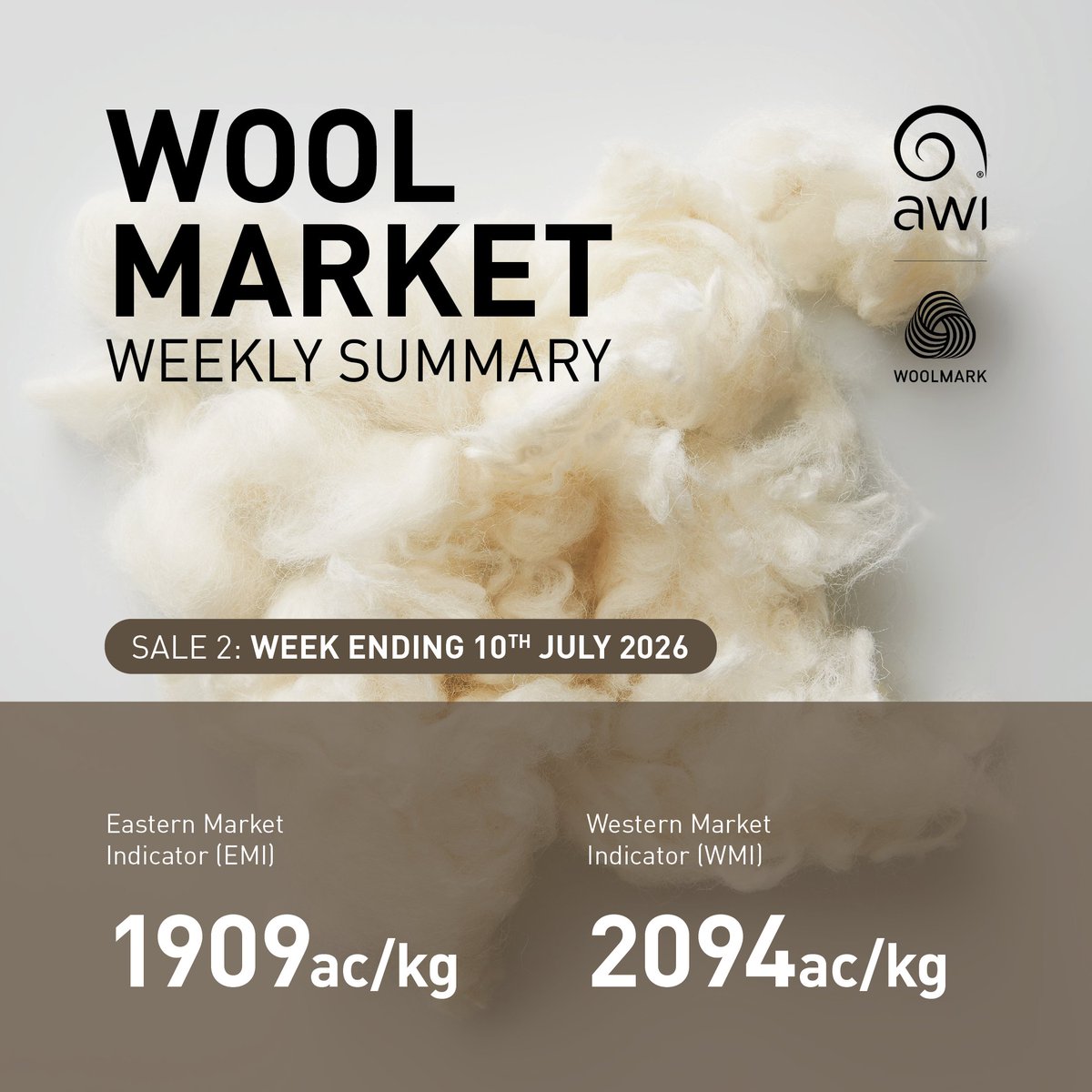
The Australian wool market found support this week, consolidating after two consecutive weeks of losses. The EMI lifted by 5 cents to 1,909 ac/kg, while in US-dollar terms the indicator rose by a more substantial 13 cents. This occurred despite a stronger Australian dollar, which provided headwinds for exporters and overseas buyers.
The recovery was led by the Merino fleece sector, most clearly demonstrated in the Western selling centre. The WMI rose by 22 cents to 2,094 ac/kg, while in US-dollar terms Western returns lifted by 26 US cents to 1,453 USc/kg, highlighting the strength of buyer support in Fremantle.
For the full market summary, head to https://t.co/8Zoi6xNRtI
On the opening week of the 2026/27 selling season, the Australian wool market gave back some of its recent gains. The pattern was similar to the previous week, with most of the losses recorded on the first day of sales.
The EMI closed 39 cents lower at 1,904 A¢/kg. In the Western region, where sales were held on one day only, losses were also concentrated, with the market finishing 57 cents lower at 2,072 A¢/kg.
For the full market summary, head to https://t.co/Q6wG427mVr
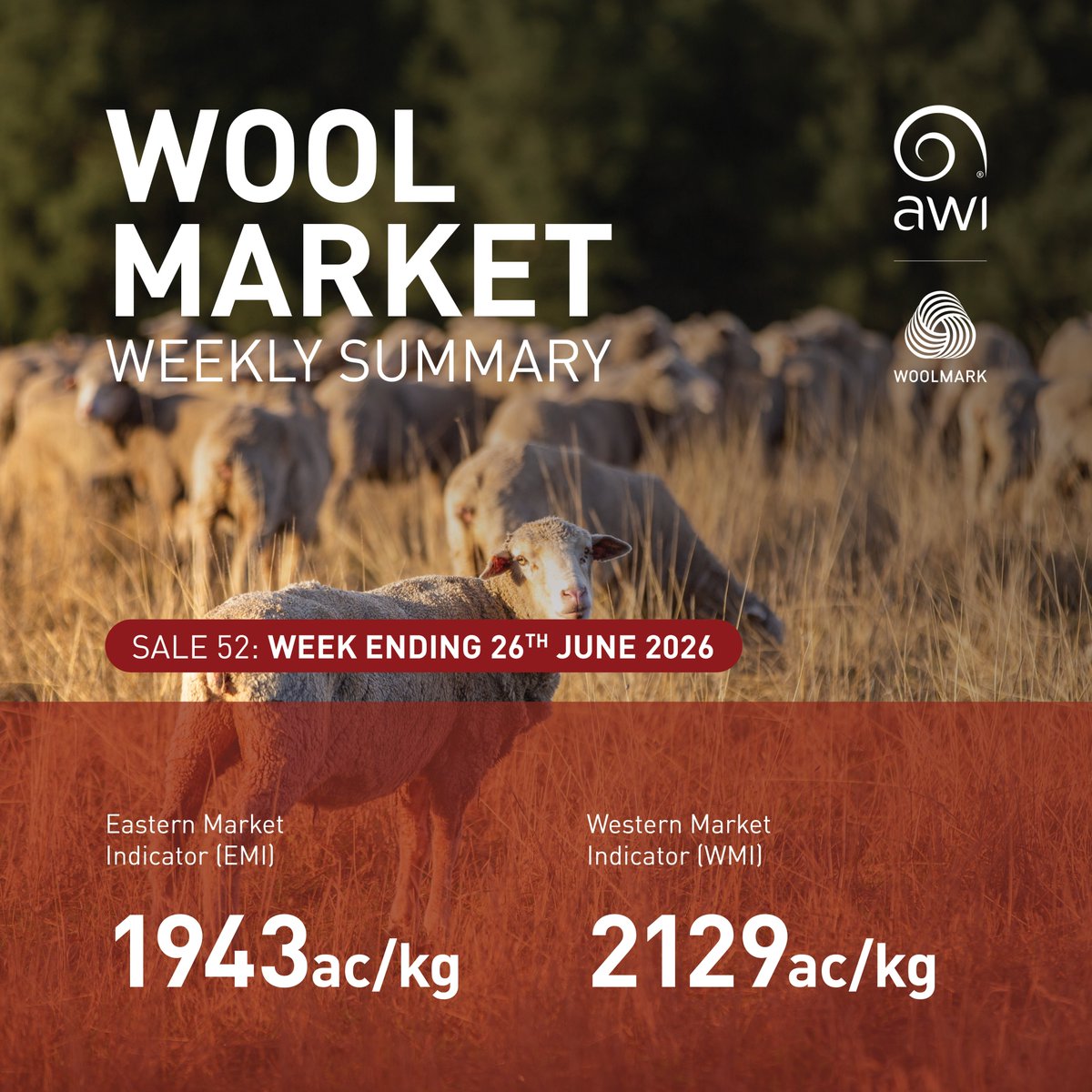
The Australian wool market eased in the final week of the 2025/26 season. The EMI falling by 46 cents to 1,943 ac/kg, while in USD returns it fell 63 cents to end the season on 1,342 usc/kg. A similar story in the western sale rooms with a decline of 41 cents for the WMI easing to 2,129 ac/kg and in USD terms 1,470 a fall of 63 usc/kg.
This week's sale saw buyers become more price-sensitive following several weeks of strong market gains. Sellers, however, remained reluctant to accept lower bids, with the clearance rate easing to 83.4%. Rather than signalling a widespread deterioration in demand, the week's result pointed to buyers reassessing value after an extended period of strong price appreciation.
For the full market summary, head to 👉 https://t.co/jE1TANIB6N
@AWIExtensionNSW@AWIExtensionQLD@AWIExtensionSA@AWIExtensionTAS@AWIExtensionVIC@AWIExtensionWA