For our 45th feature, we welcome back @ColinMGee, who brings us “Lam Chops,” an excerpt from Ransom on the Wrong Side of the River: A Ransom Mones Mystery. So get ready to dodge bullets & leap from rooftops. We dare you not to laugh! Cheers, Colin! 🍸🍸🍸
https://t.co/iaZFe7tkVp
***OUT TODAY!***
Four and a half years since Emma and Tom's adventure first started materialising on paper, my book is finally out!
Available on Kindle Unlimited, ebook and paperback exclusively at Amazon.
“Whatever was on his cold, hard phone so much more satisfying than my warm, (too) soft body.”
The ghosts of relationships past in this haunting piece by @amykdebellis.
International Law: A Handbook"by Harold Wilson
Its 2nd edition incorporates substantive material,illustrative examples, & more thorough examination of International Law topics
Kindle: https://t.co/1V9t0haIGa
Audio: https://t.co/vGDT13I0bX
Please read & review after reading
Another great event put together by Kevin Bateman:
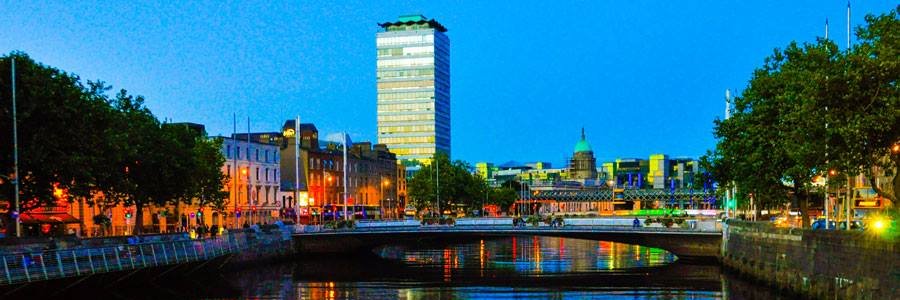
Events In Spiritual Places That People Have Forgotten To Visit
There Can Be Only One
1st February St Brigid's Day
The Old Red Iron Bridge
Waterford City
In Order Of Appearance
David Ryan
Kevin McAlan
Burke
https://t.co/J2OFgunn6j
The Kerry Babies Case started in 1984, as a local murder investigation but quickly erupted into a national scandal, revealing deep flaws in Garda conduct, the Irish legal system and the treatment of women, particularly unmarried mothers.
It began at White Strand beach near Caherciveen, County Kerry, when the mutilated body of a newborn boy was discovered washed up on the shore. The infant had been stabbed multiple times. He became known only as Baby John. The nation was horrified. The Gardaí, under intense pressure to find the killer, soon fixed their attention on a young woman from Abbeydorney. Joanne Hayes, a 25-year-old unmarried mother who had recently concealed a pregnancy and given birth on her family’s farm.
From the beginning, the investigation was rushed and prejudiced. Hayes and several members of her family were taken in for questioning. After long, grueling interrogations, they signed statements confessing to the murder and disposal of Baby John. But as the facts began to emerge, the story started to unravel.
A second infant’s body identified as Hayes’s actual baby, later known as Baby Shane, was discovered buried on the family farm. Forensic evidence showed that this baby had likely been stillborn or had died shortly after birth. Blood tests proved beyond doubt that Joanne Hayes was not the mother of the baby found on the beach.
Yet the Gardaí persisted. Rather than accept the evidence, investigators clung to a fantastical theory of heteropaternal superfecundation. The idea that Joanne Hayes had conceived twins by two different fathers, a medical rarity bordering on impossibility! It was a desperate attempt to preserve a crumbling narrative, and it made the Gardaí look absurd. By October 1984, all charges against Hayes and her family were quietly dropped.
But the damage was done. The notion that Gardaí could force confessions to a crime disproven by science demanded an explanation. A Tribunal of Inquiry, chaired by High Court Judge Kevin Lynch, was established to examine Garda conduct. The Hayes family alleged they were subjected to intense pressure, intimidation, and mistreatment by the Gardaí.
Allegations pointed to the so-called “Heavy Gang” within the force. We previously visited these notorious officers in the DTM, showing their coercive violent interrogation methods. Critics argued that the Gardaí’s tunnel vision and moral bias had blinded them to reason.
But if the investigation had been cruel, the Tribunal was crueler. What was meant to be a neutral inquiry soon became a public inquisition into Joanne Hayes’s private life. The proceedings veered into lurid territory. Her sexual history, her relationship with a married man (the father of her child), and her moral character were dissected before the nation. Women’s groups and journalists likened it to a witch-hunt, a courtroom morality play in which the real purpose seemed to be sending a message to warn and chastise Irish women.
When the Lynch Report was published in 1985, it largely exonerated the Gardaí of wrongdoing, instead accusing the Hayes family of lying. The report even suggested, without substantiation, that Joanne Hayes had choked her own baby despite the State Pathologist explicitly rejected that. It was a damning reflection of 1980s Ireland. A deeply conservative Catholic society where the word of a woman, especially an unmarried mother, carried less weight than that of a uniformed man.
In 2018, more than thirty years later, the Irish State issued a formal apology to Joanne Hayes and her family, acknowledging the grave wrongs done to them and offering compensation. Two years later, in 2020, the High Court formally declared that the Tribunal’s findings against the Hayes family were unfounded and incorrect.
In March 2023, Gardaí arrested a man and a woman after DNA evidence identified them as Baby John’s biological parents, nearly 40 the tragedy.
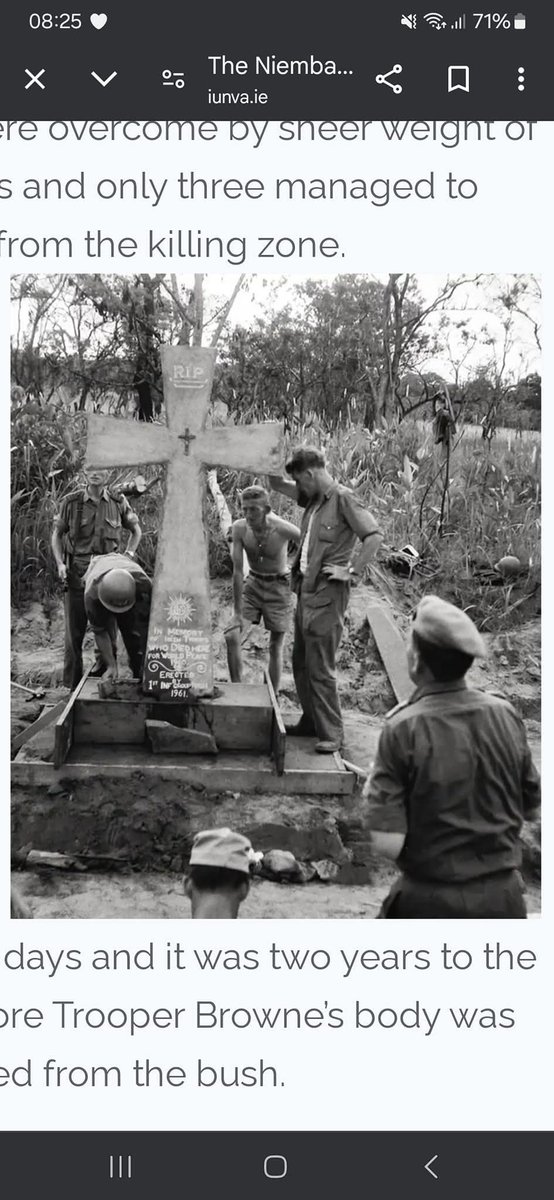
Today in 1960, 9 Irish soldiers were killed in an ambush by Baluba tribesmen in Niemba, Katanga. They were deployed as United Nations peacekeepers to stabilise the newly independent Republic of Congo as Katangan rebels attempted to secede.
Lieutenant Kevin Gleeson, leading a platoon of eleven men from the 33rd Infantry Battalion, was tasked with securing a station and repairing a bridge over the Luweyeye River. The soldiers encountered the damaged bridge and a roadblock set up by Baluba tribesmen, who had mistaken the Irish peacekeepers for Katangan rebels.
The platoon had left much of their support weaponry, including Bren machine guns, in their vehicles, which were now inaccessible. When Gleeson and Sergeant Hugh Gaynor approached to investigate, they were quickly surrounded by about 200 tribesmen armed with bows, arrows, machetes, and clubs.
Following their UN orders not to fire unless fired upon, the Irish soldiers attempted to communicate peacefully. Gleeson greeted the tribesmen with “Jamba,” a friendly term in Swahili, only to be struck by an arrow. Almost immediately, a hail of arrows rained down on the platoon.
Under intense pressure, Gleeson ordered his men to return fire while he laid down cover to help them retreat. But the numbers were overwhelming, and he was killed while defending his troops.
A fierce battle ensued in the thick jungle terrain, with the Irish soldiers severely outnumbered. Lacking sufficient ammunition, they fought hand-to-hand as tribesmen continued to advance, determined to eliminate any survivors. The fighting was swift and brutal, leaving 25 tribesmen and most of the Irish peacekeepers dead.
Amid the confusion, Trooper Anthony Browne went missing, and his body would not be found until 1962. He was later posthumously awarded An Bonn Míleata Calmachta (Military Medal for Gallantry), the Irish Defence Forces' highest honour. Privates Joe Fitzpatrick and Thomas Kenny survived the ambush by managing to hide; Fitzpatrick was rescued the following day, and Kenny was found two days later by Irish Army personnel.
The massacre left a deep impact on Ireland, where almost 500,000 mourners later lined the streets of Dublin for the soldiers' funeral cortege. While the name "Baluba" became synonymous with savagery in Ireland, this incident did not reflect the whole of the Baluba people, who, like the Irish, had endured years of oppression under colonial rule and had resisted Belgian control through rebellions in 1895 and 1917.
For the Irish Army, this mission underscored the serious challenges of being deployed overseas, particularly in environments for which they were ill-equipped and unprepared. The soldiers wore woollen uniforms and hobnail boots unsuitable for the tropical climate and carried outdated weapons. Additionally, no interpreters were assigned, compounding the miscommunication with locals.
The survivors, Fitzpatrick and Kenny, returned to Ireland traumatized and largely unacknowledged. Decades later, after a campaign to recognize their bravery, Fitzpatrick was awarded a commendation in 2007, which Kenny declined.
The remains of the 9 soldiers were interred with honours at Glasnevin Cemetery, but the events of Niemba continued to cast a long shadow. Misreported details of the ambush caused further anguish for the survivors, whose accounts were initially dismissed or altered. It was only in 1998 that medals were awarded posthumously to those who died serving as peacekeepers.
The names of those who died so brutally attempting to bring peace to the people of the Congo are :
Lt. Kevin Gleeson, Carlow, aged 30
Sgt.Hugh ‘Sonny’ Gaynor,Leixlip, aged 29
Cpl. Peter Kelly, Templeogue, aged 25
Cpl. Liam Dougan, Cabra, aged 34
Pt. Matthew Farrell,Jamestown, Dublin, aged 22
Tpr. Thomas Fennell,Donnycarney, aged 18
Tpr. Anthony Browne, Rialto, aged 20
Pte. Michael McGuinn Carlow, aged 21
Pte. Gerard Killeen Rathmines. aged 27
Ready for a new twist on the private detective genre?
Then meet David Braddock, anti-hero. And discover why EVERYONE BURNS…
Over 1,000 reviews on Amazon with an average rating of 4-stars.
#KindleUnlimited
Amazon US https://t.co/FFSpdHE7L8
Amazon UK https://t.co/pWitKtUJvu
Darby’s Quest (2 Book Series)
By Nina Romano @ninsthewriter
In this haunting tale of stunning love and loss, Darby learns regardless of what transpires she’ll always be THE GIRL WHO LOVED CAYO BRADLEY . . .
https://t.co/jrUSmqimEX
#romance#WesternRomance#HistoricalRomance #BookSeries #NewRelease #Kindle
NEW: Valerie Flynn reviews After the Train edited by Evelyn Conlon and Rebecca Pelan and published by @UCDPress
“[A]n eye-opening and evocative mosaic of first-person reflections on the 1975-1977 feminist collective”
https://t.co/3rHutCLTt0






![stingingfly's tweet photo. NEW: Valerie Flynn reviews After the Train edited by Evelyn Conlon and Rebecca Pelan and published by @UCDPress
“[A]n eye-opening and evocative mosaic of first-person reflections on the 1975-1977 feminist collective”
https://t.co/3rHutCLTt0](https://pbs.twimg.com/media/G47fL9YX0AAaIxa.jpg)





