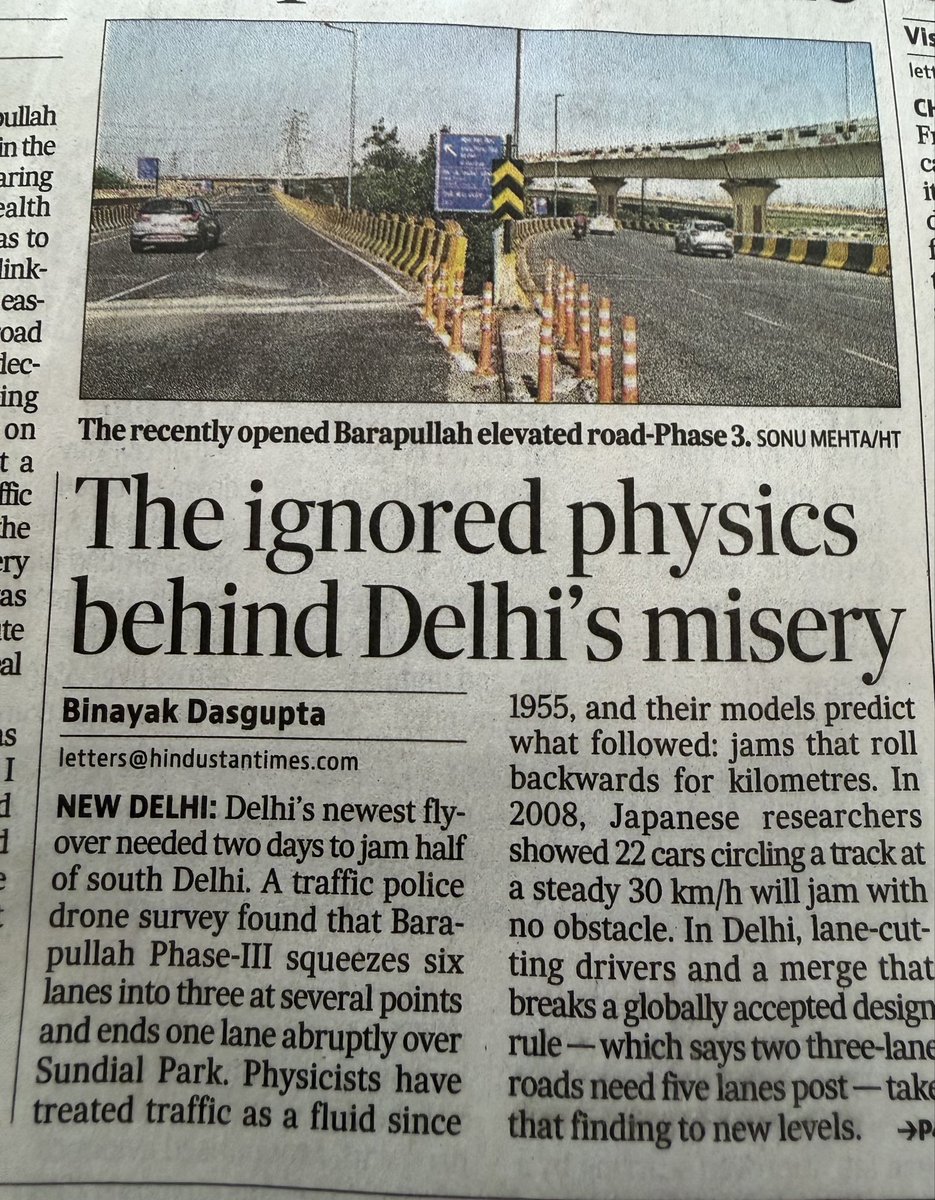
So unusual these days to find a well written news story that finds an unusual perspective for what would normally just be local reporting
It’s Binayak Dasgupta in yesterday’s @htTweets
You will have to go to the site to read the whole piece though…
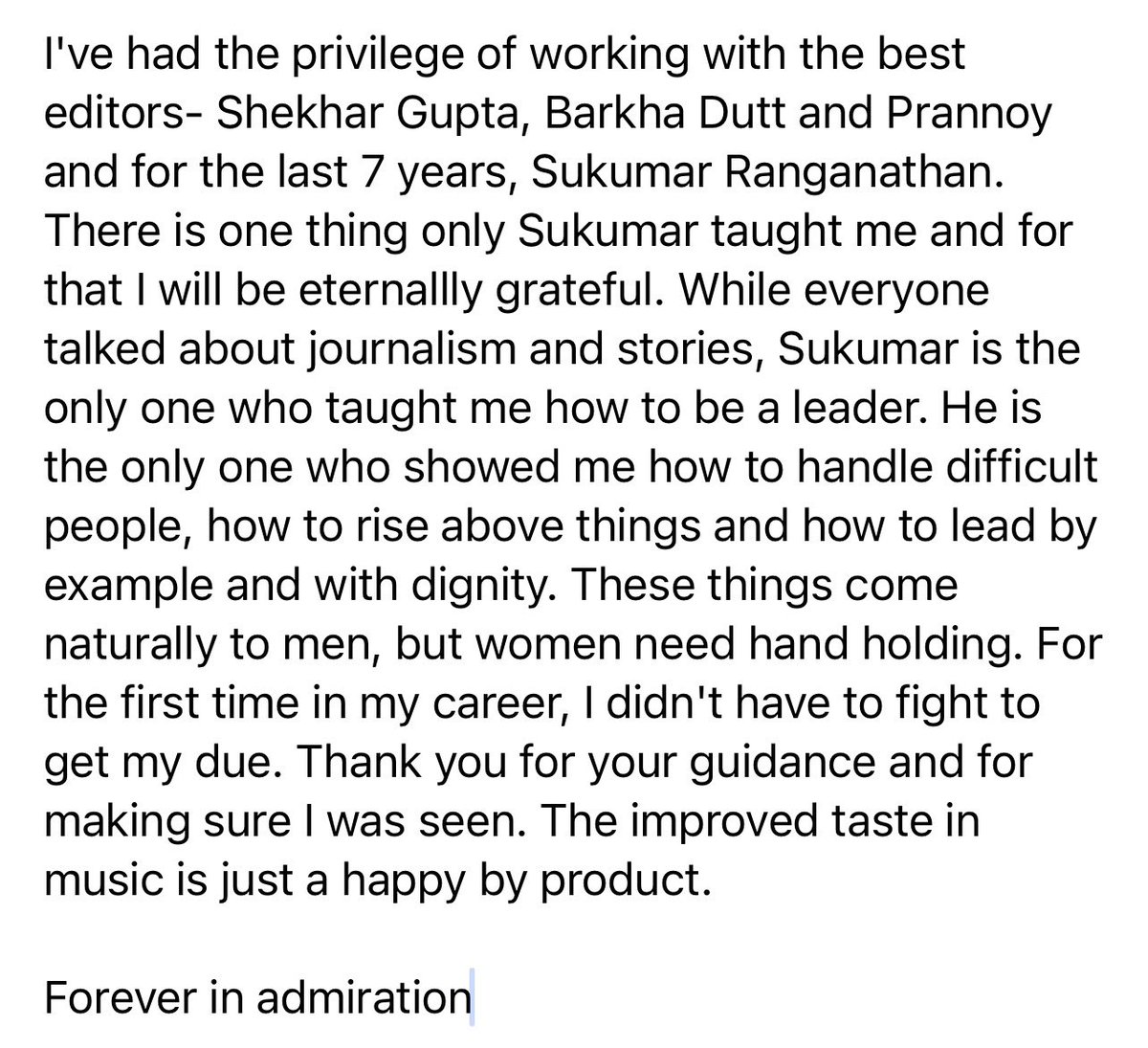
Very rarely do newsrooms get a chief who lives and leads by nothing but example. The Hindustan Times newsroom would forever remember R Sukumar as such a leader. Working with you for 18 years has been an immensely rewarding experience @HT_Ed. Great luck with the journey ahead ✨
Thank you, Mr Editor! Sukumar Ranganathan Sir @HT_Ed, I have worked with you for so many years—in Mint and then in Hindustan Times! You have been so encouraging and trusting, to me and to all of us in the newspaper. And you are so cool! You will be missed in Hindustan Times.
Everyone who cares about the Hindustan Times & its unique place in India’s newspaper history owes a huge debt of gratitude to Sukumar (@HT_Ed ) who played such an important role in stabilising the paper and running it with flair, skill, decency & fairness
It’s not easy to run a paper in these times with political & financial pressures but Sukumar never let that bother him & produced the finest paper in India .
When the history of the HT is written his contribution will remain among the high points and he will be remembered as one of the paper’s best editors
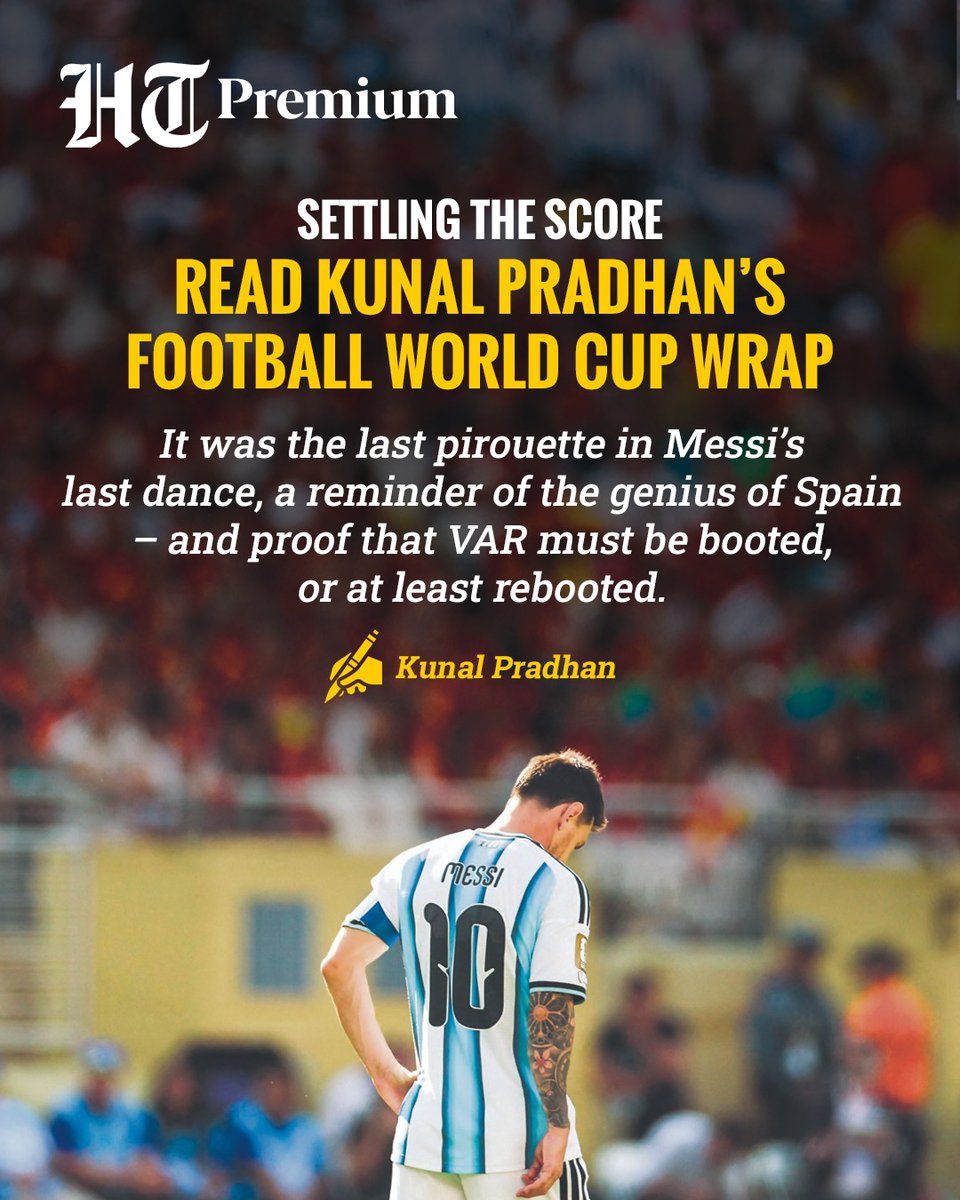
#HTWknd | Every football World Cup tells a story.
Beyond the winners and almost-winners, the happy surprises and bitter heartbreaks, it tells us a little more about the world we inhabit, and reveals new facets of the one sport that enrages and enthuses us more than any other.
The first three World Cups (1930, ’34 and ’38), held amid the Great Depression and with Europe hurtling towards World War 2, established the domination of Italy’s 2-3-2-3 method, opening the door to tactical formations.
The 1950s and ’60s marked the rise of the Samba beat, as Brazil’s free-flowing style provided joy and optimism in an era of post-war buoyancy.
The ’70s,’80s and ’90s, in a world divided by the Cold War, split football into two overarching styles: South American ingenuity and European solidity.
Over the next two decades, after Communism had fallen and the frailties of Capitalism had been exposed, superior TV coverage, breathless social-media rants and new technological interventions made football less forgiving, the players fitter, and the opinions more divided than ever before.
So, if the 2018 World Cup was about France’s superstars ruling from on high, and 2022 about Lionel Messi fighting to claim his crown at long last, what did the 2026 World Cup teach us about life and football? Here are three takeaways.
@_kunal_pradhan ✍
Know more 🔗 https://t.co/KmYoO7WLP0
In sport, there are some moments when underdog stories are the only ones that matter.
So, France’s total domination so far and Brazil’s shock exit last week notwithstanding, the early stages of all football World Cups are inevitably the songs of the unsung. Expand the field to 48 teams instead of 32, as this 2026 edition has done, for the first time, and the music is bound to get louder.
@_kunal_pradhan ✍
Know more 🔗 https://t.co/tSGFUxKZQA
17 years of waiting. Two Masters titles in a row. 🏆⛳ Rory McIlroy’s journey from heartbreak to history is the stuff of golfing legend — joining an elite club of just six icons. 🔥
Read full story: https://t.co/dguyCyxsur
@_kunal_pradhan ✍🏻
#HTWknd | The first murmurs of the trend began about 18 years ago as a funny anecdote. Batting coaches I knew in Delhi and Mumbai started talking about how they were facing a strange conundrum: fathers and mothers protesting that too much time was being spent teaching their children how to play defence instead of how to hit fours and sixes. “That’s like wanting to run before you can walk,” the coaches would laugh, as they narrated these conversations.
This was when the Indian Premier League (IPL) was two or three years old, and the gavel at the auction was turning more heads than the fireworks on the ground. As young second-string Indian players started getting snapped up for tens of lakhs of rupees — something unheard of in domestic cricket until then — the viability of cricket as a profession that could support more than just the 15 superstars who made it to the Indian team started to reveal itself.
Six-hitters was what IPL needed, so six-hitters was what people wanted their kids to become. And since the customer is always right, a fundamental shift began to occur.
All these years later, say hello to Vaibhav Sooryavanshi.
@_kunal_pradhan ✍
Know more 🔗 https://t.co/WgOuUeR27q
Is it the driver or is it the car? This burning question has dogged motor racing and its recognition as a bona fide sport since the European Grands Prix of the 1920s morphed into Formula 1 in the 1950s.
Before we get into it, allow me to throw a few more questions at you: What does it take to build the fastest machines in the world? How does one maximise the potential of these machines and squeeze an extra three-tenths of a second from them around a 3.5-mile circuit while battling 21 similar behemoths?
Tap to read: https://t.co/3QpZNd2rsa
(@_kunal_pradhan ✍🏻)