Awesome Robotics! 💾
Building your own robot just got a lot easier.
MathWorks have released an open-source GitHub repository packed with robotics resources for anyone interested in getting hands-on.
The repo includes examples for robot arms, ground vehicles, and drones, with projects that show how to connect with ROS and ROS2 or even deploy Simulink models directly as ROS nodes.
There are also more advanced demos, like modeling off-road environments and testing navigation algorithms in photorealistic simulations.
Everything is well-documented, with tutorials and links that make it easy to go from concept to prototype. 📑
Whether you’re a student, researcher, or just curious, there’s material here for every level. And since it’s an open community project, you can not only explore but also share your own contributions.
For anyone looking to learn robotics by doing, this is a solid place to start!
Here’s the link: https://t.co/2KyP6YMFny
~~
♻️ Join the weekly robotics newsletter, and never miss any news → https://t.co/GoA3ZuwoPB
SLAM dunk your robotics knowledge! ⛹🏼♂️
Robots are getting smarter and more capable, hence SLAM is often considered one of the "holy grail" of robotics, enabling machines to map unknown environments while tracking their own position within them.
Recently, even OpenAI is hiring SLAM engineers, so here's the free MIT guide to learn it!
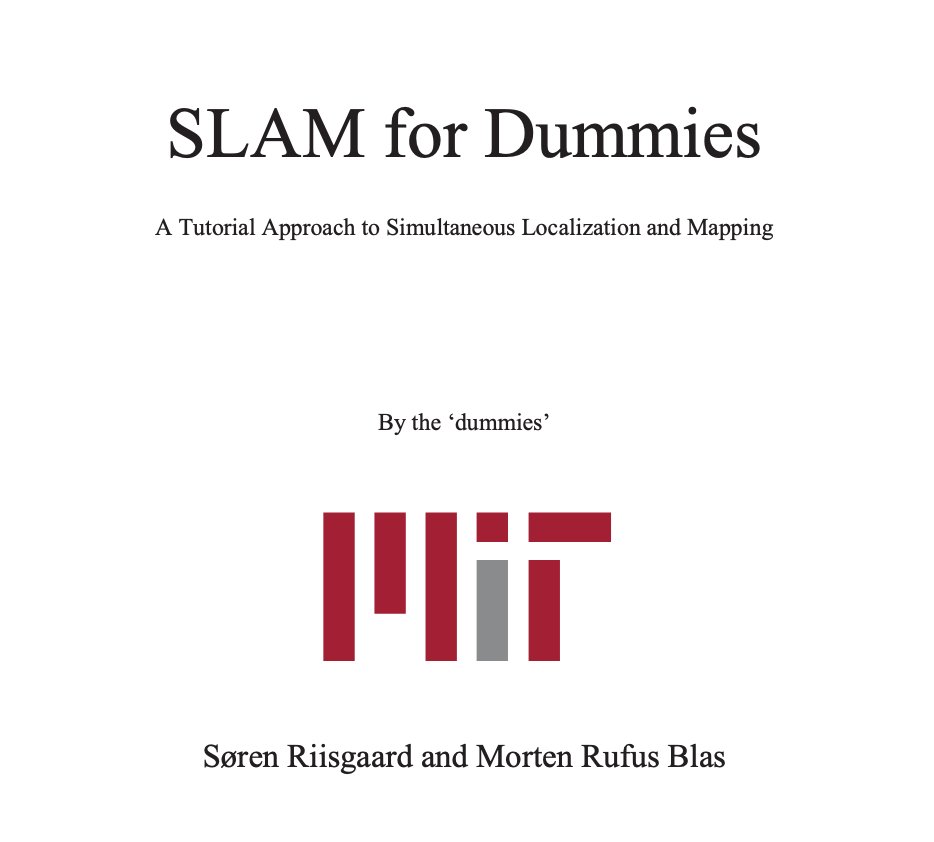
For an accessible, hands-on entry point, "SLAM for Dummies" is a must-read.
Authors Soren Riisgaard and Morten Rufus Blas developed this guide at MIT, creating a resource that bridges the gap between theory and practice.
De-mystifying complexity by breaking down the logic of autonomous navigation into understandable steps, skipping unnecessary jargon.
Code included with plenty of concrete examples, perfect for moving from theory to implementation. Proven foundation born out of the MIT academic environment, yet written specifically for practitioners and beginners.
SLAM solves a fundamental problem: How does a robot navigate when it doesn't know where it is and doesn't have a map? Traditional navigation assumes you either have a map or know your position. SLAM builds the map and estimates position simultaneously, handling the circular dependency between the two.
Applications span autonomous vehicles (building maps while driving), warehouse robots (navigating dynamic environments), drones (flying in GPS-denied spaces), and household robots (learning home layouts).
A top recommendation for aspiring robotics engineers and tech enthusiasts who want to understand how machines develop spatial awareness!
👉🏼 Get it for free here: https://t.co/0b24EudekM
~~
♻️ Join the weekly robotics newsletter, and never miss any news → https://t.co/GoA3ZuwoPB
A full MIT course on robot mechanics and control.
If you're building or working with robotic systems, this one deserves a permanent bookmark.📌
Russ Tedrake's Underactuated Robotics at MIT covers the math and intuition behind how robots actually move — not just the surface level.
No paywalls. No prerequisites gatekeeping.
What it focuses on:
- Nonlinear dynamics and stability for robotic systems
- Trajectory optimization and motion planning
- Reinforcement learning applied to locomotion and manipulation
- Lyapunov methods and limit cycles for real control design
- Worked examples with code across the full course
Full textbook, lecture videos, and problem sets — all free.
📍 https://t.co/iFk5nQoVqg
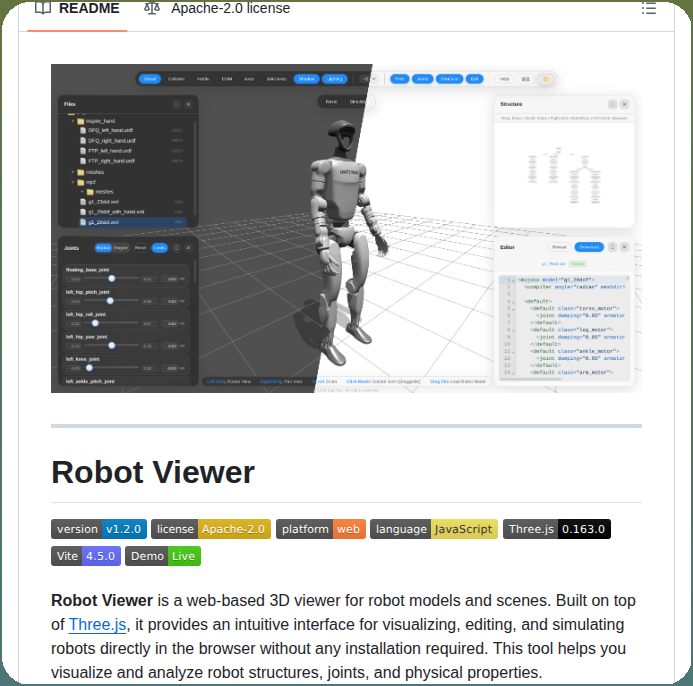
Really excited to release mjviser, a web-based MuJoCo viewer, powered by Viser. It has almost all the features of the native MuJoCo viewer, but runs in your browser. Load and simulate any MuJoCo model with a single uv command 👇
uvx mjviser <model.xml>
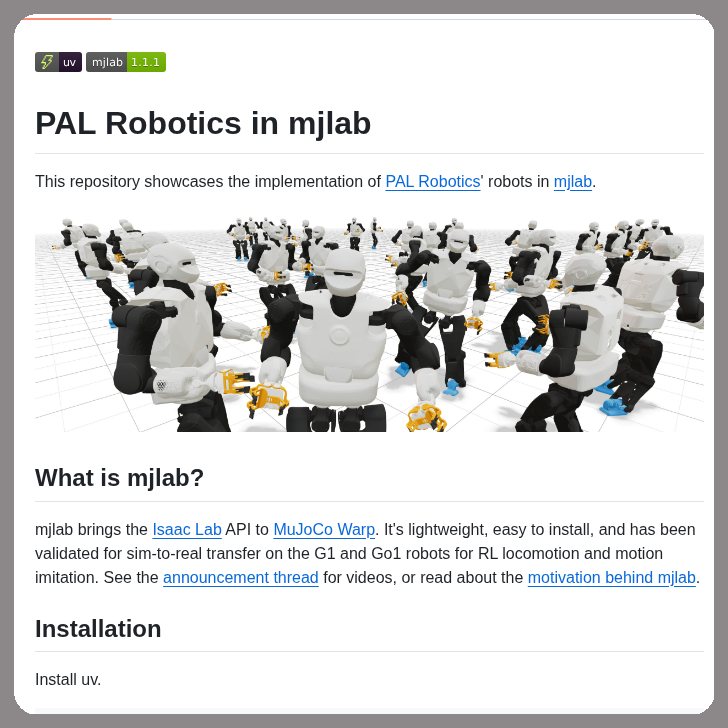
Last week, we announced our three new hands. Today, we're releasing their digital twins ↓↓↓
> new orcahand mjcf/urdf files available on https://t.co/PfhpWlc3V2
> custom learning environment @ https://t.co/qX9hRDjuUN
If You Love Mathematics and Physics, You'll Love Control Systems
Episode 1
Control Systems are the craft of keeping something doing what you want, even when the environment is pushing back. You simply measure what's happening, compare it to your goal and apply correction over and over, many times per second.
We need Control Systems because the real world is noisy and unforgiving. Loads change, wind happens, sensors lie, actuators saturate, and tiny errors snowball into failure unless you actively stabilize.
In this animation, a cart must keep an upside down stick from falling while we shove it, add gusts, change the weight mid-run, and force it to track new positions. The Controller keeps nudging and braking so it stays upright instead of tipping over.
Subscribers can get Python Script on Request.
Run your robot in simulation! 🖲️
📌 If you’re self-learning robotics, this is genuinely one to save for later.
This is next chapter of @NVIDIARobotics course "Getting Started with Isaac Sim" covering everything from building your first robot to hardware-in-the-loop deployment.
Today you will learn how to import, configure and... FINALLY simulate your cute robot.
Quick look what's inside:
→ Analyze URDF Structures: Examine URDF file structure and components to identify key elements like joints and links. This forms the basis for importing and configuring robots in Isaac Sim.
→ Apply the URDF Importer: Use Isaac Sim's URDF Importer to successfully import and simulate robot models. Set appropriate import options to ensure accurate representation and functionality.
→ Design Control Systems: Create control systems using differential controllers and keyboard control interfaces, enabling dynamic movement and interaction in the simulated environment.
→ Evaluate Physics Behavior: Assess simulated robot physics to identify and resolve issues like excessive velocity or incorrect joint configurations, ensuring realistic interactions.
→ Create Simulated Environments: Develop complete environments in Isaac Sim with robot models, appropriate physics and control settings, obstacles, and sensor configurations.
The module builds on previous foundations, preparing you for more advanced simulations and applications in the next module.
This is NVIDIA's structured approach to lowering the Isaac Sim learning curve. Most robotics teams have existing URDF files from their robot designs. Being able to import those directly into simulation without manual rebuilding accelerates iteration significantly.
See you next week!
Send this to your friend that wants to learn robotics! 💚
Here's the course (it's free): https://t.co/TCfjCCjNcO
~~
♻️ Join the weekly robotics newsletter, and never miss any news → https://t.co/GoA3ZuwoPB
Your app has two halves.
Frontend: everything that runs on your user's device.
Their browser. Their screen. Their machine.
Backend: everything that runs on your server.
Your logic. Your database. Your secrets.
The line between them is the internet.
Every feature you build crosses it.
🚨 BREAKING: Someone compiled every sim-to-real RL workflow for Unitree robots in one GitHub repo.
You can deploy:
∙Trained MuJoCo policy → real G1 humanoid
∙Trained MuJoCo policy → real H1 humanoid
∙Trained MuJoCo policy → real Go2 quadruped
In one afternoon.
→ https://t.co/GIynj5euQ0
Embedder is the world's first hardware-aware coding agent. By understanding and interacting directly with your hardware, it achieves state of the art performance in an embedded systems (C++/Rust) context.
Our latest update (v0.3.0) features a stunning new terminal UI, and our fastest, most capable firmware agent yet: @embedder_dev
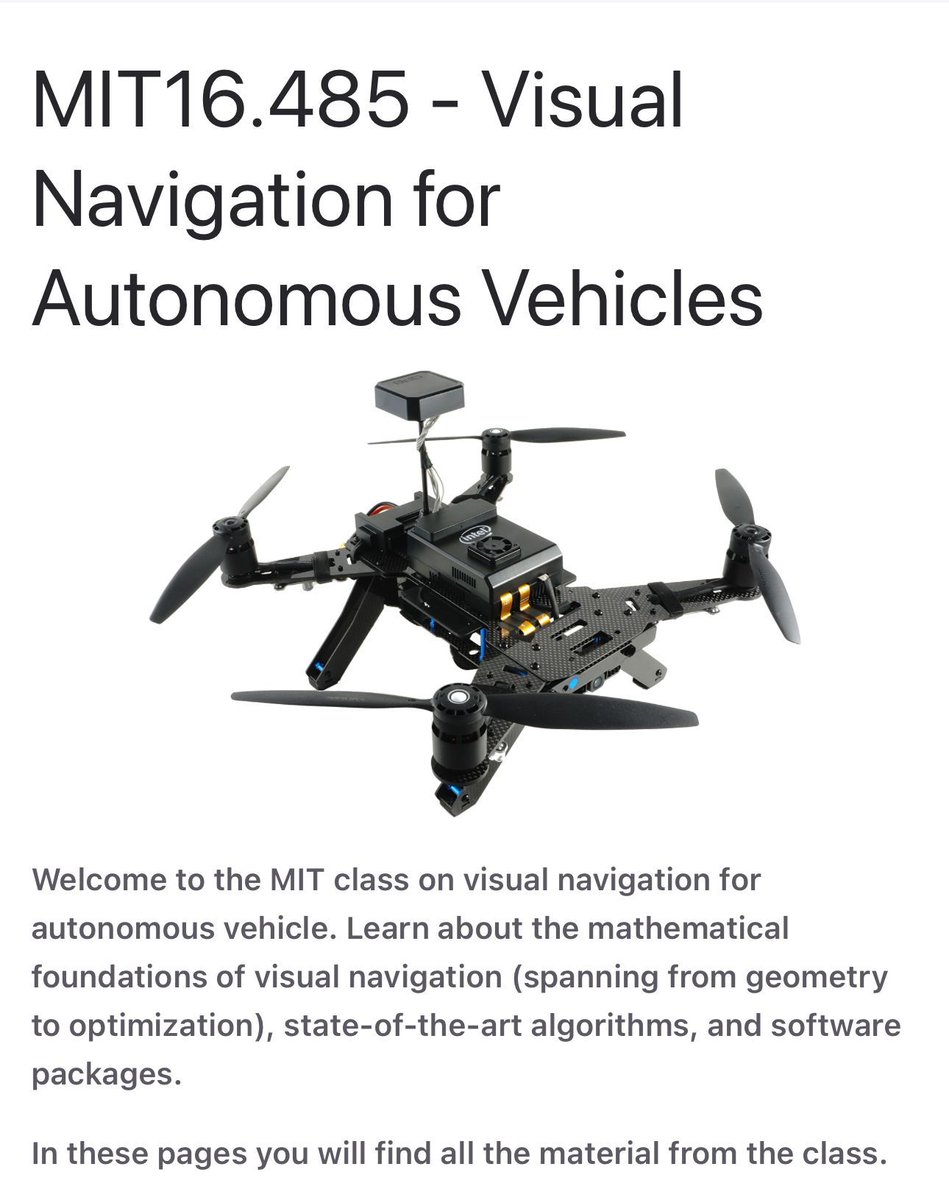
A full MIT course on visual autonomous navigation.
If you work on robotics, drones, or self-driving systems, this one is worth bookmarking‼️
MIT’s Visual Navigation for Autonomous Vehicles course covers the full perception-to-control stack, not just isolated algorithms.
What it focuses on:
• 2D and 3D vision for navigation
• Visual and visual-inertial odometry for state estimation
• Place recognition and SLAM for localization and mapping
• Trajectory optimization for motion planning
• Learning-based perception in geometric settings
All material is available publicly, including slides and notes.
📍https://t.co/HxdJKYIgsf
If you know other solid resources on vision-based autonomy, feel free to share them.
—-
Weekly robotics and AI insights.
Subscribe free: https://t.co/dsa6wcvq6n