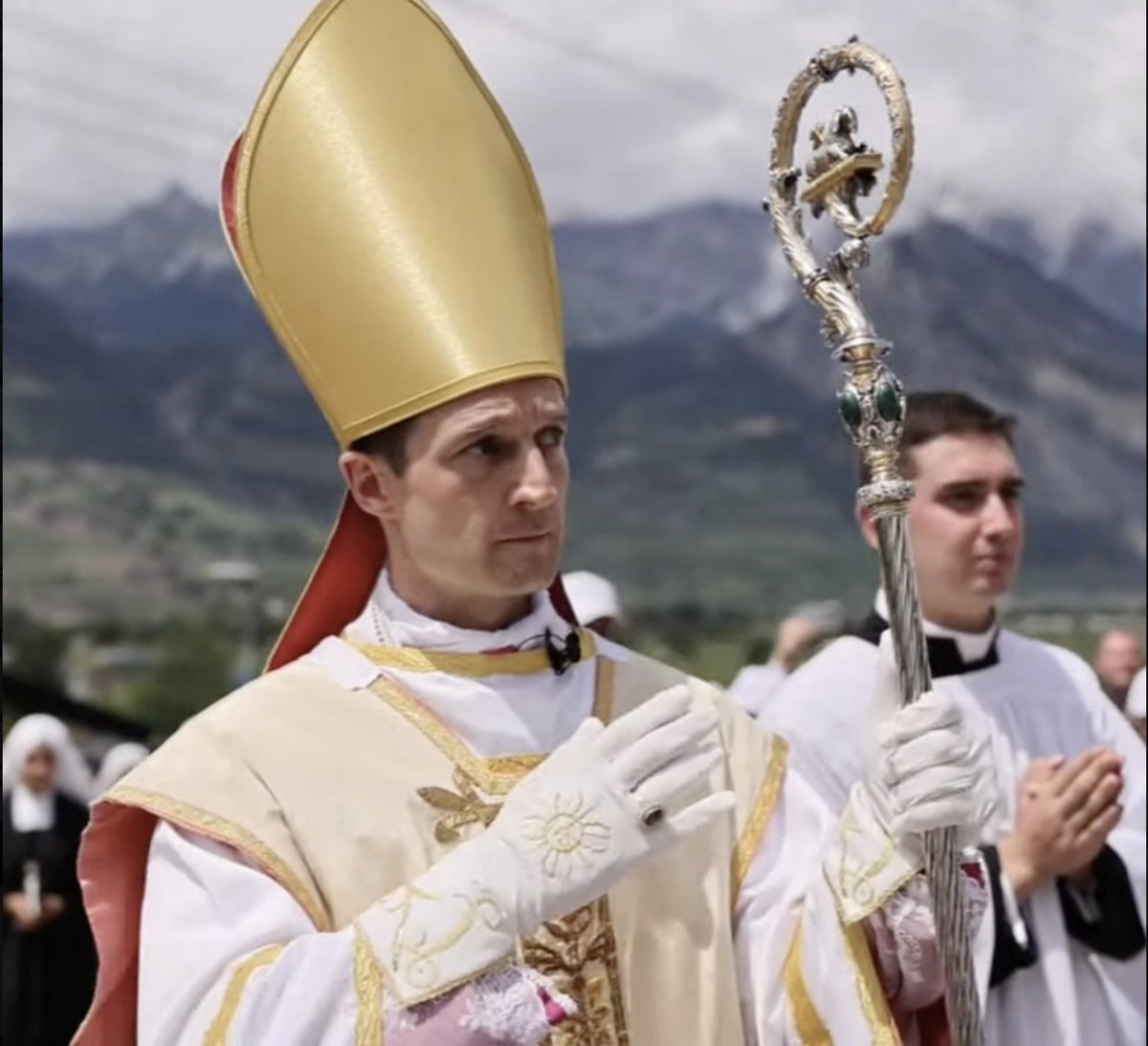
Please pray for Fr. Davide Pagliarani SSPX
As he continues his wise stewardship of the SSPX to continue to provide for the salvation of souls during a time of blatant apostasy @sspx@SSPXEN
In His Passion, Jesus Christ suffered greatly for the sins of man. He wore the crown of thorns, was scourged at the pillar, and had the Five Holy Wounds inflicted upon Him. While most Catholics know of these, few are familiar with the shoulder wound of Jesus, and the miraculous story behind its devotion.
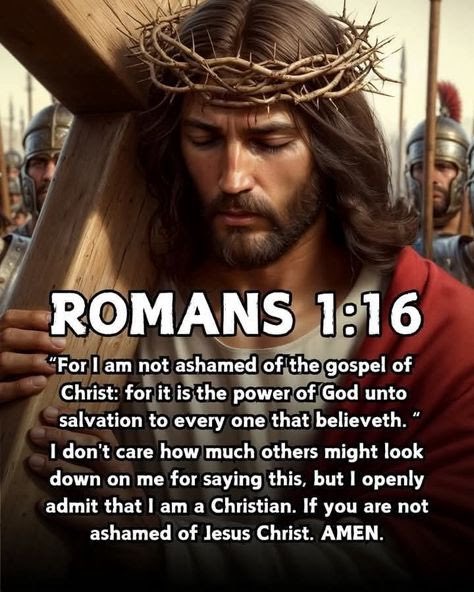
Tradition says as Jesus walked the three miles from Pontius Pilate’s courtyard to His Crucifixion at Calvary, the Cross dug through His shoulder
ripping flesh from bone. According to a pious legend, Saint Bernard of Clairvaux prayed and asked of Christ what was his greatest unknown suffering, and what wound suffered in His Passion was most painful. Christ replied to him:
“I had on My Shoulder while I bore My Cross on the Way of Sorrows, a grievous Wound which was more painful than the others, and which is not recorded by men.”
Christ asked that Saint Bernard and other members of the Faithful keep a devotion to his shoulder wound, and that those who do will receive God’s grace.
“Honor this Wound with thy devotion, and I will grant thee whatsoever thou dost ask through its virtue and merit. And in regard to all those who shall venerate this Wound, I will remit to them all their venial sins, and will no longer remember their mortal sins.”
Saint Bernard heeded Christ’s call, composing a beautiful devotional prayer to honor the shoulder wound of Our Savior:
“O Loving Jesus, Meek Lamb of God, I, a miserable sinner, salute and worship the most Sacred Wound of Thy Shoulder on which Thou didst bear Thy heavy Cross, which so tore Thy Flesh and laid bare
Thy Bones as to inflict on Thee an anguish greater than any other wound of Thy Most Blessed Body. I adore Thee, O Jesus most sorrowful; I praise and glorify Thee and give Thee thanks for this most sacred and painful Wound, beseeching Thee by that exceeding pain and by the crushing burden of Thy heavy Cross, to be merciful to me, a sinner, to forgive me all my
mortal and venial sins and to lead me on towards Heaven along the Way of Thy Cross. Amen.”
While Saint Bernard was the first to venerate the shoulder wound, he was not the last. Saint Padre Pio kept a devotion and also suffered the same wound himself as a stigmata. When Pope Saint John Paul II was still a priest he visited Padre Pio and asked him which wound was his most painful. Father Wojtyła expected that it was his chest wound, but the saint replied:
“It is my shoulder wound, which no one knows about and has never been cured
or treated.”
Prior to his death, Padre Pio confided to Brother Modestino Fucci at his friary in San Giovanni Rotondo that his greatest pains happened when took off his shirt. At the time, Fucci believed it to be his chest wounds much like John Paul II. When he was later assigned the task of inventorying all the items inside the cell of the late Padre Pio, he noticed his undershirts had blood stains on the right shoulder.
That night, Brother Fucci prayed asking Padre Pio for a sign if he truly bore the shoulder wound of Christ. At 1 A.M., he awoke with an excruciating pain in his right shoulder and the room was filled the aroma of flowers, the sign Padre Pio’s spiritual presence, and he heard a voice call out: “This is what I had to suffer!”
¡DIVINO NIÑO JESÚS!
Dueño de mi corazón y de mi vida, vengo ante Ti en este dia consagrado a tu tierna infancia para entregarte todas mis cargas.
En mis dudas, confórtame; en mis soledades, acompañame; y en mis enfermedades, fortaléceme.
Señor, te presento hoy mis necesidades más profundas. Te entrego el peso de mi cruz para que mis pasos sean más seguros y mi corazón se llene de tu paz.
Invade mi ser y hazme semejante a Ti, permitiendo que tu amor guie cada una de mis acciones y pensamientos.
Tú, que eres el consuelo de los cristianos y el refugio de los afligidos, nunca dejas sin respuesta a quienes te buscan con humildad y esperanza. Hoy deposito mi confianza en tus manos benditas, sabiendo que tu infinita misericordia obrará en mi vida.
Amado Niño, quédate siempre conmigo para apartarme del mal y guiarme por el camino de la gracia. Protégeme, ilumina mi oscuridad y bendice a mi familia. En Ti confio, de Ti espero y a Ti me entrego eternamente.
In 1986, the American Medical Association published an article titled "The Physical Death of Jesus Christ." It details the entire process, from Jesus' trial to his death on the cross. In Luke 22, before Jesus was arrested, it is described that he was in great distress and sweating blood.
Though rare, it is known as hematidrosis, a condition caused by high levels of stress. In that era, crucifixion was considered the worst death for the worst criminals. But Jesus did not only suffer this. He was flogged with such severity that it tore his flesh.
They beat him so brutally that they tore his face and ripped out his beard. A crown of thorns 5 to 7.5 centimeters long was driven deeply into his scalp. The leather whip with which he was flogged had small iron balls and sharp bones attached.
The balls caused internal contusions, while the bones tore his flesh. His skeletal muscles, veins, and intestines were left exposed, causing him massive blood loss. Most men do not survive this kind of torture.
After being severely flogged, Jesus was forced to carry his cross while people mocked him and spat on him. Crucifixion was a process designed to inflict unbearable pain, leading to a slow and agonizing death.
Nails up to 20 centimeters long were driven into Jesus' wrists and feet. The Roman soldiers knew that the tendons in the wrists would tear and snap, forcing Jesus to use the muscles of his back to breathe.
Imagine the struggle, the pain, the courage...! Jesus endured this reality for 3 hours! The Gospel of John recounts that, after Jesus' death, a Roman soldier pierced his side with a spear, and blood and water flowed out.
Scientists explain that, due to hypovolemic shock, tachycardia causes fluid to accumulate in the membrane surrounding the lungs and heart.
This accumulation of fluid in the membrane surrounding the heart is called pericardial effusion, and in the lungs, pleural effusion. To the world, Christianity is foolishness. They believe it is for the weak. But when one confronts the reality of the cross, it is clear that it is not a pleasant image. It is brutal and horrifying.
This is the weight that Jesus bore. The weight of the world's sins, all so that we may live. God's wrath is fully satisfied in Jesus. This is what it took.
Repent and believe! Jesus is "God with us" incarnate. Jesus is our Savior. Jesus loves you so much that he endured this spiritual and physical punishment for your sins and mine.
Jesus is the LORD, God Almighty, Everlasting Father.
Thank you, Jesus.
Um dia, Santa Teresa d’Ávila se encontrava num estado de aridez espiritual terrível. Por ser religiosa, ela tinha a obrigação de adorar ao Senhor Jesus por pelo menos uma hora no seu dia. Santa Teresa, sabendo da sua pouca vontade de adorar a Jesus naquele dia, pediu às suas irmãs que trancassem a porta da capela pelo lado de fora e que só abrissem quando tivesse passado uma hora. Assim o fizeram. A Santa sem nenhuma vontade de rezar, começou a contar os tijolos da capela, um por um. Terminada então a sua hora de adoração, as irmãs abriram a porta da capela e ela saiu. Alguns dias depois, Santa Teresa percebeu que sua aridez espiritual havia cessado e uma enorme paixão pelo seu Divino Esposo havia tomado conta do seu coração. Ela naquele dia foi adorar a Jesus com um amor que nunca havia sentido antes. Em um determinado momento de sua adoração, a Santa apaixonada interrogou Jesus dizendo: “Meu doce Jesus, qual foi o dia que Tu mais me amaste?” Ela ouviu imediatamente a resposta de Jesus: “Teresa, o dia que eu mais te amei, foi aquele dia em que tu não querias me adorar, mas só para permanecer na minha presença, ficastes contando os tijolos da capela.”
Today, July 10, in the Catholic Church ✝️
is the feast day of
Saint Victoria of Sabina 😇
who died around 250 AD in the Sabine hills near Rome, in the closing years of the pagan Roman Empire
A Roman noblewoman, virgin and martyr, who chose consecration to Christ over an arranged marriage.
🙏 Victoria and her sister Anatolia were betrothed to two pagan noblemen, Eugenius and Aurelius, but both had already vowed themselves to perpetual virginity, strengthened by an angel who told them that virginity is gold, chastity is silver, and marriage is bronze. Choosing the gold, they enraged their rejected suitors, who denounced them as Christians during Emperor Decius's persecution.
Imprisoned and starved for years by Eugenius, who alternated between cruelty and false kindness to break her, Victoria never wavered. Even the guards sent to wear down her resolve ended up converted by her steadfastness instead. She was finally put to death by the sword, and legend holds that her executioner fell gravely ill within days.
Saint Victoria inspires us to value our consecration to Christ above every earthly promise, and shows that real freedom is found not in meeting the world's expectations but in staying faithful to God's call. 😇
"They made Him a crown of long thorns twisted together, which they put upon His head, and lest it should fall off, they beat it down into His head with their sticks. They penetrated on every side; some entered in His forehead, and temples, and came out at His eyes; others pricked the nerves, and pierced the veins from whence the blood gushed out in abundance, and caused Him such sharp pains, that He could never have endured them without dying, had He not been supported by the Divine Power: and those pains remained till our Saviour expired on the Cross. Let those who have at any time felt violent headaches, stop a moment to consider how sensible that pain was to our Saviour, among so many others which He endured. The very thought thereof makes one tremble; and yet what is the thought, in comparison to the pain itself?
That crown, however painful it was, afflicted Him less than our ambition. We crown ourselves with so much pride." - Fr. Thomas of Jesus
EXAMINATION OF CONSCIENCE IS EVERYTHING.
If you never examine your conscience, you may never recognize the sins keeping you from God.
Every evening, pause for a few minutes. Thank God for His blessings. Ask the Holy Spirit to reveal where you failed in thought, word, deed, or omission. Repent sincerely. Resolve to do better tomorrow.
A well-formed conscience leads to sincere repentance. Sincere repentance leads to Confession. Confession restores us to grace.
Don’t end your day without looking honestly at your soul.
“Search me, O God, and know my heart… See if there is any wicked way in me, and lead me in the way everlasting.”
- Psalm 139:23–24
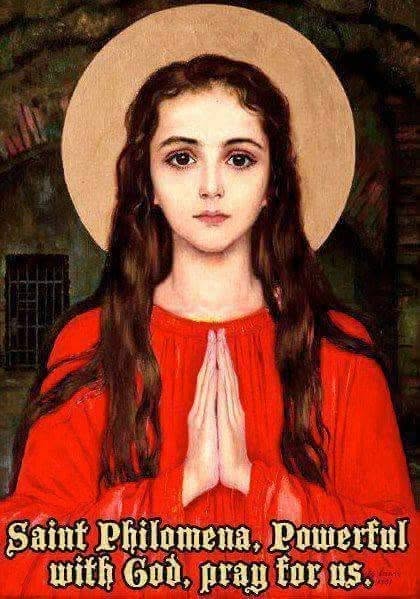
Act of Consecration to Saint Philomena
(To be said on the 11th day of every month.)
.
Illustrious Virgin and Martyr, St. Philomena, whose name and miracles are known even to the ends of the earth, graciously be pleased with the confidence we place in thy intercession, as we come to commend to thy special protection the health of our little family. Obtain for us health of soul and body, for in these days we have need of both. Make us strong in word and work, so that every thought, word and action of our lives may procure the glory of the Sacred Heart of Jesus.
.
St. Philomena, pray for us. 3x
Padre Pio Prayer:
"Stay with me, Lord,
for You are my life,
and without You,
I am without fervor.
Stay with me, Lord,
for You are my light,
and without You,
I am in darkness.
Stay with me, Lord,
to show me Your will."