SOCIOLOGISTS: we are writing an annual review article about word embeddings in sociology. If you have a published article or draft manuscript you've written using word embeddings (including LLMs like BERT/GPT3/...), please drop me a line with a URL so we can include it.
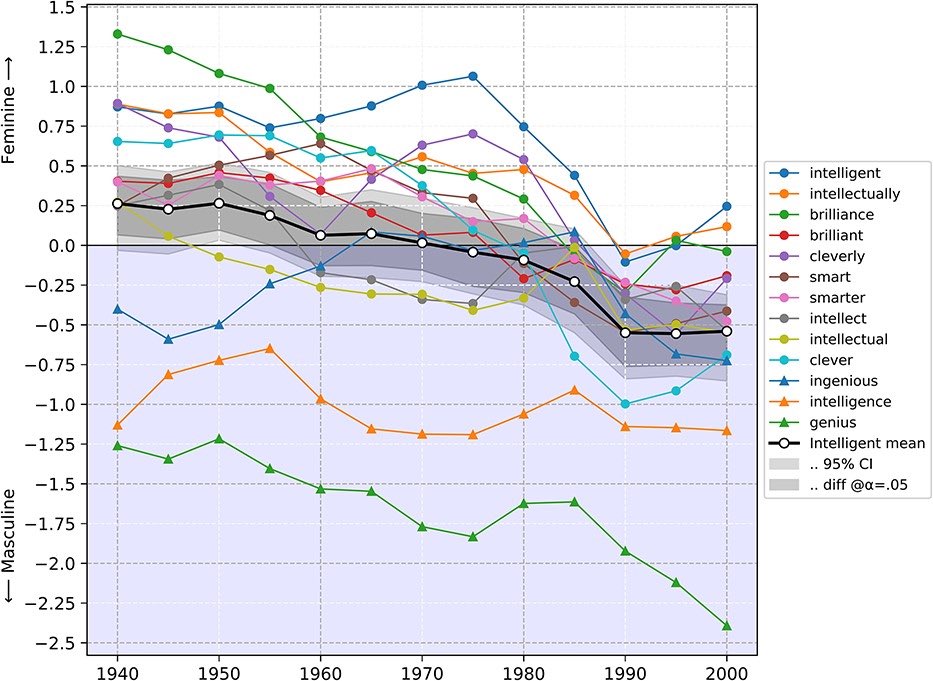
Female schooling has soared,
But men are still more likely to be called ‘intelligent’.
‘Genius’ is still reserved for men.
New analysis of a 200 million word corpus of US print media (1930-2009) by @_Andrei_B_@arsenievK & Cornell
@GenderParityUK @_alice_evans@arsenievK Roughly speaking, if a term has a y coordinate of +1, that means it is one standard deviation more likely to be used in the contexts of feminine terms than in the context of masculine terms at that point in time.
@Glen99630953@_alice_evans@arsenievK Yes, but the chart is actually 1/2 of this finding, the other 1/2 being that the gender associations of intelligence and unintelligence move in unison. In other words, women used to be more associated with the *judgement* of intelligence (high or low), whereas now it is men.
@Amtrak, does the AC in roomettes/bedrooms on SW Chief recirculate air from rest of train? And if so, are there HEPA filters (or other devices) to prevent coronavirus spread?
Trying to decide on a paper title: (1) "What Exactly are Cultural Schemas: A Conceptual Reorientation & User's Guide" vs (2) "Cultural Schemas: What They Are, How to Find Them, and What to Do Once You've Caught One" [or (2b): "... Once You Have One"]. Thoughts?
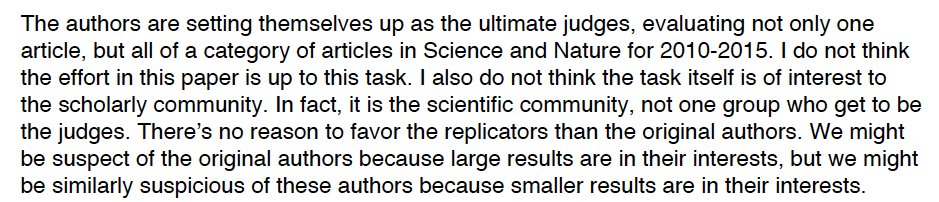
This review is literally the stuff of nightmares. The argument is roughly: 'the scientific community is the only rightful evaluator of quality of published work; thus, evaluations of the quality of published work by members of this community should not be published'
@LauraMKoenig Here's a thin slice of one reviewer's comments (not editor comments) to provide a flavor from behind the curtain. I don't think the whole review (and others) are identifying, but I'm reluctant to post more. As you might expect, reviews were polarized.