Overall, you wrote everything correctly. I completely agree.
The only thing I’ve realized recently is this:
Kaspa still has a lot to develop and improve so that the developers who are already building on top of it can fully use this foundation — if I can put it that way.
In other words, the priority is to build the most reliable and convenient base infrastructure possible, on top of which developers can build the next layer of the ecosystem more easily and securely.
Maybe I didn’t express myself very deeply, but I think you understand what I mean.
v2.1.0 is an example of Kaspa growing engineering, not slogans: stable sync at 10 BPS, DoS limits, an isolated ZK SDK, and a cleaner transport layer.
This is the kind of release that turns a chain into an L1 you can trust with nodes, pools, and applications.
https://t.co/RfNJQbOaGz
#Kaspa $KAS
While the timeline is busy with the Kasplex exploit and the chart, core shipped Rusty Kaspa v2.1.0.
This is not a hard fork and not a BPS increase. It is an infrastructure release: chunked IBD, P2P Protocol 11, transport hardening, and a standalone ZK SDK.
On a fast BlockDAG, this matters more than loud announcements 🧵
$KAS
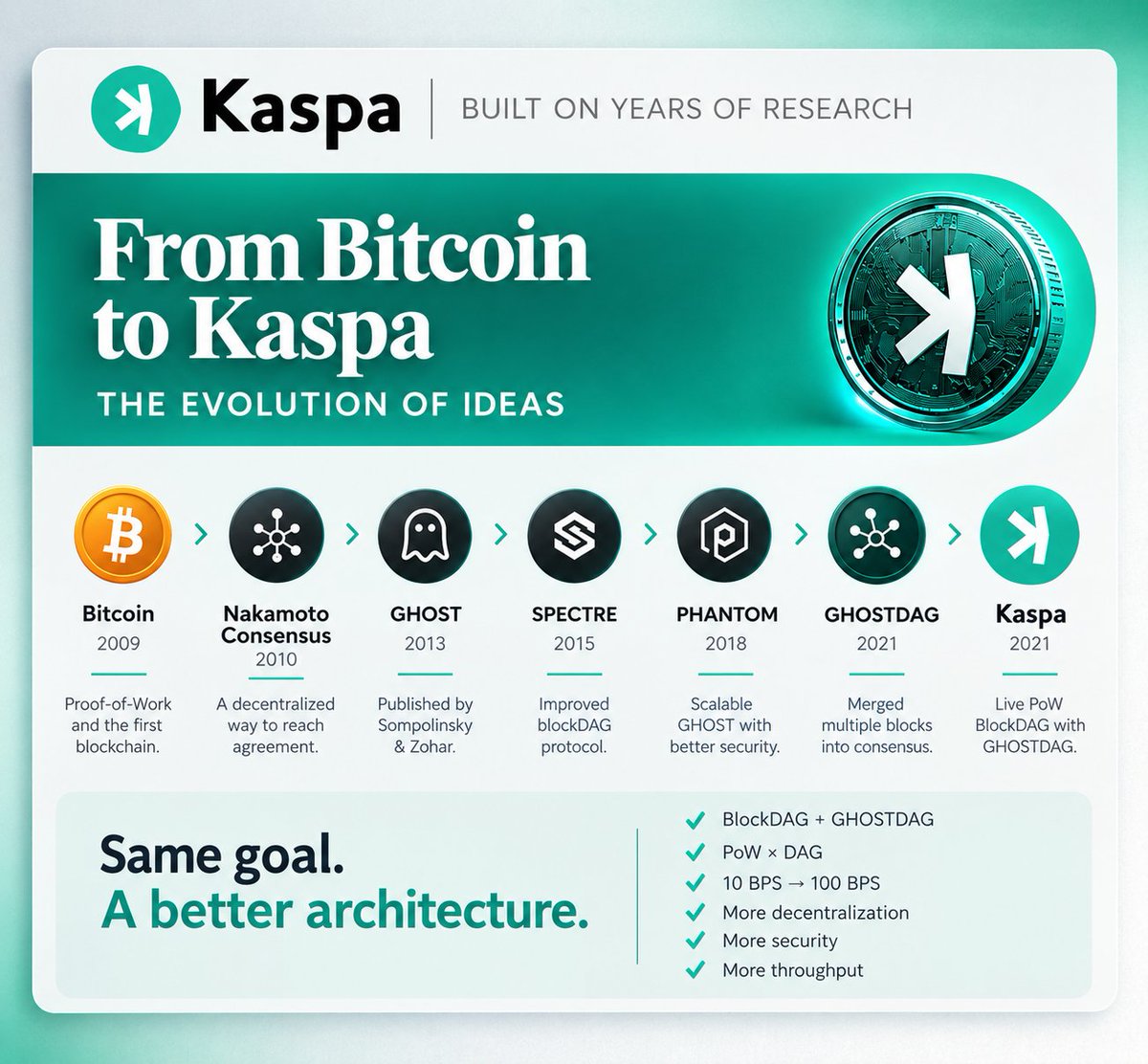
DAGKnight is not part of v2.1.0.
Mainnet is still on GHOSTDAG. KIP-2 is still Proposed. The release does not include a new consensus.
DAGKnight’s idea is different: remove a hardcoded latency assumption and adapt confirmation times to real network latency, with security under an honest majority >50%. That is the next track, not the content of yesterday’s release.
@kriptosolhunter I’m very curious — I noticed that your bio says you’re an investor. How do you generally analyze the news, and where do you get this kind of information from? 🤔🤔
@cryptogenerian I hope there will be a dip 😄 because whether it falls or rises doesn’t really matter at this point. KASPA still has a lot of work ahead. Once everything is set up and working as it should, it can grow.
@Rajatsoni 🟠 Bitcoin: about 95.66% — approximately 20.09 million BTC out of 21 million.
🟢 Kaspa: about 96.6% — approximately 27.72 billion KAS out of ~28.7 billion.
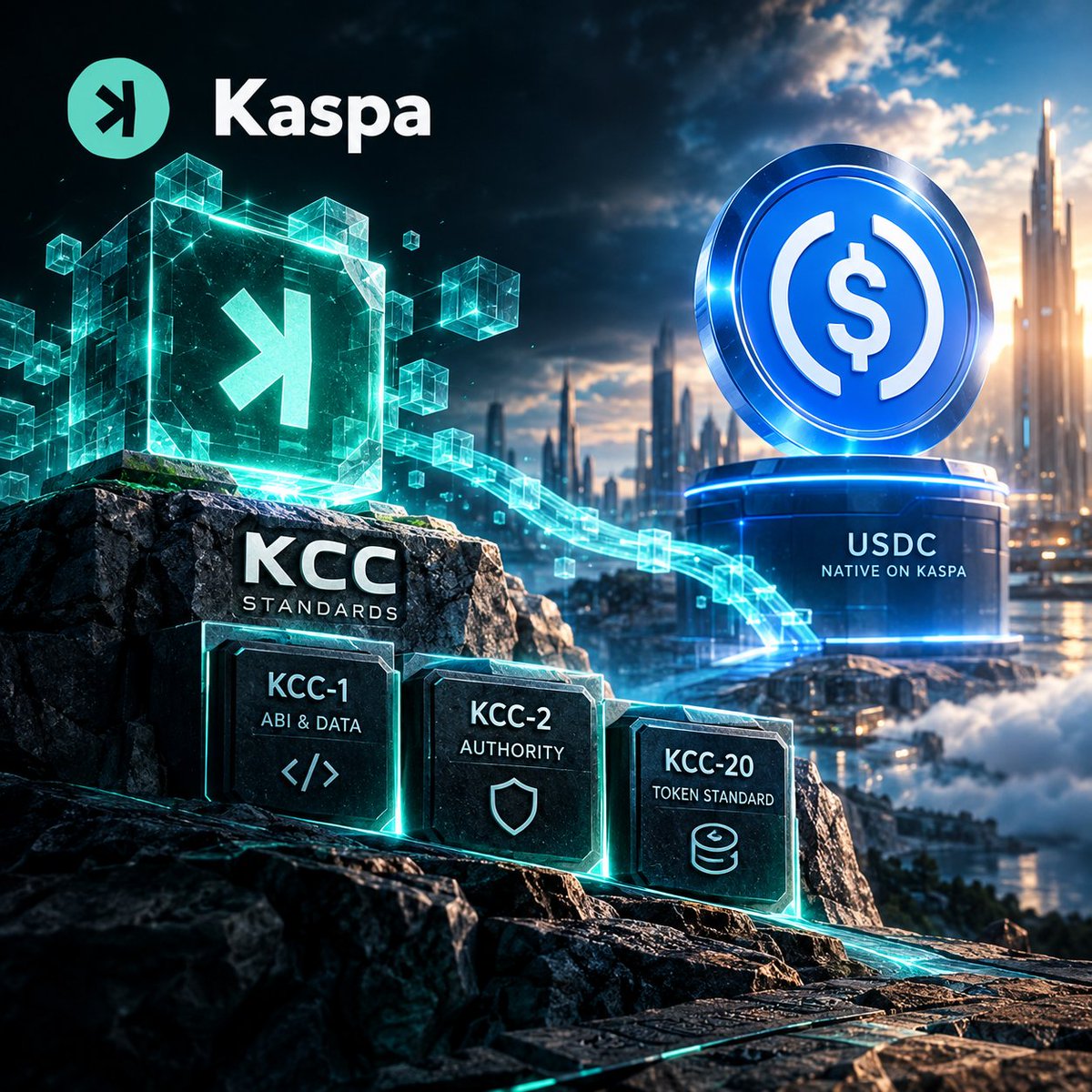
There is still no official native USDC from Circle on Kaspa. Not because things are “stuck.”
First the network has to learn how to read tokens on L1 the same way.
That is what KCC is.
A breakdown of the core developer’s reply.
After the Toccata hard fork (June 2026), Kaspa L1 got covenants — spending rules that travel with the coin.
Kaspa Escrow already runs on them: funds lock in an on-chain contract, the buyer can open a dispute, the merchant responds, and an arbiter (human + AI review of the evidence) decides whether to return the money to the buyer, pay the seller, or split it.
The arbiter cannot send the funds to themselves — the network rejects that path.
If everyone disappears, a timeout kicks in so the money does not stay frozen.
This is exactly the layer you described: a fast payment plus the protection a normal stablecoin transfer does not have.
Nobody “reverses” the original transaction. The funds just are not final until the deal is closed.
The question is no longer whether this rail is possible. It is how to take it into real commerce.
Same question you asked in the thread: GTM for merchants and consumers.
The stack looks clean.
Flex and MoonPay bring cards, banking UX, onboarding, and compliance.
Kaspa brings a layer where a dispute does not require handing funds to a custodian.
If the idea lands, you may want to look at Kaspa more closely and help turn this into a product.
You already have what the protocol itself does not: merchants, cards, and a path into everyday payments.