Just wondering why Nigerians are making voting decisions based on who's most likely to win ?
Does Nigeria need a person who's most likely to win elections or a person who can turn our misfortunes around for good ?
Buba Galadima Shola Arise TV Pastor Adeboye Burna Peter Obi
Leadership Beyond Identity: The Courage to Serve and Defend Humanity.
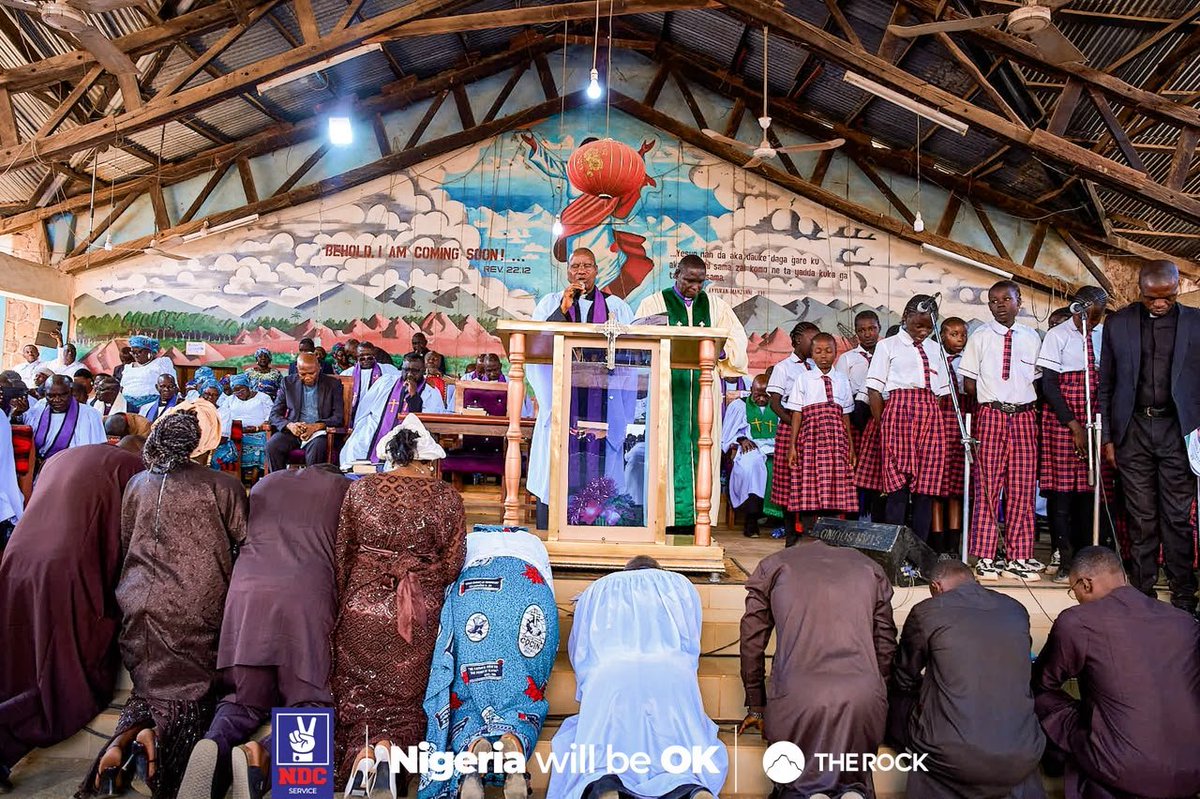
Yesterday, I was honoured to attend the retirement service of Reverend Ezekiel Dachomo in Plateau State. Although it was my first opportunity to meet him personally, I have long admired his courageous advocacy, his compassion for victims of violence, and his steadfast dedication to truth, justice, and the sanctity of human life.
Rev. Dachomo’s example reminds us that faith is expressed not only through what we profess in places of worship, but also through the courage to protect the vulnerable, challenge those in power with the truth, and uphold what is right, even when doing so is difficult or unpopular. The conclusion of formal service should not mark the end of one’s commitment to truth, justice, and humanity.
I also used the occasion to consider the leadership and choices Nigeria requires. Those who support me should not do so because I come from a particular tribe, belong to a particular religion, or benefit from personal sentiment. Their support should be based on my record, character, competence, and the principles I have consistently demonstrated in public service. Nigeria must move beyond identity-based politics and assess leadership according to the ability to deliver results, the integrity to account for public resources, and the compassion to serve those who depend most on government.
Our faith, ethnic identities, and political affiliations must never be used to divide us. Instead, they should reinforce our common humanity and our shared duty to create a nation in which every Nigerian, regardless of background, can live with peace, dignity, and opportunity.
I remain firmly convinced that Nigeria does not lack resources or potential. What we require is leadership that recognises public office as a responsibility rather than a privilege, and as a call to serve rather than an avenue for personal enrichment.
May God continue to strengthen Reverend Ezekiel Dachomo and all who, in their respective callings, remain steadfast in upholding truth, justice, and the dignity of every human being. May He also grant us the wisdom and courage to build the Nigeria we all deserve.
A New Nigeria is POssible. -PO
SmartBallot : Towards credible and Transparent Ballot
I have consistently believed that technology, combined with the creativity and resourcefulness of young Nigerians, can help reinforce our democracy and advance free, fair, and credible elections.
I am pleased to endorse SmartBallot (https://t.co/YgbAq2cLxE), a platform developed to facilitate grassroots mobilization, civic engagement, and election monitoring.
I urge our supporters and NDC candidates to register on SmartBallot and examine how its tools can assist them in organizing their communities, coordinating voters and polling unit agents, expanding grassroots engagement, and supporting transparent election monitoring.
Through the effective use of technology and collective action, we can reinforce our democratic institutions and help ensure that every vote is counted.
Credible elections require preparation, active participation, and peaceful vigilance. Let us make full use of every available resource to create a more organized, engaged, and empowered electorate.
A New Nigeria is Possible. -PO
NIGERIANS, GO AND VERIFY (7)
LIFTING THE VULNERABLE : ANAMBRA’S BLUEPRINT FOR POVERTY ALLEVIATION AND SUSTAINABLE EMPOWERMENT (2006–2014)
Economic growth that does not translate into improved living conditions for ordinary citizens is incomplete. This is one of our fundamental concerns with President Bola Ahmed Tinubu's government. Development must ultimately be measured by its impact on human lives, particularly those of the poor and vulnerable. This was underpinned by the Anambra Integrated Development Strategy (ANIDS). We believed that infrastructure, education, healthcare, agriculture, and social protection must reinforce one another. Poverty was not merely a shortage of money; it was also a lack of access to opportunities, productive resources, and the basic conditions necessary for a decent life.
Our poverty alleviation strategy, therefore, went beyond temporary handouts. It focused on restoring dignity, creating economic opportunities, and equipping vulnerable citizens with the means to become self-reliant.
Our approach attracted recognition beyond Anambra. In May 2010, Magnus Kpakol, then National Coordinator of the National Poverty Eradication Programme (NAPEP), commended our commitment to poverty reduction, declaring: “We are prepared to support you in the excellent work you are doing in Anambra State.”
1. POVERTY MAPPING: KNOWING WHERE POVERTY LIVES
We recognised that poverty could not be effectively addressed without knowing where it was concentrated and what caused it. We, therefore, undertook a poverty-mapping exercise to identify the most deprived local government areas and communities.
The exercise revealed that some of our poorest communities were also important food-producing areas. Their challenges included poor access to markets, agricultural inputs, electricity, water, and other economic opportunities.
Areas including Anambra West, Orumba South, Awka North, and Ogbaru required particular attention. The findings informed our development priorities, enabling us to direct roads, agricultural support, and social interventions toward neglected communities.
2. EMPOWERING WOMEN, WIDOWS, AND COOPERATIVES
We recognised that rural women, widows, and indigent households bore a disproportionate burden of poverty. Across the 21 local government areas, we provided financial assistance and productive support to thousands of beneficiaries.
Our administration provided financial assistance to support the establishment and expansion of small businesses and farming activities. We also introduced revolving loan schemes to promote enterprise development, economic self-reliance, and improved livelihoods.
We distributed productive equipment, including sewing machines, generators, ovens, cookers, hair dryers, shoe-making machines, and welding equipment. The objective was to help beneficiaries establish sustainable livelihoods rather than remain dependent on government assistance.
We also promoted access to microcredit and cooperative financing to enable small entrepreneurs to expand their businesses, improve their incomes, and create employment.
Our philosophy was simple: rather than merely giving people money to survive today, the government should help them acquire the means to earn a living tomorrow.
3. AGRICULTURE AND FADAMA: MAKING RURAL COMMUNITIES PRODUCTIVE
Agriculture was central to our poverty-reduction strategy because many rural households depended on farming.
Through partnerships with the Federal Government, the World Bank, and other development partners, particularly under the FADAMA programme, we supported farmers with finance and productive assets.
In November 2009, our administration disbursed millions to FADAMA Community Associations across the state. By October 2010, the National FADAMA office was commending Anambra’s commitment. Its National Project Coordinator, Buka Tijjani, represented by Charles Ugwuona, described Anambra as the leading state in the programme.
NIGERIANS, GO AND VERIFY (6)
SECURING LIVES AND PROPERTY: PARTNERSHIP WITH SECURITY AGENCIES
Peter Obi
In the preceding instalments, I explained how we approached governance under the Anambra Integrated Development Strategy (ANIDS), beginning with strengthening state institutions and investing in education and other critical sectors. Our conviction was that development must rest on strong institutions, capable human beings, and a secure environment.
No meaningful development can take place where lives and property are constantly under threat. Education, commerce, investment, and other productive activities can only flourish when people feel safe. This informed our approach to security. We understood that the responsibility of protecting lives and property could not be discharged through speeches and declarations alone. It required deliberate investment, effective coordination, and sustained partnership with the security agencies.
When we assumed office, Anambra faced serious security challenges. Armed robbery, bank attacks, kidnapping, and other violent criminal activities had created an atmosphere of fear. In 2006, I personally approached the then Inspector-General of Police, Mr Sunday Gabriel Ehindero, to seek urgent intervention. Following our appeal, the police authorities constituted a special team comprising experienced officers, including the late Haruna John, Alhaji Amusa Bello, and others, to confront the security challenges in the state.
We therefore made security a major priority of our administration, recognising that government must provide both the leadership and the resources required to enable security agencies to perform their duties.
EQUIPPING THE SECURITY AGENCIES
We believed that those entrusted with protecting our people must be adequately equipped. Accordingly, our administration, using funds from the security votes, provided over 600 patrol vehicles to various security agencies, including the Police, Army, Civil Defence, Customs, Immigration, NDLEA, Road Safety, Prisons, SSS, Navy, and community vigilante organisations.
Our support went beyond vehicles. We provided Armoured Personnel Carriers (APCs), armoured Hilux patrol vans, communication gadgets, repeater and linker stations, base stations, mobile vehicular radios, walkie-talkies, generators, and other logistical requirements. We also used the same security votes to provide financial support for their operations, including fuel, weekly allowances, and other essential needs of security personnel.
We paid particular attention to community security because we understood that effective policing must have a strong local presence. Again, using funds from the security votes, we provided billions of naira to the 177 communities in Anambra State to strengthen security in their respective areas. We directed traditional rulers and town union presidents to establish vigilante groups under police supervision, with the police providing uniforms for proper identification. We also contributed towards the payment of their salaries.
Additionally, we provided 250 patrol vehicles to communities across Anambra State. These vehicles were manufactured by Innoson Vehicle Manufacturing Company in Nnewi. Some towns received more than one, depending on their size and security needs. This initiative was also extended to universities and other large institutions in the state.
We also recognised that markets were particularly vulnerable because of the volume of commercial activities and the large number of people who visited them daily. Thus, in March 2014, we presented security vehicles to major markets in Onitsha and its environs. The beneficiaries included Bridge Head Market, Ogboefere Market, Building Materials Market, Ogidi, Onitsha Main Market, Marine Modern Market, Ogbaru Main Market, Ose Okwodu Market, Electronics Market, and the Amalgamated Market Traders Association.
NIGERIANS, GO AND VERIFY (3)
Building the Future Through Education
Peter Obi
In the first two instalments of this series, I explained how we approached the task of building strong institutions and laying a solid foundation for the development of Anambra State. One of the most important institutions we invested in was education.
For me, education was not a political game or a convenient political promise. Even before I ventured into politics, I had always regarded it as the foundation of meaningful development and the most enduring investment any government can make in its people. I believe that the future of any society depends largely on the quality of its educational institutions, teachers, learning environment, and opportunities available to its young people.
This conviction informed our decision to invest across the entire educational spectrum, from primary schools to universities, technical institutions, and adult education.
Basic and Secondary Education
One of our first major decisions was to return mission and privately owned primary and secondary schools to their original proprietors while retaining government support. We also provided billions of naira to assist in rehabilitating the returned schools, restoring the partnership between government and religious institutions that had historically contributed to educational excellence.
This policy attracted international attention. Professor Paul Collier, the Oxford economist and World Bank consultant, led a World Bank-commissioned study of Anambra’s educational transformation. His team examined our decision to return schools to their original missionary owners while retaining government responsibility for funding teachers’ salaries and supporting infrastructure. The team described the partnership model as a revolution in public service delivery and recommended it as a model that could be replicated by other Nigerian states and developing countries. We believed then, as we do now, that government does not necessarily have to own every institution to discharge its responsibility effectively. What matters is ensuring that every child has access to quality education.
For those who claim that we built no schools, I invite them to verify our records. We constructed five-classroom blocks in virtually all of the 177 communities in Anambra State, one of the most extensive community-based school infrastructure programmes undertaken by any state government. The town union chairmen and community leaders of that period can attest to this.
We also renovated hundreds of dilapidated schools, including some where trees had literally grown through abandoned buildings. Comprehensive Secondary School, Onitsha, and Oraukwu Grammar School are examples.
Beyond infrastructure, we distributed approximately 40,000 computers to schools, including more than 22,500 HP laptops. We equipped secondary schools with Microsoft Academies and connected schools across the state to the internet. We supplied generators, established and stocked libraries, revived school sporting activities, and installed boreholes in over 300 schools, including all girls’ schools. We also provided funding to support sporting activities in all our secondary schools.
These technology investments attracted remarkable international recognition. Mr Fabrice Campoy, Managing Director of the Personal Systems Group at HP Inc., described our procurement and distribution of over 22,500 HP laptops as the biggest project of its kind in the Middle East and Africa. Similarly, Mr Ken Spann, then Country Manager and Head of Microsoft Nigeria, described the establishment of Microsoft Academies in more than 500 Anambra secondary schools as the most extensive deployment of its kind in Africa at the time.
Our aim was to create a state where public resources produced tangible public benefits, institutions existed to serve the people and development was assessed by the lives transformed rather than by the promises made. We therefore began by strengthening the institutions of government, rebuilding their ability to operate effectively and ensuring that they remained accountable to the public interest. Building on these foundations, we advanced development across multiple sectors through careful planning, responsible resource management and leadership grounded in accountability.
In Series 2, we will first consider the measures we took to restore and reinforce the institutions of the state and ensure that government served the people effectively. We will then review our initiatives and accomplishments in education and other essential sectors.
I assure Nigerians that the progress demonstrated in Anambra State was neither a one-time occurrence nor an experiment that cannot be repeated. It reflected a proven model of governance that we are ready to extend to the national level. What we accomplished in Anambra can also be accomplished in Nigeria. With capable leadership, effective planning, responsible management and accountable institutions, Nigeria, too, can work for all its citizens.
Go and verify. -PO
NIGERIANS, GO AND VERIFY (1)
Introduction: Governance as a Public Trust
Peter Obi
When I took office as Governor of Anambra State, our beloved state was at a critical juncture. Leadership had become increasingly disconnected from the people, and many of the essential institutions needed to support a modern society were weak, ineffective, or absent altogether. We understood that governance could not continue according to established habits. It needed to be reconceived as a solemn public trust founded on transparency, prudence, accountability, and demonstrable results.
Our governing philosophy rested on four principles: character, competence, capacity, and compassion. We understood that leadership was not a platform for self-promotion, political slogans, or the pursuit of personal acclaim. Its purpose was to improve the circumstances of ordinary citizens. It meant converting public resources into concrete benefits and ensuring that government’s foremost responsibility was to serve the people. Achieving this demanded more than good intentions; it required a clear vision, careful planning, and disciplined execution.
Among our earliest findings was that the state lacked a unified development plan to direct its priorities and determine how resources should be allocated. We therefore promptly created the Ministry of Economic Planning to establish the institutional foundation for deliberate, coordinated, and sustainable development. After completing the necessary groundwork and consultations, we launched the Anambra Integrated Development Strategy (ANIDS).
At that time, the Millennium Development Goals (MDGs) were being pursued worldwide across eight clearly defined priorities: eliminating extreme poverty and hunger; achieving universal primary education; advancing gender equality and empowering women; reducing child mortality; improving maternal health; combating HIV/AIDS, malaria and other diseases; promoting environmental sustainability; and fostering a global partnership for development.
We adopted ANIDS as our overarching development philosophy and strategic framework for advancing these objectives, tailoring them to the distinctive circumstances, needs and development priorities of Anambra State. Instead of viewing the MDGs as remote international benchmarks, we worked to convert their aims into practical policies, programs and measurable results that would produce tangible improvements in the lives of our people.
We also undertook a deliberate effort to redefine the state’s identity, changing its public image from ‘Home for All’ to ‘The Light of the Nation’. This was not merely a change in slogan; it reflected our resolve to restore public confidence in government, renew civic pride and show that Anambra could serve as a model of purposeful leadership and development.
The ANIDS Blueprint: A Comprehensive Framework for Development
ANIDS served as the foundation for our commitment to broad-based and balanced development. We did not accept the idea that government could focus on a single sector while leaving others behind. We recognized that education, healthcare, infrastructure, security, agriculture and capable public institutions were mutually dependent. Advancement in one area could not be sustained without commensurate progress elsewhere. Accordingly, we pursued development across every sector, guided by defined priorities, disciplined planning and prudent stewardship of public resources.
Central to this vision was the restoration of the dignity of the Anambra person. We understood that dignity could not be restored through rhetoric alone. It was evident in the condition of roads and other infrastructure, the availability of healthcare, the quality of education, the performance of public institutions and the way government treated its workers, pensioners and traditional institutions.
ATTACK ON SENATOR KWANKWASO’S CONVOY IN BICHI: I CALL FOR IMMEDIATE INVESTIGATION AND ARREST OF PERPETRATORS
I am deeply saddened by reports of the attack on the convoy of my brother and running mate, Senator Rabiu Musa Kwankwaso, and members of his entourage in Bichi Local Government Area of Kano State.
I strongly condemn this unfortunate incident. Reports indicate that several members of the entourage sustained injuries, while about seven vehicles were vandalised. This is unacceptable and must not be allowed to become part of our political culture.
Democracy is not warfare. Political differences should never be a reason to resort to violence, intimidation or the destruction of property. Every Nigerian, regardless of political affiliation, has the constitutional right to participate in the democratic process without fear of attack.
We must not allow violence to take the place of dialogue, nor intimidation to silence those who hold different political opinions. Our democracy can only grow when we respect one another, uphold the rule of law and recognise that political competition is not a battle against fellow Nigerians.
I therefore call on the Nigeria Police Force and all relevant security agencies to immediately investigate this incident, identify those responsible, including anyone found to have sponsored the attack, and ensure that they are brought to justice. No individual should be above the law, regardless of political position or influence.
I stand in solidarity with Senator Kwankwaso, the Kano State NDC leadership and everyone affected by this incident. I also wish those injured a speedy recovery.
Our commitment to building a new Nigeria remains unwavering. We believe that change must come through peaceful engagement, persuasion, ideas and the ballot, not violence.
Nigeria belongs to all of us. We may belong to different political parties, but we remain one people with a common destiny. No political ambition is worth the life of any Nigerian.
A new Nigeria is POssible. -PO
LET MY RECORD SPEAK
I just arrived United States this evening to honour an important invitation and participate in a series of engagements beginning at 9am tomorrow morning in Washington DC.
Throughout my election campaigns, I have sought to emphasise policies, ideas, and practical solutions that can deliver the change Nigeria urgently requires and help our nation overcome its current challenges.
Nevertheless, because certain individuals have repeatedly scrutinised my past, even as they appear uneasy about their own records, I have chosen to allow the facts to speak for themselves. Starting today and running for ten days, I will present some of the accomplishments recorded during my tenure as Governor of Anambra State. This series will outline my interventions, achievements and the responsibilities entrusted to me. I have titled it my Record of Service.
In every position I have held, I have consistently given my utmost effort in fulfilling my responsibilities. Although no one can always attain every intended result, I have never been found lacking in dedication or effort. I have always given the task my full commitment.
As campaign activities gather momentum, I will also continue to keep you updated on my daily engagements and other significant developments.
In particular, in light of allegations that I abandoned Anambra State during the erosion crisis, among other assertions, I consider it necessary to present the facts to the public. I have never evaded any responsibility entrusted to me, and I will certainly not shirk my responsibility to help address Nigeria’s challenges.
I am confident that, ultimately, facts outlast allegations, while records carry greater weight than rhetoric.
Let my record speak for itself! -PO
A NEW DIMENSION OF TOXIC POLITICS IN NIGERIA
The new dimension of toxic politics that Nigeria has developed since 2025,
I arrived at the airport at 7 a.m. this morning to board my flight to Enugu. There, I saw the Nigeria Under-17 girls' team, which had just arrived and was preparing to board its vehicle into town.
With genuine joy and enthusiasm, I asked my Protocol Officer, Jackie Wayas, to find out whether I could greet and welcome the team. I was informed that officials of the Nigerian Football Federation (NFF) had refused and had requested that I not approach them because, if I did, they would all lose their jobs.
Regrettably, this is not the first time I have been subjected to such treatment. On March 25, 2025, I was in Uyo for the World Cup qualifier. The governor warmly received me and welcomed me at the VIP stand. Following the match, other government officials went to greet the players, but I was again prevented from doing so. I was told by the officials that they would lose their jobs if I proceeded.
It is deeply troubling to witness the extent of toxic politics into which our nation has descended since 2025. Each year appears to bring further deterioration. This reflects how deeply Nigeria has been affected.
The new Nigeria we aspire to build must have no room for hostility, intimidation, or discrimination, regardless of political affiliation. It must be a Nigeria in which unity, mutual respect, and our shared humanity take precedence over political differences.
A new Nigeria is POssible. -PO
GOOD DAY, MR PRESIDENT: NIGERIANS DESERVE ACCOUNTABILITY
Good day, Mr President.
I congratulate you on spending a night in one of Nigeria’s states outside Lagos and Abuja. I hope you enjoyed the warmth, hospitality, and delicious cuisine of Akwa Ibom, which I am sure is even better than those of the destinations where you have spent over 260 days outside Nigeria since coming into office.
I sincerely hope this visit will inspire you to travel to the remaining 33 states of the federation, spend time with the people and, more importantly, explain what your administration has done with the ₦15.8 trillion saved from the removal of fuel subsidy, the over $100 billion you have borrowed, the increased revenues accruing to the government from taxing Nigerians, and the additional government revenues which your administration celebrated last year as having surpassed its target.
Nigerians deserve to know how many that were pulled out of poverty within this period, how many out-of-school children were returned to school, and how many functional primary healthcare centres you have built. They also deserve to know how much electricity supply has improved, especially given your promise that if you do not fix power, Nigerians should not vote for you. They deserve an explanation of how you have secured the country, which still ranks among the most terrorised countries in the world.
Mr President, Nigerians deserve answers. They deserve to know what has been done with the resources entrusted to your government.
The New Nigeria we want to build will be based on accountability, transparency, and the physical, measurable impact of our public resources on the lives of citizens.
A new Nigeria is POssible. -PO
I concur with you!
We once lived in Umuoji in Idemili North. We weren't briefed because my late aunty thought we'll change our mind if she did
One python found it's way inside our bathroom na that day I know say my mama never old, the woman run pass us wey be her children ��🤣
I slept in the same room with two big python unknowingly.
During my NYSC days, I served in Ogidi, Idemili. If you know Ogidi very well, especially around Iyi-Enu Hospital, you'll understand the tradition. They don't kill pythons in that community. If you mistakenly kill one, you're expected to give it a proper burial, just like a human being.
My landlady had already briefed me about their culture, so I was always careful. But I never imagined I'd experience it firsthand.
One particular day, I washed my clothes, spread them on the fence and went to church. I returned at night and went straight to pack my clothes. Without checking them properly, I gathered everything and dumped them on my bed.
Unknown to me, TWO BIG PYTHONS were hiding among the clothes!
I slept on the other side of the bed. Each time I rolled over and moved closer to the clothes, I felt something cold against my body. I assumed it was just some damp clothes that needed more sunlight.
The funny thing? I slept comfortably all through the night!
It wasn't until the following morning, when I started sorting out my clothes, that I discovered what I had been sharing my bed with.
TWO HUGE PYTHONS!
I screamed so loudly that I eventually fainted. My landlord had to come and remove them.
Imagine sleeping peacefully beside two pythons all night and waking up to discover your roommates! 😭
Till today, I still wonder what would have happened if I had rolled over to the other side of that bed.
My second encounter was in my kitchen 😱
@Kene_Nnewi As people that visited Umuoji in Idemili North we weren't aware that they do same with python
On that faithful day, una need to see how my mama run pass us wey be her children
🤣😂🤣