July 6, 1944. On the ruined island of Saipan, with his troops destroyed and the battle lost, a Japanese admiral takes his own life. And this was not just any admiral. This was Chuichi Nagumo, the man who had commanded the fleet that attacked Pearl Harbor.
Think about that arc. Two and a half years earlier, Nagumo stood on the bridge of a carrier launching the surprise strike that crippled the American fleet and pulled the United States into the war. He was at the very center of Japan's moment of triumph.
Now here he was on Saipan, a shattered island in the Marianas, his forces smashed, the Americans closing in, and nowhere left to go. The battle for the island had been a catastrophe for Japan. Their fleet had been gutted in the Turkey Shoot out at sea, and their soldiers on land had been ground down to nothing.
So Nagumo and the army commander chose death over surrender, taking their own lives as the end closed in.
And they left behind one last horror. Before the finish, the surviving Japanese soldiers were ordered into a final suicidal charge. At dawn the next day, thousands of them, some barely armed, some wounded and on crutches, threw themselves at the American lines in the largest banzai charge of the entire war and were almost all cut down.
Worse still were the civilians. Terrified by propaganda that the Americans would torture them, hundreds of Japanese families on Saipan threw themselves and their children off the cliffs into the sea rather than be captured.
The man who started the war at Pearl Harbor died amid all of it, on a lost island, by his own hand.
When the family found Grandpa's old flannel jacket in the closet, they weren't sure what to do with it. So they placed it on his favorite chair. What happened next left everyone speechless. Buddy walked over first. Then Max. Neither barked. Neither moved for nearly an hour. They simply sat beside the jacket, quietly breathing in the scent of the man who had loved them every single day. Sometimes memories aren't stored in photographs. Sometimes they're carried in a familiar scent that never really leaves. If you've ever missed someone who changed your life, drop a ❤️ below.
The USS Constitution, aka Old Ironsides, is the world’s oldest commissioned war ship still afloat!
She was launched in 1797, one of six original frigates authorized for construction by the Naval Act of 1794 and the third constructed.
On the night of July 6, 1943, an American cruiser called the USS Helena was torn apart by torpedoes in the dark waters of the Solomon Islands. That much is a normal war story. What happened to her crew over the following ten days is the part worth telling, because most of them lived through something that reads more like an adventure novel than a naval report.
First, the setting. The fighting in the Solomons had settled into a strange nightly rhythm. Japan needed to keep feeding troops and supplies to its island garrisons, and the only way to do it was to send fast destroyers racing down the channel under cover of darkness, drop off men and cargo, and be gone before American planes could catch them in daylight. The Americans called this the Tokyo Express, and stopping it meant fighting at night, which is where the Japanese navy was terrifyingly good. Their sailors were superbly trained in night combat, and they carried a weapon the Americans badly underestimated, the Long Lance torpedo, which could travel enormous distances at high speed and hit with devastating force.
On this particular night an American force of cruisers and destroyers under Admiral Walden Ainsworth went in to intercept one of these runs, and a savage close-range gun and torpedo brawl erupted in the pitch black. Early on, American gunfire smashed the lead Japanese destroyer and killed the enemy admiral. But the Helena had a problem. She was firing her guns so fast, and had switched to ordinary gunpowder after using up her flashless supply, that every salvo lit her up with a huge muzzle flash. In a night battle, that is like standing in a dark room waving a flashlight at people who are aiming at the light. The Japanese fired a spread of Long Lance torpedoes right at those flashes. The first ripped the bow clean off the ship. Two more slammed into her body, and the Helena broke apart and went down fast.
Around 168 men died in the sinking. But more than seven hundred survived the water, and now their real ordeal began, scattered across miles of dark, enemy-controlled sea. Some clung to the shattered bow of the Helena, which stubbornly refused to sink and stayed bobbing on the surface like a life raft. American destroyers, still in the middle of a battle, braved the danger to circle back and haul as many men out of the oily water as they could that night, packing survivors aboard by the hundreds.
But hundreds more drifted away in the currents and could not be found before the ships had to leave. For days these men floated in the open ocean in small clusters, clinging to rafts and debris, burned and exhausted and slowly drifting toward the horizon. And where they drifted was not friendly territory. A large group, well over a hundred men, washed up on the shores of Vella Lavella, an island firmly held by the Japanese.
This is where the story turns almost miraculous. Living in secret on that island were coastwatchers, a handful of incredibly brave Allied men, often Australians, who hid in the jungle behind enemy lines with radios and reported on Japanese movements. Together with the local Solomon Islanders, who risked their own lives to help, they took in the shipwrecked American sailors, hid them from Japanese patrols, fed them, and cared for them for days. Then they radioed out the sailors' location and worked out a plan to get them off the island.
Around ten days after the Helena went down, American ships crept back into those dangerous waters in the dark, right under the enemy's nose, and pulled the survivors off the beach. Nearly the entire group was saved. When you add it all up, the overwhelming majority of the Helena's crew came home, rescued in stages across more than a week, first from the water, then from the floating wreck of their own bow, and finally from a Japanese-held jungle island by a network of coastwatchers and islanders who owed them nothing and helped them anyway.
There is one more detail that makes the ship's story land even harder. The Helena had been at Pearl Harbor on December 7, 1941, and was hit in that attack too. She had been there at the very start of the war for America, survived it, fought her way through the brutal battles of the Solomons, and now finally went to the bottom off New Georgia. She became the first ship in the US Navy ever awarded the Navy Unit Commendation. But her real legacy is those men on the beach at Vella Lavella, alive because a few hidden watchers and a village of islanders decided to save them.
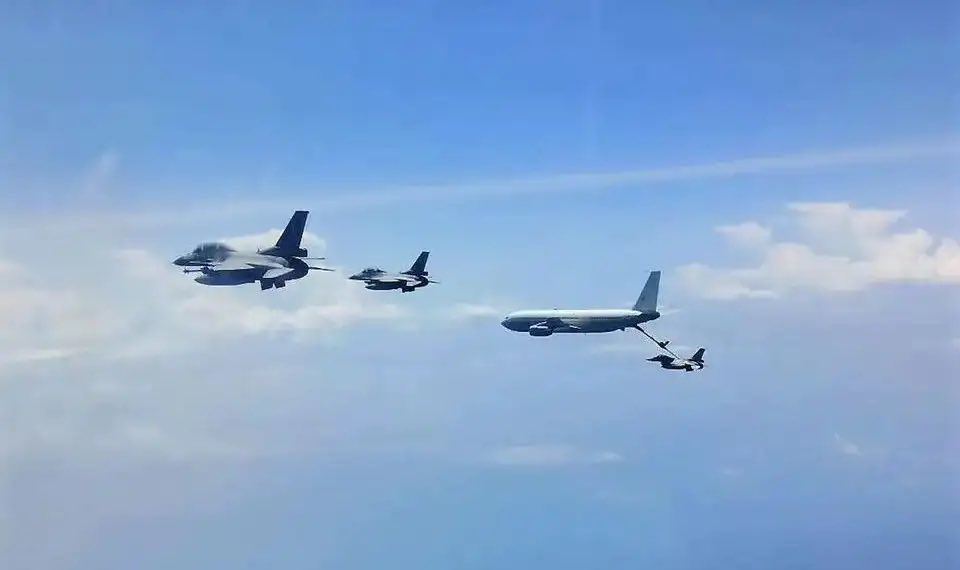
🇮🇱🤝🇬🇷 Israeli and Greek aircraft took part in a joint aerial refueling drill over Crete. Greek media reports the cooperation is part of a broader strategic plan to combat Turkish aggression.
📸: IAF tanker refueling Hellenic Air Force F-16s
Saviez vous que des pilotes japonais avaient volé aux côtés des Français pendant la première guerre mondiale ?
Les pilotes japonais oubliés de la premiere guerre mondiale (SANS IA)
https://t.co/SWujs4TFCY
A USMC Veteran is looking to build their foundation and connect with more friends:
@1KAG007
If you're willing to lend a listening ear or share experiences your support could mean the world Let's come together and make a difference in their journey!
A US Army Veteran is looking to expand their support system and connect with more friends:
@JoeJone27293459
Let's come together and make a difference in their journey!
Ο μίνιμουμ αναγκαίος αριθμός για την Πολεμική Αεροπορία είναι τα 200 μαχητικά.
Κάτω από εκεί και υπό τις σημερινές συνθήκες,πραγματικά δεν μπορούμε να υποθέσουμε αλλά ούτε και να ελπίζουμε σε κάτι θετικό για την Ελληνική πλευρά.
Ίσως τελικά χρειάζεται μια διαφορετική αντιμετώπιση της Αεροπορικής μας Ισχύος....
Παλαιότερο άρθρο:
https://t.co/OPMLNuyWUx
@OratiosPoulos Παρεπιπτόντως, και με όλο τον σεβασμό στον πρώην Πρωθυπουργό, και όχι τίποτα άλλο επειδή κόπτεται για την Πατρίδα, μήπως να μας πεί και που έχει υπηρετήσει την στρατιωτική του θητεία; Καλόπιστα ρωτάω...
ΚαΨιΜιτζής vol 121, τα ΜΙΡΑΖ 2000-5ΜΚ2 μπορούν να προσφέρουν, οι ΣΚΑΛΠ στα Μιράζ όχι στις ΦΔΙ, η γιορτή της 4ης Ιουλίου, σταμάτησαν οι αγορές αμερικανικών όπλων (;), ο Σκαραμαγκάς ξεκινά με τις ΜΕΚΟ, ναρκοθηρικά από Βρετανία, το ΠΝ στη ΡΙΜΠΑΚ 26 https://t.co/Ixrm1olcLn
》4
-Δεν αγοραζει Ελληνικες ΣΝΟ επειδη
-Δεν αγοραζει Ελληνικους ιπταμενους στοχους για το ΠΒΚ
-Δεν συντηρει τα ERIEYE
-Εστειλε Κυπρο την Κιμων χωρις RIM-116 στο RAM(που παρηγγειλε 52 για τις Ρουσσεν ενω ειναι γνωστο οτι χρειαζομαστε αλλους 84 για τις FDI ΑΛΛΑ ΔΕΝ ΤΟΥΣ ΠΑΡΗΓΓΕΙΛΕ)