Wow… couldn’t believe my ears …
The founder of @burnt_xion was asked on live on Maeil Business news TV how he first got into crypto space since he originally originally came from a web2 background and also what made him decide to make the switch ..
“four years ago I bought a Banksy art piece. I lit it on fire, sold it as an NFT.
That NFT ended up breaking the record for highest price NFT sold and was the highest average price NFT sold on OpenSea for all of 2021.
Since then, we raised about $36 million to build @burnt_xion .”
Ft > @BurntBanksy (founder of Xion)
I didn’t think something as simple as moving USDC could become this confusing.
But I quickly realized that in crypto, what looks simple on the surface can completely block you when you don’t understand how the system actually works.
Earlier today, I almost got stuck trying to move my $USDC out of $XION, and for a moment, I genuinely thought I had lost it.
Not because the funds were gone.
But because nothing was making sense.
I felt I should share this because I know others might have experienced the same thing.
At first, I tried sending it to my Zerion wallet, but it kept failing. The address format looked normal, but it wasn’t compatible with the route I was using.
Here is something important I learned quickly:
Zerion uses a standard EVM address format like 0xA3f…9B21
Keplr uses a Cosmos style format like xion1q8r4…p9k2x7p
XION itself also uses its own native address format within its ecosystem
That mismatch alone can stop a transaction completely.
So I had to rethink everything.
Here is what I did to fix it:
First, I got a small gas fee from a friend and sent it into my XION wallet. That unlocked transactions.
Then I moved my USDC from XION into Keplr Wallet since it supports the XION ecosystem.
After that, I used @squidrouter inside Keplr to bridge the USDC into other chains like BNB Chain and beyond.
That was the breakthrough moment.
What looked like a stuck transaction was actually just a misunderstanding of how wallets, addresses, and ecosystems connect.
If you’re new in crypto, learn this early:
It’s not just about sending funds.
It’s about compatibility, routing, and bridges.
One wrong assumption can freeze your entire flow.
Decided to share this to the @xion_community so both old and new members can learn form this …
I tested an AI tool called @hypescribe
And I genuinely think a lot of people are sleeping on how useful this can be in everyday life.
especially if you: • Watch YouTube videos • Attend online meetings • Record podcasts • Take lectures/classes • Conduct interviews • Create content • Work remotely
here’s a full walkthrough of how HypeScribe works from sign up to using the actual app .. 🧵
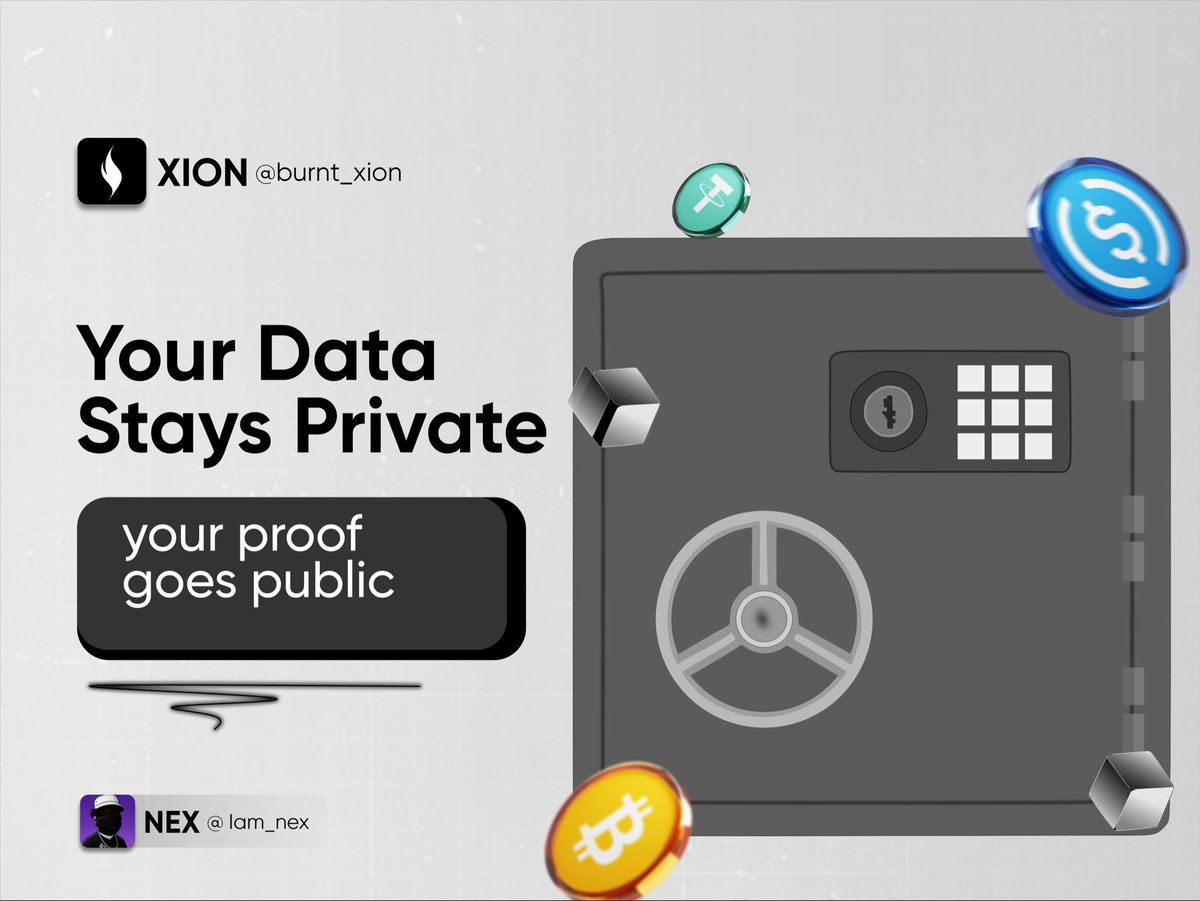
most apps today ask you to trust them with your data.
upload your email > share your bank details > hope they don’t misuse it.
@burnt_xion flips that model completely.
it separates the system into two simple layers that work together:
Let’s dive deeper > 🧵🪡
first is the verification layer.
this is where the system proves something is true without exposing your private data.
for example:
Instead of showing your actual bank balance, you can generate a proof that says “my balance is above $10,000” without revealing the number itself.
or it can verify your email is real without storing your inbox or personal messages.
this layer is open for anyone to read and verify. No permission needed.
then comes the second layer, the OAuth2 action layer.
this is where apps can actually do things based on those verified proofs.
like:
approving a loan
issuing a digital credential
executing a smart contract
but here is the key difference.
they cannot act unless the verification layer has already confirmed the truth.
so instead of apps blindly trusting users, they only act when cryptography proves it is valid.
think of it like this:
verification = “Is this true”
action = “Now we can safely act on it”
and the powerful part is how they connect.
an app first checks a proof (like email ownership or income level).
If it passes, it can then trigger an action on-chain using an authorized request.
no sensitive data is ever exposed.
only proof is shared, not the personal information behind it.
this means your identity and credentials are no longer locked inside one app.
If one app verifies you, another app can recognize that same proof.
portable trust.
Without sharing your private data everywhere.
that is the shift XION introduces.
from “trust me with your data”
to “here is cryptographic proof, now let’s act on it safely”
most people don’t realize it yet, but the way we use money online is already changing.
i came across @Mypal_Global and what caught my attention was how simple everything feels.
you can send money, receive it, and even use digital cards without going through long steps or trying to figure things out.
everything is placed where you expect it to be. you open it and just move.
it feels like something made for everyday people, not just tech guys or crypto users.
if you’ve ever had issues with slow transfers or apps that make simple things look hard, you’ll understand why this stands out.
money is becoming more global and more digital, and MyPal fits right into that shift in a very natural way.
stay tuned , for more updates ….
GENERAL HEADACHES 😮💨
i just can’t be the only one in this…
guys, have you ever opened an app and thought of these questions?
1. Why is this so confusing?
2. Where’s my wallet?
3. Why do I have to click a hundred things?
now imagine… an app where you just click once, and everything happens automatically.
That’s XION (@burnt_xion )
here’s the cool part > it works like “Login with Google.”
you know, normally, when you open a new app on your phone, it asks for a bunch of permissions e.g like your camera, contacts, or location.
You tap allow once, and after that, the app just works.
XION does the same thing, but for blockchain.
- You approve once
- The app can do stuff safely behind the scenes
- No popups, no extra clicks, no confusing steps
It’s basically blockchain that feels like the apps you already use every day.
So what does that actually mean in a real sense ?
1. apps can run blockchain actions just like normal apps
2. you approve once
3. no signing transactions every few seconds
it makes web2 easy, and it brings power to web3.
that’s the magic.
for developers, this is insane.
before XION, they had to:
> learn wallets
> handle gas fees
> manage keys
> deal with popups constantly
but now
> Plug in OAuth2
> Build apps like normal
> Ship fast
before, using blockchain apps felt like a puzzle:
> Wallets everywhere
> Gas fees popping up
> Popups every 2 seconds
now, with XION:
> Log in once
> Approve once
> Click around, done
and for users, it’s even better.
No wallets.
No seed phrases.
No approvals every time.
Just:
1. Log in
2. Approve once
3. Use the app like normal
it looks easy , smooth and stress free .
XION has simplified this problem for us and everything is still secure and on-chain, but it feels normal just like your favorite apps.
so there’s no confusion .
Why this matters:
web3 is amazing… but tricky for normal people.
XION makes blockchain , easy to use , fun to explore and work like apps you already know
so with @burnt_xion the future won’t be:
“Download a wallet. Learn crypto. Approve every transaction.”
rather , it will be
login. click. done.
XION just made that real.
Takeaway:
here’s what I want you to understand.
with the existence of @burnt_xion , developers can make blockchain apps without learning crypto, also users can use blockchain apps without learning crypto.
If you are interested in having more deep dive , visit : https://t.co/mDtF9wctiA
my portfolio is bleeding
so i invested in a strawberry farm
yeah, its not joke brosss
it’s real business
~23% APR
real collateral
if it fails i’ll just work there
@eightlends
https://t.co/cDM1k4k5MY