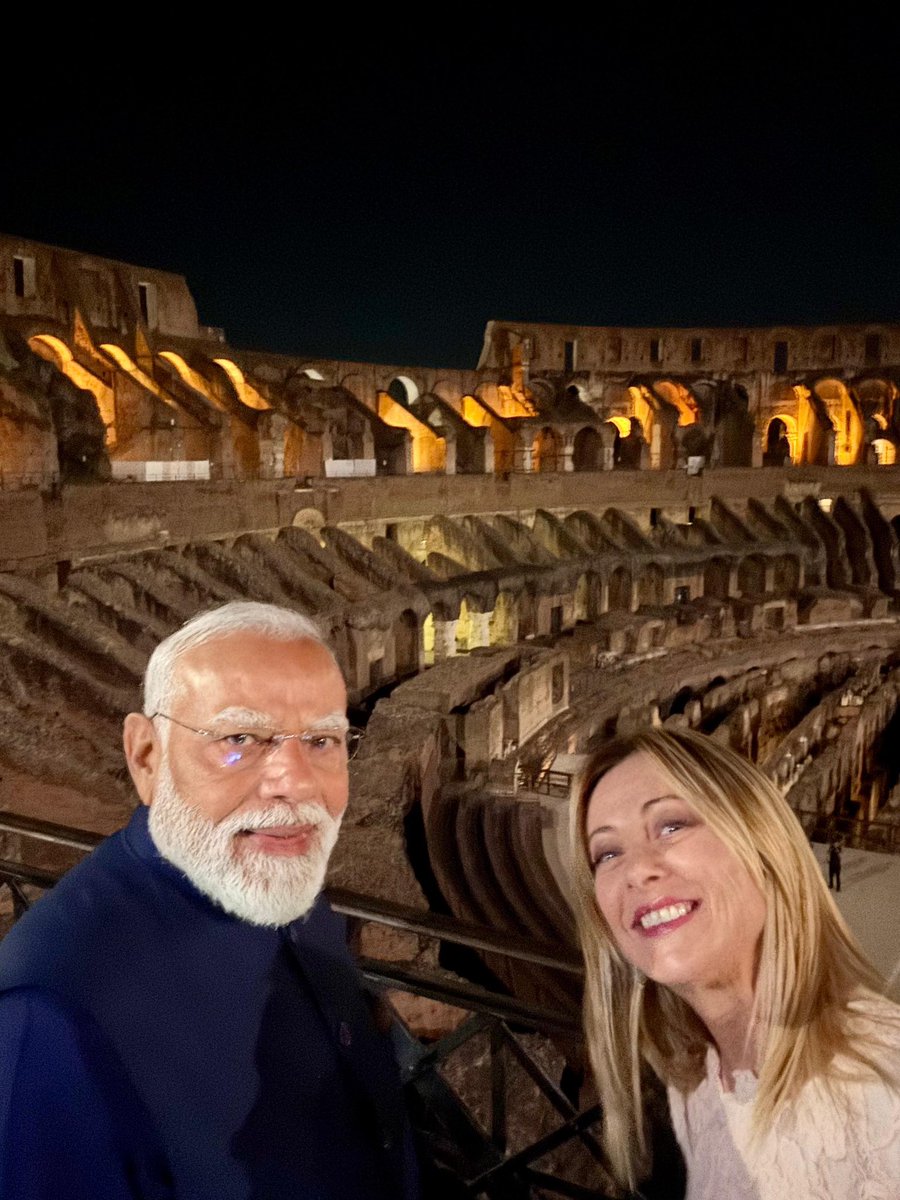
Your Knowledge is Embarassing that's the PROBLEM, this place is not a museum but The Atesgah of Baku _ Out of the 23 inscriptions found at the temple 18 are in Devanagari Script, 2 in Gurumukhi, 2 in Landa scripts and only one in Farsi. The sacred Hindu Swastika symbol is found in six of the inscriptions and the majority of the inscriptions begin with Om Shri Gaṇeshāya Namah. Goddess Jvala Ji is mentioned over a dozen times in these inscriptions.
Most Indians have not heard of Persistent Systems.
That is a shame, because every Indian should know what happened this weekend.
Let me explain everything from the beginning.
Persistent Systems is an Indian software company founded in Pune in 1990 by Dr. Anand Deshpande.
He started it after doing his PhD at Indiana University, came back to India, and built a technology company from scratch.
For most of its existence, Persistent was a mid-size player that did not get the same attention as TCS, Infosys, or Wipro.
Today, Persistent is recognised as the fastest-growing IT services brand globally in 2026. They have had 24 consecutive quarters of sequential revenue growth.
So, for six straight years, every single quarter has been bigger than the one before it. That kind of consistency is extremely hard to pull off in any business.
Now, they did something that has almost never happened before in Indian tech.
An Indian IT company just launched a takeover bid for a publicly listed German company on the Frankfurt Stock Exchange.
Persistent is offering 81 euros per share to buy Nagarro SE, which works out to approximately 1.1 billion euros.
And they are paying 140 percent above Nagarro's share price the day before the deal was announced. That is how badly they want this company, and how confident they are in what the combined business will be worth.
So what does Nagarro actually do and why does Persistent want it so badly?
Nagarro is headquartered in Munich, Germany. They have 18,500 employees across 40 countries and generated 1 billion euros in revenue in 2025.
Their biggest clients include four of the top five European automotive manufacturers. So BMW, Volkswagen, Mercedes-Benz type companies.
These are some of the most demanding engineering clients in the world.
Nagarro builds the software that goes inside these companies.
> The dealer management software.
> The supply chain tools.
> The digital interfaces that a BMW engineer uses when designing a new model.
This kind of deeply embedded enterprise software work is extremely difficult to replace once it is in place. These are long relationships measured in decades, not years.
That is why this deal makes strategic sense for Persistent.
Before this deal, only 9 percent of Persistent's revenue came from Europe. After this acquisition closes, that number jumps to 22 percent.
Right now, Persistent earns most of its money from North American clients, which means it is heavily exposed to whatever happens in the US economy.
If US companies cut tech spending, Persistent hurts.
Adding a strong European base changes that. Your revenue is now spread across two of the world's largest economies.
The combined company will have $2.9 billion in annual revenue and more than 46,000 employees across 40 countries. Of those, 37,000 plus will be in India.
So an Indian company, built by an Indian founder, that now employs 37,000 Indians and just bought a German company listed on the Frankfurt Stock Exchange.
For most of the last 30 years, the story of Indian IT was that we sent engineers to do work that Western companies needed done cheaply.
Good work, real work, but fundamentally in a support role. You came to us because we were affordable and skilled.
But now with Persistent buying Nagarro, Coforge buying Encora for $2.35 billion, TCS buying Coastal Cloud, Infosys buying Optimum Healthcare IT, Indian IT companies going out and buying Western companies for their client relationships, their market presence, and their technology capabilities.
We are the buyers now. :)
Shocking. @talk2anuradha has received legal notice from Delhi Police for her three year-old sarcastic tweets after Scheduled Castes Commission took suo motu cognisance of them. The draconian SC/ST Act has been invoked. She could be arrested any moment.
I stand with Anuradha.
2024 NEET Paper Leak
2026 NEET Paper Leak
UGC Rules Debacle
The Most Incompetent Minister and Ministry of Modi Ji’s Government needs total Overhaul
RT if you Agree!
If you’re wondering why Hindus of Bengal voted in large numbers, it’s because of this assurance:
Woman: Gunde (TMC) maarte hain.
Officer: Aap maa ke samaan hain. Aapko koi haath laga dega to usko wahi zameen mein gaad denge. 🔥🔥
Award-winning journalist, asking tough questions that no-one else dares to ask:
Bataiye, 5 ghante pehle Prayagraj pahunch kar aap kya kijiyega? Asli maza to road trip me hai, naa ki pahunchne me. To phir sarkar expressway banwa kar kyon logon ki road trips chhoti kar rahi hai?
No need to come back.
Indians must understand the difference between Bharat, the oldest unbroken dharmic civilization since the Bronze Age, and India, a modern nation-state governed by a democratic system since 1947.
Your love and gratitude for Bharat should not be weaponized as a guilt trip to pull you back to India, where merit is devalued, corruption is normalized, adulteration is rampant, civic sense is poor, pollution is pervasive, babushahi stifles efficiency, appeasement and freebies shape policy, and mobs dictate terms to democratically elected governments.
Bharat stays with you. Wherever you go, the civilization goes with you. If you want to preserve and carry forward that civilization, practice dharmic righteousness wherever you are and uphold its values through your conduct, work, and integrity. You don't have to be in India for it.
Bageshwar Baba:
🗣️ “I said have FOUR CHILDREN and dedicate one to the RSS. I don't think that was wrong.
— If not RSS, send one to the Army, make one a doctor or collector, or dedicate one to spreading SANATAN culture."
Baba Bageshwar is doubling down. No retreat, No apology.
The economics here are wilder than most people realize.
India produces 24-26 million metric tons of mangoes per year. About 45% of the entire planet's supply. And they export... 32,000 metric tons. That's 0.13%.
Mexico produces a fraction of what India does and exports 10x more by dollar value. India's mango export revenue is ~$60 million. Mexico's is $575 million.
Why would the world's largest producer barely sell to the outside world?
Because 1.4 billion people who consider mango a staple fruit create a domestic market so large that the marginal return on exporting is almost zero. The internal price clears. The logistics of cold-chain shipping a tropical fruit halfway around the world can't compete with selling it fresh at the market down the street.
India has over 1,000 mango varieties. The ones most Indians eat (Langra, Dasheri, Chausa) are so fragile they'd never survive export. The only variety that ships well, Alphonso, represents a tiny fraction of total production.
The "less than 1% exported" stat sounds like a failure. It's actually a demand curve so steep that the rest of the world barely gets a taste.
This is going to drive @TuckerCarlson crazy 🤣. What if the close relationship between India and Israel we see today, is simply an acknowledgment of the ancient ties between the two civilizations?
🚨 The most sacred relic in Christianity might have been woven 4,000 miles from Jerusalem.
New genetic analysis of the Shroud of Turin reveals DNA signatures that trace back to the Indian subcontinent. Pollen grains embedded in the fabric match species native to the Kashmir region. The linen itself carries molecular markers consistent with flax grown in areas spanning modern day Pakistan and northern India.
Every Christian scholar who built their career defending the Shroud’s authenticity as the burial cloth of Christ is now staring at evidence that completely reshapes the narrative.
But the implications run deeper than authentication debates.
What we’re looking at could be the smoking gun for first century trade networks that medieval historians claimed didn’t exist yet. The idea that fine Indian textiles reached Palestine 2,000 years ago contradicted everything we thought we knew about early commerce patterns. The Silk Road wasn’t supposed to be fully operational. Maritime trade between India and the Mediterranean was considered marginal.
The DNA evidence suggests otherwise.
If the Shroud originated in India, it means luxury textile production and long distance commerce were far more sophisticated in the first century than any textbook admits. Indian weavers were already creating fabrics so extraordinary that they traveled thousands of miles to reach the most important burial sites in the ancient world.
Think about what that required. Quality control systems to maintain fabric integrity across months of transport. Financial instruments sophisticated enough to handle payments across multiple currencies and kingdoms. Cultural exchange networks deep enough that Indian craftsmen understood and catered to specific burial customs in distant lands.
The genetic markers tell a story of globalization that predates our supposed “global” era by two millennia.
Archaeological orthodoxy just took a massive hit.
The traditional timeline puts sophisticated Indian Ocean commerce centuries later. The standard model claims the Roman Empire was insular, dependent on local production with minimal eastern trade. Economic historians built entire theories around the idea that complex international supply chains were modern inventions.
DNA doesn’t lie about geography.
Those pollen grains traveled from Kashmir valleys to a tomb in Jerusalem through human networks that were supposed to be impossible in 30 AD. Either the dating is wrong, or our entire understanding of ancient economic systems is incomplete.
The religious angle creates its own earthquake.
If the Shroud is authentic but Indian, it means the burial cloths of Christ were luxury imports, not local Palestinian linen. The man Christians worship was laid to rest in fabric that cost the equivalent of a house, shipped from craftsmen who never heard his name but whose work became the most venerated textile in human history.
That detail rewrites crucifixion accounts. Someone with access to international luxury goods provided the burial materials. The narrative of Christ dying poor and abandoned doesn’t align with being wrapped in premium Indian textiles.
The forensic anthropology adds another layer.
DNA analysis also found genetic material from individuals with South Asian ancestry who handled the cloth. Multiple handlers across centuries left traces. But the original genetic signatures point toward the Indian subcontinent as the fabric’s birthplace, not just its journey.
What emerges is a picture of the first century world that’s far more connected, sophisticated, and globally integrated than academic consensus admits.
The Shroud might force a complete revision of ancient trade histories, early Christian economics, and our assumptions about technological capabilities in the Roman world.
DNA evidence rarely lies.
But it frequently demolishes the stories we built around artifacts we thought we understood.
Japan is just 43 km from Russia. Russia can supply oil and gas in an hour or two! But Japan hardly buys any Russian energy.
Instead Japan buys from the Persian Gulf which is 8300 km of sailing distance. And suffering due to the Strait of Hormuz.
Shows lack of independence 🤔
Deeply saddened by the tragic loss of Tarun Kumar in Uttam Nagar. It’s heartbreaking that something as small as a child throwing a water balloon during Holi could escalate into such violence. Humanity should never fall to this level. Prayers for his family and hope the culprits face the strictest punishment.