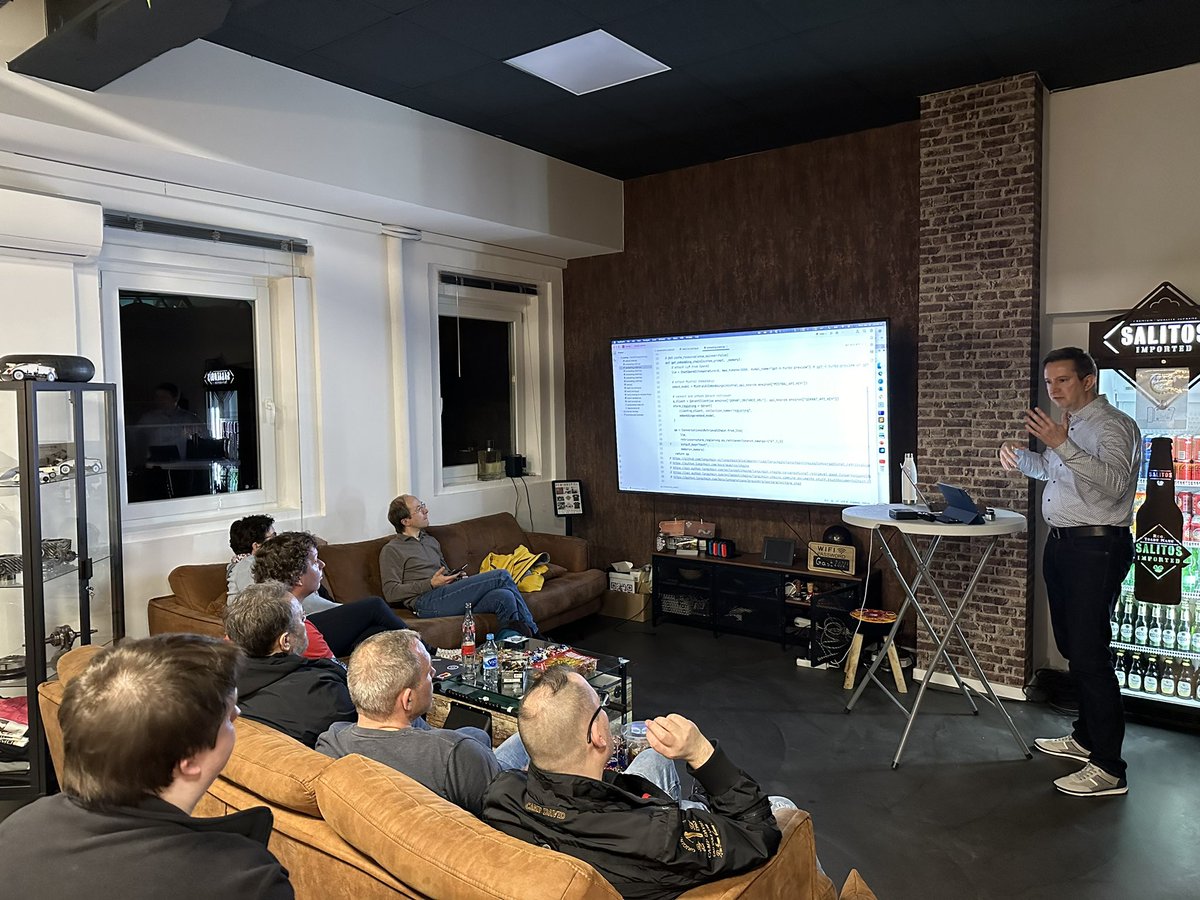
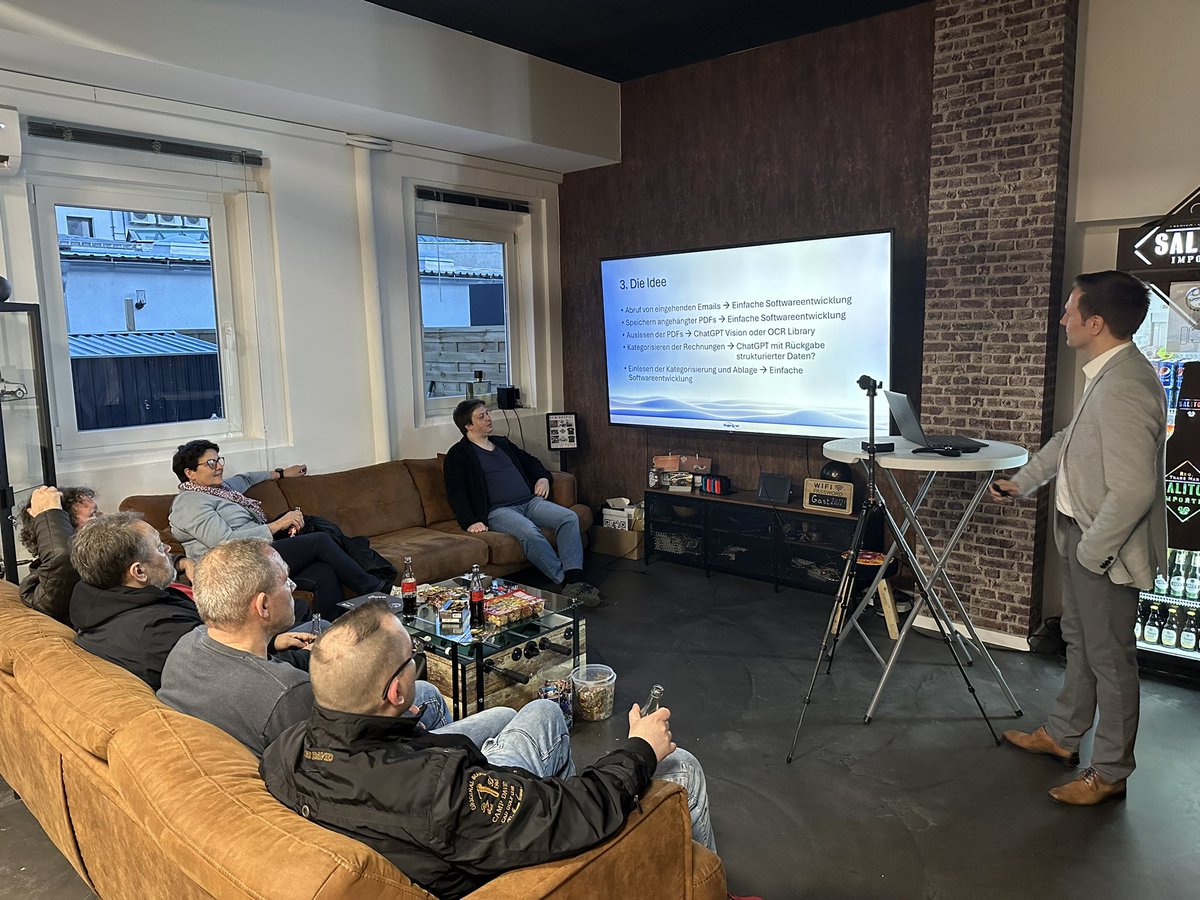
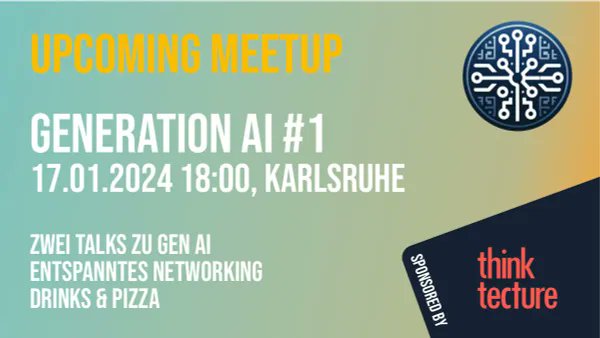
Wir freuen uns wieder auf zwei Speaker, die mit den Teilnehmern auf Integrationsmöglichkeiten von und mit Generative AI schauen werden. Dabei steht bei diesem #Meetup das #Framework#DotNET von #Microsoft eher im Vordergrund als #Python
https://t.co/iKJMEQaiIk
#Thinktecture
Wie kann ich Formulare mit KI vollautomatisch ausfüllen lassen? Unser #W3C-Member und #GDE Christian Liebel liefert in seinem kostenlosen Webinar die Antwort! https://t.co/Zi2v4J6hO4
👨💻 Bei unserem nächsten #GenerativeAI Talk mit Marco Frodl erforschen wir Tracing & Debugging von LLMs. 🛠️ Entdecke Tools wie @langfuse & #LangSmith (@langchain) für transparentere generative KI-Anwendungen. ✨
🗓️ Melde dich an! https://t.co/V257VNHQEg #Debugging#LLM
🚀 Beigeistert von #KI in der #Webentwicklung, stößt aber Bundler-Issues? Christian Liebel zeigt in seinem #Labs-Post wie man sie löst. 🛠️💻 Bleib technisch am Ball mit diesem Artikel! #GenerativeAI#WebLLM#TechTipps
https://t.co/Kwf7oIGu3S
Noch 3 Tage bis zum nächsten #Meetup :)
Wir haben zwei Talks zu #GenerativeAI in der Agenda.
@jochenkluger stellt vor, wie man #AI im Unternehmen einsetzen kann. @marcofrodl zeigt, wie man generative #AI transparent einsetzen kann.
https://t.co/6klmtYemP7
In einer Woche sind wir in #Mannheim zu Gast! Jochen Kluger und @marcofrodl packen ihr #Wissen zu #GenerativeAI in jeweils einen Talk für uns Dabei stehen die "Vereinfachung von Prozessen" und "Tracing- & Debugging-Techniken für #LLM-Anwendungen" im Fokus!
https://t.co/bHJeoO50KT
Ohne Sponsoren für 🏢 Location und 🍕Pizza /
🍶 Getränke wären unsere #Meetup Events nicht möglich! Daher vielen lieben Dank an unsere beiden Sponsoren für den 20.3. 🤘 Vielen Dank an die #HotRodCrewMannheim und @KlugerNet! #CommunityRocks#Mannheim#AI
https://t.co/lV2UwlQjXQ
Am Mittwoch startet unser Talk über die Vorteile von .NET 8 Native AOT für https://t.co/SF7ZzsMbtt Core Web APIs. 🖥️💡 Sei dabei, wenn unser Experte @feO2x spannende Einblicke biete und sein Wissen teilt! Wir freuen uns auf dich! 🚀 #NativeAOT#ASPNETCore
https://t.co/6wLucnafMe
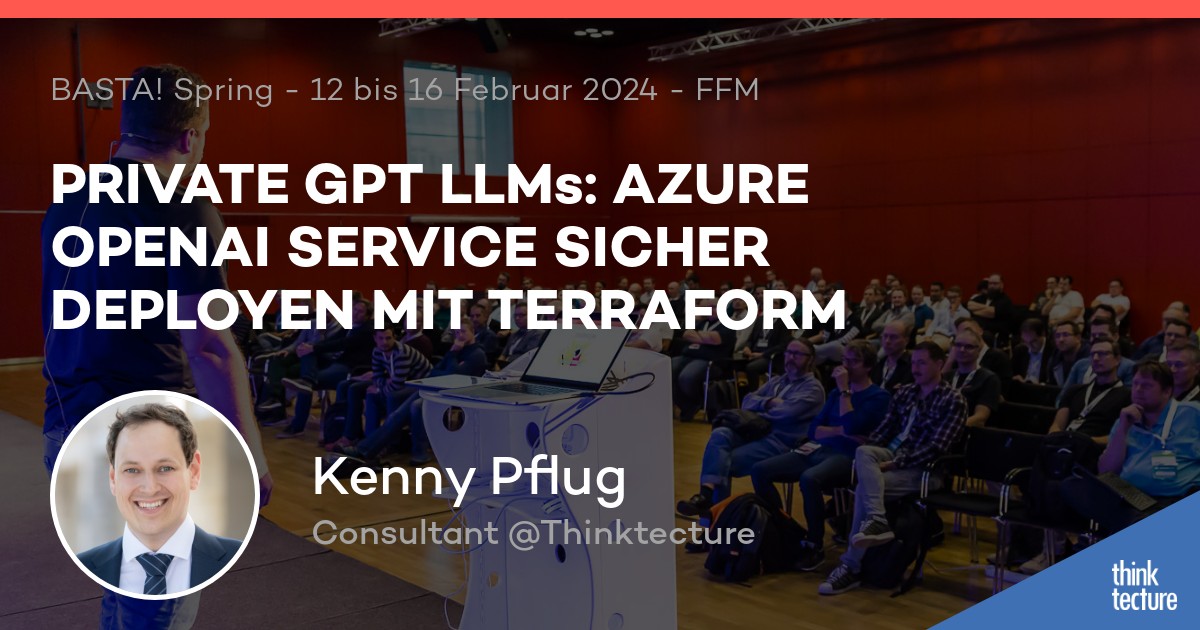
🚀 Nur noch eine Stunde bis zum spannenden Talk über den Azure OpenAI Service auf der #BASTA2024 Konferenz! Wir freuen uns darauf, unser Wissen mit euch zu teilen und gemeinsam zu lernen. Seid dabei! 🌟 #GenerativeAI#TechTalk
https://t.co/OnAIwCkb5g
Here we go again :)
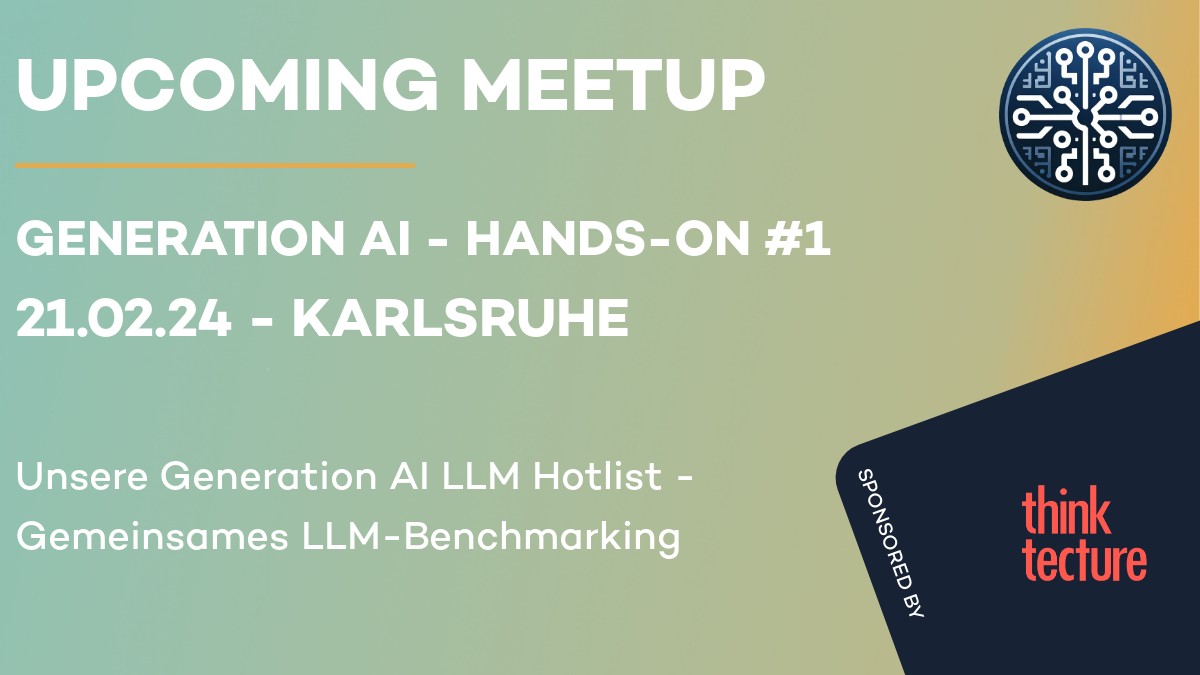
Seid dabei, wenn wir LLMs mit euch auf den Prüfstand stellen 🤘🏻
Komm mit mir zu Generation AI - 02/24 - Hands-On #1 https://t.co/7MT0AE5Mf6
💡 In my very humble opinion, this is hands-down the *one* article that every software engineer should read to understand Large Language Models (LLMs).
https://t.co/VfMuKFnbat
👇🏼
"In this post, the author will delve into the inner workings of Large Language Models (LLMs) to provide a practical understanding of their functionality. The exploration will be facilitated through the use of llama.cpp, a pure C++ implementation of Meta’s LLaMA model, which the author finds to be an excellent resource for comprehending LLMs in depth. Its code is appreciated for being clean, concise, and straightforward, avoiding unnecessary abstractions. The specific commit version of this code will be used in the discussion.
The focus will be on the inference aspect of LLMs, specifically how these trained models generate responses based on user prompts.
[...]
Throughout the post, the author will guide readers through the entire inference process, covering several key topics, which include:
1. Tensors: Providing a basic overview of how mathematical operations in LLMs are executed using tensors, potentially with GPU acceleration.
2. Tokenization: Explaining how user prompts are broken down into a list of tokens, which serve as the input for the LLM.
3. Embedding: Detailing the process of transforming these tokens into vector representations.
4. The Transformer: Focusing on the core part of the LLM architecture, particularly the self-attention mechanism, which is vital for inference.
5. Sampling: Discussing how the model selects the next predicted token, with an exploration of two different sampling techniques.
6. The KV Cache: Examining a common optimization strategy used to enhance inference speed in large prompts, including a basic kv cache implementation.
By the end of this post, readers should gain a comprehensive understanding of how LLMs function, equipping them to delve into more advanced topics, some of which will be outlined in the final section."
#LargeLanguageModels #LLMs #Transformer #Llama #llamacpp #SoftwareEngineering
Wir laden euch herzlich ein! 🤖 Am 21. Feb. findet unser erstes Hands-On Meetup bei @thinktecture statt. Wir wollen Bewertungskriterien für #LLMs erarbeiten und anhand unserer Maßstäbe testen. Bringt eure 💻 mit! #CommunityRocks#AI#Karlsruhe
https://t.co/w0Ndj0oUD6
👋 Greetings from Germany! 🇩🇪 We're on the lookout for talented individuals to join our team—specializing in Angular and Angular + UX/UI design. Important: Proficiency in German and residency within the EU are essential to serve our customer base.
🚀 https://t.co/KwUu63DXmz
🚀 https://t.co/7DEk2EgQnN
Willst du mehr wissen zu offlinefähiger #GenerativeAI und den Updates in #Angular 17? Dann würde mich freuen, wenn ihr mir ein Herz ❤️ beim Session Voting der @MiB_MD_DevDays gebt:
- https://t.co/WTK59eGAOA
- https://t.co/eJGO1RAOXh
- https://t.co/jGoYgXfEyw
#mddevdays#magdeburg
Am Mittwoch startet endlich unserer #Meetup!
Kommt gerne bei @thinktecture in #Karlsruhe vorbei, hört euch die Talks von @marofrodl und @christianliebel an und diskutiert mit den Teilnehmern was euch zum Thema #AI & #GenerativeAI bewegt!
https://t.co/BY7On2XMCU
@BASTAcon Besucht z.B. meine Talks zum sicheren Hosten von Azure OpenAI Service am 13.02. oder zu allen Internals von async-await in .NET am 14.02.
https://t.co/AgYMoUUO2F