Alejandro G. Iñárritu visited the Cannes Film Festival for the first time in 2000 for the premiere of his film, "Amores Perros" (2000). One day during the festival, Iñárritu and many other directors were invited for a 7 PM screening of Wong Kar-wai's "In the Mood for Love" (2000).
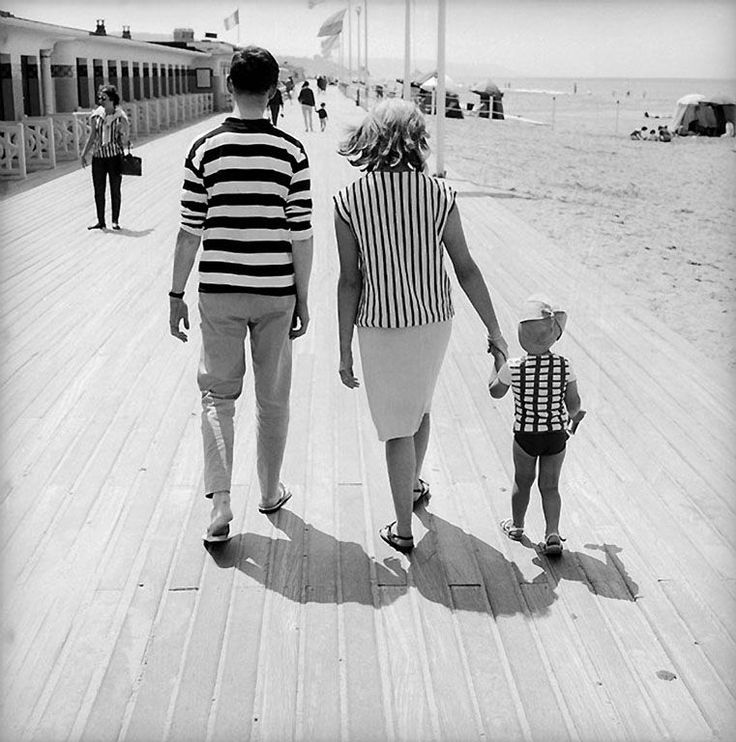
Iñárritu and his wife Maria booked a taxi at 6:15 PM. But the taxis were overbooked. So Iñárritu, wearing a tuxedo & his wife, wearing a long dress with high heels had no other choice but to run to reach the theater on time, while the temperature was 95°F. The traffic was heavy. While running, Iñárritu took off his jacket, tie & the first 3 buttons of his shirt. His wife took off her shoes.
Their effort wasn't in vain as they reached the theater at 7:01 PM. They were drenched in sweat. But they both had experience of their lives when they watched the movie.
Here is what Iñárritu said of "In the Mood for Love" (2000):
"For a filmmaker, the experience of entering that legendary [Palais Des Festivals] with 2,000 seats is similar to that of a Catholic boy going into the Vatican. [From] all the way in the back, we watched “In the Mood for Love” on a screen 40 times bigger than us.
Maria and I walked in complete silence for almost 10 minutes [afterward]. We suddenly stopped by the sea. Maria hugged me and started crying inconsolably on my shoulder. And I did the same on hers. “In the Mood for Love” had left us speechless and deeply moved. It was that moment that reminded me why, even when it’s so stupidly difficult sometimes, I wanted to become a filmmaker."
("We Miss You, Cannes: 23 Filmmakers Relive Indelible Moments", Manohla Dargis and A.O. Scott, The NY Times, 2020)
P.S: On this day, 26 years ago, "In the Mood for Love" (2000) premiered at the Cannes Film Festival, France.
1910 Bélgica. Otlet y La Fontaine crean #MUNDANEUM Un equipo de mujeres organiza TODO el conocimiento humano en papel (libros, periódicos, imágenes) Se puede enviar preguntas y recibir info por correo. Precursor de internet, bases datos, buscadores😵https://t.co/wk4mi6ldpR
We Are Failing A Generation of Kids!
Delighted to see such a big piece in The Guardian today detailing my thoughts about the growing use of screens in our children's lives.
Over the past decade, childhood has fundamentally changed. Many young people are now spending significant portions of their lives in digital environments designed to capture and hold their attention.
It is so clear to many healthcare professionals that this rapid increase in screen time is having a devastating effect on the health and wellbeing of our children. There are multiple potential issues including anxiety, depression, worsening eyesight, visual problems and lower quality sleep.
Another concern of mine is that these devices (especially social media use) train distraction. Everything good in our lives comes from our ability to be present - our relationships, self worth and contentment.
We are failing our kids. Our job is to protect them and put safeguards in place like we do with gambling and pornography.
Successive governments have been weak and allowed tech companies to decide what is best for our kids. A few weeks ago, there was hope that a social media ban for under 16s would be forthcoming in the UK but, unfortunately, it seems as though the current government are trying to stall this with another 'consultation'. This has been going on for far too long. We already know enough. How many more kids need to be negatively impacted before action is taken. It is time the politicians acted and did what we expect them to do - protect the wellbeing of our children.
This is not about blame. Teachers and parents are struggling and need the government to help. As @JonHaidt eloquently says, this is a collective action problem.
We are in the middle of a widespread social experiment that no one consciously signed up for. And it is our kids who are paying the price.
What do you think? Do you think we should ban social media for under 16s? What about the rapid increase of screen use in schools? I'd love to hear your perspective below!
Read the full article: https://t.co/HBvTKU9xwa
Kudos a Victoria Derbyshire de la BBC por esta fantástica entrevista a Gisèle Pelicot como lo que es, una reina, en el Ayuntamiento de Paris.
Llevamos nuestra fuerza en nuestro ADN.
COBARDES
#sumisionquimica
https://t.co/2dIiG1Mxt0
Bestselling historian, Yuval Noah Harari, explains why we may be one of the last generations of homo sapiens.
The prediction:
"We are one of the last generations of homo sapiens. Within a century or two, Earth will be dominated by entities that are more different from us than we are different from chimpanzees."
The technologies driving the shift:
Harari explains that we as humans will soon have the power to re-engineer our bodies and brains through genetic engineering, direct brain-to-computer connections, and completely non-organic artificial intelligence.
These technologies are developing at breakneck speed.
The unprecedented danger:
Harari warns, "One of the dangers is that we will see in the coming decades, a process of greater inequality than in any previous time in history because for the first time it will be real biological inequality."
If enhancement technologies are available only to the rich or only to people from certain countries:
"Homo sapiens will split into different biological castes because they really have different bodies and different abilities."
Why this matters:
Throughout history, inequality has been social and economic, but humans remained biologically equal. We're now approaching a threshold where the enhanced and unenhanced could be as different as humans and chimpanzees.
The question is... who gets access, and what happens when biological inequality becomes real?
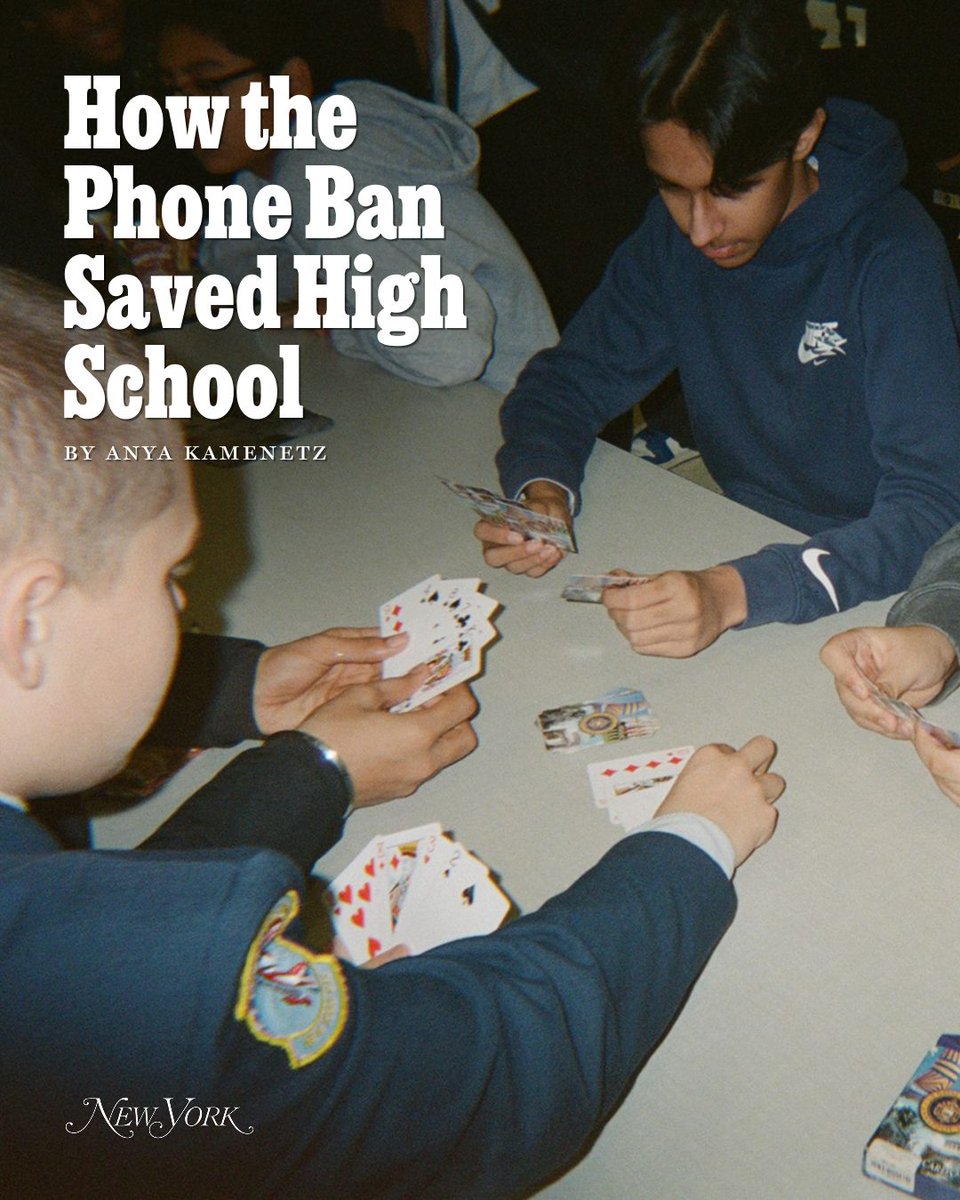
When New York State banned phones in public schools from bell to bell this past September, the goal was undistracted learning. But within weeks of the Great Phone Lockup, teachers began to notice an incidental (and arguably even more compelling) benefit: The teens were talking to one another as if they were in a Brat Pack movie. Sure, there’s been grumbling and some burner phones and scrolling in the bathroom. But generally, with phones off-limits, the atmosphere feels different. There’s a pleasant buzz in the lunchroom, chatter in the hallways, and an alphabet of new analog hobbies popping up just about everywhere. “We’ve had a lot more school spirit,” said one senior at a charter school in Harlem. “People are more willing to do stuff.”
What stuff are they doing? At many schools, teachers have made cards, board games, and sports equipment available during free time, and the kids have deigned to use them. Aidan Amin, a ninth-grader at Hunter College High School, is in a friend group that congregates in the school foyer to stack ‘OK Play’ tiles and compete at ‘Sorry!’ and other tabletop games during lunch. “I’d say it’s made us closer. Honestly, half the people I’m playing board games with I didn’t know at all before this,” Aidan says.
Read more about how the state’s device ban has shifted the atmosphere in New York public schools: https://t.co/NMOJzQT2nS