This what employees at Anthropic feel after using claude for every task.
"On days where everything works well, I can't help but
think nothing I do matters, everything is automated and
better and faster than I ever will be. But then there are
days where everything breaks and I don't understand
why and I realize I have no idea what I've been up
to anymore."
And this what i feel as well, even though i am building and creating more than ever but a sense of accomplishment is missing.
Even after doing a weeks worth of work in a day, I still feel empty.
And this makes believe that Ai will accelerate the “Loneliness” problem, which most of us are already suffering from.
And i believe this will lead to new opportunities in creating offline communities, events, picnics and parties etc.
Humans need to socialise and collaborate; otherwise we would all go crazy!
The advancements that we have been able to achieve till now are the results of collaboration.
I see a future where most of the work is being done by ai/agents/robots and humans will build different communities and meet offline more than ever to experience life and share moments with each other.
.
.
.
Curious to hear what yall think about it!
🚨 do you understand what Anthropic just published..
They released internal data showing their AI is now accelerating the development of AI itself.
This is the first step toward systems that build their own successors. They're openly warning where this leads. It could end in humans losing control.
- Tasked with speeding up model-training code, their AI went from 3x faster to 52x faster in a single year
- A skilled human needs 4-8 hours to hit 4x on the same task
- When a human researcher took a wrong turn, the AI picked a better next step 64% of the time
- They're now calling for a way to globally pause AI development before it's too late
The company making the AI is telling you it might not be able to control it. Read that again.
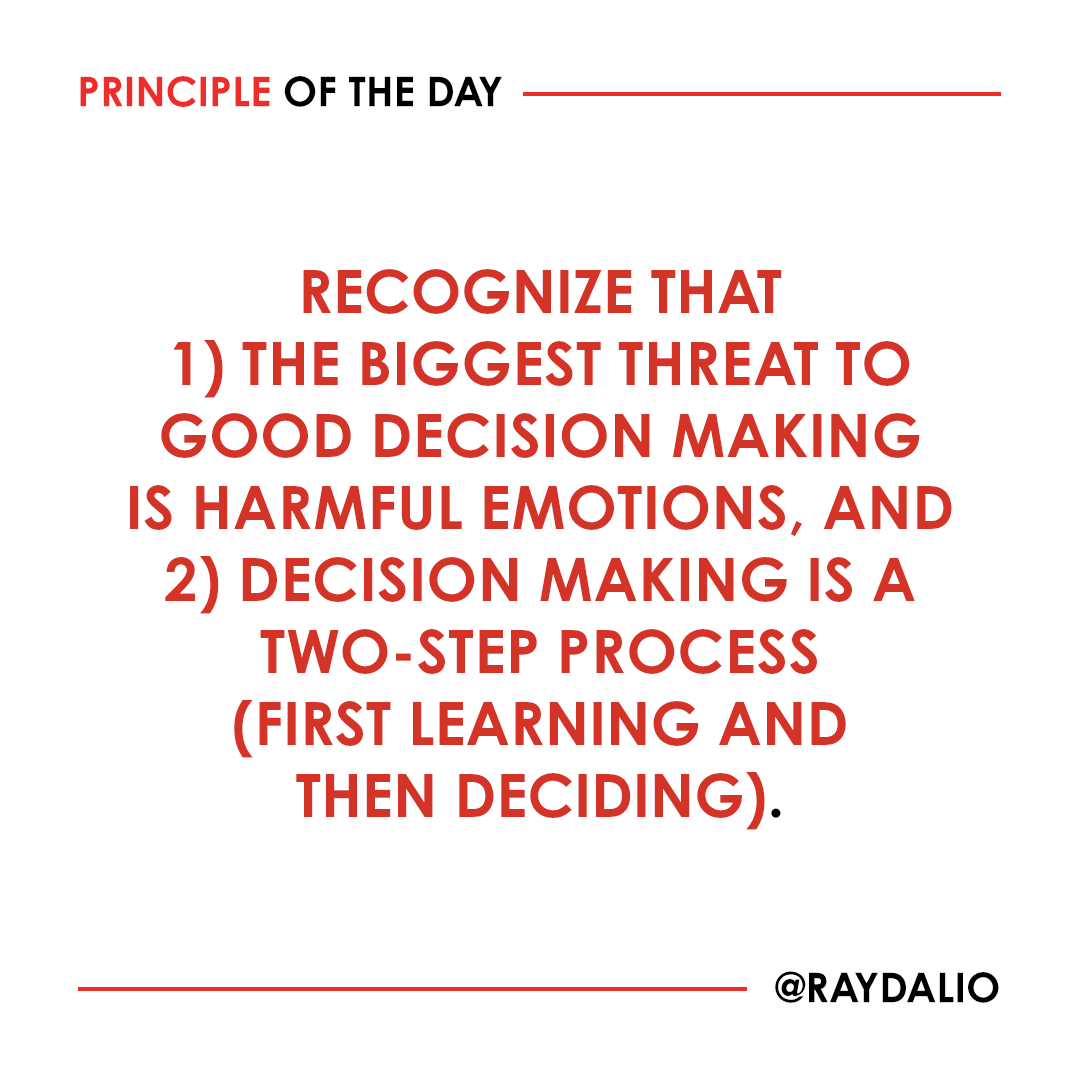
Learning must come before deciding. As explained in Chapter One, your brain stores different types of learning in your subconscious, your rote memory bank, and your habits. But no matter how you acquire your knowledge or where you store it, what’s most important is that what you know paints a true and rich picture of the realities that will affect your decision. That’s why it always pays to be radically openminded and seek out believable others as you do your learning. Many people have emotional trouble doing this and block the learning that could help them make better decisions. Remind yourself that it’s never harmful to at least hear an opposing point of view.
Deciding is the process of choosing which knowledge should be drawn upon—both the facts of this particular “what is” and your broader understanding of the cause-effect machinery that underlies it—and then weighing them to determine a course of action, the “what to do about it.” This involves playing different scenarios through time to visualize how to get an outcome consistent with what you want. To do this well, you need to weigh first-order consequences against second- and third-order consequences, and base your decisions not just on near-term results but on results over time.
Failing to consider second- and third-order consequences is the cause of a lot of painfully bad decisions, and it is especially deadly when the first inferior option confirms your own biases. Never seize on the first available option, no matter how good it seems, before you’ve asked questions and explored. To prevent myself from falling into this trap, I used to literally ask myself questions: Am I learning? Have I learned enough yet that it’s time for deciding? After a while, you will just naturally and open-mindedly gather all the relevant info, but in doing so you will have avoided the first pitfall of bad decision making, which is to subconsciously make the decision first and then cherry-pick the data that supports it.
But how does one learn well? #principleoftheday
When their automated funnels break and they don't know why, you will be the only one in the room who knows how to fix the foundation.
The cognitive bill is going to come due for the entire D2C space.
Make sure your brand actually knows how to pay it.
The Bill Comes Due: Surviving Cognitive Debt in D2C
We all know how traditional tech debt works.
You cut corners on your backend architecture so you can ship the product faster. It is a calculated trade-off.
Become the Verifier: Let every other lazy D2C brand become completely dependent on the prompt.
Your edge is your foundational understanding of consumer behavior.