Climate change stands between us and a better future. Many of the solutions are already at hand. At this point, the only question is: what are we waiting for?
And now I am in south-east Madagascar! @_KatStuart and I are helping conduct bird surveys in Mahabo forest, sharing what know of R Studio and statistics, and doing what we can to help conservation in the region. Great to learn about the biodiversity in this amazing place.
How do groups of social animals decide when and where to move? I’m in Kenya helping @DamienFarine find out! Vulturine Guineafowl at @MpalaResearch are colour banded and GPS tracked, providing high res data on social networks and group movement. How stunning are the birds!
My favourite part of my #honours fieldwork is seeing newly settled abalone! This little beast is only 8mm in shell length, and was living it up in one of the #IMAS Abalone Recruitment Modules.
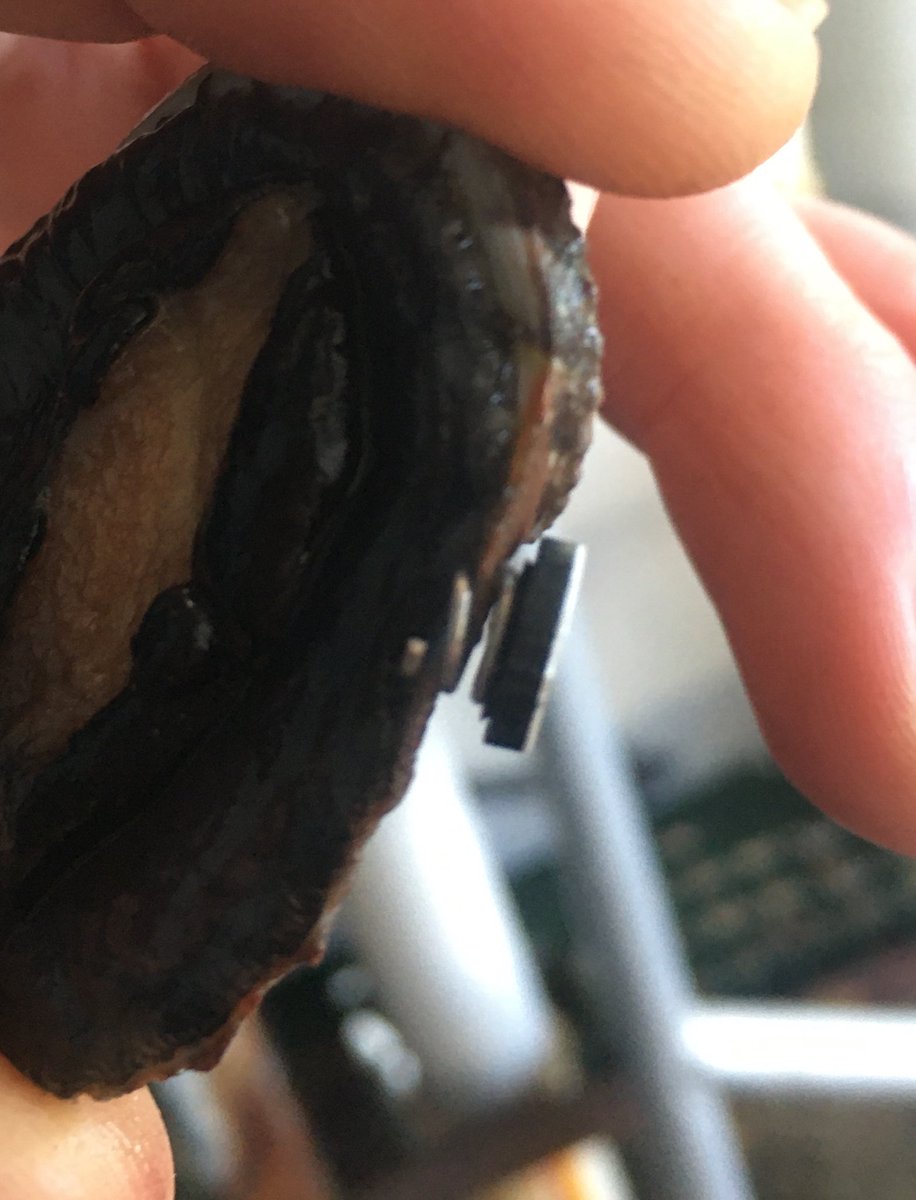
@ZekeGaffney Great question. It's a spring that just rolls onto the edge of the shell and is held there by tension until the shell grows around it, anchoring it even more!
I've been tagging abalone to explore movement of captive individuals. Tags are attached to the edge of the shell and over time the shell grows around it. I was lucky enough to meet an abalone in the field that had been tagged previously. Cool seeing where tags sit after a while!
@pessa_3 Abalone are actually long-lived, slow growing animals that have different growth rates in different regions! In east Tasmania, where these photos are from, it's about 25mm per year until they reach about 125mm. After that it's approx 1mm per year of growth.
My @IMASUTAS Honours fieldwork has finally begun! Using Abalone Recruitment Modules (ARMs) in an attempt to quantify juvenile abalone abundance in southern Tasmania. There are two abalone in this photo - can you spot the baby?