AI isn’t the end of software jobs. It’s the beginning of a new era.
We’re going to build apps we can’t even imagine today.
New problems will show up.
And those problems will need smart engineers to solve them.
That’s where _you_ come in.
the heart of mechanical engineering is validation. it's funny because it's never formally mentioned as the point of your studies in school, but it's the unspoken goal of all four years of a BSME
mechanics of solids: does this part break? statics: how do you even get the load for the first question? heat transfer: can the system handle the energy?
some would argue that this is the whole point of engineering. take formula 1 as an example -- we take it for granted today because the cars have gotten so reliable, but this is what F1 really is: how do you build a car that fails on lap n + 1? doing so makes the car as light and fast as possible. it's even baked into the rules: how do you get as close as possible to breaking the rules without actually breaking them?
software development doesn't have the benefit of being built on engineering or the physical sciences, so validation isn't solving a series of equations using empirically tested methods: it's literally building your own tests and seeing whether the software passes or fails according to your own criteria
why does this matter, and what does it have to do with this kernel?
in mechanical engineering, physics is truth. in software development, you make up the truth. nvidia has not released that full truth -- the series of tests that confirm downstream changes do not break the upstream repository. this is a problem because it effectively freezes development
this kernel is a big deal. not technically -- it seems inferior to OCC for now -- but in terms of licensing. opencascade, for all its faults, has been a critical part of the world's technology stack and remains so today, but it has a fatal flaw: it requires derivative works to be open-sourced or licensed from its current proprietors
nvidia is letting this thing into the wild without those strings attached. that is great, but with one huge caveat: it doesn't seem that they've released the full test suite. there is a test suite, but not all of its inputs are bundled with the release, so some tests are skipped unless you supply those inputs separately
so this new kernel is potentially a big deal as a baseline, but everyone is going to run into the same problems day in, day out until either nvidia releases the tests it hasn't included -- if they exist -- or a fork puts together a test suite under the same license to enable other developers to build the future of this kernel
further: they aren't accepting external contributions. this means the kernel is locked in its current state. even if we had all of the tests -- we wouldn't be able to unify everyone's work in one main repo and build on each other's contributions
building the future requires an unrestricted baseline that everyone can build upon, tried and tested in a way that everyone agrees on. i think USD BRep can be that. but first: we need to fully develop the tests. after that, robustness and feature parity with the leading kernels
i'll toy around with this and see if it's possible, but i think it needs benefactors -- who can provide tokens and money -- and contributors to do it properly. i'll try, but i don't think i'm the right person for it. i'll let you know if it works out
If you're taking French classes at a lower intermediate level, let me recommend this documentary, " Le Bus: Les Bleus En Grève" for you. It's looks back on France's chaotic WC2010 episode and there are some nice expressions in there you can add to your lexicon.
If you know any digital marketer that’s yet to do their NSS and needs placement to work with us at ArXyn dev, please let them send an email to [email protected] please. Thank you!
BREAKING: Formula 1 returns to Africa with 10 year agreement to race in Rwanda
The African Grand Prix is set to join the F1 calendar in the early 2030s
#F1
IMHO GEN, Goliath robotics, KNUST's Dept of Mechanical engineering & Biomedical engineering can all deliver and it will be made to suit our local context. But no let's import.
How do you expect engineering design, manufacturing and innovation to grow.
Sigh😔
Pres. Mahama to import rechargeable wheelchairs for persons with disabilities, raises their share of district funds from 3% to 5%...
#EIBNetwork#GHOneTV#GHOneNews#NewsAlert
I have a different take on this. Sell your team, sell the dream, don't sell yourself.
The most successful people I know were products of great teams; they didn't do it alone. When you have to start “selling yourself,” it is typically disdainful of the cooperative effort of others.
One reason why I won't fail to mention my co-founder, colleague, partner, or family member who helped along the way while we tried to do great things.
Yes, I agree that selling yourself is cringe and I do everything to avoid those who do. They become trouble later on.
Let me annoy half the football world with a Messi and Ronaldo analogy…
….maybe let me leave that for now 😂
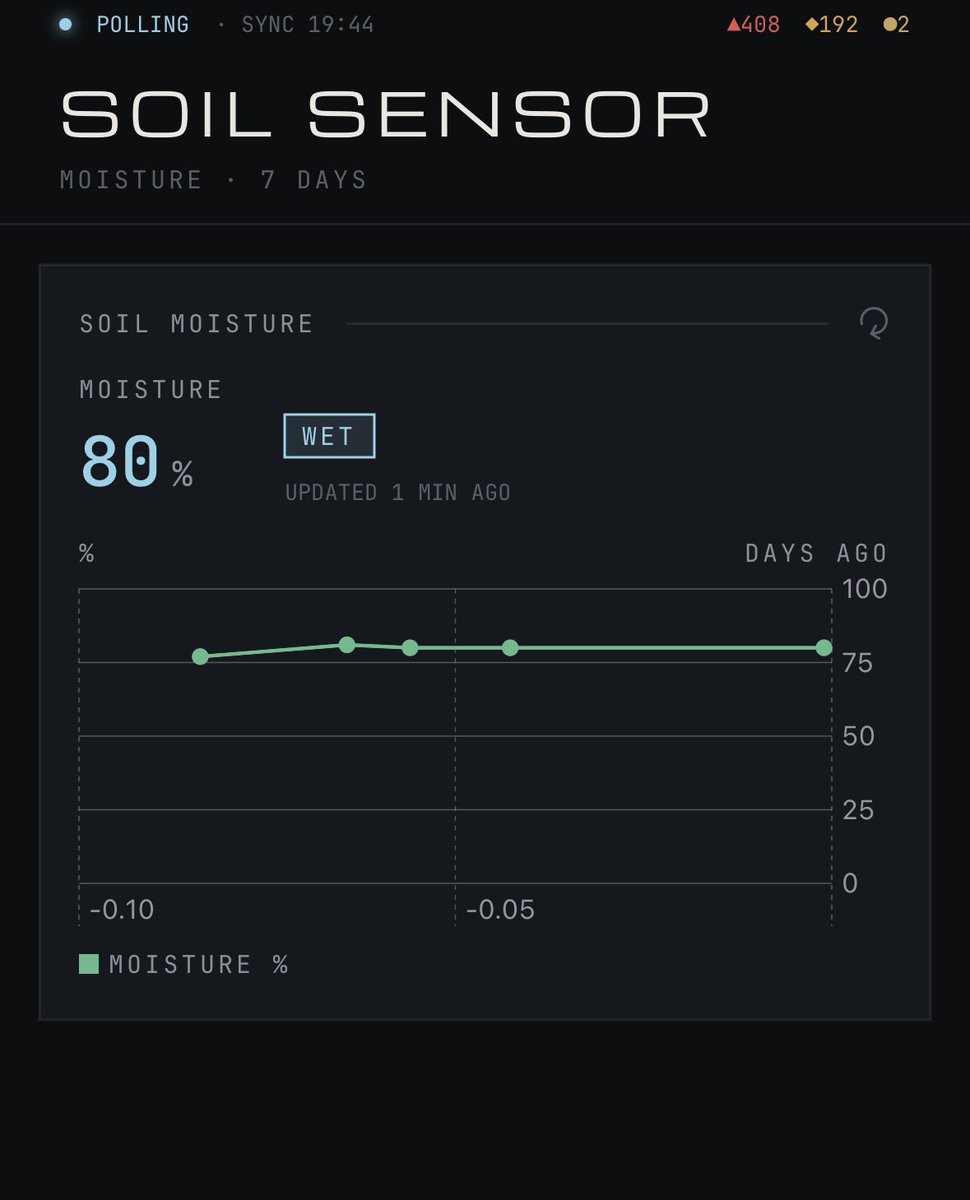
One of the very simple ESP-32 projects out there. Wrote a small soil moisture sensor for madam that logs regularly. Lmao we have a calendar event to remind us to water the plant, we can ignore it now.
new internet home: https://t.co/iuLbIvvPGg
a few years into design [with an eternity left to go], and the goal has stayed pretty simple: get as close to the final thing as possible, obsess over the final output, and make sure the idea survives the journey from thought to the user's experience.
somehow, that need for ownership has led me into building stuff too, including this site. a lot more is coming, and i’m excited for this to be the place that holds it all.
if you’re an OG, thank you; and if you’re new, hi, i’m aj.
My key takeaway from this preaching in buses situation is that the Christian community knows how to apply pressure and lobby when it aligns with their interests.
So the galamsey, wossop? 👀
You sometimes see a table claiming that African countries, including Ghana, have the lowest IQs in the world. The most widely shared version is on Business Insider Africa.
Business Insider cites CEOWORLD magazine. CEOWORLD did not test anyone. Its figures match, to two decimal places, a 2019 dataset compiled by Richard Lynn and David Becker.
Now look at what is inside that dataset.
Sierra Leone's score of 45 rests on one study from 1966. Mali's rests on a single sample. South Sudan's comes from refugee children. Ghana's 58.16 appears to be the average of a small set of test samples and Ghana's TIMSS school assessment scores, rescaled and relabelled as IQ.
An IQ below 70 is the usual threshold for intellectual disability. A national average of 58 would mean most Ghanaians could not hold a job, run a business or raise a family. Anyone who has spent a day in Accra knows that is absurd.
The dataset's own author agrees there is a problem. Becker wrote in 2019 that differences between countries scoring below 60 are more likely measurement error than real differences in intelligence. He also wrote that the dataset is not suitable for comparing two individual countries.
The dataset was never peer reviewed, which Becker himself calls a weak point. Yet researchers used it in published papers for years, because reviewers check the analysis, not the data underneath. In 2024, academics called for several of those papers to be retracted.
That is how a zombie statistic is made. Lynn and Becker becomes "a study". The study becomes "CEOWORLD". CEOWORLD becomes "Business Insider". Each step adds a more respectable name and no new evidence. Then it turns up in social media arguments as settled fact.
Before you share a ranking, ask three questions. Who collected the data? How many people were measured, and when? Does the number survive a basic sanity check?