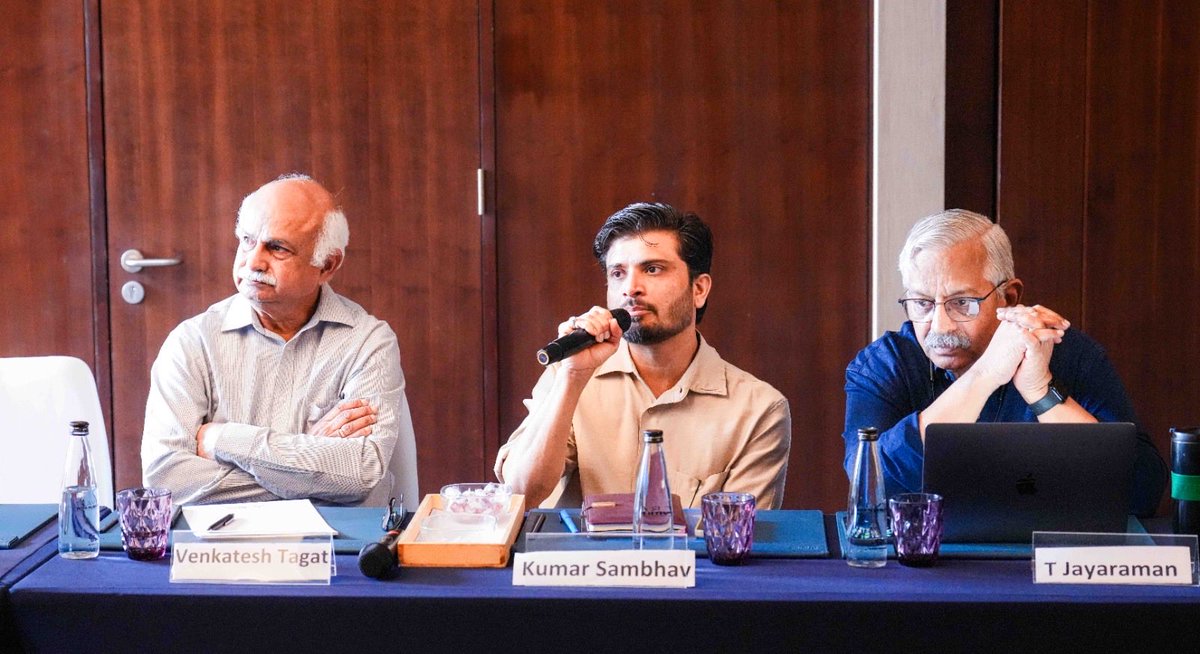
We are grateful to @CSTEP_India for creating a thoughtful space for participatory modelling, and to all fellow participants for a rich and necessary conversation.
He also underlined the need to decode social and ecological costs of conflict to translate not only to a just transition, but more effective planning and investment.
Taking the example of land classifications like “wasteland”, he shares how the tag alone can overlook grazing, seasonal livelihoods, fuelwood collection, settlements, and existing or potential community rights.
Sambhav shared perspectives from our work on land and resource conflicts, highlighting how several datasets inadequately represent the human element behind land-use.
The discussion looked at the land constraints behind India’s renewable energy expansion. It brought together experts working on land, ecology, governance, conflicts, and community rights to test how models can better reflect realities.
Our Founder & CEO, @Kum_Sambhav was part of an important roundtable hosted by @CSTEP_India in Bengaluru on SAFARI-DHARTI, one of India’s first integrated and participatory Land-Water-Energy-Food Systems models.
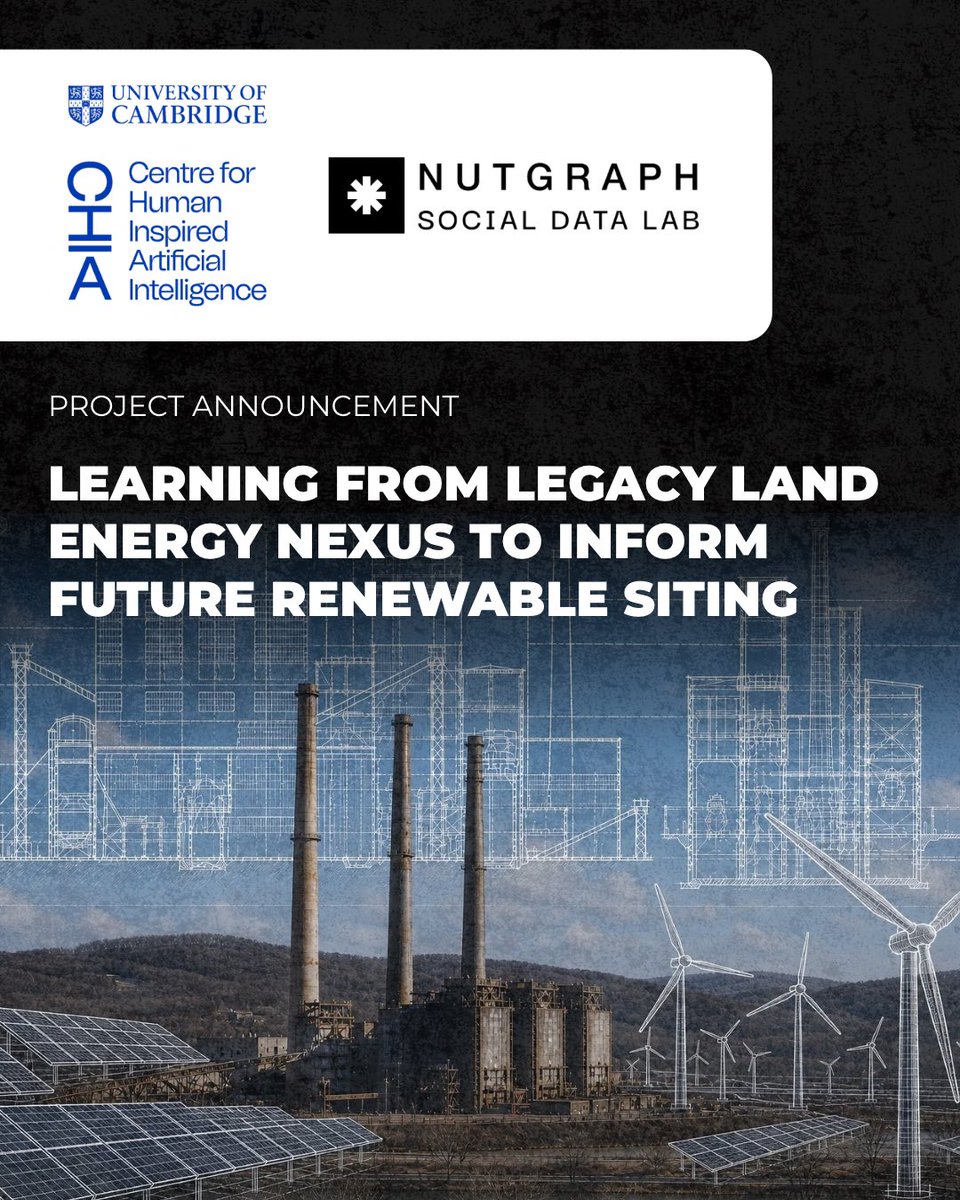
Combining Nutgraph’s field-verified database of 130+ energy-linked land conflicts with satellite imagery, time-series analysis, & on-ground validation, the project will generate a comparative spatial evidence base to improve siting decisions and identify land-related risks early.
We’re excited to announce our new partnership. With the University of Cambridge’s Centre for Human-Inspired AI, we’re building a first-of-it’s-kind AI-augmented geospatial evidence base–helping India’s energy transition learn from past land-use challenges
https://t.co/iqi9sPt5Ld
By learning from legacy energy systems, using multimodal AI, the project aims to help renewable energy expansion avoid repeating past land-governance blind spots while strengthening long-term energy security and investment confidence.
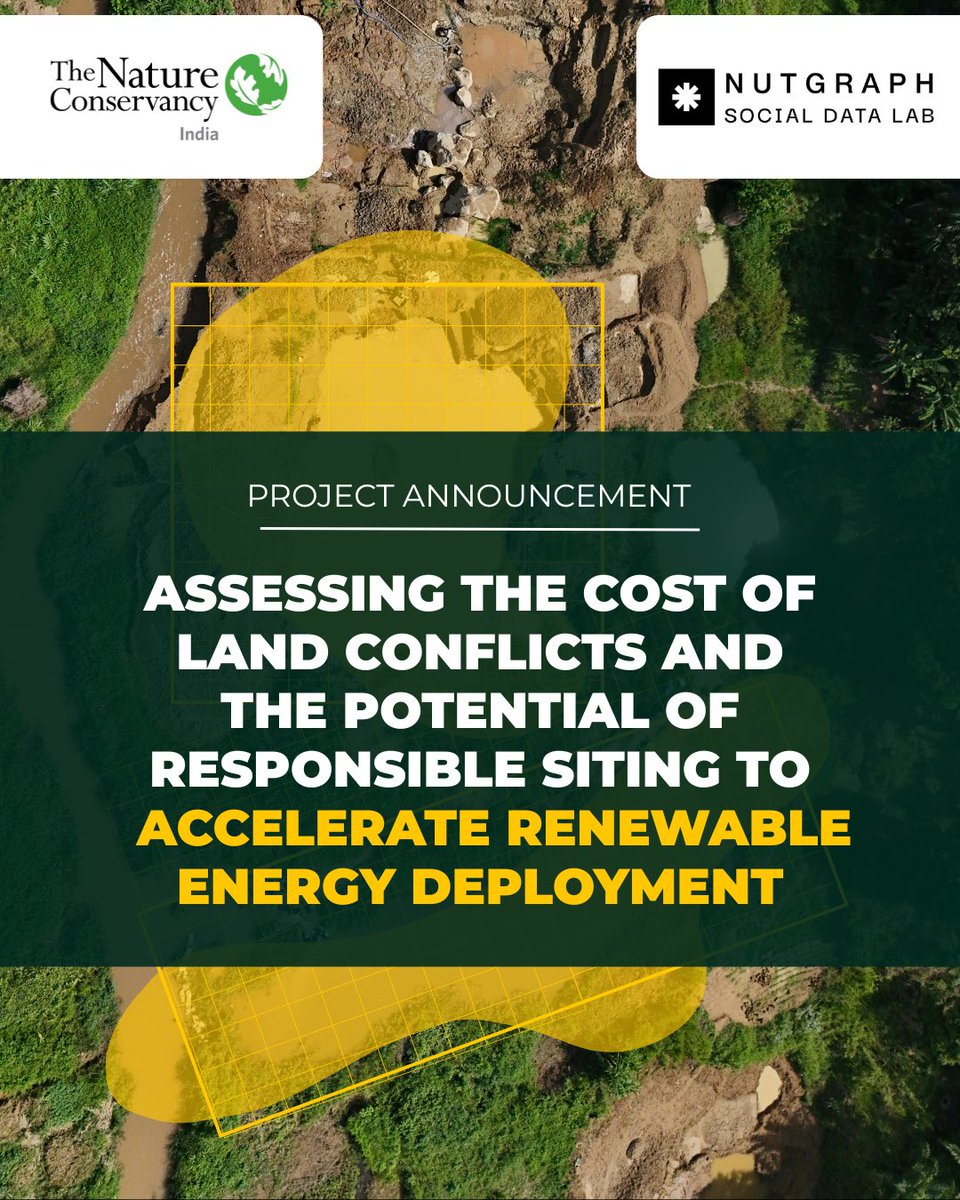
By bringing together developer insights, community perspectives, and empirical conflict data, the research aims to build evidence on how responsible siting practices can reduce risk, improve predictability, and support faster, more sustainable renewable energy deployment.
India is in the midst of one of the world’s most ambitious renewable energy expansions. As of March 2026, it had installed approximately 283.46 GW of renewable capacity, including 150.26 GW of solar and 56.09 GW of wind.
https://t.co/dktEzotr4w
It will also document how developers currently approach siting and risk mitigation, and evaluate whether tools like SiteRight could help identify high-risk locations earlier in the planning process and avoid conflicts.