How much do European countries actually trust each other? 🌍
Less than you might think… and it varies a lot.
With @B_Eichengreen, we're launching the new website for our 𝗕𝗶𝗹𝗮𝘁𝗲𝗿𝗮𝗹 𝗧𝗿𝘂𝘀𝘁 𝗗𝗮𝘁𝗮𝗯𝗮𝘀𝗲!
Free to use 👉 https://t.co/rW91nryUt7
İktidar ilk kez yolsuzluk sınavı vermiyor. Daha önce de farklı süreçlerde, bakanların isimleri rüşvet alma, rüşvet aldırma işlerine karıştı. Adı karışan isimler görevlerinden alındı, siyasi hayatları bitti ama adli işlem yapılmadı.
O zamanlar iktidarın hep kendine göre verdiği bir takım savaşlar vardı: Ya FETÖ’ye karşı mücadele, ya dış güçlere karşı direniş vesaire. Hep bir yan unsur, bir kalkan vardı.
Ancak bu kez ardına sığınacak bir mücadele falan yok. İktidara yakınlık kisvesi altında kurulmuş bir düzenek ve bu düzeneğe yüksek kazanç vaadi ile dahil edilmiş yüzbinlerce insanın parasıyla kurulmuş bir ağ ve bu ağdan daha da zenginleşen güçlü insanlar var. Tablo budur.
Beştepe’nin kol keseceğini tahmin ediyorum.
Turkey’s widening fund crisis has reached the ruling AK Party’s leadership, with Deputy Chair Fatma Betul Sayan Kaya stepping down from her party post after opposition allegations about stock trades involving her and her husband. https://t.co/IhK8fSPnaK
Looking forward to go back with WEFIDEV webinars in #Finance and #Development next week, thanks @KimFeCramer and @nish_vats for leading this! Full webinar list available here https://t.co/tBgPaCajmO
You don’t need to read/study the academic literature to learn about the political economy of finance. Just watch Turkey for a continuous stream of events that will show you every mechanism and every relationship that the academics were able to uncover so far (and perhaps more).
Interviews by @taylanbilgic (@Bloomberg) with desperate investors trapped in the Turkish fund collapse (including some of my opinions): https://t.co/XIxDBzwD4m
Turkey has arrested the founder of an investment brokerage at the centre of an $18bn alleged Ponzi scheme that has torched the savings of hundreds of thousands of investors & raised questions about why regulators did not act earlier to stop it
https://t.co/xIzpGvNVKl
Bu haber Nisan'da çıkmadan önce @uguruzyilmaz ve Donal Griffin ile aylarca uğraştık. O dönem hem çok güzel mesajlarla, hem de özellikle X'te haksız söylemlerle karşılaştık. Son günlerde haber tekrar hatırlanınca, bir kez de ben paylaşmak istedim:
https://t.co/73gACy5xP3
.@halktvcomtr aylar öncesinde @Bloomberg’e verdiğim bir röportajdaki fikirlerime son günlerde IMKB’de yaşanan fon problemleri üzerinden yer vermiş: https://t.co/Ax3P3sDpa7
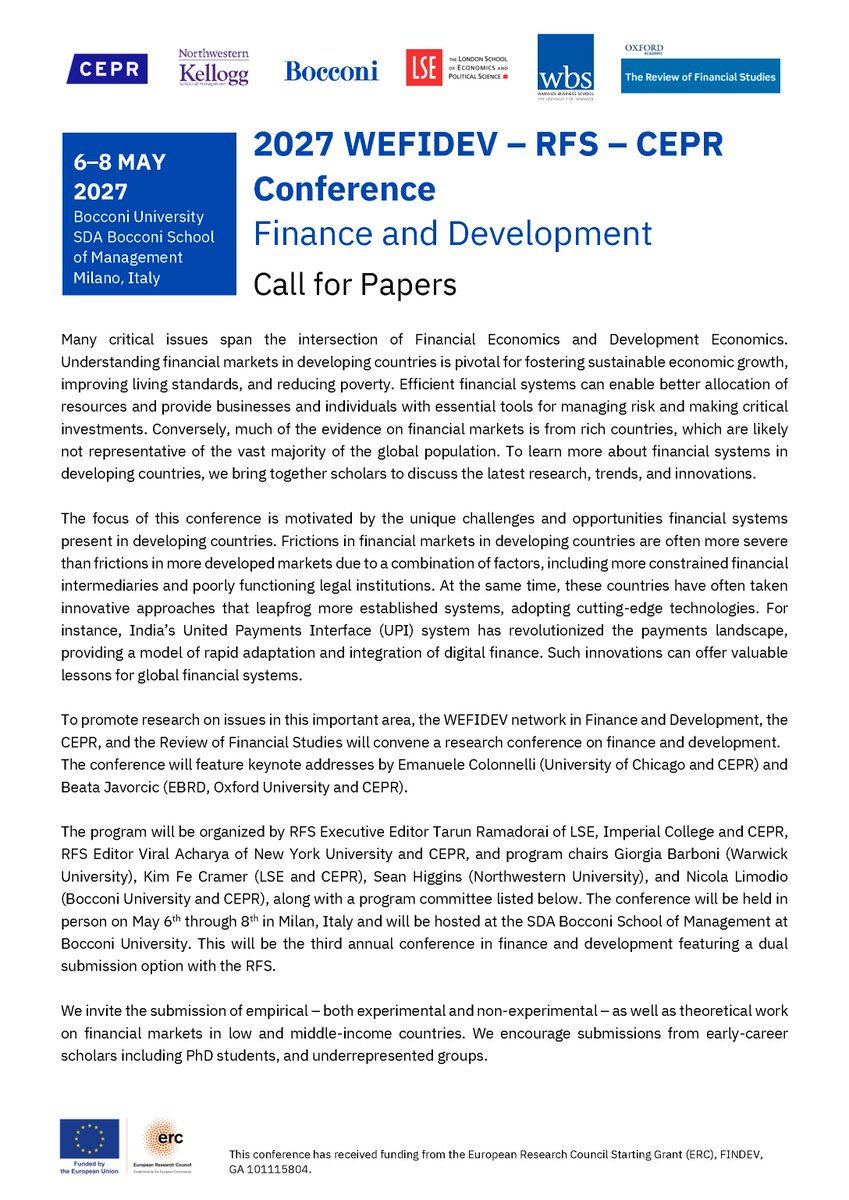
Very happy to announce the 2027 WEFIDEV–RFS–CEPR Conference on #Finance and #Development, which will take place on 6–8 May 2027 in Milan, hosted by @sdabocconi at @Unibocconi.
This will be the third annual conference bringing together researchers working at the intersection of Financial Economics and Development Economics: a field that continues to generate some of the most exciting questions in finance, from banking and corporate finance to household finance, payments, regulation, asset pricing, insurance and climate finance.
We are especially delighted to welcome two outstanding keynote speakers: #EmanueleColonnelli (@ChicagoBooth and @cepr_org) and @BJavorcik (@EBRD, @OxfordEconDept and @cepr_org).
The submission deadline is 15 November 2026. We welcome empirical, experimental and non-experimental research, as well as theoretical work on financial markets in low- and middle-income countries, and we particularly encourage submissions from early-career scholars, including PhD students.
Submit your paper here: https://t.co/7iuGfkvNAH
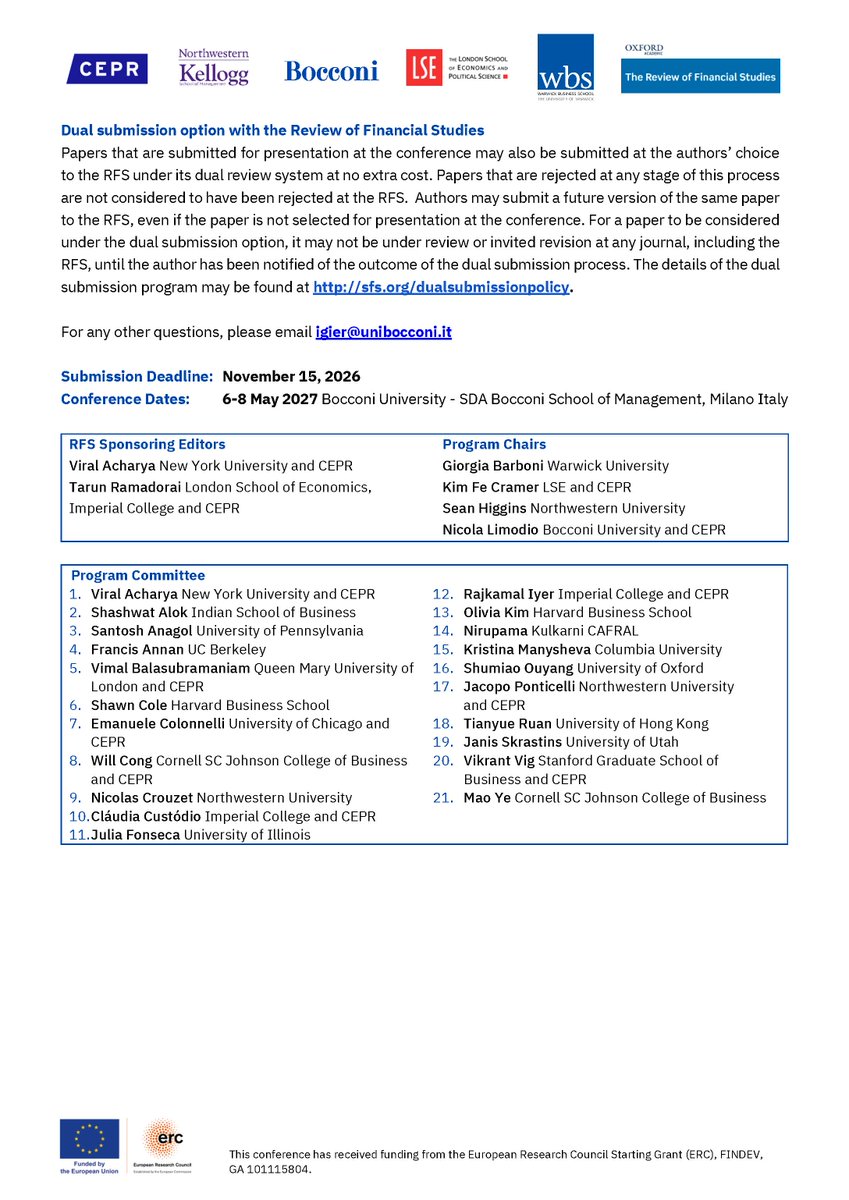
As in previous editions, papers may also be submitted through the Review of Financial Studies dual-submission process, at no additional cost. I am enormously grateful to the Review of Financial Studies @SFSjournals, and especially to the Executive Editor, #TarunRamadorai (@LSEfinance and @imperialcollege) and Editor, #ViralAcharya (@NYUStern), for their leadership, intellectual generosity and continued support in helping build and promote Finance and Development as a field.
A very warm thank you also to @cepr_org, and particularly @ElenaCarletti7 and @elianalaferrara, for their invaluable support and enthusiasm.
Important also to thank @ERC_Research for supporting the conference and my #ERCStartingGrant project on Finance and Development (FINDEV).
And, of course, none of this would be possible without our exceptional Program Committee and the wonderful colleagues helping to organise the conference: @giorgiabarboni, #SeanKHiggins, @KimFeCramer and @nish_vats. It is a privilege to work with such a thoughtful and committed group of scholars.
I very much hope to see many colleagues, old friends and new faces in Milan next May, and to spend two days discussing new ideas, new evidence and the future of Finance and Development at @Unibocconi and @sdabocconi.
There is still so much to learn about how financial systems work across developing economies and a great deal to gain by bringing finance and development economists into the same conversation.
More info soon from @cepr_org, https://t.co/G4xLtlxkbp and https://t.co/oMKfS3u34v
Please send us your best work. We look forward to reading it and to welcoming you to Milan.
#Finance #DevelopmentEconomics #FinanceAndDevelopment #RFS #CEPR #Bocconi #SDABocconi #CallForPapers #AcademicResearch
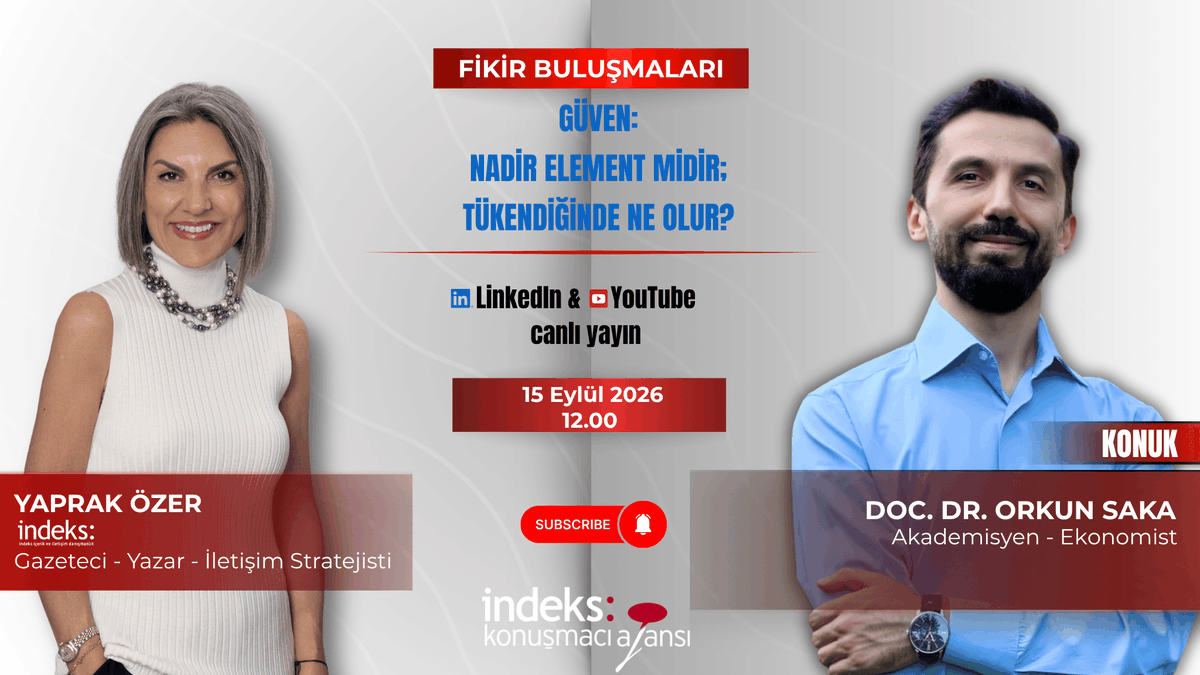
Önce, “Güven ölçülebilir mi?” diye sormalıyım değil mi?...
İktisatçı Orkun Saka'nın, güven olgusunu doğrudan ve dolaylı yöntemlerle ele aldığı ilginç araştırmaları var.
Bu araştırmaları tartıştığımız canlı yayınımıza sizleri de bekleriz: https://t.co/wiE8oiIGwy
I resigned from Anthropic today. I spent the last three years doing pretraining research at both OpenAI and Anthropic. Neither company is acting responsibly. They are racing straight to self-improving superintelligence and gambling with our lives. More thoughts below.
Happy to share that our Applied Microeconomics Research Group will host the Workshop on Health in Developing Countries on 23–24 Sep.
📍 Room C309, Tait Building (Northampton Square)
📎 Preliminary program attached
🔗 Please register here:
https://t.co/jKR6Zkorc3
#EconTwitter
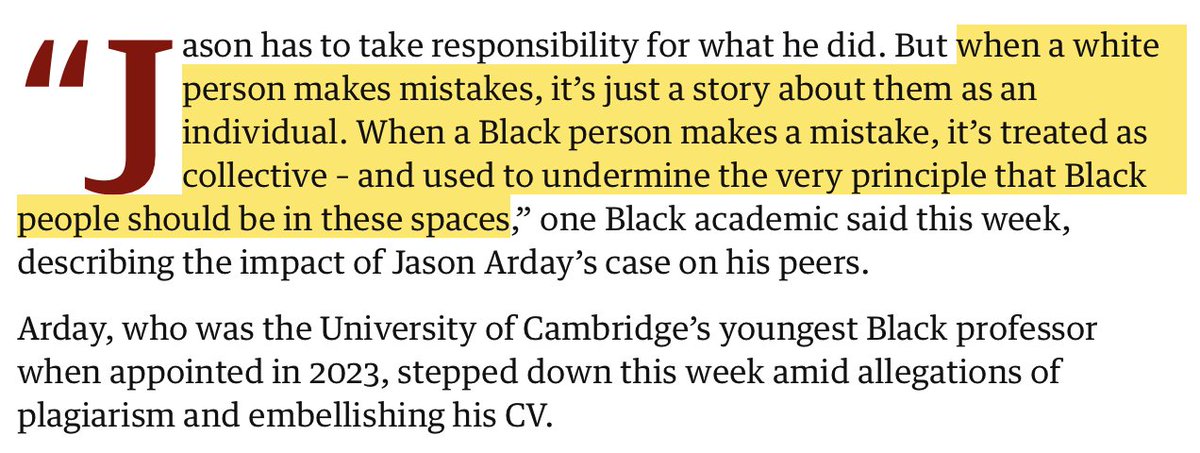
This is such a tragic story. Jason Arday was indeed a victim of racism — not from the media who scrutinized his record, but from @Cambridge_Uni administrators and every institution and academic that enabled this deeply troubled con man, lowered the bar for him, elevated him to dizzying heights, and paraded him as proof of their own virtue, all because he happened to have the "right" skin color (and alleged neurodivergence).
The @nytimes story is surprisingly good, holding Cambridge to account for the perverse role they played in all of this.
https://t.co/0Oj31YyhBJ
📢 We’re hiring!
Six Lecturer/Senior Lecturer (Education Track) positions at City St George’s, University of London.
Deadline: 30 August 2026
Details & apply 👇
3 x Economics
https://t.co/btv0J0oU2l
3 x Accounting
https://t.co/T1eVLhE7og
@SinanAlper_@_Semih_Uslu_ Cofnas’in Cambridge’den atildigi doğru değil; soruşturma sonrası yazdıklarının “düşünce özgürlüğü” içerisinde olduğuna karar veriliyor. Bağlı olduğu kolejle iliskisinin kesilmesi söz konusu ki bu farklı bir durum çünkü kolejden para almıyor.
@Tyler_A_Harper If identity becomes a big part of your rise, it will eventually become a big talking point when you fall. You can’t have your cake and eat it too 👇🏼
DEI advocates always want to have their cake and eat it too.
You cannot demand collective racial engineering via race-conscious hiring, diversity quotas and preferential pipelines and then turn around and say, "Y U NO TREAT US AS INDIVIDUALS" when something like Jason Arday dominates the headlines. You are the ones who elevated identity as a credential.
“We need more BAME professors” was the explicit slogan. “Cambridge’s youngest Black professor” was the explicit marketing line when Jason Arday was appointed in 2023.
Sorry but this is just the predictable consequence of the framework you imposed.
For white people (and East Asians), it's the other way around. Under DEI regimes that systematically disadvantage them in favor of BAME representation, a white / Asian person who still reaches an elite post has typically done so IN SPITE OF their identity, not because of it.
That raises the prior probability that they cleared a higher bar. When such a person later plagiarizes or fabricates, the failure attaches to them as an individual; it does not put “whiteness” or the legitimacy of white presence on trial because their ascent was never framed as a racial deliverable in the first place.
DEI’s central bargain was always unstable. The price of that bargain is that group outcomes, positive or negative, become fair game for judgment.
This idea that you can demand that universities treat people as racial collectives for the purpose of preferential inclusion and then COMPLAIN when a high-profile failure is treated as an indictment of the collective logic that put them there in the first place is so laughable.