"For I know the plans I have for you," declares the Lord, "plans to prosper you and not to harm you, plans to give you hope and a future."
— Jeremiah 29:11
The question is simple:
Can 100,000 Northeasterners make a sacrifice for the greater good of 80 million Northeasterners?
Apparently, that is asking too much.
The Northeast has repeatedly demonstrated that expecting solidarity across ethnic lines is wishful thinking. Worse, even intra-ethnic and inter-tribal rivalries have shown how difficult it is to put collective interests above narrow identities and territorial interests.
Manipur could have been a shining example of Northeastern unity. 3 distinct ethnic communities, living together under a single heterogenous administration, could have demonstrated that people with different ethnic identities, histories and traditions can coexist, share institutions and build a common future.
Instead, Manipur has shown just how fragile the idea of unified living in NE really is. If three communities cannot sustain a shared future within one state, what hope is there for unity across the Northeast?
The SUMP project could address the Northeast's electricity deficit once and for all. Not merely meeting today's demand, but generating enough electricity to accommodate decades of population growth and support the industrial expansion the region desperately needs.
Look at the Tehri Dam. The Garhwalis (a community that has also contributed immensely to the Indian Armed Forces over generations) made the enormous sacrifice of surrendering their ancestral lands for a larger public good. The benefits extended far beyond their own community, helping address drinking water, irrigation and electricity needs across Uttar Pradesh, Delhi, Haryana and Punjab. Millions benefited, including people culturally and ethnically very different from those who bore the immediate cost.
And perhaps their Gods blessed that sacrifice. Today, New Tehri, the town built to rehabilitate displaced residents, stands among the nicest towns in Uttarakhand. With its excellent roads, proper sidewalks, schools and hospitals, it is, by all accounts, a lovely and prosperous place to live. A community that gave up its ancestral homeland for the greater good has, over time, built a new home it can be proud of.
That is what sacrifice for the greater good can look like.
But in a region plagued by inter-ethnic competition, inter-tribal rivalries and mutual suspicion, the first question always seems to be: “What's in it for me?”
And therein lies the tragedy of the Northeast.
The people of the region speak endlessly about regional identity, shared struggles, historical neglect and the need for greater investment. Yet when an opportunity arises to make a difficult sacrifice today for the collective prosperity of 80 million people tomorrow, every group struggles to see beyond their own immediate interests.
The people want the benefits of regional unity without accepting the costs of collective progress.
Our children are full of talent and limitless potential. Extremely proud of Lochumbeni Kikon!
Courtesy: Isaiah Ability Higher Secondary School, Wokha, Nagaland
@narendramodi@AmitShah@NitinNabin@blsanthosh
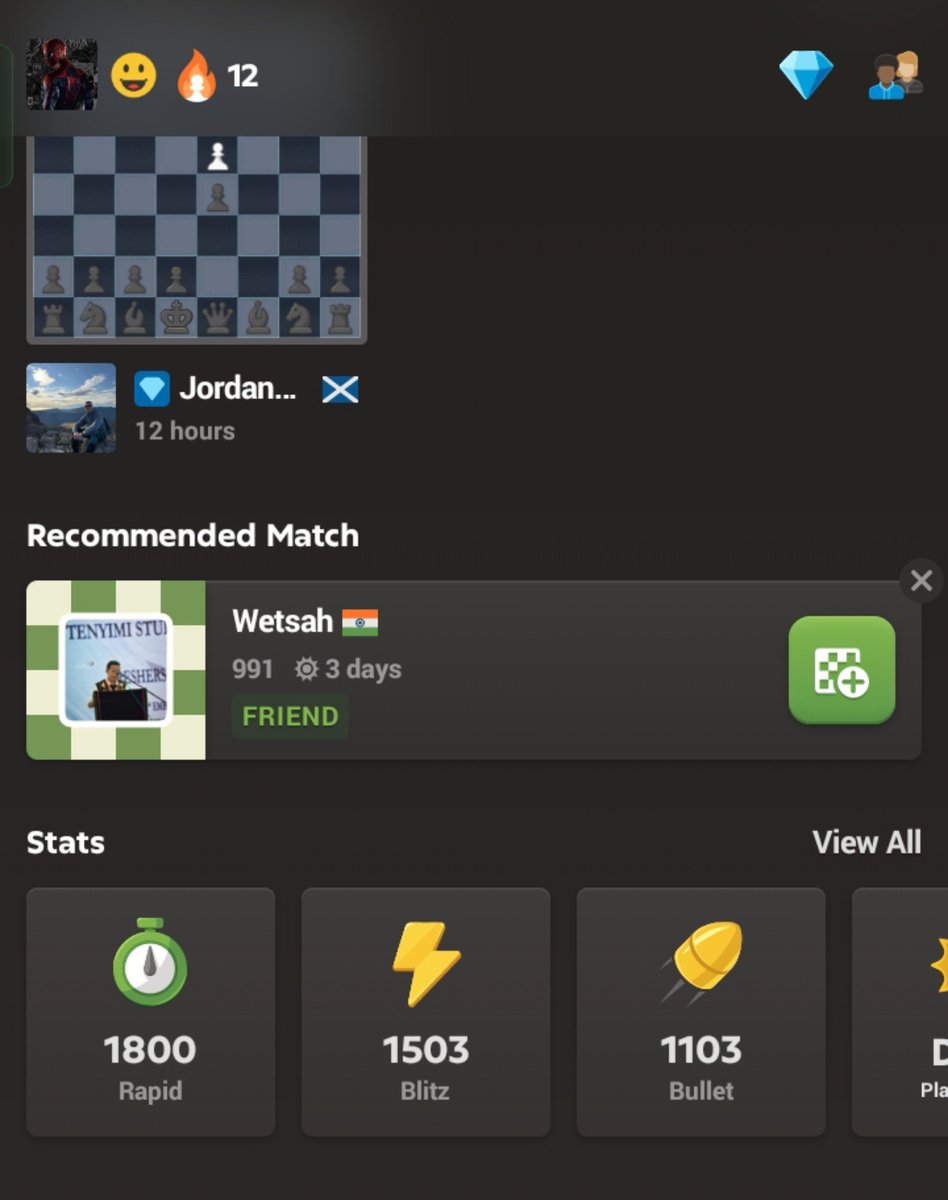
@YesAverage@chesscom It's actually easy. I only know two opening variations thoroughly, at most, and a few endgames. The rest is about finding tactics and avoiding blunders. If you can do that, you can easily reach this level.