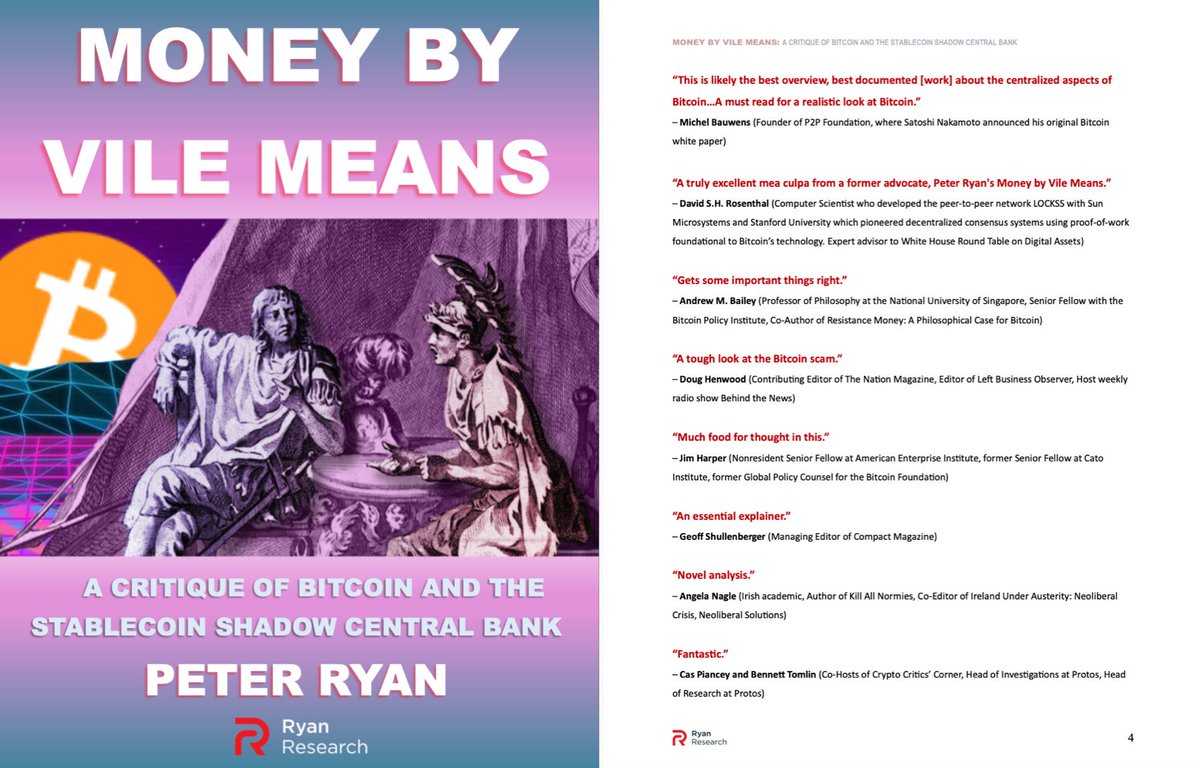
Just dropped an eBook/PDF of “Money by Vile Means.” Nowhere else will you get:
- What Bitcoin actually is (why it's corrupted)
- Debunked myths of decentralization
- Hidden stablecoin endgame = shadow central banking
If you're tired of the hype, grab it now.
(link below)
@Mahboiii Yup, I rec you give Dumezil a read. He is not arguing for a particular hierarchy like a dopey conservative reactionary. He is arguing that this myth undergirds our individual and collective psyche
I find it harder and harder to distinguish modern capitalism and its antithesis of socialism from past iterations of oligarchy and democracy. I don't know what exactly is so different besides the form factors and scale.
I think people get too emotional on these labels and I've often tried to abolish them from my thinking. Capitalism and socialism simply don't exist, but human society does.
The defining characteristic of our modern era is not so much that we have a market, as we always had markets, it's that we blew up the sacred and the sovereign and overemphasized the material. Everything is downstream from that imbalance.
100% @TheStalwart - "So if you want to understand capitalism, you need to be talking to small business owners, portfolio managers, and Marxists. Nobody else can really talk about it with any substance."
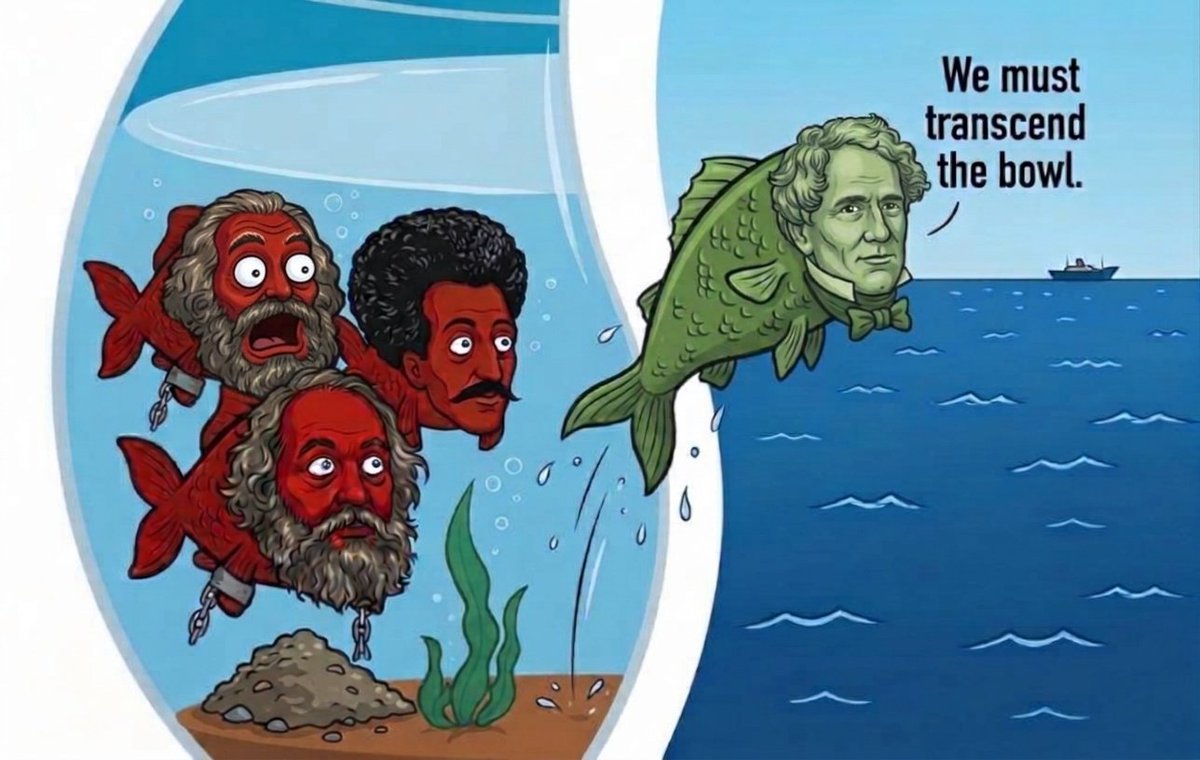
perfect cartoon on ideology that blinds most others: @ZackMaril
Yes "balance" is the keyword I keep coming back to.
"Distribution" is went left and right of convention discuss in contrast.
I rather inquire about what does balance look like and does distribution matter if it is not balanced across the spheres of society. Do we need more or less distribution of material or a balance of the orders where the sacred and sovereign check the materialist.
I am not against the French Revolution in the Anglo sense. I align with the revolutionary zeitgeist and Napoleon’s emergent order. That seems to be the legitimate recreation of a natural tripartite model than what the absolutist monarchs were doing in league with emergent bourgeois merchants.
My point is not any particular person or hierarchy but the platonic ideal of such.
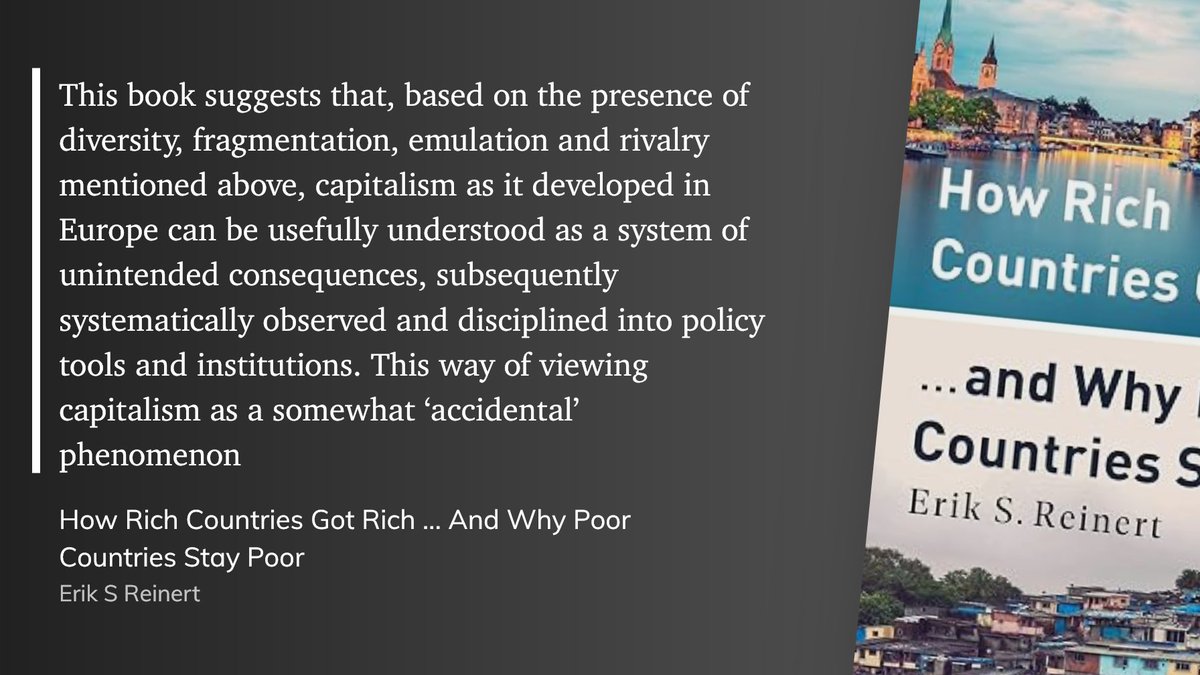
Capitalism is an “accidental phenomenon” as Reinert said.
And in a sense, capitalism only exists as a shadow of Marxism because Marxism had to de facto define what it was critiquing.
There were no card carrying self-described zealots of capitalism before Marxism.
The thing is. And this was a major 🔑 for me several years ago, in thinking about the podcast, is that communists are obsessed with capitalism. Some of them are so obsessed that they might even secretly love it. Whereas capitalists rarely spend any time thinking about it.
@Mahboiii@spandrell4 All worth considering...I just find it thought provoking to get out of the conventional college dorm room disgust at the three estates which are obviously based on Duzemil's tripartite model and think of how that tripartite model can be evolved
@Mahboiii I've been thinking about Dumezil's tripartite model more and more. It's a totally different way to see society that doesn't fall into logical pretzels of capitalism and socialism.
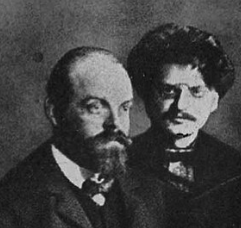
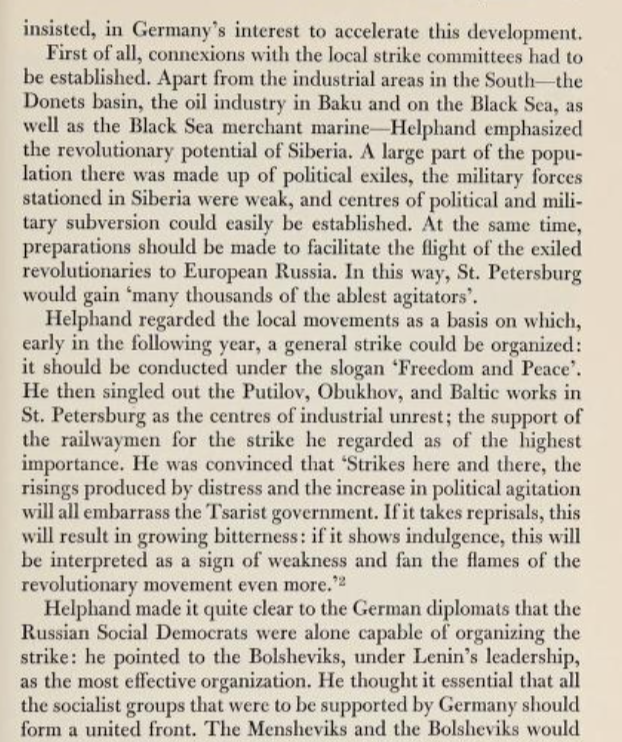
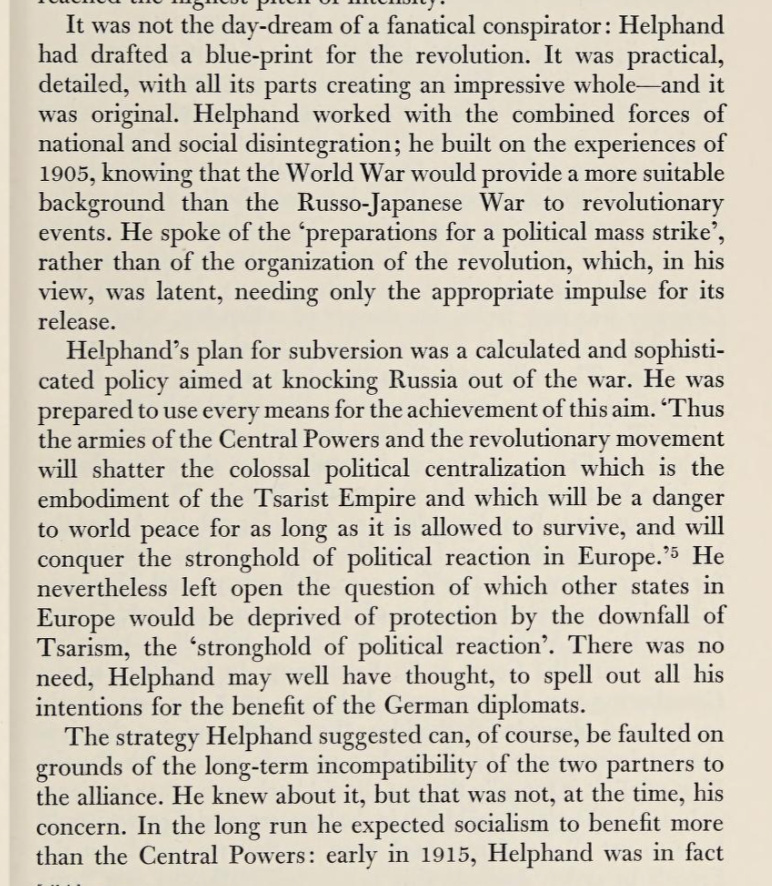
Alexander Parvus (Helphand) was one of the most impactful Marxists on history and this is how he was described:
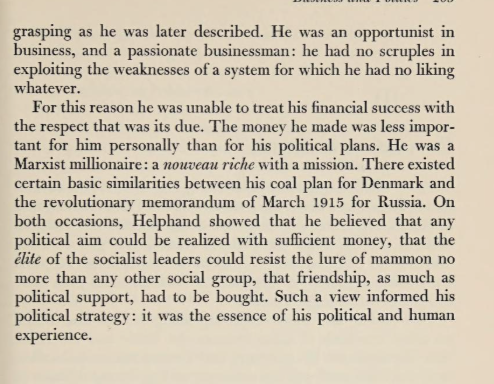
"He was a Marxist millionaire: a nouveau riche with a mission"
"He lived like an oriental potentate, surrounded by an ostentatious show of wealth."
"Helphand himself mainly made money: his gains from the coal business ran into millions of kroner. He never denied the profits he was making: he even was, in his way, rather off-hand about them. 'Be it far from me', he wrote in 1918, 'to justify capitalist gain by personal qualities. But I do not see why I should not bring some of the surplus value, hoarded by the capitalist class, over to my side.' He was, he admitted, a 'businessman, industrialist, capitalist', but he was not using his money any more selfishly than was customary at the time...In relation to money, Helphand did not feel himself bound by the conventional socialist code."
"He was an opportunist in business, and a passionate businessman: he had no scruples in exploiting the weaknesses of a system for which he had no liking whatever. For this reason he was unable to treat his financial success with the respect that was its due. The money he made was less important for him personally than for his political plans. He was a Marxist millionaire: a nouveau riche with a mission...On both occasions, Helphand showed that he believed that any political aim could be realized with sufficient money, that the élite of the socialist leaders could resist the lure of mammon no more than any other social group, that friendship, as much as political support, had to be bought. Such a view informed his political strategy: it was the essence of his political and human experience."
[Image of Parvus to the left of Leon Trotsky]
https://t.co/bBfd03LFRh
Who should you follow on China tech?
One great place to start is the brilliant guests who’ve been on my High Capacity podcast—now at 20 episodes!
Here they are and the topics we covered:
1. Georg Stieler (@GeorgStieler) — China’s industrial robotics revolution
2. Tu Le (@SinoAutoInsight) — China’s EV industry and global competition
3. Grace Shao (@Gracemzshao) — China’s AI ecosystem and tech giants
4. Lei Xing (@leixing77) — Autonomous driving and robotaxis
5. Afra Wang (@Afrazhaowang) — China’s tech culture and entrepreneurs
6. Kevin Xu (@kevinsxu) — China’s rise in open source
7. Tom Wang (@Xianbao_QIAN) — Chinese AI models, open source, and agents
8. Rui Ma (@ruima) — China’s tech strengths and weaknesses
9. Zixuan Li (@ZixuanLi_) — Inside Zai and China’s GLM models
10. TP Huang (@tphuang) — AI chips, energy, and industrial supply chains
11. Paul Triolo (@pstAsiatech) — China’s semiconductor industry
12. Ruby Wang (@RcjWang) — China’s AI healthcare and biotech revolution
13. Matt Sheehan (@mattsheehan88) — China’s evolving approach to AI safety
14. Nathan Lambert (@natolambert) — Frontier AI, open source, and regulation
15. Abigail Coplin — China’s biotech rise and innovation ecosystem
16. Fengming Lu (@FengmingLuPE) — How China really built its EV industry
17. Zilan Qian (@ZilanQian) — China’s hidden AI economy
18. Alvin Wang Graylin (@AGraylin) — US-China AI competition and cooperation
19. Kendra Schaefer (@kendraschaefer) — China’s AI regulation and governance
20. Sunny Cheung (@SunnyCheungky) — China’s humanoid robots and supply chains
All episodes available on:
- YouTube: https://t.co/6U2kLPRgpT
- Apple Podcasts: https://t.co/rNrq96gYGS
- Spotify: https://t.co/Wdq1D0ThXu