Since Opus 4.8 is out and more and more designers are getting into Design Engineering, I thought I’d share some of the interaction patterns I use most often:
Use proximity, not just hover. When the cursor gets close, nearby elements can subtly scale and darken based on distance.
It makes interfaces feel more responsive, less binary, and way more alive
onpointermove = e =>
document.querySelectorAll(".dock>*").forEach(el => {
const r = el.getBoundingClientRect();
const t = Math.max(0, 1 - Math.abs(e.clientX - r.x - r.width/2) / 120);
el. style.scale = 1 + t * .5;
});
The CEO of Take-Two, the company behind GTA, just said something the entire AI industry doesn't want to hear.
And he said it without being anti-AI.
Strauss Zelnick's argument is precise. AI is built on datasets. Datasets are backward-looking. Creativity is forward-looking. A model trained on everything that already exists cannot, by definition, produce something genuinely unexpected. And all hits, by their very nature, are unexpected.
Asset creation and hit creation are not the same thing. AI is getting very good at the first one. The second one is what actually makes money, builds franchises, and changes culture. Nobody has shown AI can do that yet.
The derivative property problem is real. You can clone GTA with existing technology. You could do it before AI. It would take 3 years and look identical. It still wouldn't sell. Because it isn't GTA. It's a clone of GTA.
And consumers, despite what the industry occasionally pretends, can feel the difference between something genuinely new and something assembled from the residue of things that already worked.
Thousands of mobile games ship every year. 0 to 5 hits get made. The same studios make them every time. The technology to make more games has been commoditized for years. It didn't democratize hit creation. It just flooded the market with more forgettable product.
The Silicon Valley thesis that AI unlocks game creation for everyone is true in the same way that cheap cameras unlocked filmmaking for everyone. They did. And the same 5 studios still make the movies everyone watches.
What Zelnick is saying, without quite saying it, is that the thing AI cannot replicate is taste. The instinct for what hasn't been done yet. The cultural antenna that detects the gap in the market before the data can see it.
Data tells you what people wanted. Hits tell people what they want next.
Those are different jobs.
Introducing Interact AI: a new interface for the web.
Add it to your website, and it talks to every visitor, answers questions, and shows your product.
Try it now -> https://t.co/qdfaFGI9a9
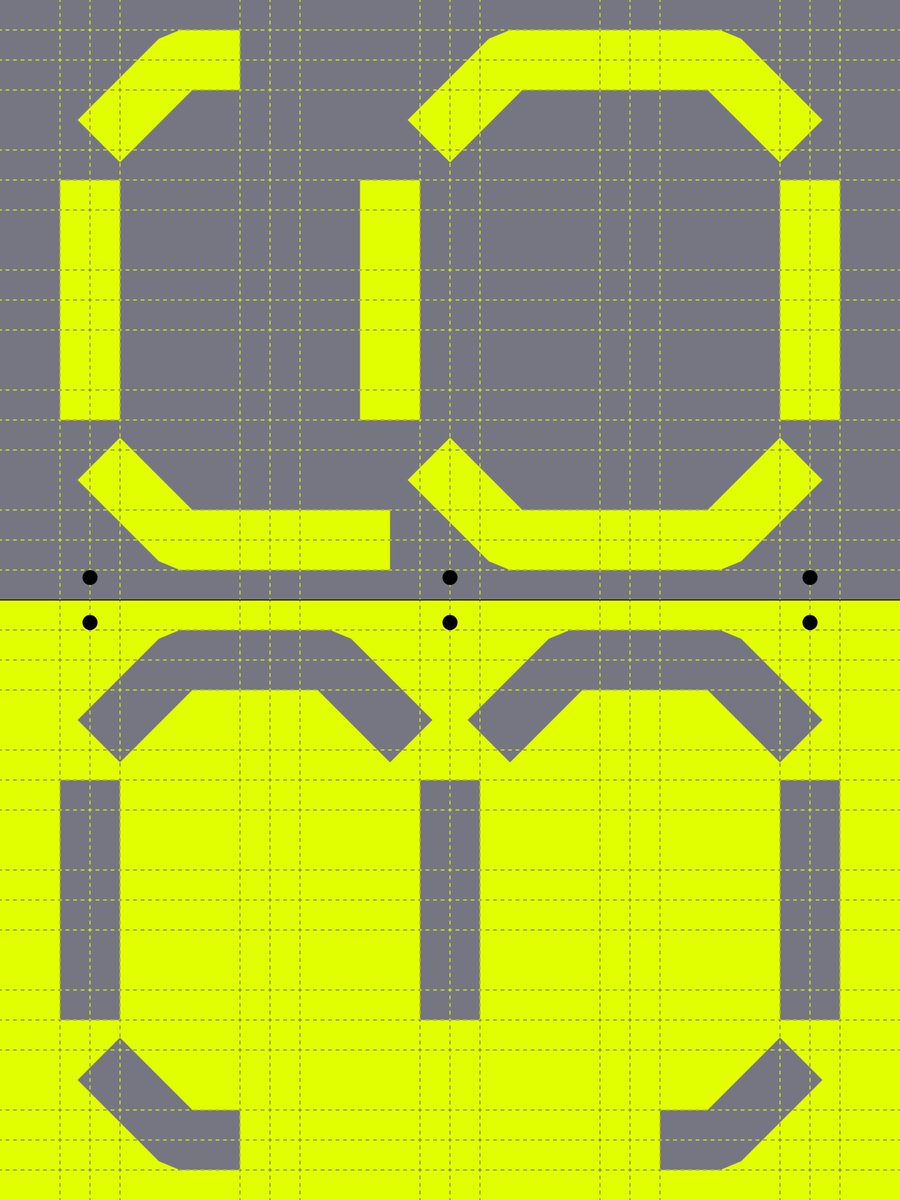
I’ve been drawing grid-based monospaced letters for a while and kept putting off turning them into a real font.
Recently I exported a 2023 set as SVGs, dropped them into ChatGPT, and now I have working TTF and OTF files 🥹
Today, we’re open-sourcing the draft specification for DESIGN.md, so it can be used across any tool or platform. We’re also adding new capabilities.
DESIGN.md lets you easily export and import your design rules from project to project. Instead of guessing intent, agents know exactly what a color is for and can even validate their choices against WCAG accessibility rules.
Watch David East break down this shared visual language in action👇. New capabilities and links in 🧵
alright - verdict is in - Motion Design is solved
made with HyperFrames + Claude Design
btw - HyperFrames is open source, star it on github and I'll send tutorial on how i made this with 2 prompts.
🧵 My tips for getting the best results out of Claude Design! I’m on the verticals team at Anthropic which means I serve 7 different products. Claude Design makes it possible!
1. Set up your design system and your core screens. An hour of setup and refinement here is worth it
bro created an AI job search system for Claude Code that scored 700+ job applications and actually got him a job.
AND IT'S NOW OPEN-SOURCE.
It scans multiple company career pages, rewrites your CV per job, and even fills application forms. The repo has:
> 14 skill modes (evaluate, scan, PDF, ...)
> Go terminal dashboard
> ATS-optimized PDF generation via Playwright
> 45+ companies pre-configured (Anthropic, OpenAI, ElevenLabs, Stripe...)
GitHub: https://t.co/PwrYBOAphi
Every website you’ve ever used is broken in a way you never noticed and it’s been this way for 30 years...
A Midjourney engineer finally just fixed it.
It’s called Pretext:
A tiny library that lets websites lay out text the way magazines and newspapers do, with text flowing around images, wrapping into columns, and fitting perfectly into any shape, all at 120fps.
This has been basically impossible on the web for 30 years. Every website you’ve ever used relies on the same clunky system from the 90s to figure out where text goes on screen. Pretext bypasses it entirely. 500x faster.
The demos look like they shouldn’t be possible in a browser. Go look.