Why Should Wrestlers Measure RSI mod?
For wrestlers and combat athletes, RSI mod is particularly valuable because it provides insight into their explosive power, fatigue resistance, & readiness to generate force in a short time frame, all of which play to account in our sport.
This really resonates @Alan_Couzens.
Coming from wrestling, discomfort was never a bug in the system…it WAS the system. Early mornings, weight management, brutal practices…then doing it all again tomorrow. None of that was efficient or optimized, but it forged a particular relationship with effort: you stop asking whether something feels good and start asking whether it’s worth doing.
What I worry about now is how often we frame training success around avoiding sensation - hunger, fatigue, monotony, boredom - it’s as if the goal is to adapt without any effort. Even when the metrics look good, something gets lost if the process never asks anything of you psychologically.
There’s a confidence that comes from choosing the hard path when an easier one exists. Not performative toughness, just knowing that you didn’t flinch, that you stayed the course. Wrestling taught me that doing hard things on purpose changes your relationship with difficulty. It stops being something to avoid and becomes something you know how to move through.
Discomfort isn’t something to eliminate. It’s a skill to practice.
Sunday's contrast bathing (sauna + cold plunge) produced a clean heart-rate pattern:
three smooth climbs to ~120 bpm, followed by rapid drops into the mid-40s.
From an exercise physiology standpoint, heat drives HR up through thermoregulation (skin blood flow, reduced venous return, cardiac output doing its job). The sharp drops that follow reflect a strong parasympathetic rebound, triggered by CWI. Think of it as the nervous system slamming the brakes after revving the engine.
It’s not exactly cardio, although the comparison is common. It’s better understood as autonomic stress and release.
Important to note:
this is not exercise HR recovery and shouldn’t be compared to HRR norms. Different stimulus, different rules.
What it does highlight is autonomic flexibility - the ability to move quickly between stress and recovery. That’s a useful trait, just not one you PR.
Heat and cold don’t replace training, but they’re a good reminder that recovery is a physiological skill.
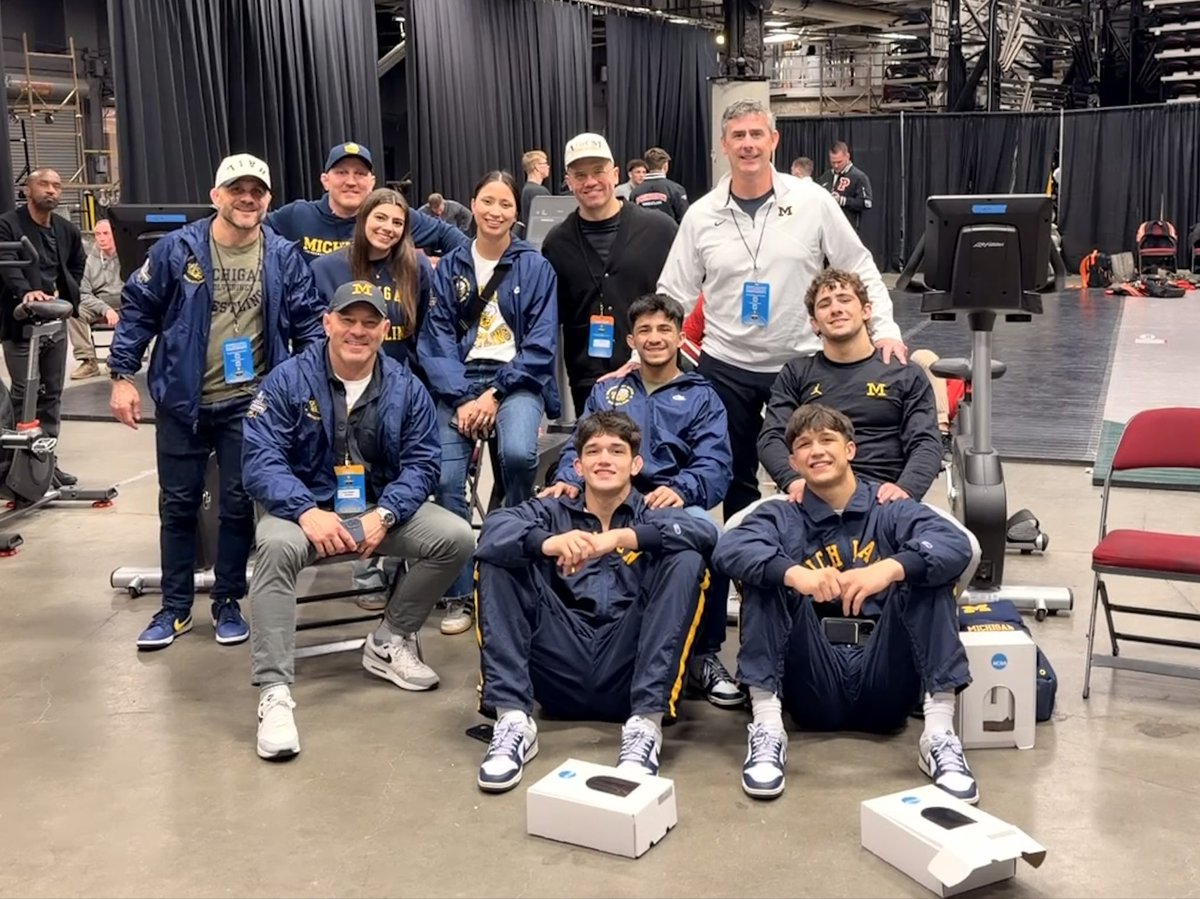
Wolverines claimed second place this weekend with five placewinners, including four in the top four at their weights. Our highest #CKLV Invitational in eight seasons.
#GoBlue
Corporate America should normalize eating at your desk but taking a daily workout break. The hours balance out, but the benefits for health and productivity are a clear net positive.
For the best athletes, taking time off from training should feel harder than NOT taking time off from training.
Recovery matters, no doubt. But if you’re built for this, you find joy in the grind.