A massive new study shows updated COVID-19 vaccines slash the risk of heart attacks, strokes, and deaths.
A groundbreaking study published in JAMA Internal Medicine shows that updated COVID-19 vaccines offer powerful protection for the heart, reducing the risk of severe cardiovascular events like heart attacks, strokes, and heart failure by almost 40%.
Analyzing data from more than 1 million U.S. veterans, researchers discovered that vaccination not only mitigates virus-specific heart damage but also leads to a 6% drop in overall severe cardiovascular disease and a 7% reduction in all-cause hospitalizations and deaths.
For every 10,000 people vaccinated, the shot was linked to preventing roughly 23 major cardiovascular events, 30 hospitalizations, and 16 deaths over just an eight-month period.
The cardiovascular benefits were most pronounced in adults over age 75 and individuals living with chronic conditions like diabetes, lung disease, or pre-existing heart issues. Doctors emphasize that COVID-19 is far more than a respiratory illness; the virus causes systemic inflammation, blood vessel damage, and clotting, all of which strain the heart. Crucially, vaccinated individuals also saw fewer health complications that were not directly linked to a diagnosed COVID-19 case, suggesting the vaccine may ward off damage from mild or undetected infections. These findings underscore that keeping up with vaccinations is a vital tool for long-term cardiovascular health.
source: Cai, M., Xie, Y., & Al-Aly, Z. (2026). 2024-2025 COVID-19 Vaccine and Major Adverse Cardiovascular Events Among US Veterans. JAMA Internal Medicine.
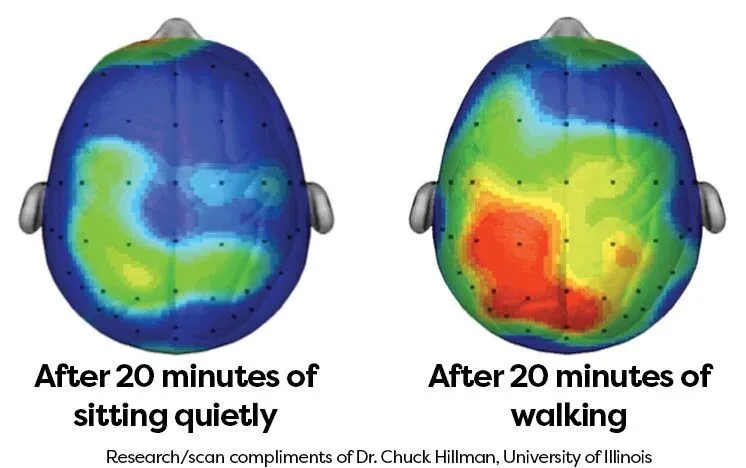
🚨Twenty minutes of walking triggers measurable brain rewiring.
That timeframe should terrify every person chained to a desk. Twenty minutes. Not twenty days, not twenty weeks. In the span of a single episode of a TV show, your brain begins physically restructuring itself at the cellular level.
Neuroscience research reveals that this brief window of rhythmic movement activates gene expression patterns that had been dormant. Within those twenty minutes, your hippocampus starts manufacturing fresh neurons. Your prefrontal cortex begins strengthening synaptic connections. Blood flow to regions governing memory and executive function increases by 15 to 30 percent.
The implications destroy every excuse you've ever made about not having time.
Most people spend twenty minutes scrolling social media, watching random videos, or sitting in traffic. During that same period, they could literally be growing their brain. The opportunity cost is staggering. Every twenty minute block you remain sedentary is a twenty minute block your neural architecture remains static, aging, shrinking.
Researchers tracked office workers who took twenty minute walking breaks versus those who remained seated. The walkers showed immediate improvements in attention span, working memory, and creative problem solving that persisted for hours afterward. Their brains generated more alpha waves, the electrical patterns associated with calm focus and insight. The sitters showed declining cognitive performance throughout the day.
The twenty minute threshold reveals something profound about human neurobiology. Evolution wired our brains to expect regular movement. Our ancestors walked 5 to 10 miles daily while hunting, foraging, and traveling. The modern sedentary lifestyle represents a radical departure from the movement patterns that shaped our neural development over millions of years.
When you walk for twenty minutes, you're not just exercising. You're activating the biological programs that built human intelligence. The rhythmic gait pattern synchronizes brain waves across multiple regions. The increased oxygen delivery feeds neural tissue that's been starved by prolonged sitting. The gentle stress of movement triggers adaptive responses that make your brain more resilient.
Psychology studies reveal that twenty minute walks reduce cortisol levels more effectively than meditation apps, therapy sessions, or pharmaceutical interventions. Cortisol, the chronic stress hormone, shrinks the hippocampus and impairs memory formation. Walking doesn't just lower cortisol. It reverses the brain damage that elevated cortisol causes.
It's found that people who sit for more than 8 hours daily show brain patterns identical to patients with early stage dementia. Their hippocampi are visibly smaller. Their white matter is less organized. Their processing speed declines measurably with each passing year.
Twenty minutes of daily walking can prevent and reverse these changes.
The research suggests that sedentary behavior isn't just bad for your heart and muscles. It's a form of accelerated brain aging. Every hour you spend immobile, your cognitive capacity degrades in ways that compound over time. The good news is that those changes aren't permanent. The brain retains remarkable plasticity throughout life. But you have to activate that plasticity through movement.
Silicon Valley executives have started conducting meetings while walking. They report better decisions, more creative solutions, and clearer thinking. They've accidentally rediscovered what Aristotle knew 2,400 years ago: the best ideas emerge when the body moves and the mind follows.
Your brain evolved to think while moving. Sitting still for hours violates the fundamental architecture of human cognition. Every step you take sends electrical signals through your nervous system that say: stay sharp, build connections, generate insights.
Twenty minutes. That's all it takes to begin rewiring decades of neural stagnation.
We are called "the elderly." But that quiet label hides something most people rarely stop to consider. We are the last living witnesses of a world that no longer exists.
Look at us and you might see gray hair, slower steps, and the patience that time teaches.
But listen to our story — really listen — and you'll realize something extraordinary.
We are the only generation in human history to have lived a fully analog childhood and a fully digital adulthood.
That's not a small thing. That's one of the most breathtaking journeys a human being has ever been asked to make.
We were born in the 1940s, 50s, and early 60s, into a world still rebuilding from the rubble of World War II.
Our toys were marbles and hopscotch and card games at kitchen tables. When the streetlights flickered on, that was it — childhood adventures were over, and it was time to go home. No smartphones. No streaming. No endless scroll.
We built our memories in the real world. With scraped knees and laughter echoing down streets and friendships formed face to face.
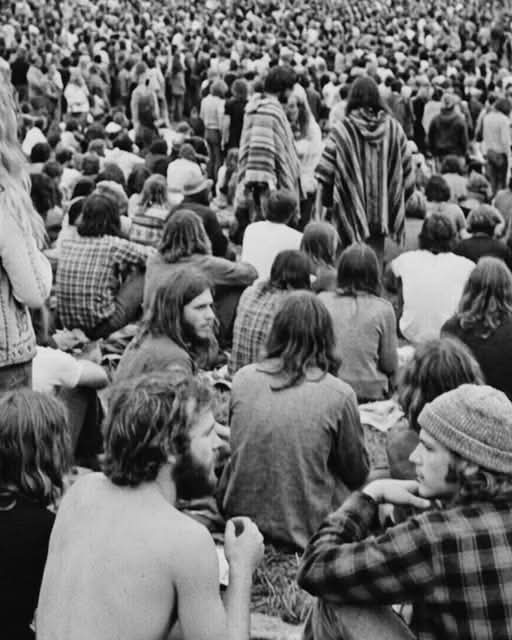
In 1969, we sat in living rooms staring at black-and-white televisions as Neil Armstrong took humanity's first steps on the Moon. Hundreds of thousands of us stood in muddy fields at Woodstock believing — really believing — that music and community could reshape the future.
We fell in love to vinyl records spinning on turntables. We waited days, sometimes weeks, for handwritten letters to arrive. We learned patience because information didn't come instantly. Mistakes were fixed with erasers — not a delete button.
Then the world transformed.
Machines that once filled entire rooms shrank to devices lighter than a paperback. We went from rotary phones and party lines to seeing the face of someone we love on the other side of the ocean — instantly, on something that fits in a pocket.
We watched the birth of the personal computer. The arrival of the internet. The smartphone. Artificial intelligence.
And through every single shift — we adapted.
Not because it was easy. Because that's what our generation does.
We also carry the weight of history in our bodies.
We grew up afraid of polio and tuberculosis. We watched science defeat them. We witnessed the discovery of the structure of DNA, the decoding of the human genome, the transformation of medicine itself. We survived pandemics across decades — and kept going.
Few generations have been asked to absorb so much change in a single lifetime.
And through all of it, certain things never changed.
We still know the joy of a cold glass of lemonade on a hot afternoon. The taste of vegetables picked straight from a garden. The value of a long conversation that unfolds slowly, without a screen interrupting it.
We have celebrated births and mourned losses. Carried the stories of friends who are gone. Watched the world become something our younger selves couldn't have imagined — and found ways to belong in it anyway.
We are not relics.
We are living bridges between two entirely different worlds.
Our memory carries something the modern world needs — proof that progress doesn't have to erase wisdom. That speed doesn't have to replace patience, kindness, or reflection.
So when someone calls us elderly, we can smile.
Because behind that word is something remarkable.
We crossed two centuries. Witnessed eight decades of transformation. Walked from handwritten letters to artificial intelligence — and never lost our sense of what actually matters.
My kid left yesterday for Iran. Before we hung up, he wanted to discuss his life insurance policy. He’s 19. It gutted me. War isn’t a joke. It’s not something C rate celebs should be making controversial statements about for attention. Shame on you @EW for running this drivel.
Researchers at UC Irvine took saliva samples from a choir before and after performing Beethoven. One antibody, the most abundant in your entire body, spiked 240%.
That antibody is called secretory immunoglobulin A. Mouthful of a name, but it does a simple job: it coats your throat, gut, and airways and acts as your body’s first barrier against every cold, flu, and respiratory virus you breathe in. Your body makes more of it than all other antibody types combined.
The 2000 study found this antibody rose 150% during rehearsals and 240% during the live performance. A separate 2004 study from the University of Frankfurt tested what happens when choir members just listen to the same music instead of singing it. The antibody barely moved. And their mood actually got worse.
Marathon runners show the exact opposite. A study of 98 competitive runners found this same antibody dropped 21 to 31% after the race. 17% came down with colds or throat infections within two weeks. Cross-country runners tracked over a full season saw it fall to 40% of their starting level by November. Running was suppressing the same antibody that singing was tripling.
It works through the vagus nerve, the longest nerve in your body. It runs from your brain down through your chest to your gut and controls your “rest and digest” mode. When you sing, your vocal cords physically vibrate against it where it wraps around your voice box. You’re also breathing from deep in your belly with long, slow exhales, which tells your nervous system to calm down. Your stress hormones drop. Your immune system responds.
A 2016 study from the Royal College of Music and Imperial College London tested 193 cancer patients and carers across five choirs in South Wales. One hour of group singing lowered cortisol (the body’s main stress hormone) and raised five different immune signaling proteins. The people with the worst depression scores improved the most.
You don’t need to be good at it. The boost comes from the physical act, the vibration and the breathing, not the melody. Trained soprano or shower singer, your body responds the same way.
One caveat: that 240% number came from a live performance, where adrenaline and emotional intensity were at their peak. Singing along to the radio probably produces a smaller spike. And these are temporary boosts, not permanent changes. But the 193 cancer patients in the 2016 study weren’t performing Beethoven on stage. They were just singing together for an hour in community choirs.
Two thirds of Alzheimer’s patients are women. Not because women live longer, but because estrogen protects the brain. When it’s suddenly stripped away, the brain literally shrinks. Brain fog in your 40s isn’t “just stress.” It’s a red flag. But instead of addressing hormones, women are gaslight with antidepressants or told to meditate. Fast forward 20 years and she’s in a nursing home and can’t remember her own kids. This isn’t “normal aging.” It’s medical negligence. And despite most Alzheimer’s patients being women, much of the research is still done on male mice instead of female mice. That’s not science, that’s neglect.”
"If having sex with a girl who is black out drunk considered rape, then almost every man is a rapist."
YOU. ARE. SO. FUCKING. CLOSE. TO. GETTING. THE. POINT. YOU. PUMPKIN. SPICE. SCENTED. TRASH. BAG.