FINANCE MINISTER ASKS MANAGEMENT OF UGANDA AIRLINES TO EMBRACE PRIVATE SECTOR BUSINESS MODEL:
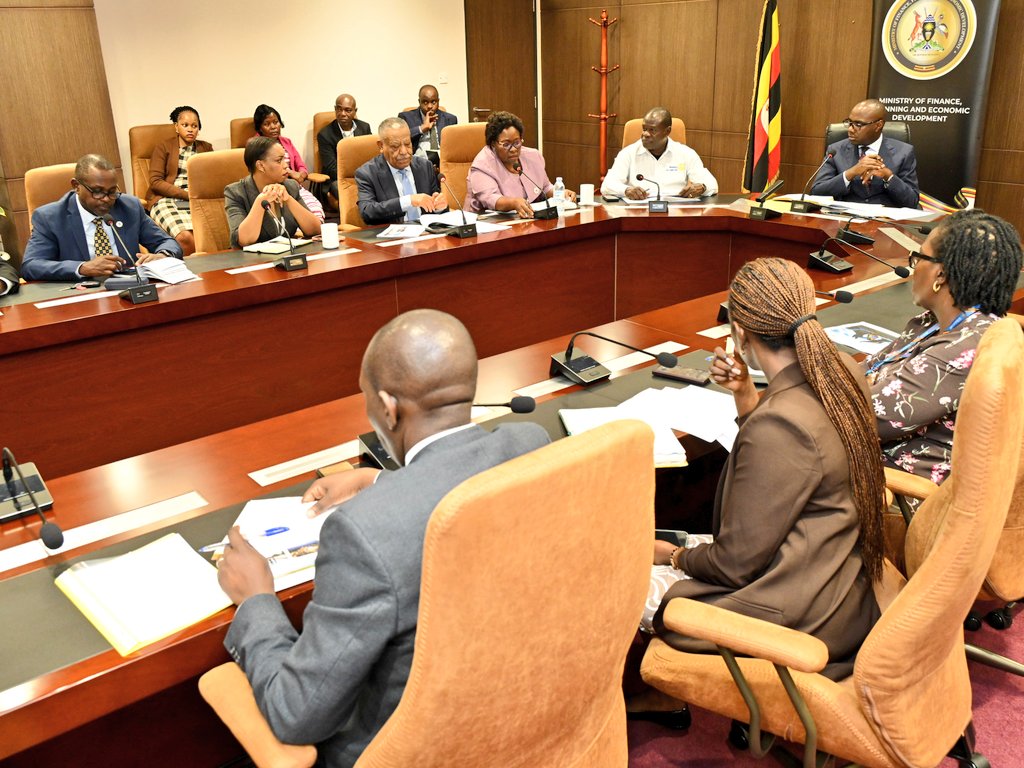
Finance Minister @henrymusasizi1 today met the Board of Directors and Management of Uganda Airlines to discuss the ten years strategic direction of the national carrier owned 100% by the Government of Uganda.
@UG_Airlines team was led by the Chairperson of the Board of Directors Priscilla Mirembe Serukka and the Acting Chief Executive Officer Girma Wake. The Deputy Secretary to the Treasury Patrick Ocailap is a member of the Board of Directors.
The Finance Minister who was flanked by the Minister of State for Privatization & Investment @AminahMukalazi said the Board & Management of Uganda Airlines should implement key reforms to ensure that the Airline becomes a profitable and reliable, world class carrier and major contributor to Uganda’s tenfold growth strategy.
The Acting Chief Executive Officer made a presentation on the operations of the Airline and the new developments. He said the Airline has a new schedule structure effective July 1,2026 and has plans to open Accra and Kigali routes to support the new network.
Girma said the regional conflict which led to the suspension of the Dubai flight operations, fuel cost volatility and Ebola outbreak are some of challenges affecting the operations of the Airline.
He also called for the establishment of a specialized procurement framework for aircraft acquisitions, leasing transactions and aviation-specific goods and services.
The Chairperson of the Board said Uganda Airlines needs Recapitalization for Aircraft acquisition, meeting the growing route demand and improving reliability.
She said the Airline has successfully transitioned from market-entry startup to a regional competitor, now commanding 27% of market share at Entebbe International Airport.
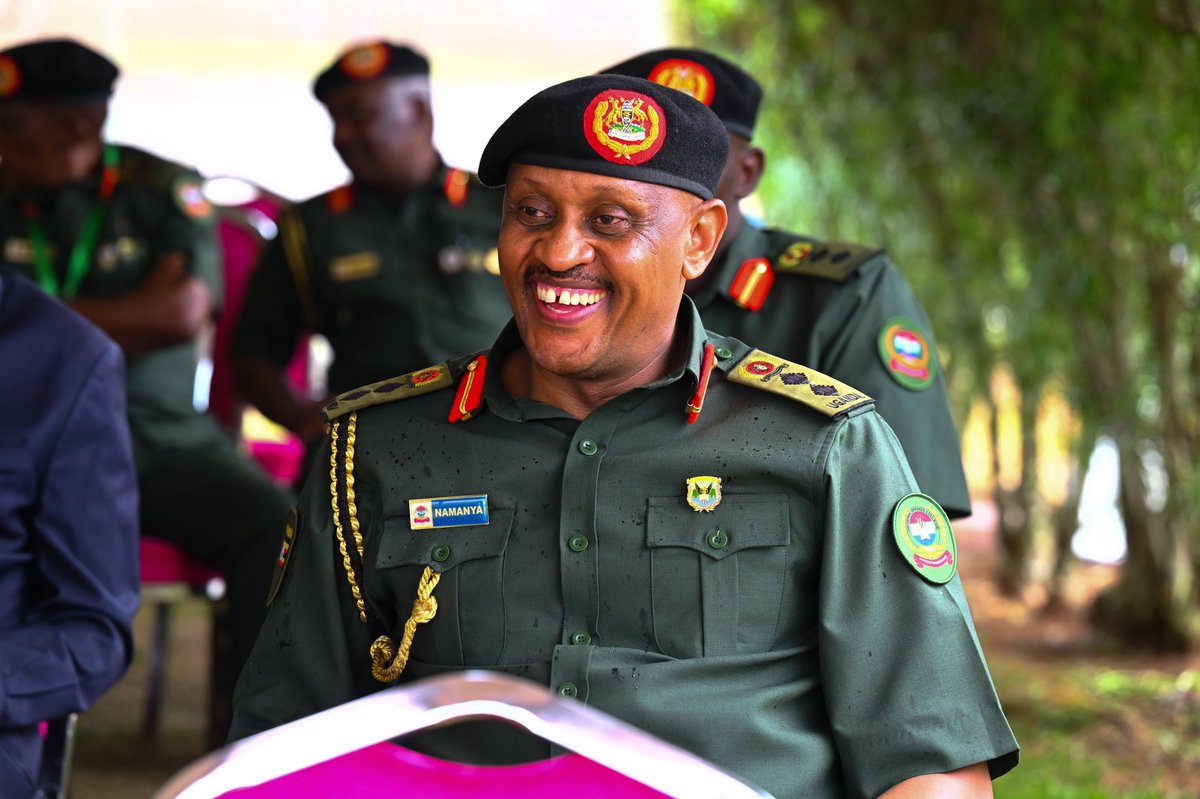
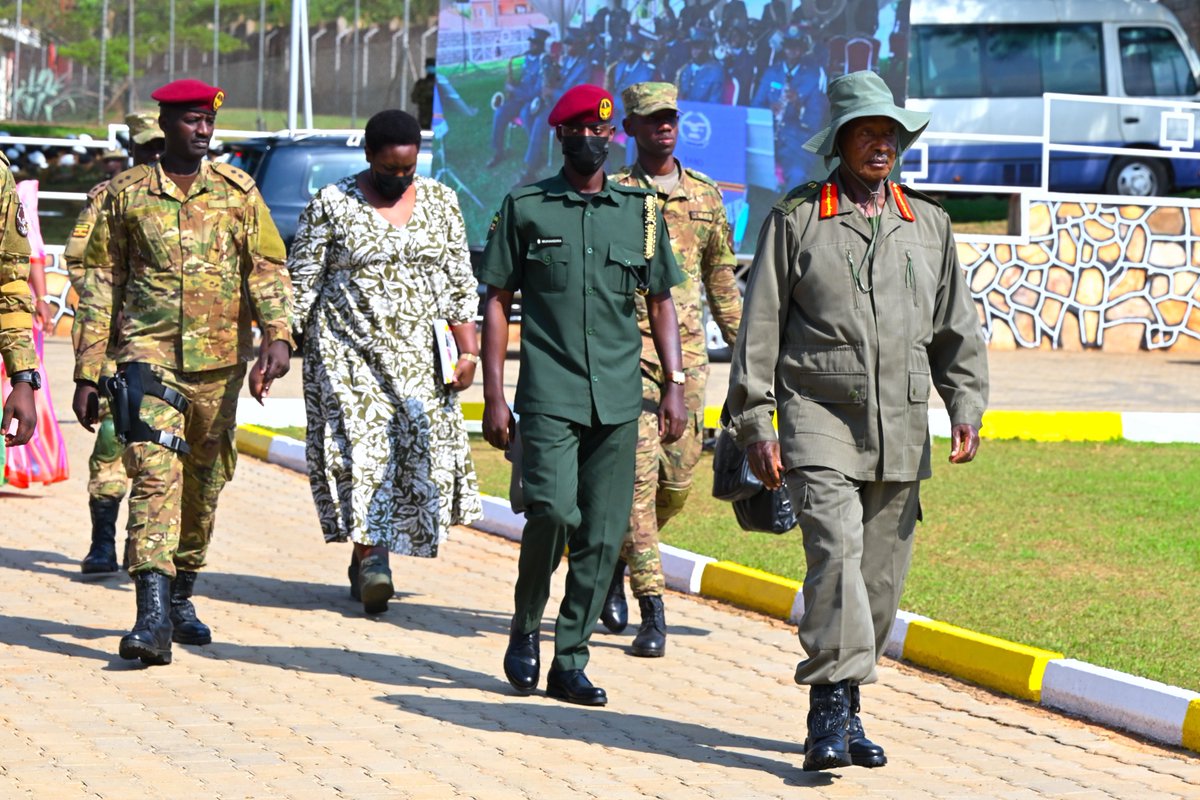
This afternoon, I presided over the graduation of 21 officers who completed the National Security and Strategic Studies Course at the National Defence College in Buikwe district. I congratulate them and urge them to provide strategic leadership in safeguarding our country’s security and development.
To build a strong centre of gravity for Africa, we must strengthen our defence capabilities on land, in the air, at sea and in space. At the same time, we must prioritise wealth creation because prosperity is the foundation of security. I wish them good luck.
Uganda is the one country on this continent seriously showing the rest of us how it’s done with brick.
COF Outreach Village Schools, Rakai and Lwengo districts, Southern Uganda. Localworks designed the program to put 20,000 new learning spaces across the region, building from a sketch the late architect Ross Langdon left behind. Fair-faced clay brick from Butende Brickworks nearby, cement screed floors, steel-timber shutters with no glass. The yellow brick was picked deliberately, it ages without looking worn in dust or mud.
The classroom module works on any site orientation, north-south or east-west, because covered walkways run on all four sides instead of just the shaded face. Vent roofs pulled from the design of local coffee mills let hot air escape through the roof structure, no mechanical cooling anywhere on site. Perforated roof sheeting keeps rooms lit even with shutters closed in a storm. Rainwater harvesting, biogas toilets, fuel-efficient stoves, the whole campus runs as one closed loop.
Roughly 1,500 square meters per school, sourced local, built to be maintained by the districts that use them, not by outside contractors flying in.
This is what it looks like when a design system respects the place it’s built for.
Architect: Localworks (formerly Studio FH Architects)
Location: Rakai and Lwengo Districts, Southern Uganda
Client: Cotton On Foundation
Materials: fair-faced clay brick, cement screed, steel-timber shutters
Uganda breaks into global top 25 for outsourcing
At 10 a.m. on a Tuesday in Gulu, 26-year-old Amara is already deep into her workday.
Her client is in Tokyo. The assignment: rebuilding a website for a Japanese retail company. She has never been to Japan. She has never needed to. For years, many young Ugandans were told that the path to a successful career in technology led abroad -or at least to larger regional hubs such as Nairobi.
Today, that assumption is being challenged by a growing digital economy that is bringing international work directly to Uganda. Amara is one of 1,500 trained digital freelancers working through Maarifasasa Limited, a Ugandan company that serves clients across Japan, the United States, Germany, Denmark, Norway, Belgium, South Korea, Ghana and Eswatini.
According to the 2026 Global Outsourcing Talent Index, Uganda ranks 24th out of 193 countries assessed for competitiveness in outsourced digital services.
That places the country among the world’s top 13 per cent outsourcing destinations, second in the East African Community after Kenya, and among only seven African countries to make the global top 25
https://t.co/MGY8VsSe39
Uganda is one of only two African countries with a labour cost score of 98 and an English proficiency score of 80 or higher, the other being Nigeria, which ranks #1 in Africa.
Within East Africa, 🇺🇬ranks #3 behind Kenya (#3 in Africa) and Ethiopia (#6 in Africa). While Kenya leads the region in infrastructure, Uganda and Ethiopia match each other in labour cost (both 98/100), with Kenya close behind at 95/100.
Source: Ataraxis Global Outsourcing Talent Index