WATCH��LIVE: Join us for the announcement of the 2026 prize in economic sciences.
Hear the breaking news first.
Where are you watching from?
#NobelPrize https://t.co/rTh6kJsoo1
Robert E. Hall’s and Michael Woodford’s research has generated a paradigm shift in stabilisation policy. New Keynesian models, a result of their research, allow us to explain and quantify how stabilisation policy affects business cycles and are now used by central banks and finance ministries around the world.
Since the laureates’ works were published, the models have been developed and refined; this process can be expected to continue as our economies keep changing. The models can easily be adapted to the varying circumstances encountered by households and businesses.
The laureates’ research has made it possible to manage major macroeconomic crises far more effectively than before. It has been hugely beneficial during the pandemic and the energy crises of recent years, which have not had such long-term consequences for growth and inflation as in the critical periods of the 1970s. We have not become mired in a catastrophic economic depression like that of the 1930s. Recessions and episodes of high inflation have not disappeared, but they are less long-lasting.
2026 economic sciences laureate Michael Woodford’s economic model has made it possible to respond to supply shocks more effectively.
Various types of shocks can disrupt the balance between supply and demand. A negative supply shock could be a commodity shortage, while a positive supply shock could be a technological breakthrough that makes the production of large volumes cheaper and easier. A positive demand shock could be good news about the future that increases households’ consumption, and a negative one the opposite news. If the balance is disrupted, it can be reset using a stabilisation policy that reduces demand (to the left) or increases it (to the right).
#NobelPrize
2026 economic sciences laureate Robert E. Hall’s hypothesis was that changes in consumption could not be predicted because they depend on new – and thus unpredictable – information.
Hall presented his results in an article in 1978, which was something of a eureka moment for research. His work became key to the development of modern research on consumption.
#NobelPrize
This year’s prize in economic sciences uses microfoundations to deliver macro insights.
Traditional Keynesian models built upon statistical and historical relationships between macroeconomic variables. The New Keynesian models are based on microfoundations, decisions that are made by individuals and businesses.
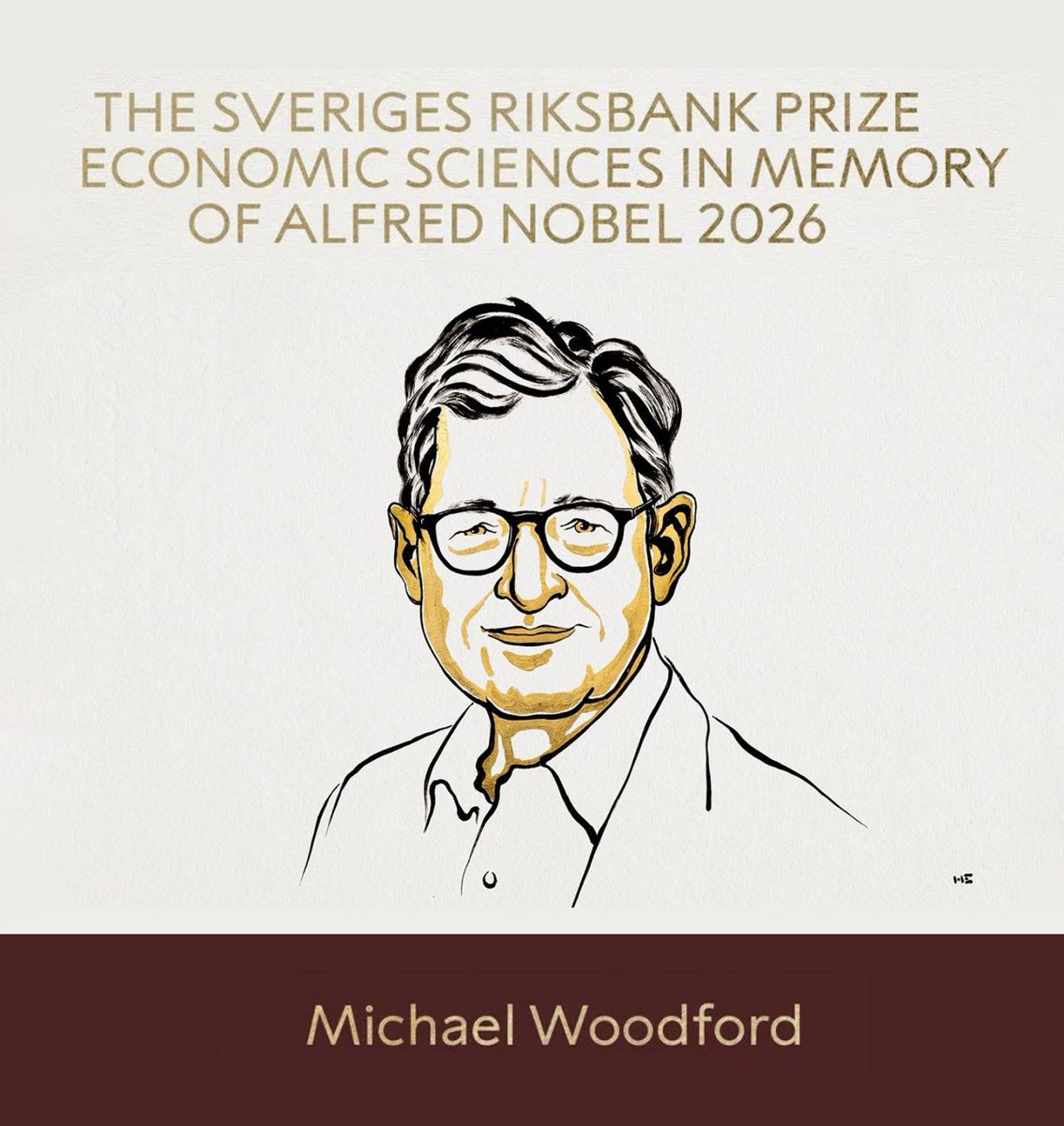
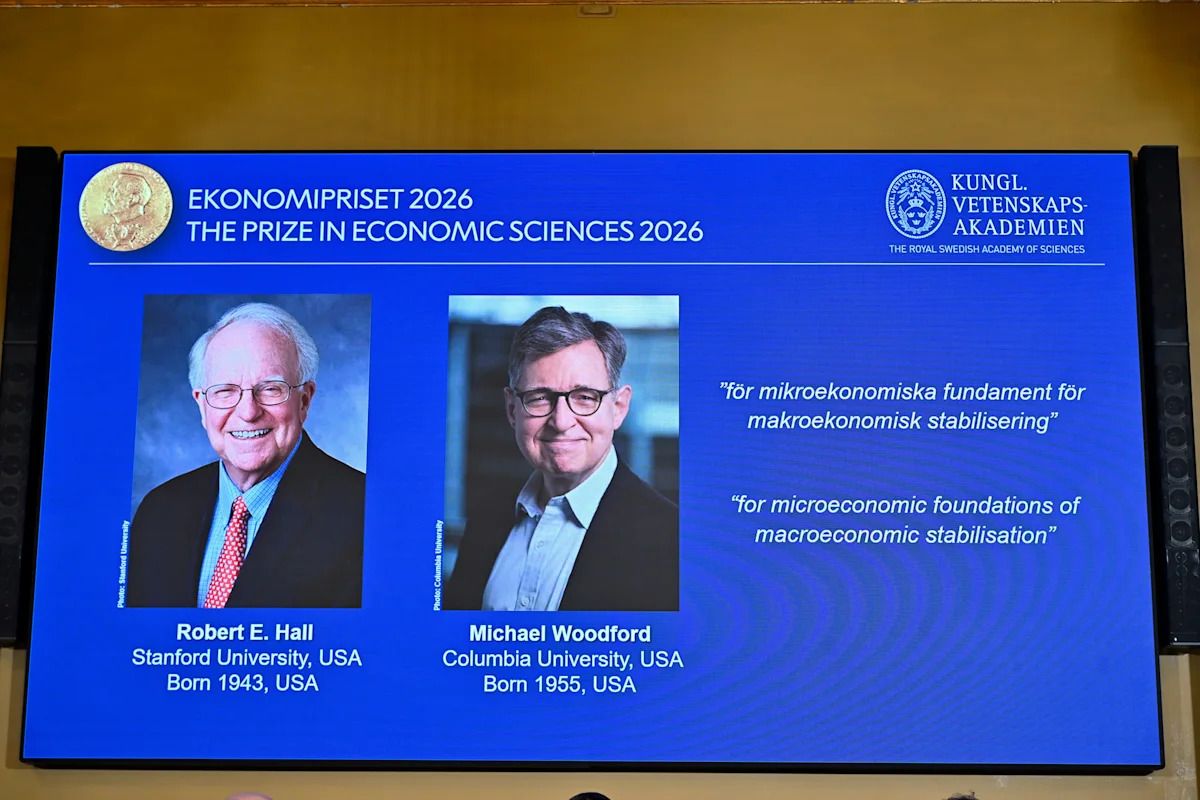
The 2026 Sveriges Riksbank Prize in Economic Sciences in Memory of Alfred Nobel has been awarded to Robert E. Hall and Michael Woodford “for microeconomic foundations of macroeconomic stabilisation.”
#NobelPrize
2026 economic sciences laureates Robert E. Hall’s and Michael Woodford’s research has made us better equipped to manage economic downturns.
They laid the foundation of the New Keynesian paradigm, in which models are built upon microfoundations, which means from the bottom up. Economic outcomes are the result of millions of decisions made at the microlevel by households and businesses. Using models based upon this approach, rather than simply studying the economy from a macro perspective, like a bird’s eye view, Hall’s and Woodford’s research has generated a paradigm shift in the theory of stabilisation policy.
#NobelPrize
This year’s laureates in economic sciences, Robert E. Hall and Michael Woodford, have developed new macroeconomic models that have significantly improved our ability to implement effective stabilisation policy. On the basis of these models, well-timed fiscal and monetary policy measures can reduce the economy’s peaks and troughs.
#NobelPrize
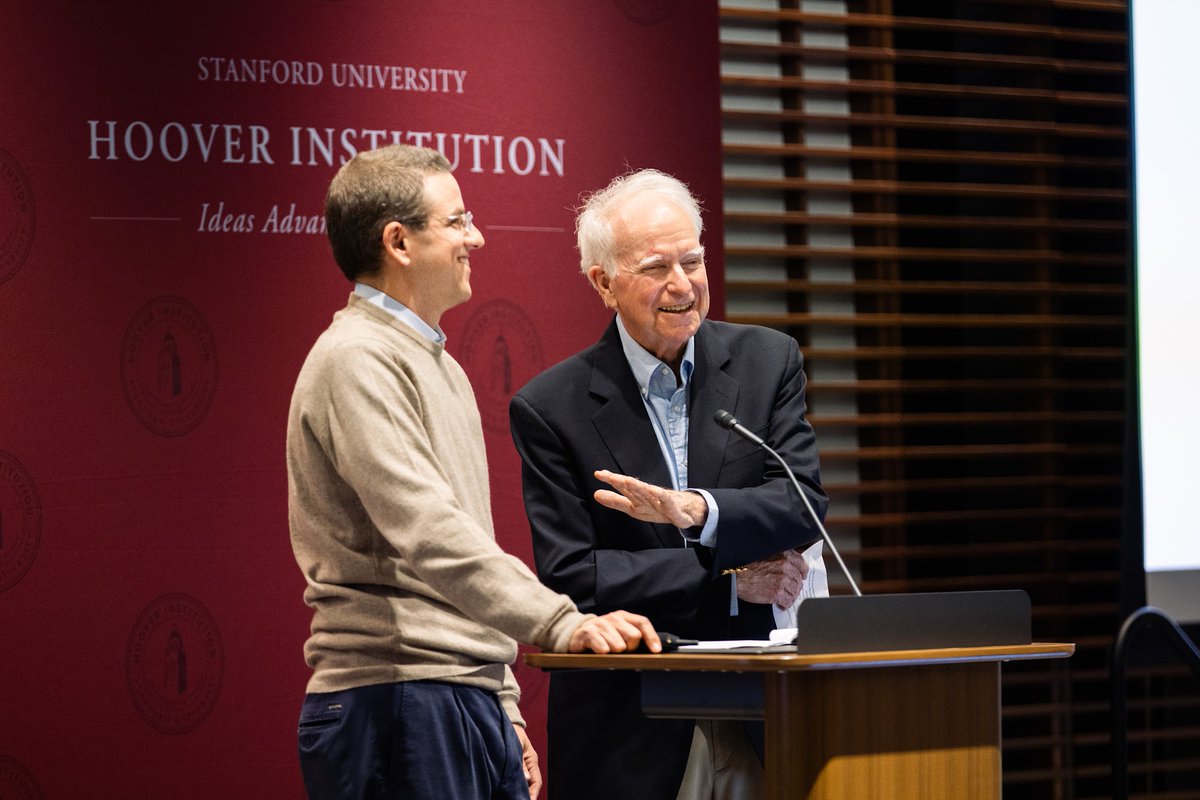
Congratulations to Robert E. Hall, winner of the 2026 Nobel Memorial Prize in Economic Sciences. The professor emeritus of economics and @HooverInst senior fellow emeritus shares the prize with Michael Woodford for developing macroeconomic models built on how households and businesses actually make decisions. Those models have helped governments and central banks time their policies to soften economic shocks.
📸: Patrick Beaudouin
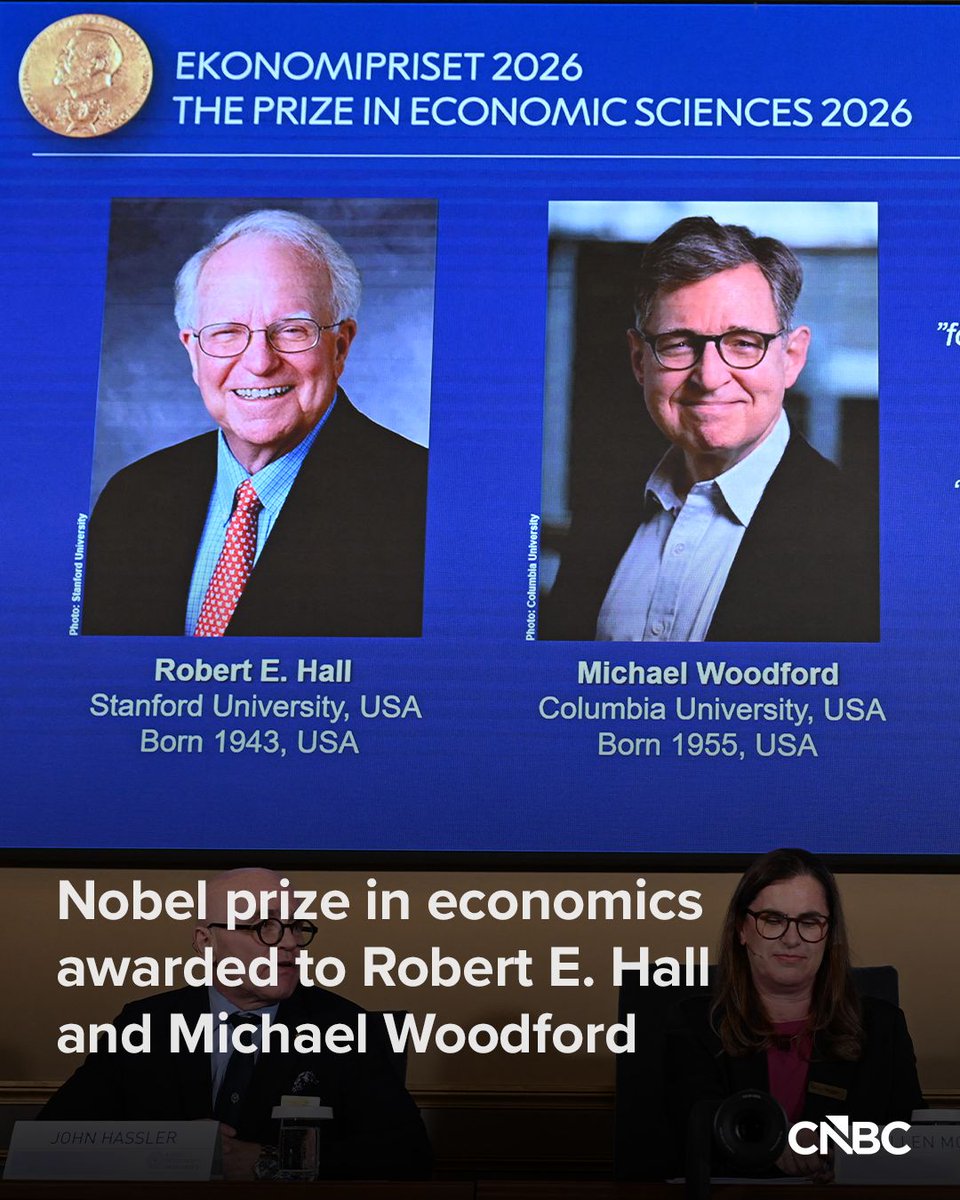
Robert E. Hall and Michael Woodford were awarded the Nobel prize in economics.
➡️The work of the U.S.-born pair underpins the models used by central banks and governments.
➡️“On the basis of these models, well-timed fiscal and monetary policy measures can reduce the economy’s peaks and troughs,” the Royal Swedish Academy of Sciences said.
🔗For more, please click here: https://t.co/8knYYIgCAj
NEW: American-born economists Robert E. Hall and Michael Woodford win the Nobel Memorial Prize in Economics for their work on models that have helped governments and central banks manage economic shocks. https://t.co/6TCW6eJUDa
American-born economists Robert E. Hall and Michael Woodford won the Nobel Prize in economics for their work on models that help governments and central banks manage economic shocks. https://t.co/oJgB58Hk7c
American academics Robert Hall and Michael Woodford have won the 2026 Nobel Prize for economics for "microeconomic foundations of macroeconomic stabilisation."
The Nobel Memorial Prize in economics has been awarded to US economists Robert E Hall and Michael Woodford by the Royal Swedish Academy of Sciences in Stockholm. https://t.co/JpF5sDFY4O
STOCKHOLM — Americans Robert Hall and Michael Woodford were awarded the Nobel economics prize Monday for their work on how monetary and fiscal policy can better stabilize disruptive economic fluctuations.
Read more: https://t.co/c3bz5jpkMZ
American-born economists Robert E. Hall and Michael Woodford won the Nobel Memorial Prize in Economics on Monday for their work on models that have helped governments and central banks manage economic shocks, such as energy crises and inflation. https://t.co/OSNF57XPeh