Hon. Minister, I think this reflection feels dismissive because it deflects from the actual concerns people are raising about gendered enforcement and police violence against women. It reduces a collective concern about law enforcement and violence to a a debate about fashion, commercial sexualisation and cultural identity.
1 - You suggest we shouldn’t be quick to describe this as « the state policing our bodies ». But the police announced that they would start monitoring indecency, and these restrictions were subsequently enforced. A police officer told one woman, « Ninongera kubona uwo mukondo urambona », meaning, « If I see your belly button again, you will see what I will do. » Another one said, « harazamo n’igiti, » meaning « we will beat you. »
If the state announces a vague policy like this and allows it to be enforced while evidently targeting women, then what is this if not the state policing women’s bodies?
2 - I agree with what you said that women’s bodies are not inherently sexual. If you believe that to be true, then I hope you understand that giving random security people, police officers, organisers and now youth “agents of change” the authority to enforce an undefined idea of decency will give more men permission to sexualise and then harass women according to their personal desires.
We literally still do not have a clear definition of what is being enforced exactly, yet the number of people empowered to enforce it is expanding. This is dangerous for women and for the nation as a whole.
3 - So, this is why these questions about fashion trends and cultural alternatives feel dismissive in regards to the conversation happening right now. They do not address the legal ambiguity, the gendered enforcement or the violence women are being threatened with. They redirect responsibility from the institutions exercising power to the women being punished.
4 - I agree that our fashion choices are shaped by commercial interests, algorithms and foreign influence, which is the same for all aspects of life beyond just clothing. So, the fact that something influences people, or that some members of our society deem something to be immoral or indecent, does not give the state legitimate authority to regulate it through vague policies and threats that especially seem to target one gender?
5 - Once women feel safe, we can definitely participate freely in conversations about what shapes people’s fashion choices. I think you can objectively agree that whatever shapes someone’s choice of clothing is not inherently a crime, and it cannot justify threats of violence.
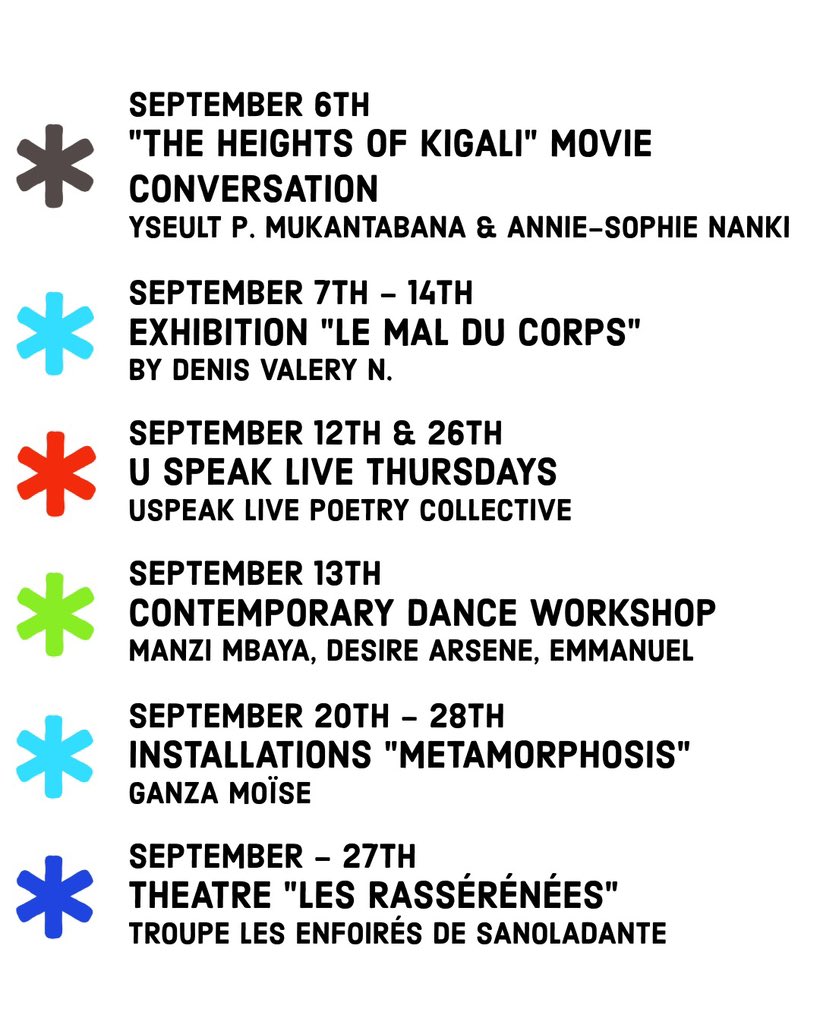
*️⃣ “Le Mal du Corps” solo #exhibition by @AahDeniss
Opening the 7th September, 7 PM at #lespacerw 📍
Le Mal du Corps: Visualising the Inner Dialogue, by Denis Valery Ndayishimiye is a poignant exploration of the inner struggles and emotional turbulence of the human experience
Toutes nos félicitations à @AahDeniss, premier étudiant rwandais 🇷🇼 sélectionné à l'université d'été de @lafemisparis ! Durant 8 semaines, grâce à sa bourse de @ambafrancerwa, il va travailler à la réalisation de documentaires avec d'autres étudiants internationaux 🎥