Remember when Pak Army Chief (now Failed Marshal) Gen Asim Munir famously bragged: "India is a shining Mercedes, but we are a dump truck... if the truck hits the car, who loses?"
Well, a Pak Navy ship just tried playing "dump truck" by crashing into a frontline Indian warship in the Arabian Sea.
Result: The Indian warship stands unbothered, while the Pak vessel limped back to port with severe damage.
Kirana Hills were hit by a loitering munition that had run out of fuel while hunting for radar targets, says ex-CDS Gen Anil Chauhan.
(I really love “drones that run out of fuel”.)
India did not target Kirana hills, but Former Indian CDS Gen Anil Chauhan explains what happened.
Points loitering munitions were targeting radars near Sargodha, may have struck Kirana Hills, site of Pakistan’s nuclear facilities, after failing to find targets.
Vdo ctsy: VIF
India has manufactured and successfully test-fired its first fully indigenous AK-203 “Sher” rifle at the IRRPL facility in Korwa, UP.
The rifle uses 100% Indian components and input materials, marking a major milestone in the indigenisation of AK-203 production in India.
The AK-203 is Russian-designed, while its production in this configuration has been fully localised in India.
This is a significant milestone in India’s defence-manufacturing localisation.
Pre-orders for Grand Theft Auto VI will officially begin on June 25 on digital storefronts and at other select retailers.
Check out the official cover art, also available as downloadable artwork at https://t.co/XPwC8URCQ4
50 light-years from here is a dead star made mostly of diamond. Two-thirds the size of Earth. As heavy as the Sun. The biggest diamond ever found on our planet was 3,100 carats. This one is 10 billion trillion trillion carats.
Diamonds are absurdly common in space. Wood is the cosmic miracle.
Carbon is the 4th most common element in the universe, after hydrogen, helium, and oxygen. Squeeze it hard enough and it turns into diamond. Inside Neptune and Uranus, the pressure is so extreme that methane in their atmospheres comes apart, and the carbon falls as diamond rain. Some of these diamonds could grow up to a meter wide. Lab experiments confirmed it in 2017, and a 2024 follow-up showed it can happen on smaller, Neptune-like planets too. Those are among the most common types of planet astronomers find outside our solar system.
Take PSR J1719-1438 b. A planet 4,000 light-years from here, twice as dense as lead. As heavy as Jupiter, but less than half its size. Probably mostly crystalline carbon. A diamond planet, orbiting a tiny dead star that spins 10,000 times a minute.
And nanodiamonds are everywhere, even in meteorites that land on Earth. They make up about 3% of the carbon in those rocks.
Wood is harder. It needs lignin, a natural compound that turns soft plant tissue into hard wood. Lignin first appeared on Earth about 385 million years ago. Earth is 4.5 billion years old. Trees have only existed for 8.5% of our planet's history.
For tens of millions of years after lignin appeared, plant matter built up in Earth's swamps faster than it could fully break down. Most of the coal humans have ever burned was once those plants.
Wood needs everything: water, photosynthesis, an oxygen atmosphere, complex life, plants with veins, and finally the chemistry to build lignin. Diamonds need just two things: carbon and pressure.
So far, every place we have looked in the universe has carbon and pressure. Only one place we know of has trees.
Dialogues from US-Iran peace talks:
🇺🇸: Don’t make nukes Iran.
🇮🇷: STFU
🇺🇸: If you don’t agree, war is on.
🇵🇰: If you guys don’t end this, we will not repay your loans.
🇺🇸: Shit
🇮🇷: Are bsdk humse to loan hi nahi liya hai hum kyu ruke?
🇵🇰: Fair
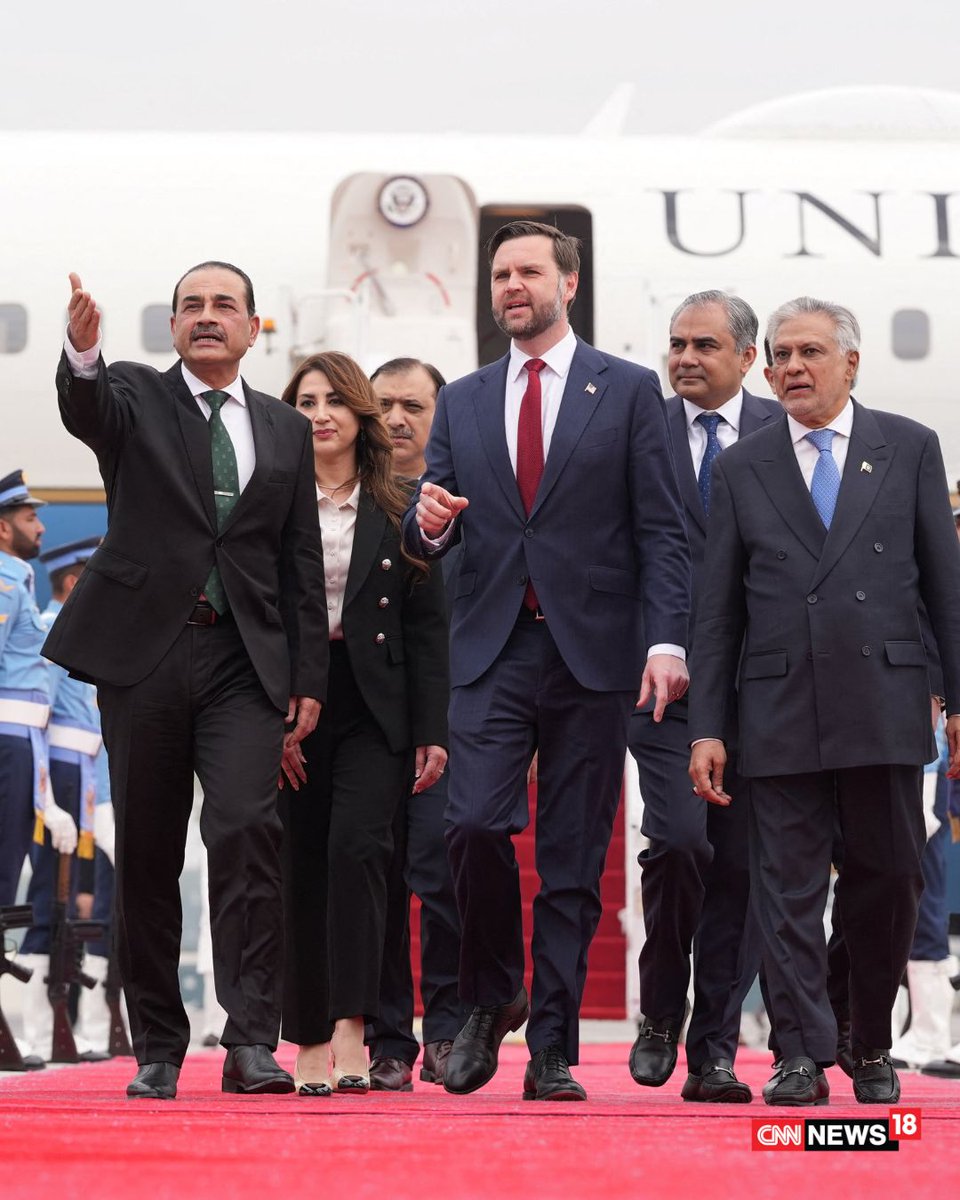
JD Vance: Talks have failed..!!
ECI works manually
Rathee: Software good, use it
ECI uses software
Rathee: Software bad, democracy dead
German Shephard is Fraudest of fraud experts 🤣🤣
Just landed at Tel-aviv Airport. Handed over my Pakistani passport for immigration, and the officer smiled warmly, looked at me and said, “Maa chudwa liye peace talk me bhikhari"
Today, India takes a defining step in its civil nuclear journey, advancing the second stage of its nuclear programme.
The indigenously designed and built Prototype Fast Breeder Reactor at Kalpakkam has attained criticality.
This advanced reactor, capable of producing more fuel than it consumes, reflects the depth of our scientific capability and the strength of our engineering enterprise. It is a decisive step towards harnessing our vast thorium reserves in the third stage of the programme.
A proud moment for India. Congratulations to our scientists and engineers.