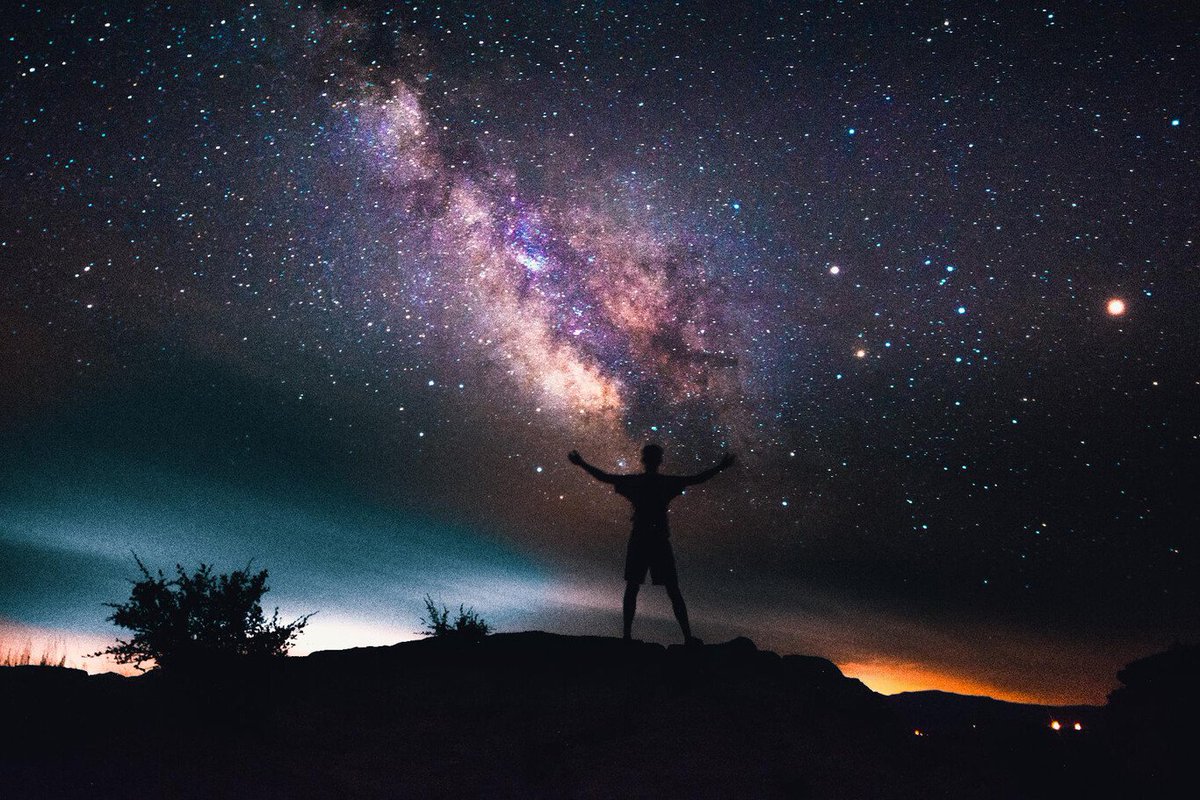
🔴 CÓMO HACER ASTROFOTOGRAFÍA CON TU MÓVIL
Con cualquier smartphone, ya sea un Android o un iPhone, puedes hacer fotos increíbles del cielo. Solo tienes que saber un par de truquitos.
Vaaaaamos con el hilo!👇🏻
Amigues del X/Twitter/verso 🇵🇪🇩🇪
Un grupo de estudiantes de @BioUNMSM necesita su apoyo para visitar tres universidades en Alemania antes de fin de año y aprender más sobre superbacterias y resistencia a los antimicrobianos
Si quieres convencerte de apoyarlos, sigue el hilo pe 🧵
Yesterday we had a Zoom lunch w/ a former PhD student of the lab. He said he has been using my GitHub repo to brush up on his R skills. "It's well put together" he said. I'm so glad to hear that! I wrote these when I was slacking off in the lab. 😂
https://t.co/875sYAxopH
The best teachers are not the ones who provide you all the answers. They're the ones who get deeply excited by the questions they cannot answer, the ones who teach how to question and doubt the things you learn.
A sea slug that can do photosynthesis just like a plant! It takes genes from the algae it eats to perform photosynthesis and thus get all the energy it needs from sunlight, allowing it to survive without food for months! Clever eh?
@larepublica_pe Por favor, no se necesita una maestría para enseñar en la pre. Más que un experto en un tema particular, se requieren maestros que motiven, que recuerden a los chicos que deben postular a la una carrera que verdaderamente disfruten.
R resources for ecologists:
Here's a link to all my #Rstats resources in one place! I've got online courses, YouTube videos, a blog, and more!
*Especially useful for grad students... #ESA2023 👀
Check it out here: https://t.co/TYQ5eIcgJu
#RforEcology#ecology#gradschool
Repongo un "X" de hace tiempo
Este diminuto ser que vive bajo las aguas del norte del planeta se llama Ángel del mar (Clione limacina). Fue grabado en el mar Blanco en #Russia . Fascinante!!
Crédito: Alexander Semenov.
#biology#biologia#Science#NaturalBeauty
Day 14 of great synthetic biology papers. Storing a video in DNA.
“CRISPR–Cas encoding of a digital movie into the genomes of a population of living bacteria,” by Shipman et al. (2017).
This is the GIF that made synthetic biology go viral. But how did it actually happen?
*****
DNA is an incredible way to store information.
It is information dense (it can store nearly 1.5 terabits per square millimeter of space, 800-times more dense than a hard drive) and extremely durable (last year, scientists sequenced a 2.4 million-year-old DNA sequence from an ice sheet in Greenland.)
Another way to think about this, from my prior essay: "a coffee mug filled with nucleic acids could store all the data produced in the last two years.” (https://t.co/odrTLYBVJC)
Despite the promise of DNA storage, this 2017 paper is the first demonstration of a movie being encoded in a living cell. The video itself is a recreation of Eadweard Muybridge’s running horse movie, which was made by stitching together still images in the late 1800s.
But how was it made?
***
To encode a video inside of living cells, we must first make the DNA.
DNA includes four letters, or nucleotides: A, T, G, and C. Each letter can be used to encode a distinct color, such as white, light gray, dark gray, or black. That is four colors in total; one for each letter. It is possible to encode more colors if you use pairs or triplets of nucleotides.
So that’s our colors sorted. But how do we know which color goes where in the image? In other words, how do we encode spatial information in DNA?
The secret is that DNA itself contains spatial information. We often say things like, “Gene A is encoded on Chromosome 6,” or “Gene B is located upstream of Gene C.”
We can take advantage of DNA's natural spacing to encode our video.
If you wanted to encode a 50 x 50 pixel image in DNA, for example, you would first map out the color of each pixel. Let’s say A = white, T = light gray, and so on. Then, you would synthesize a DNA strand, 50 letters long, for each row in the image. Next, you would insert these DNA strands into the genome in the order of their rows, such that the sequence located furthest upstream corresponds to row 0, and the strand located furthest downstream in the genome corresponds to row 49.
The challenge, of course, is getting the DNA snippets into the genome in the correct order, so that this spatial information is preserved. But there's an easy way to do that, too.
***
If you insert all the strands into the genome at random places, there will be no way to read them back out and reconstruct the image. The spatial information will be lost.
But there is a solution for this. In a 2016 Science paper, Shipman and co. figured out a clever way to insert DNA into the genome in a specific order. This technology has made all the difference for embedding videos in DNA. (https://t.co/QglKlLgPFH)
The 2016 paper shows that two proteins, called Cas1 and Cas2, can grab onto snippets of DNA that are electroporated into cells (literally, a pulse of electricity forces DNA into the cell) and then integrate them in the genome. These special proteins ALWAYS insert DNA in the same location, such that the first DNA snippet is inserted at position 0. A second DNA snippet is inserted at position 0, and the first DNA snippet moves to position 1. And so on.
After Cas1 and Cas2 have inserted dozens or hundreds of DNA strands into the genome, the final outcome is that the DNA snippet located furthest from position 0 must have been the first one to be acquired by the cells!
For the 2017 paper, Shipman synthesized all the DNA needed to encode the various pixels for each frame in the running horse paper. He then "shocked" this DNA into a population of cells. These cells took in the DNA snippets, embedded them in their genomes, and went about their day as if little had happened. When the researchers later sequenced these DNA arrays and averaged the results over mllions of cells, the team was able to retrieve the video’s information with >90% overall accuracy.
This paper is a beautiful demonstration of how a simple discovery (DNA acquisition via Cas1 and Cas2) can be used to capture and inspire people’s imagination. I like it a lot.
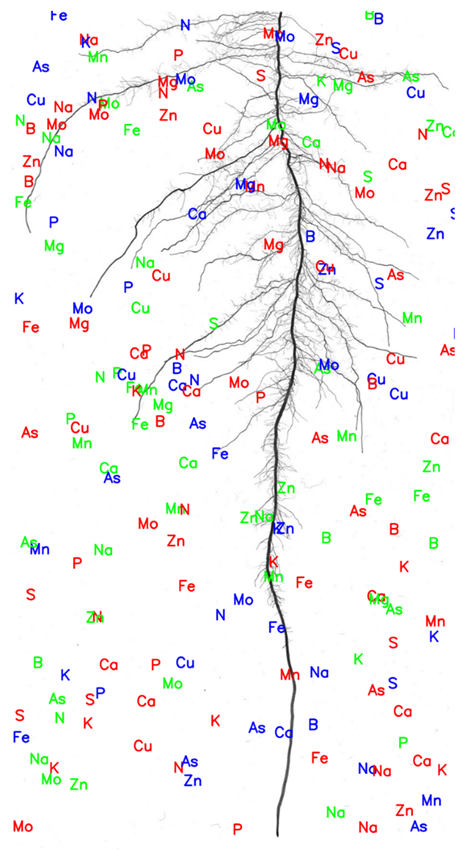
¿Alguna vez te has preguntado cómo las plantas 'deciden' qué nutrientes tomar del suelo? Piensa en el suelo como una sopa de letras. ¿Recuerdas cuando te empecinabas en elegir solo algunas letras y descartar otras? Sigue...
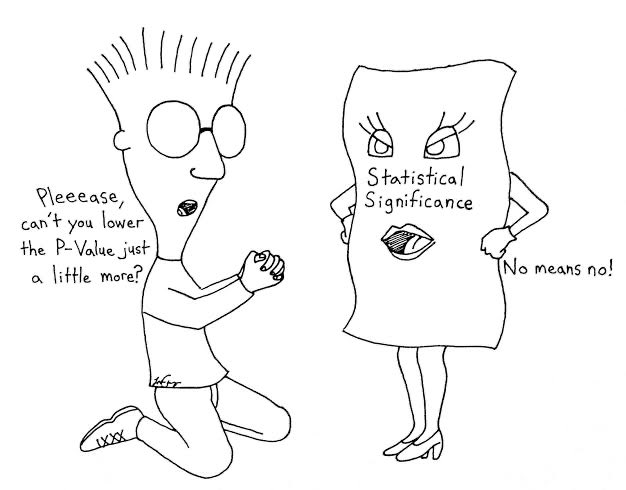
Why We Use p<0.05
🔹 Ever wondered why scientists often use p<0.05 as the threshold for statistical significance? Let's dive into its history, implications, and alternative approaches.
🔹 The p<0.05 threshold can be traced back to Sir Ronald A. Fisher in the 1920s. He suggested the 5% level as a convenient boundary for significance. However, it's important to note he never intended for it to become a rigid rule.
🔹 The p value tells us the probability of obtaining our observed results (or more extreme) if the null hypothesis is true. So, p<0.05 implies there's less than a 5% chance our results happened due to random variation alone.
🔹 However, there are critiques. Relying solely on p<0.05 has led to "p-hacking" - tweaking experiments to achieve this threshold. It's also been implicated in the replication crisis, where many scientific studies couldn't be reproduced.
🔹 So, is p<0.05 the correct way to test a hypothesis? Well, it's a tool. When used correctly and with understanding, it can provide valuable insights. But, like any tool, it has limitations.
🔹 Some suggest a more flexible approach:
•Using different thresholds depending on the field or study.
•Looking at effect sizes alongside p-values.
•Emphasizing confidence intervals to provide a range of plausible values.
🔹 Bayesian statistics is another approach. Instead of frequentist's p-values, it provides a direct probability statement about the parameter in question using prior information and observed data. This can sometimes offer a more intuitive understanding.
🔹 In conclusion, while p<0.05 has historical significance and is widely used, it shouldn't be the sole determinant of a study's validity. Science is ever-evolving, and so should our methods and understanding of data interpretation.
🔹 As always, critical thinking is key! Don't just take p<0.05 at face value. Dive deeper, understand the context, and consider alternative methods when interpreting results.
#DataScience #Statistics
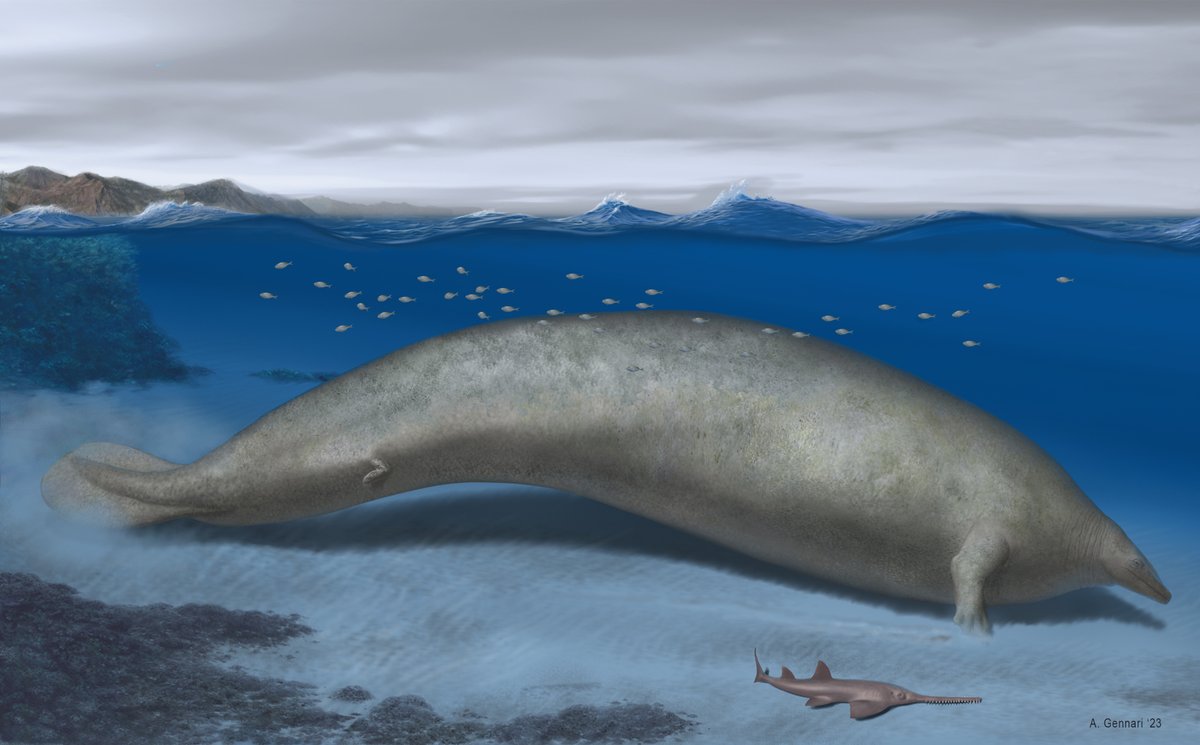
LA BALLENA COLOSAL DEL PERÚ 🇵🇪
Tras casi 10 años de excavaciones y un arduo trabajo presentamos hoy en la revista @Nature a Perucetus colossus: un gigantesco basilosaurio de 38 millones de años y quizás el animal mas pesado que alguna vez haya existido 🧵
https://t.co/7M92MS2H2H
Don't forget to submit your ROS research!
PCE Special Issue open for submissions:
Redox regulation of plant stress and development
Guest editors: Ruthie Angelovici and Ron Mittler (University of Missouri)
Deadline for submission: 1st September 2023
Day 29/30 of great biology papers.
"Phylogenetic structure of the prokaryotic domain: The primary kingdoms," by Carl Woese & George Fox (1977).
Perhaps the most important paper in evolutionary biology. It established a "third domain" of life.
***
This paper is just 2.5 pages in length. It contains a single table as its figure. Its publication went largely unnoticed by biologists, but The New York Times printed a story about a "third type of life" on its front page.
Prior to this study, all life was divided into two categories: Cells that have a nuclear membrane (eukaryotes), and cells that don't (prokaryotes).
Francis Crick first proposed "comparing sequences to infer relationships" as early as 1958. But this paper heralded the dawn of molecular phylogenetics.
Woese and Fox claimed, provocatively, that "all cellular life falls into one of three large relatedness groups: eukaryotes...eubacteria, and archaebacteria."
(See https://t.co/JqGIpcfGJu)
They made this claim by sequencing a single, highly-conserved gene across many organisms: Ribosomal RNA. This is the catalytic part of ribosomes, the protein-making machines inside of cells. By studying how rRNAs had mutated over eons and eons, Woese and Fox inferred the evolutionary connections between cells.
Many well-regarded microbiologists at the time believed that the relationships between microbes could not be determined without a fossil record. This sounds hilarious in hindsight. But it was a real, mainstream belief.
Roger Stanier, who helped modernize microbiology and was a respected professor at UC Berkeley and the Pasteur Institute, wrote in his textbook, The Microbial World, in 1970:
"[r]eflection and experience have shown, however, that the goal of a phylogenetic classification can seldom be realized. The course that evolution has actually followed can be ascertained only from direct historical evidence contained in the fossil record. This record is at best fragmentary and becomes almost completely illegible in Precambrian rocks more than 400 million years old."
Overturning dogma and telling professors that they're wrong is fun! A classic.
One more day to go!
Paper: https://t.co/Phthq9tutl
Looks like Google Scholar is going to die soon.
I just got access to Elicit beta, an AI-powered search engine for academic research.
It's like (ChatGPT + Google Scholar) x 10.
And totally FREE!
Here's how Elicit will revolutionize the way we search academic literature:


![NikoMcCarty's tweet photo. Day 29/30 of great biology papers.
"Phylogenetic structure of the prokaryotic domain: The primary kingdoms," by Carl Woese & George Fox (1977).
Perhaps the most important paper in evolutionary biology. It established a "third domain" of life.
***
This paper is just 2.5 pages in length. It contains a single table as its figure. Its publication went largely unnoticed by biologists, but The New York Times printed a story about a "third type of life" on its front page.
Prior to this study, all life was divided into two categories: Cells that have a nuclear membrane (eukaryotes), and cells that don't (prokaryotes).
Francis Crick first proposed "comparing sequences to infer relationships" as early as 1958. But this paper heralded the dawn of molecular phylogenetics.
Woese and Fox claimed, provocatively, that "all cellular life falls into one of three large relatedness groups: eukaryotes...eubacteria, and archaebacteria."
(See https://t.co/JqGIpcfGJu)
They made this claim by sequencing a single, highly-conserved gene across many organisms: Ribosomal RNA. This is the catalytic part of ribosomes, the protein-making machines inside of cells. By studying how rRNAs had mutated over eons and eons, Woese and Fox inferred the evolutionary connections between cells.
Many well-regarded microbiologists at the time believed that the relationships between microbes could not be determined without a fossil record. This sounds hilarious in hindsight. But it was a real, mainstream belief.
Roger Stanier, who helped modernize microbiology and was a respected professor at UC Berkeley and the Pasteur Institute, wrote in his textbook, The Microbial World, in 1970:
"[r]eflection and experience have shown, however, that the goal of a phylogenetic classification can seldom be realized. The course that evolution has actually followed can be ascertained only from direct historical evidence contained in the fossil record. This record is at best fragmentary and becomes almost completely illegible in Precambrian rocks more than 400 million years old."
Overturning dogma and telling professors that they're wrong is fun! A classic.
One more day to go!
Paper: https://t.co/Phthq9tutl](https://pbs.twimg.com/media/F0eF-eXX0AEZ_zC.png)




![NikoMcCarty's tweet photo. Day 29/30 of great biology papers.
"Phylogenetic structure of the prokaryotic domain: The primary kingdoms," by Carl Woese & George Fox (1977).
Perhaps the most important paper in evolutionary biology. It established a "third domain" of life.
***
This paper is just 2.5 pages in length. It contains a single table as its figure. Its publication went largely unnoticed by biologists, but The New York Times printed a story about a "third type of life" on its front page.
Prior to this study, all life was divided into two categories: Cells that have a nuclear membrane (eukaryotes), and cells that don't (prokaryotes).
Francis Crick first proposed "comparing sequences to infer relationships" as early as 1958. But this paper heralded the dawn of molecular phylogenetics.
Woese and Fox claimed, provocatively, that "all cellular life falls into one of three large relatedness groups: eukaryotes...eubacteria, and archaebacteria."
(See https://t.co/JqGIpcfGJu)
They made this claim by sequencing a single, highly-conserved gene across many organisms: Ribosomal RNA. This is the catalytic part of ribosomes, the protein-making machines inside of cells. By studying how rRNAs had mutated over eons and eons, Woese and Fox inferred the evolutionary connections between cells.
Many well-regarded microbiologists at the time believed that the relationships between microbes could not be determined without a fossil record. This sounds hilarious in hindsight. But it was a real, mainstream belief.
Roger Stanier, who helped modernize microbiology and was a respected professor at UC Berkeley and the Pasteur Institute, wrote in his textbook, The Microbial World, in 1970:
"[r]eflection and experience have shown, however, that the goal of a phylogenetic classification can seldom be realized. The course that evolution has actually followed can be ascertained only from direct historical evidence contained in the fossil record. This record is at best fragmentary and becomes almost completely illegible in Precambrian rocks more than 400 million years old."
Overturning dogma and telling professors that they're wrong is fun! A classic.
One more day to go!
Paper: https://t.co/Phthq9tutl](https://pbs.twimg.com/media/F0eGFOAXsAEOmXT.png)





