A sales team rewarded only on revenue may chase the wrong deals.
Consider linking incentives to:
• Revenue collected
• Contribution margin
• Customer retention
What gets rewarded gets prioritised.
#SalesStrategy#SME#BusinessFinance#PerformanceManagement
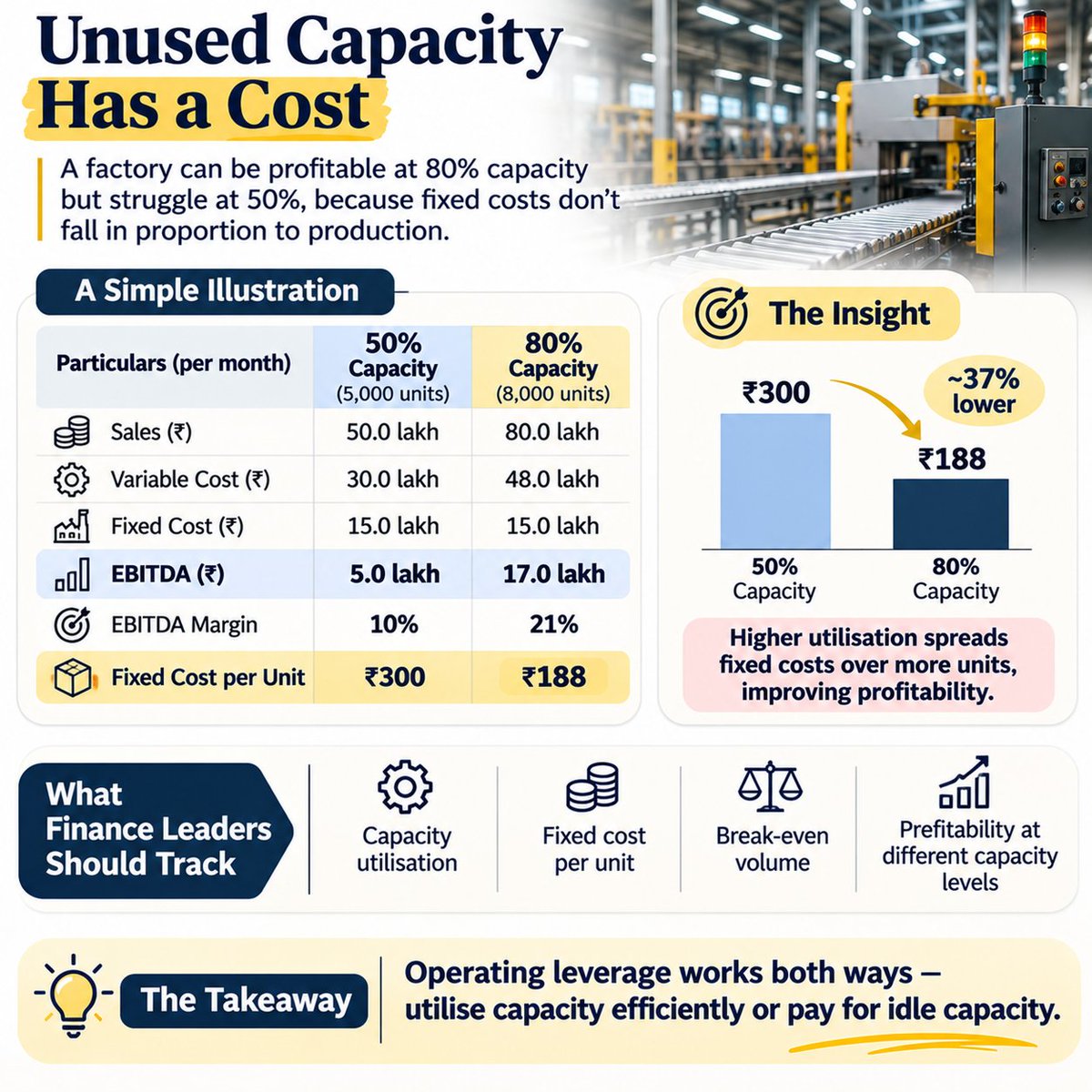
Unused capacity eats into margins.
Higher production spreads fixed costs across more units, improving operating leverage.
Track utilisation, fixed cost per unit and break-even volume.
#Manufacturing#SME#OperatingLeverage
A forecast that is consistently wrong is not just a planning problem.
It can lead to excess hiring, idle capacity, unnecessary inventory and missed opportunities
Don't just measure forecast accuracy. Investigate why assumptions keep failing.
#BusinessPlanning#SME#Management
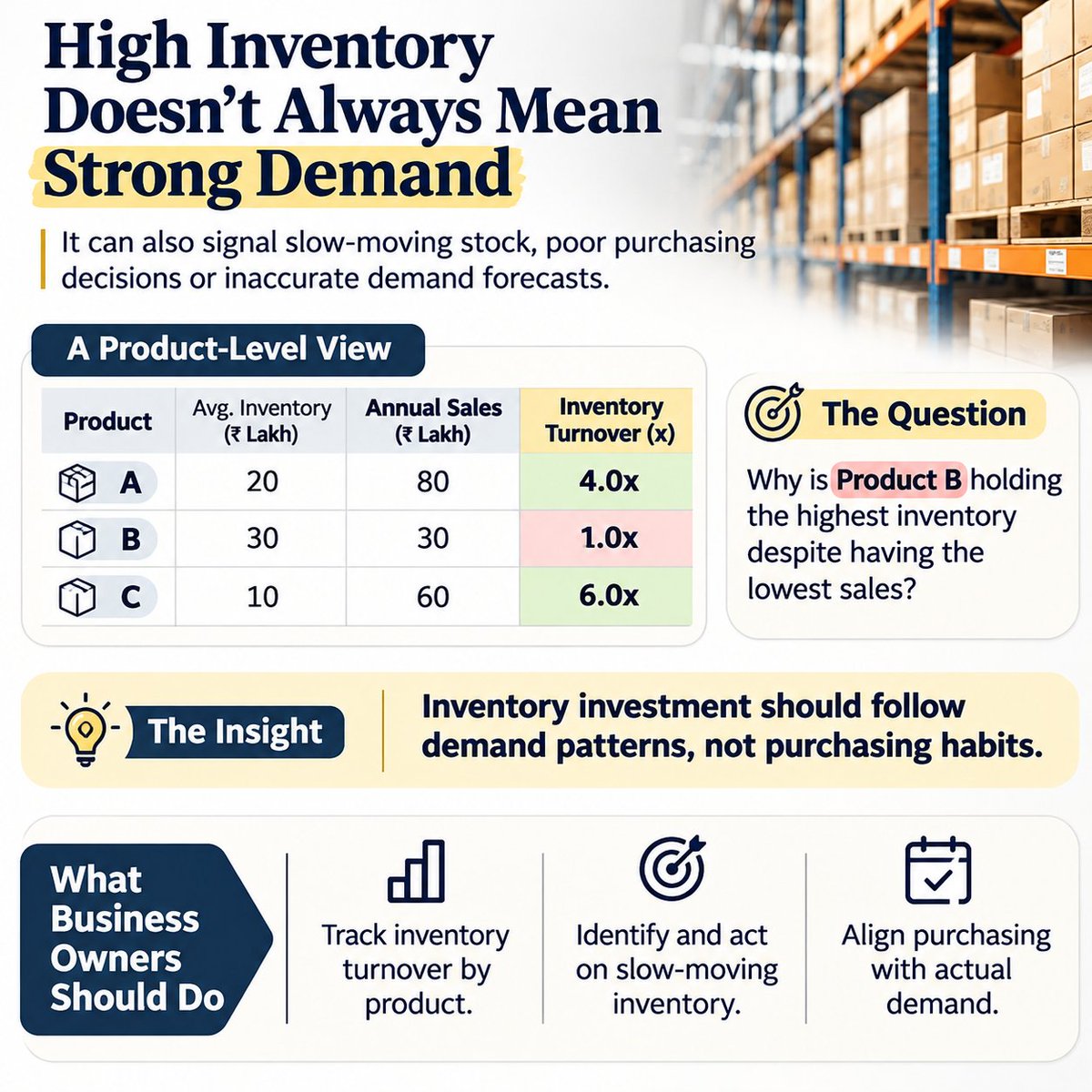
High inventory doesn't always mean strong demand.
It may mean slow-moving stock, poor purchasing decisions or inaccurate demand forecasts.
Track inventory turnover by product, not just total inventory value.
#InventoryManagement#SME#BusinessPerformance#SupplyChain
Your biggest customer can also be your biggest risk.
If 3 customers generate 65% of revenue, losing one could disrupt growth, capacity utilisation and profitability.
Measure customer concentration. Don't let growth create dependency.
#SME#RiskManagement#BusinessStrategy
Before discounting, ask:
• Will extra sales offset lower margins?
• Are we winning customers or subsidising existing ones?
• Would customers buy at full price?
Discounts should be strategic, not automatic.
#Pricing#SME#Profitability
High revenue doesn't always mean high value.
Assess each product on:
• Contribution margin
• Strategic fit
• Resource demands
• Growth potential
Then decide where to invest, improve or exit.
#SME#ProductStrategy#BusinessGrowth
Most annual budgets become outdated long before the financial year ends.
Yet management continues treating them as fixed commitments.
A budget should guide decisions, not restrict them.
#BusinessFinance#FPandA
A bigger team doesn't necessarily mean a stronger business.
More employees can hide poor productivity, duplicated roles and inefficient processes.
Revenue per employee deserves more attention.
#BusinessPerformance#Leadership
Not every growing business needs more funding.
Sometimes, it needs a better business model.
More capital won't fix poor unit economics. It may simply make the problem bigger.
#BusinessStrategy#Entrepreneurship
Your business may be profitable on paper but struggling to pay suppliers.
The problem might not be profitability. It might be poor working capital management.
Are you tracking receivables, inventory and payables together?
#SME#WorkingCapital
Revenue growth doesn't guarantee value creation.
Track ROIC, working capital and operating margins.
Growth creates value only when returns justify the capital invested.
#SME#BusinessFinance#Profitability
Forecasting isn't about predicting perfectly. It's about spotting cash gaps early.
A rolling cash forecast helps businesses plan collections, payments and funding needs before a crisis hits.
#SME#CashFlow#BusinessFinance
A company can hit its revenue target and still miss its business objectives.
Why?
• Margin erosion
• Unfavourable product mix
• Rising operating costs
• Declining returns on capital
Hitting targets isn't the same as creating value.
#BusinessFinance#Profitability#Finance
Finance leadership
The real value of finance isn't explaining last month's numbers.
It's helping management make better decisions before next month's numbers arrive.
Budgeting
A budget is not a commitment to spend.
It's a financial framework for making better decisions.
If actual performance changes but management decisions don't, your budget is just a spreadsheet.
Your biggest customer could be quietly costing you money.
High revenue doesn't guarantee high profitability.
Look beyond sales:
• Margins
• Credit terms
• Servicing costs
• Working capital
Growth is valuable only when it creates profit and generates cash.
Working capital
A company can be profitable, growing rapidly and still face a liquidity crisis.
Why?
Because growth consumes cash.
Receivables, inventory and payables deserve as much management attention as revenue and EBITDA.